
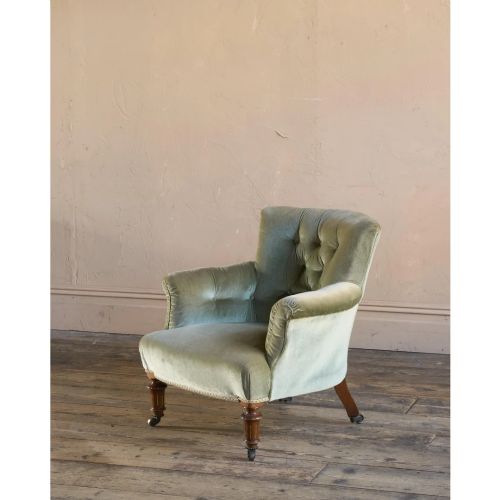
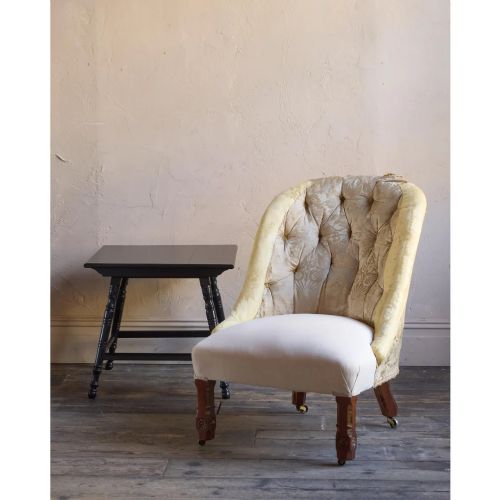
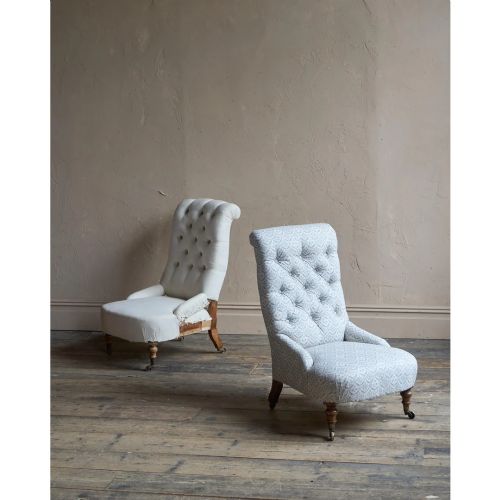
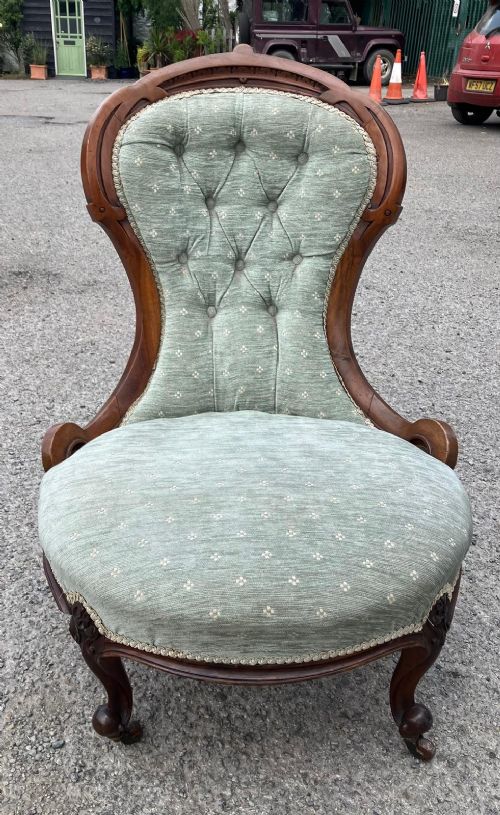
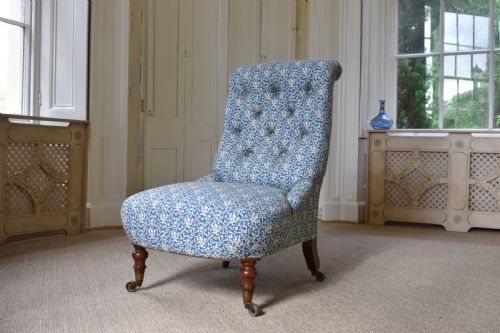
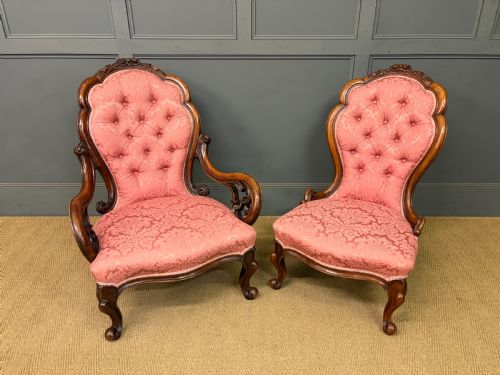
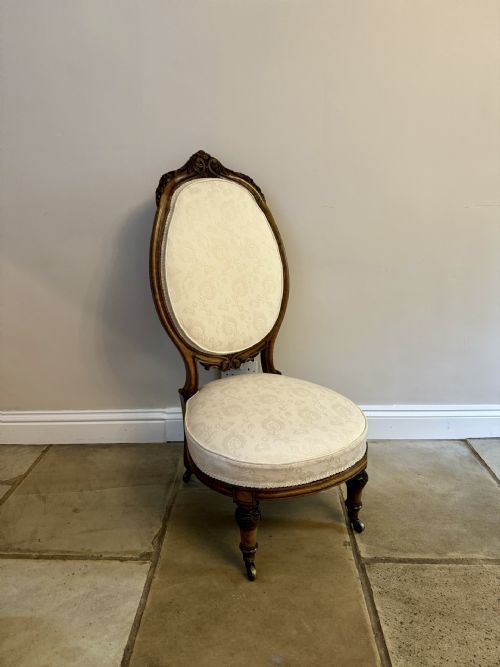
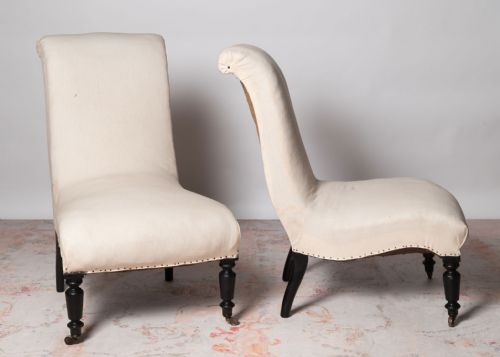
Slipper Armchair
A slipper armchair sits low to the ground for ease, bringing nineteenth-century comfort and compact proportions to a modern room.
Slipper Armchair
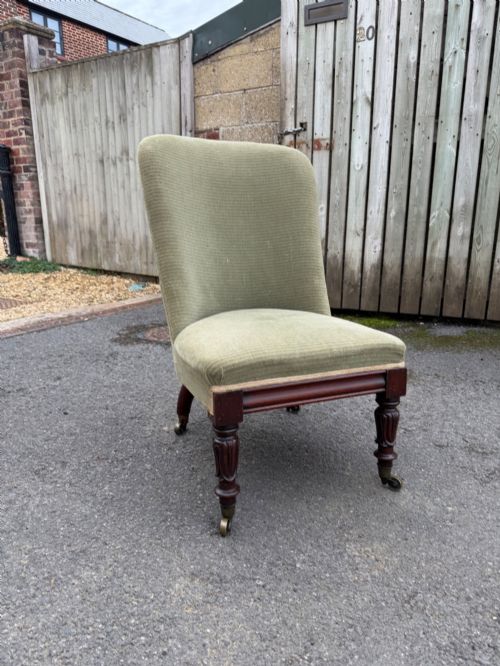
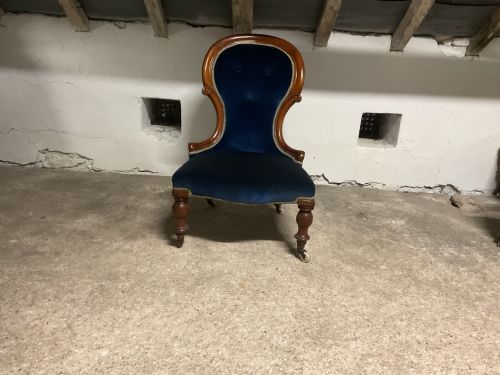
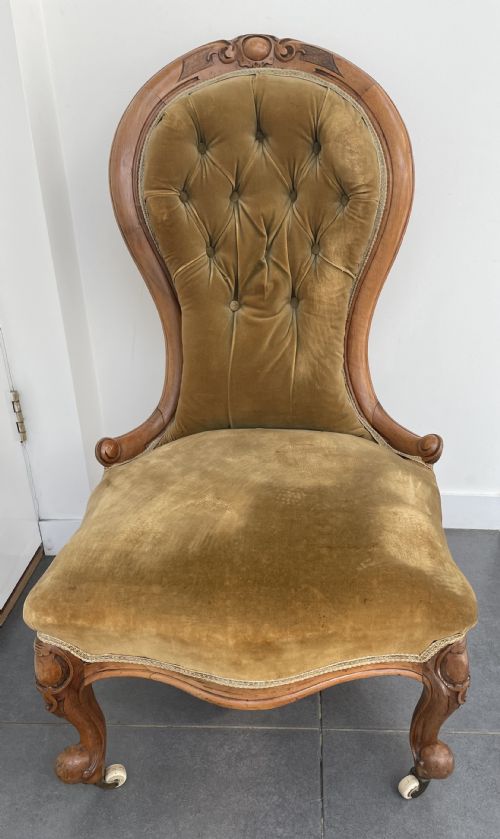
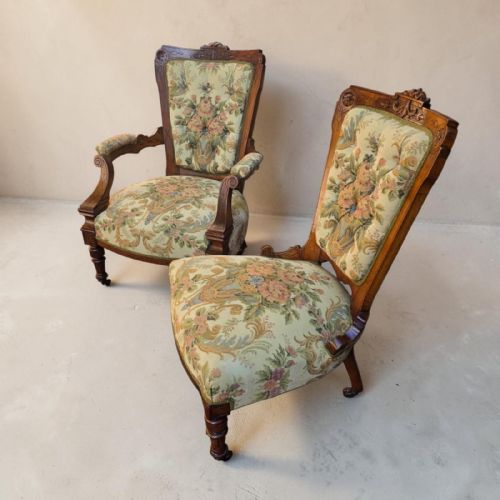
A slipper armchair provides low-slung seating designed originally for bedrooms and dressing rooms, allowing someone to sit comfortably while putting on shoes. The version met most often on this page is the Victorian walnut nursing chair or occasional chair, alongside nineteenth-century French and English variants.
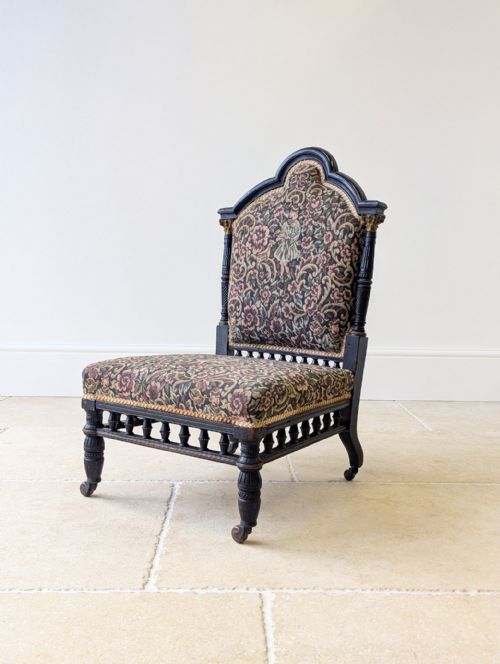
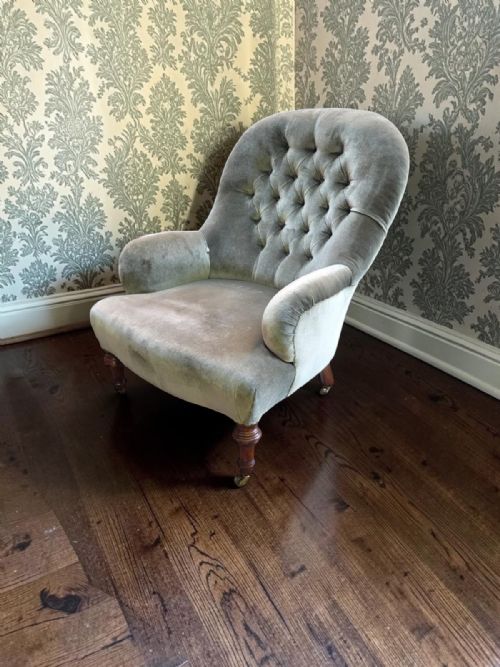
Makers and workshops produced these pieces across several periods, spanning Georgian, William IV, Victorian, and Edwardian eras. Forms range from button-backed tub chairs and spoon-backs to open armchairs and low salon chairs.
The evidence shows diverse object descriptions including nursing chairs, bedroom chairs, and salon chairs grouped under the broader slipper armchair search. These low seats serve well as accent chairs in contemporary drawing rooms and bedrooms.
How they were made
Frames rely on solid timbers such as walnut, mahogany, oak, and rosewood, shaped with carved details or ebonised finishes. Some examples incorporate iron-back supports for structural rigidity beneath the upholstery.
Upholstery relies on traditional stuffing enclosed in fabric, velvet, hessian, leather, or specialist patterned textiles. Button backing appears frequently, requiring skilled tensioning across the padded interior.
Turned or carved wooden legs often feature brass castors to ease movement across carpets and floorboards.
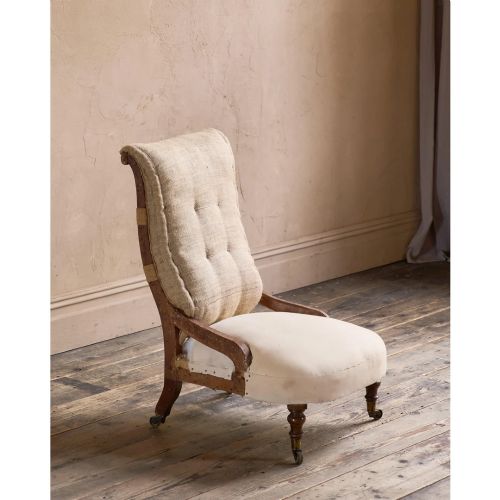
Several pieces arrive ready for recovering, offering a fresh start for fabric enthusiasts who want to reimagine a Victorian frame.
What varies in quality
The integrity of the timber frame and the depth of hand-carved detail dictate the foundational standard of each piece. Walnut and mahogany frames with crisp spoon-backs or elaborate carving sit at the upper end of the scale.
Upholstery work varies from simple utilitarian covering to sophisticated buttoning and specialist designer fabric application. The quality of the underlying sprung or stuffed construction determines how the seat holds its shape.
Howard and Sons·Gillows·Holland and Sons·Robert Kime
The Slipper Armchair Glossary
- Spoon-back
- A padded chair back shaped like the bowl of a spoon to fit the human spine. This ergonomic curve became popular during the Victorian period.
- Button back
- An upholstery technique where deep buttons are pulled tight into the padding to form geometric diamond patterns. It holds the stuffing firmly in place while adding texture.
- Tub chair
- An armchair with a rounded, curved back that wraps around the sides in a continuous line. It offers an enclosed, supportive sit.
- Ebonised
- Wood stained or painted black to imitate expensive ebony. Makers used this finish extensively during the Aesthetic Movement.
- Hessian
- A coarse woven fabric made from jute fibres, utilised as a traditional inner scrim and foundation layer beneath top upholstery.
Slipper Armchair: Frequently Asked Questions
Why are slipper armchairs so low?
These seats were originally designed for nineteenth-century bedrooms to let ladies sit comfortably while dressing or putting on footwear. The low profile also kept them out of the way of draughts near the floor.
Today, that compact height makes them ideal for smaller rooms, low ceilings, or pairing with modern lounge furniture without dominating the sightlines.
Can I use a slipper armchair in a living room?
These pieces transfer easily from bedrooms to reception rooms as accent seating. Their compact footprints allow them to fit into corners or beside fireplaces where standard armchairs prove too bulky.
They function well as occasional chairs when entertaining guests, offering a comfortable sit without taking up excessive floor space.
How do I identify a Victorian slipper armchair?
Victorian examples often feature walnut or mahogany frames with distinctive spoon-backs, button upholstery, and turned wooden legs fitted with brass castors. The proportions remain lower and narrower than standard armchairs of the same era.
Stylistic markers range from mid-century floral mahogany forms to later ebonised Aesthetic Movement designs.
What is the difference between a nursing chair and a slipper chair?
Nursing chairs traditionally featured slightly higher padded backs to support a mother while feeding, combined with low seats for warmth near the hearth. Slipper chairs often lacked arms entirely or featured low arms to accommodate heavy nineteenth-century skirts.
In modern listings, the terms frequently overlap as both describe low-slung nineteenth-century bedroom seating.
Are these chairs comfortable for daily use?
The comfort depends entirely on the condition of the internal padding and traditional upholstery. Many period examples provide a firm, supportive sit suited for reading or conversation.
Chairs listed for recovering or upholstery allow owners to renew the internal webbing and padding to modern comfort standards.