


Castor Foot Armchair
These castor foot armchair examples offer deep-seated comfort and period character, bringing traditional seating into modern rooms.
Castor Foot Armchair
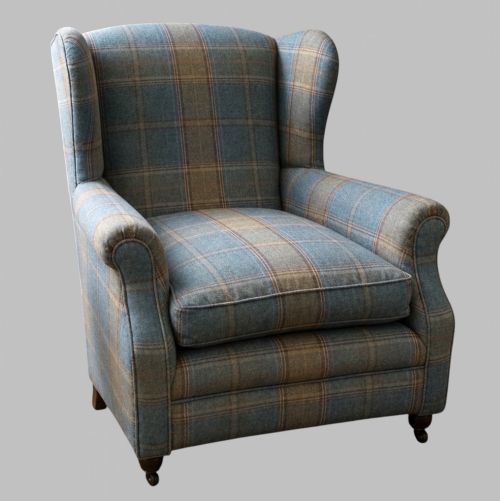
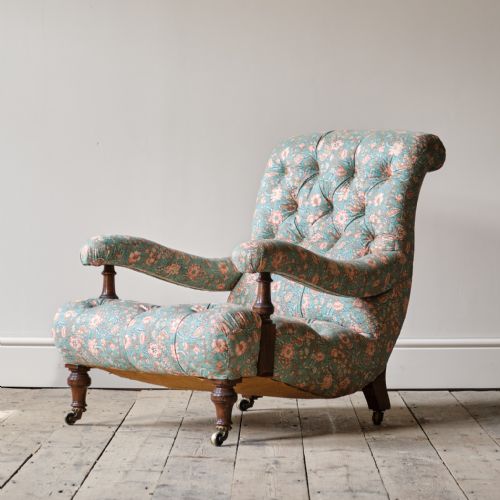
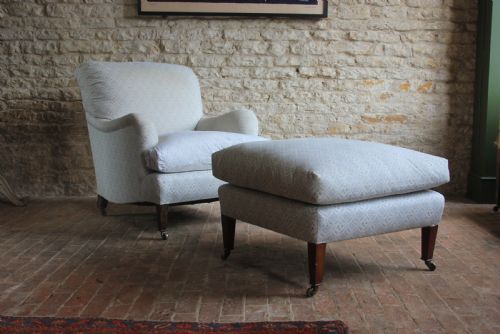
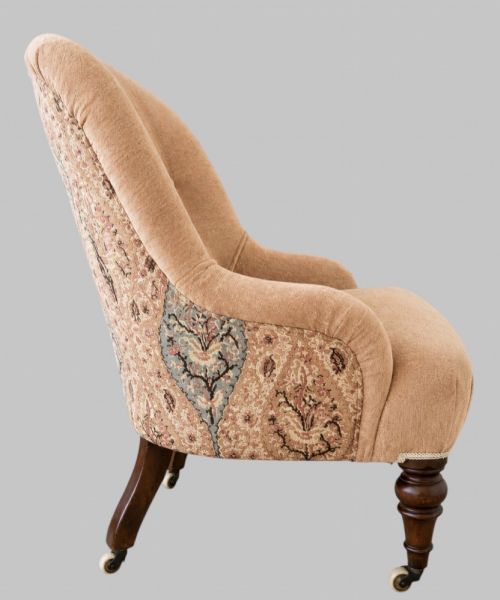
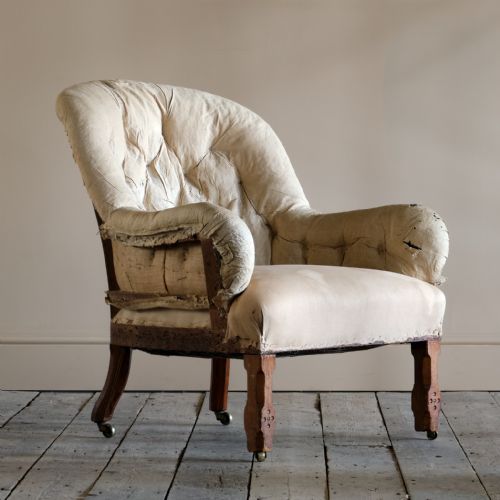
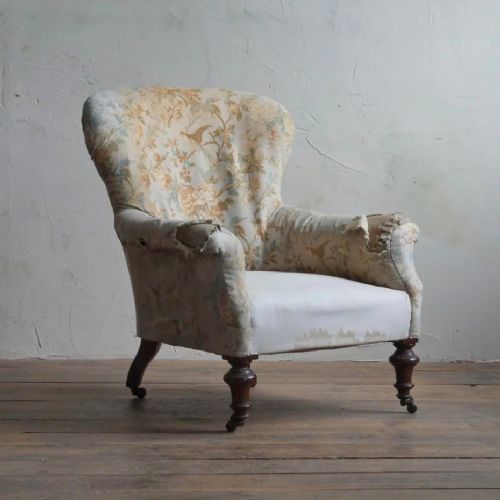
A castor foot armchair combines supportive upholstered seating with small wheels fitted to the base of the legs for ease of movement. Buyers hunting for a castor foot armchair will encounter various nineteenth-century and Edwardian forms, including deep-seated country house chairs, gentleman's chairs, and nursing chairs.
The selection ranges from button-backed bedroom seating to large structural armchairs upholstered in velvet, calico, hessian, and patterned fabrics. Mahogany and hardwood frame construction supports these upholstered bodies, often featuring brass fittings on the feet.
Victorian and Edwardian iterations dominate the selection, showing distinct regional English craftsmanship across open armchairs, wingback designs, and occasional seating. These pieces serve as functional reading chairs or statement furnishings in traditional interiors.
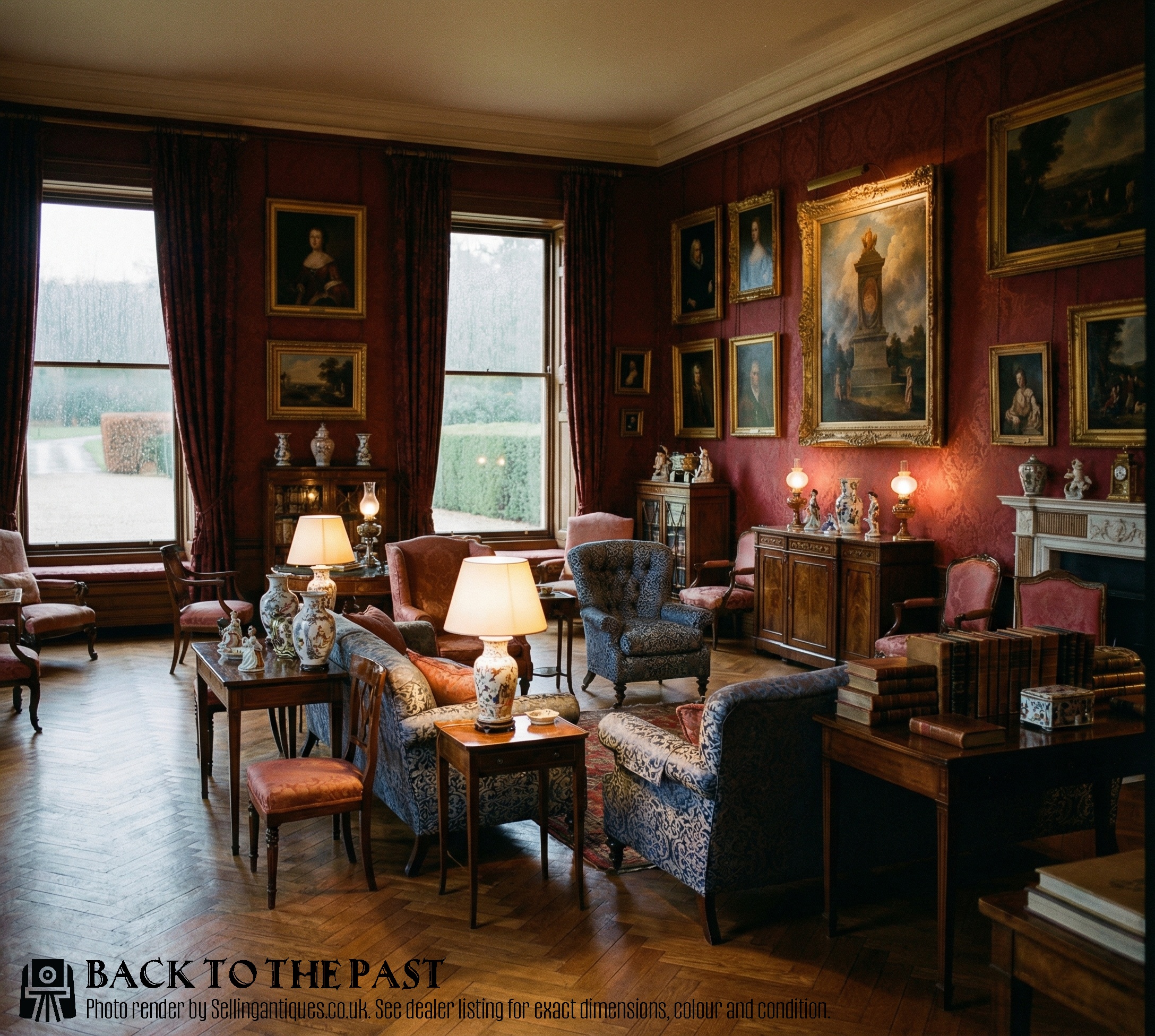
Materials and Construction
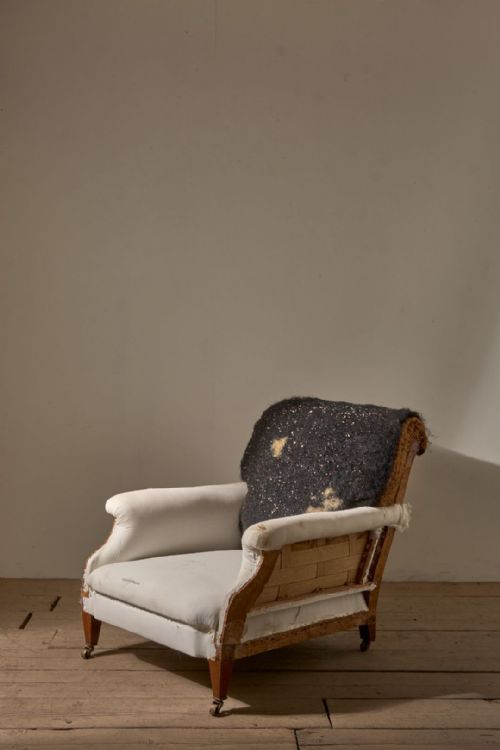
Makers built the structural frames of a castor foot armchair using sturdy hardwoods like mahogany, supporting heavy interior stuffing and upholstery. Traditional textiles such as velvet, calico, and hessian cover the padding, secured with meticulous hand-finishing.
Metal components typically consist of brass castors affixed beneath wooden legs to allow smooth repositioning of heavy seating across carpets and floorboards. Frameworks range from simple iron-backed nursing chairs to expansive sprung armchair chassis designed for deep lounging.
Castor Foot Armchair Retail Price Guide 2026
Typical asking prices for castor foot armchair among the pieces listed under this phrase on Sellingantiques today, from the lower quarter to the upper quarter. They describe what is for sale here now, not the wider market.
Wheels on chair legs meant Victorian readers could chase the afternoon sun across the drawing-room carpet without standing up.
Assessing Quality and Execution
Quality in a castor foot armchair rests upon the integrity of the underlying hardwood frame and the tautness of the sprung upholstery. Superior examples demonstrate balanced proportions, substantial weight, and refined upholstery textiles like patterned wool or rich velvet.
The refinement of the turning on the wooden legs and the quality of the brass castor mechanism distinguish standard production from exceptional workshop output. Attention to detail in the buttoning, piping, and fabric selection elevates the overall presence of the seating.
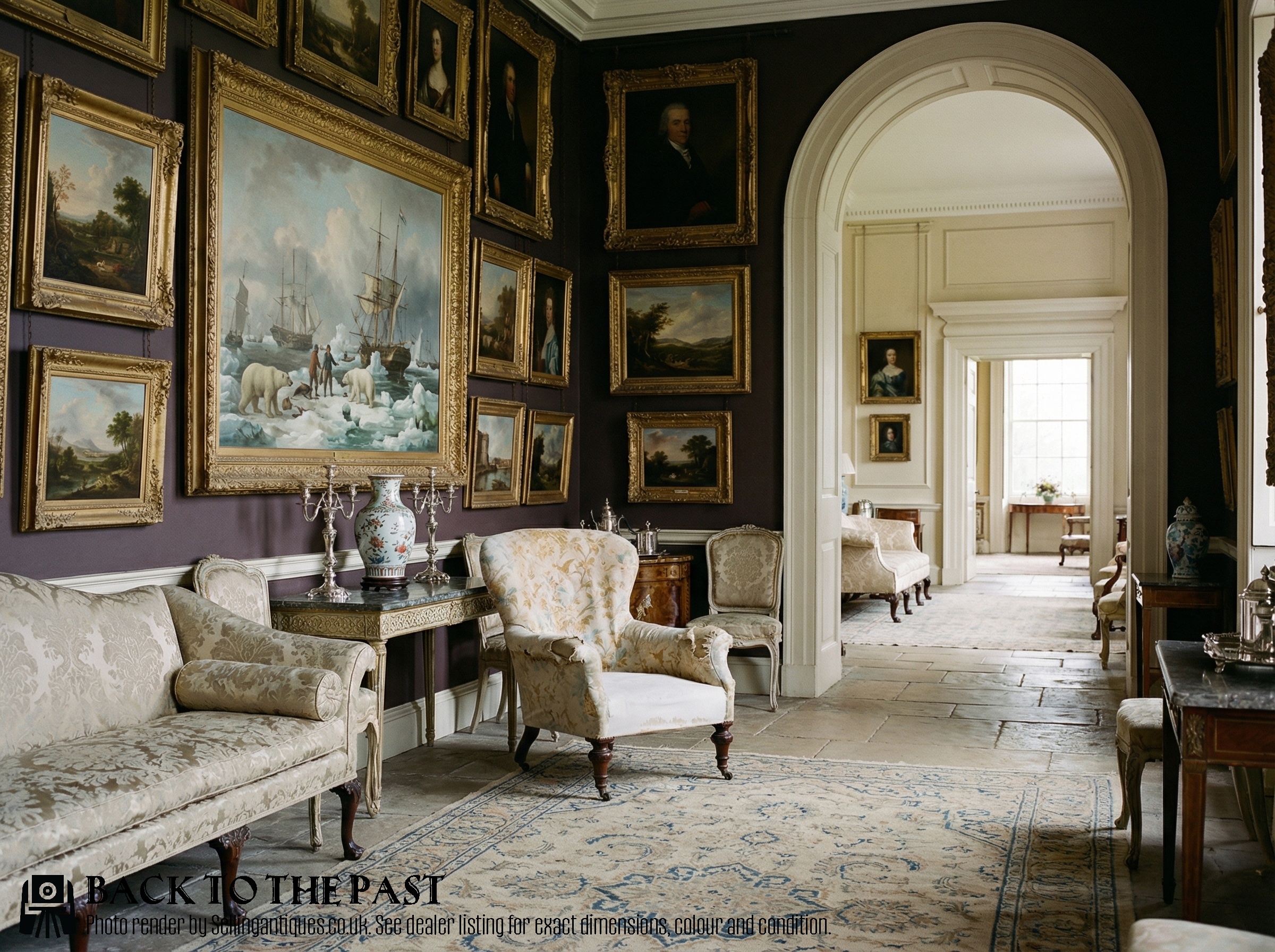
Holland & Sons·Howard & sons·Gillows
The Castor Foot Armchair Glossary
- Castor
- A small wheel attached to the foot of furniture to permit rolling. These allow heavy upholstered chairs to shift across floors with minimal effort.
- Button back
- An upholstery method where depressions are created by sewing through the padding to anchor buttons. This technique secures deep stuffing and adds geometric texture.
- Spoonback
- A chair back curved in the concave shape of a spoon. It offers ergonomic support tailored to the human spine.
- Hessian
- A coarse woven fabric typically spun from jute fibres. It functions as internal scrim and webbing support beneath outer upholstery covers.
- Calico
- A plain-woven unbleached cotton textile. It frequently serves as a sturdy under-upholstery layer before decorative fabrics are applied.
Castor Foot Armchair: Frequently Asked Questions
How do I date these armchairs?
Dating relies on examining the frame timber, upholstery style, and turning of the wooden legs. Victorian pieces often display button backs or spoonback shapes, while Edwardian versions lean towards relaxed country house proportions.
Hardware such as brass castors also provides clues to the manufacturing period, matching nineteenth-century brass-working techniques.
Are these chairs comfortable for daily use?
Many of these pieces offer deep seating, sprung bases, and substantial padding designed for relaxation. Their generous proportions make them practical for modern reading spaces and sitting rooms.
Upholstery materials range from robust cottons to luxurious velvets, accommodating various levels of daily domestic wear.
Where were these armchairs used historically?
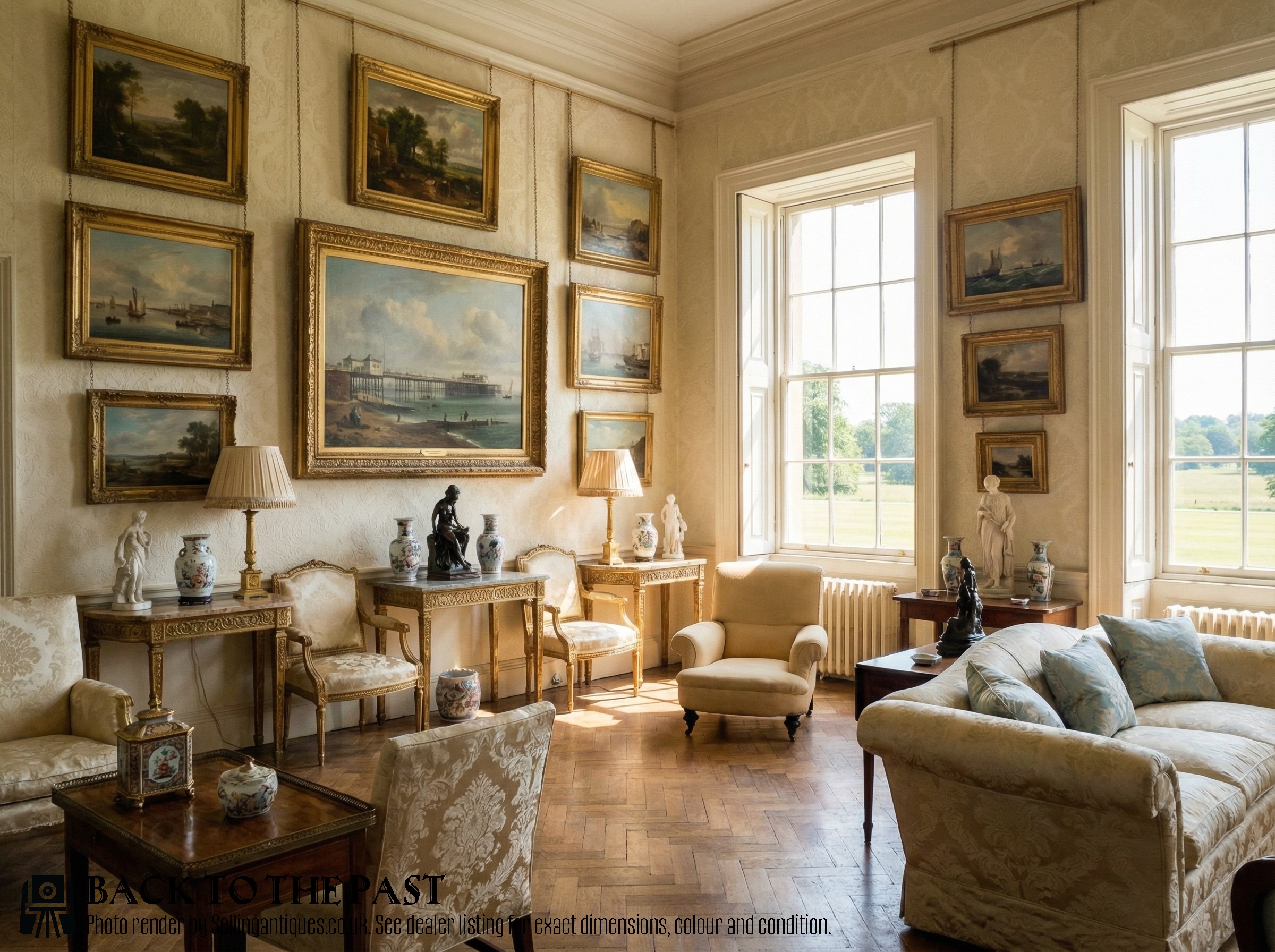
Historically, these chairs inhabited gentleman's libraries, grand drawing rooms, and private bedrooms. Smaller nursing chairs served specific domestic duties near hearths or nurseries.
Their mobility via castors meant servants or occupants could rearrange formal and informal rooms with ease.