


Holland and Sons Chair
A holland and sons chair brings nineteenth century maker prestige and robust Victorian craftsmanship into a room.
Holland and Sons Chair
A holland and sons chair represents high Victorian seating, encompassing dining chairs, armchairs, piano stools, and chaise longues from the nineteenth century. These pieces originate from a prominent London cabinet maker and upholsterer that supplied major institutions and domestic interiors alike. Buyers searching this phrase seek firm attribution, maker stamps, or stylistic markers linking a seat to this specific firm.
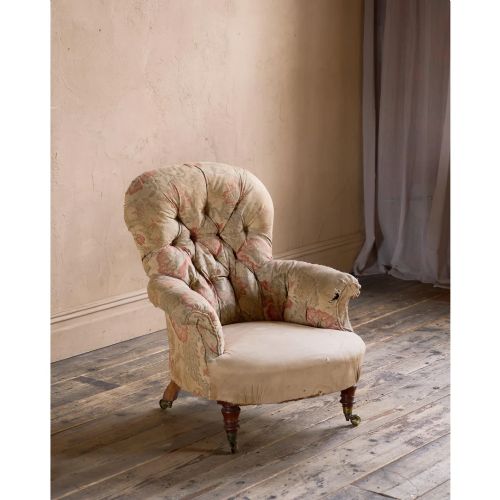
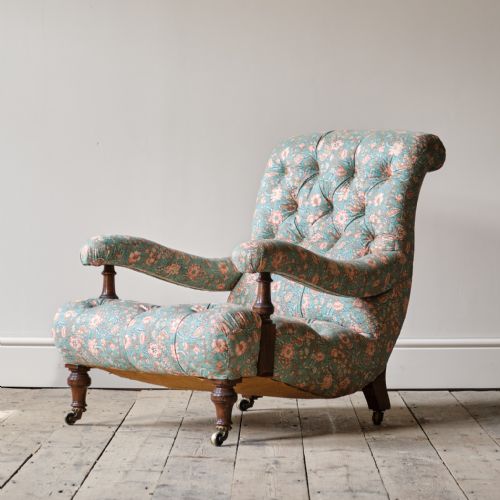
The assortment on this page ranges from mahogany dining sets and hall chairs to gilded armchairs and walnut slipper chairs. Open armchairs, spoon-back chairs, and low library seats appear frequently across the Victorian period and the Aesthetic Movement. Many examples display influences of French Revival or Gothic styles alongside standard Victorian forms.
Armchairs and chaise longues dominate the surviving record, often retaining deep buttoning or supporting horsehair stuffing beneath modern or period textiles. Dining chairs typically emerge in sets, constructed from solid mahogany with carved details. Every form reflects the high standards of a workshop that operated at the centre of elite nineteenth century furniture production.
What varies in quality
The presence of a maker stamp or clear attribution separates standard nineteenth century seating from a definitive Holland and Sons piece. Stamped inventory numbers or firm marks confirm workshop origin and elevate collector interest. Pieces that retain original brass castors and untouched internal stuffing hold greater historical integrity.
Carving depth and timber selection dictate the tier of a frame, with crisp hand-carved giltwood and figured mahogany sitting at the upper end. Chairs designed for public institutions or grand libraries exhibit heavier gauge timber and more complex turning than standard bedroom or slipper chairs. The quality of the secondary timbers and the precision of the joinery complete the hierarchy.
Listings feature nineteenth century seating in mahogany, walnut, and giltwood, with styles spanning Victorian forms, French Revival, and the Aesthetic Movement.
Holland and Sons·Gillows
The Holland and Sons Chair Glossary
- Cope and Collinson castors
- Brass wheel attachments stamped with maker names found on nineteenth century seating legs. These fittings help date pieces securely.
- Horsehair
- Traditional stuffing material utilised for interior upholstery padding. It provides firm resilience beneath the outer fabric cover.
- Spoon-back
- An upholstered chair back shaped in a concave oval resembling the bowl of a spoon. This profile gains popularity during the Victorian era.
- Giltwood
- Timber treated with gold leaf or gilt paint to create a lustrous decorative surface. This finish appears on formal nineteenth century armchairs.
- Aesthetic Movement
- A late nineteenth century design style prioritising artistic expression over heavy historicism. Pieces from this phase often feature simpler lines and ebonised or lighter woods.
- Calico
- A plain-woven cotton fabric used as an interior lining beneath top upholstery covers. It holds the horsehair stuffing tightly against the frame.
Holland and Sons Chair: Frequently Asked Questions
How do I identify a Holland and Sons chair?
Look for maker stamps, typically pressed into the wood of the seat rail or rear leg, often accompanied by serial numbers. Documentary evidence, such as provenance from institutional commissions, also confirms attribution.
Stylistic hallmarks include robust Victorian proportions, high quality mahogany or walnut framing, and traditional brass castors by makers like Cope and Collinson.
What periods do these chairs come from?
The vast majority date from the nineteenth century, spanning the Victorian era through to the Aesthetic Movement around eighteen ninety. Regency styles also appear in later interpretations.
Most surviving examples cluster around the mid-Victorian decades when the firm produced prolific amounts of domestic and institutional seating.
Were these chairs used in public buildings?
Yes, the firm supplied major British institutions, including museum reading rooms and government offices. These institutional pieces often exhibit utilitarian durability alongside standard aesthetic refinement.
Chairs from these locations share the same robust hardwood framing and traditional upholstery methods found in domestic commissions.
What fabrics are typically used on these seats?
Upholstery ranges from historical velvet and damask to patterned linen and calico underlayers. Many pieces retain horsehair stuffing beneath their top covers.
Replacement fabrics often respect nineteenth century design palettes, though original textiles survive on select archive pieces.