
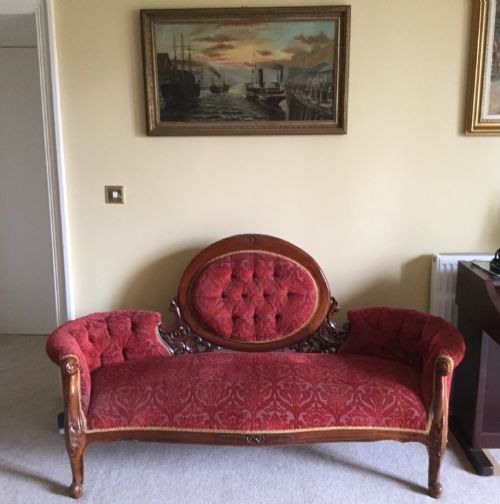
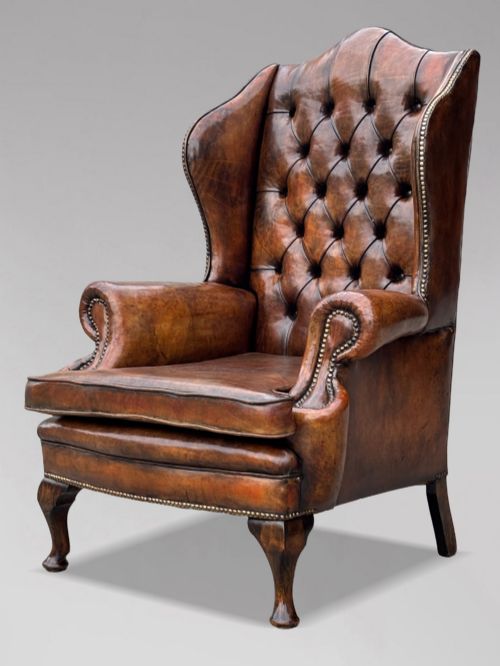
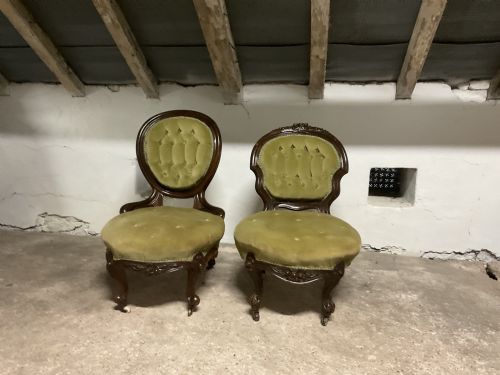
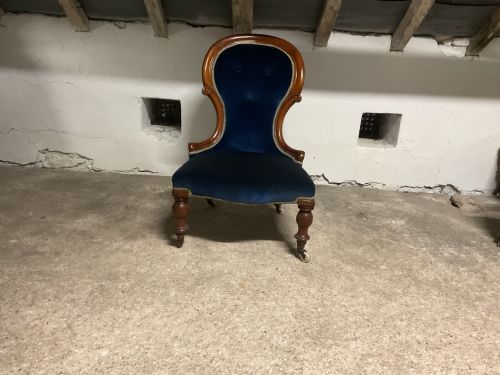
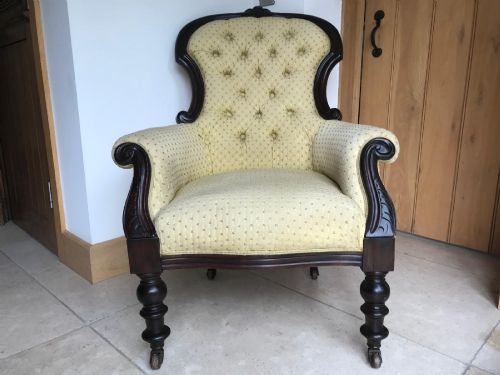
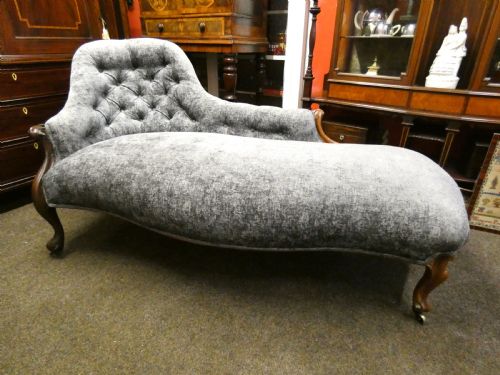
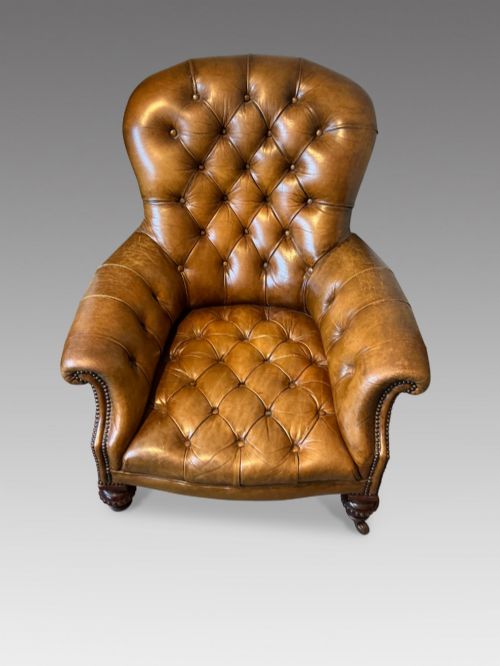
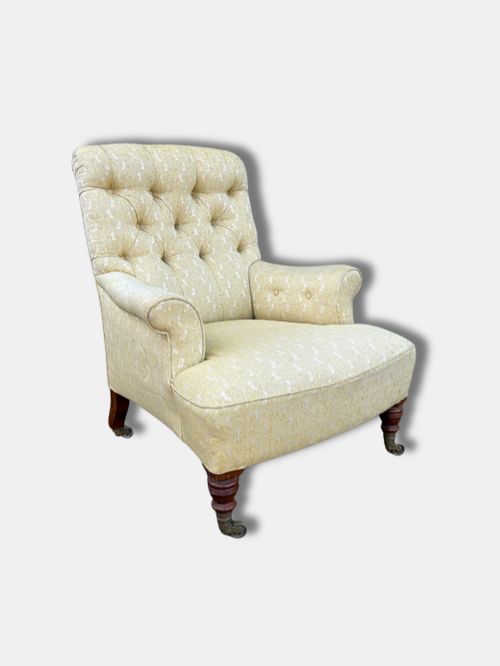
Mahogany Button Back Chair
A mahogany button back chair brings rich timber and deep upholstery together for immediate comfort and period presence.
What a mahogany button back chair is
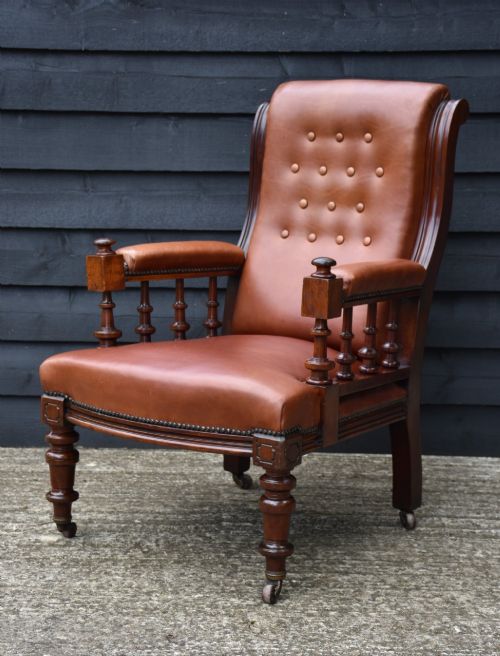
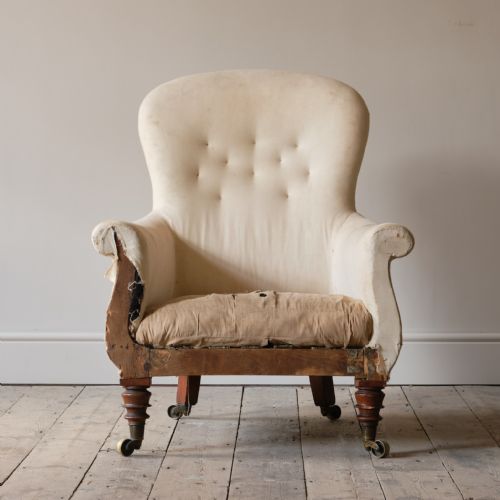
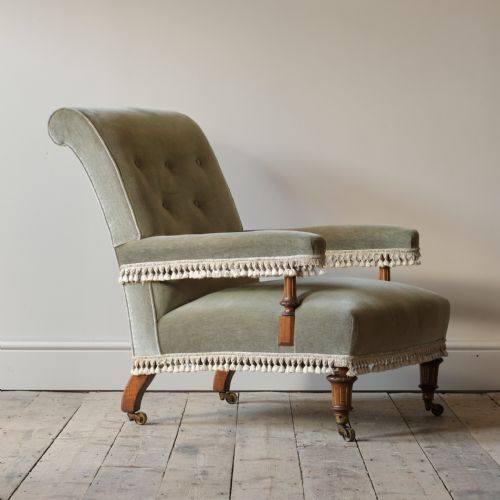
A mahogany button back chair offers deep upholstery paired with rich timber frames, spanning the Victorian era and the William IV period. These pieces appear as library armchairs, fireside gentleman's chairs, compact nursing chairs, and reading seats.
Most examples found on this page date from the nineteenth century, utilising solid mahogany structures to support generous padding. The form balances robust joinery with soft textile surfaces designed for domestic repose.
Makers and workshops constructed these armchairs and side chairs for formal parlours and private studies alike. Buyers encounter diverse proportions, ranging from large country house seats to smaller bedroom and slipper chairs.
How they were made
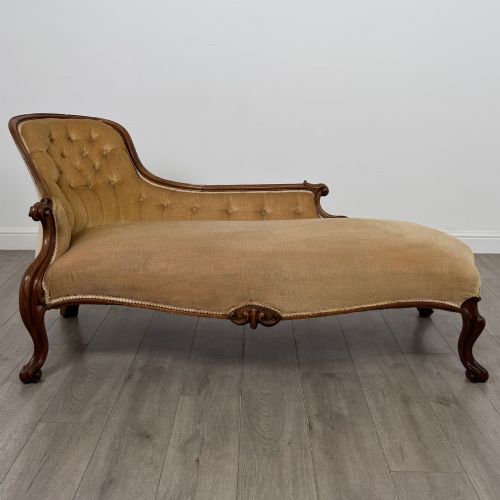
Craftsmen built the structural frames from solid mahogany, frequently shaping showwood elements through carving or turning. Component parts like cabriole legs, turned supports, and scroll sides integrate directly into the hardwood chassis.
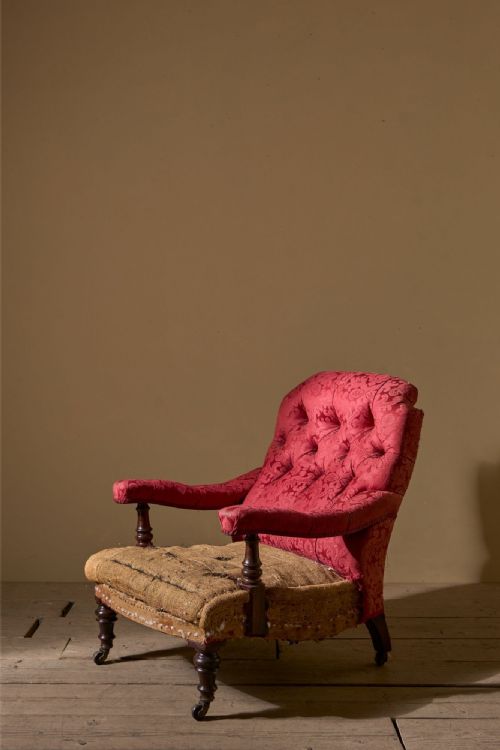
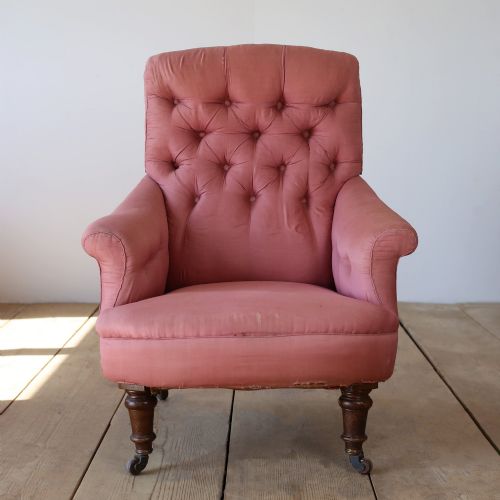
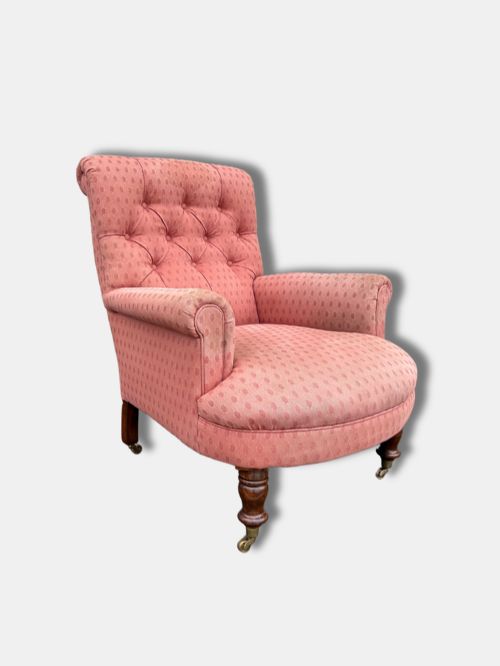
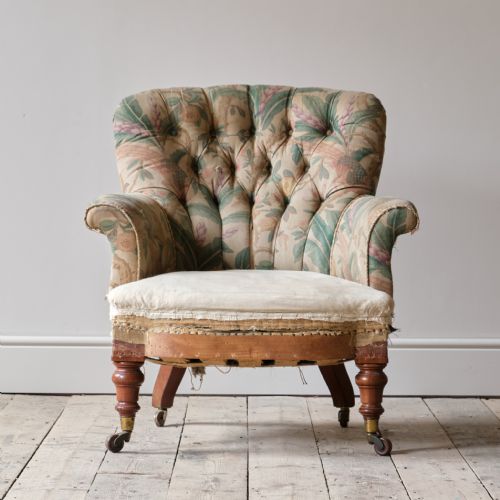
Upholstery techniques involved securing internal webbing, jute, and stuffing beneath layers of fabric, velvet, leather, or calico. Craftsmen then pulled the covering taut with deep buttoning, anchoring the textile facets securely into the padding.
Retail Price Guide 2026
Typical UK retail prices for mahogany button back chair, calculated from the Sellingantiques database of over a million retail prices indexed since 2003. This retail price guide relies exclusively on Sellingantiques data; no external sources or auction records are used, so the figures do not describe the wider market.
Some nineteenth-century readers apparently needed dedicated reading chairs with extra padding to survive three-volume novels.
What varies in quality
The sophistication of the timber carving and the architectural sweep of the showwood frame distinguish finer examples. Superior frames exhibit careful hand-shaping along the crest rails, arms, and legs rather than plain, utilitarian timber work.
The precision of the buttoning and the harmony of proportions also divide the range. Tighter, more disciplined tufting and well-balanced frames indicate greater workshop skill during original construction.
Holland and Sons·Hamptons and Sons·Howard and Sons
The Mahogany Button Back Chair Glossary
- Button back
- A method of upholstery where individual buttons are pulled deep into the padding to create a geometric pattern of tufts. This technique secures the internal stuffing while adding rich texture to the seat back.
- Showwood
- Exposed polished timber on a chair frame, particularly around the arms, crest, and legs. It allows the grain and colour of the mahogany to remain visible alongside the upholstered areas.
- Spoon back
- A concave, oval-shaped chair back that curves gently to cradle the sitter's spine. The wooden rim often resembles the bowl of a spoon, frequently appearing on mid-nineteenth-century seating.
- Castors
- Small wheel attachments fitted to the base of chair legs to ease movement across floors. They are typically fashioned from brass and mounted with ceramic or metal wheels.
- Scroll side
- An outward-curling arm or frame terminal shaped like a rolled scroll. This decorative flourish characterises many William IV and Victorian seating designs.
Frequently Asked Questions
What periods are these chairs from?
The available pieces originate primarily from the nineteenth century, encompassing Victorian and William IV periods.
Craftsmen produced these designs across several decades, resulting in variations from early nineteenth-century forms to late Victorian styles.
Were these chairs used in libraries?
Library armchairs provided sturdy seating for reading rooms and private studies in large houses. Their substantial mahogany frames and deep upholstery suited long periods of sitting.
Makers often paired the timber structures with leather or heavy fabric coverings to withstand daily use.
What timber was used for frames?
Makers relied on solid mahogany for the structural frames, legs, and exposed showwood. The dense hardwood provided the necessary strength to support complex joinery and deep upholstery.
Surfaces were polished to highlight the natural grain and deep colour of the timber.
Do these chairs feature castors?
Many examples include small brass and ceramic castors mounted beneath the legs. These fittings allowed heavy Victorian and William IV armchairs to move easily across carpets and floors.
Castors often appear on fireside, library, and scroll side chairs from the period.