



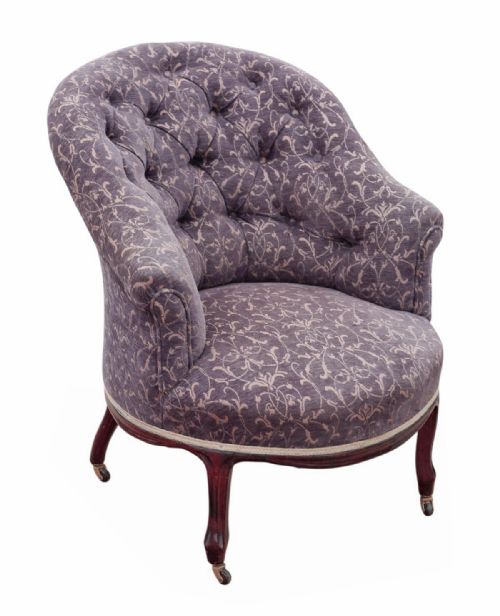


Tufted Nursing Chair
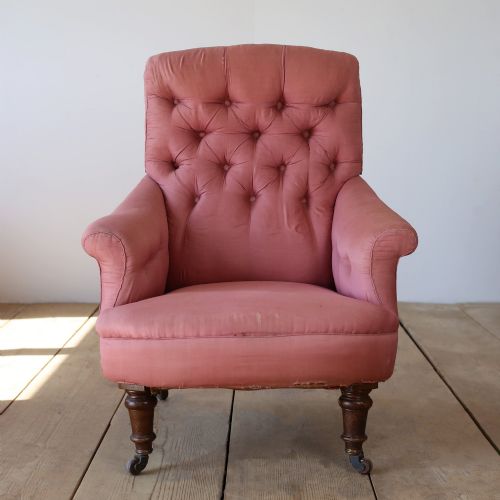
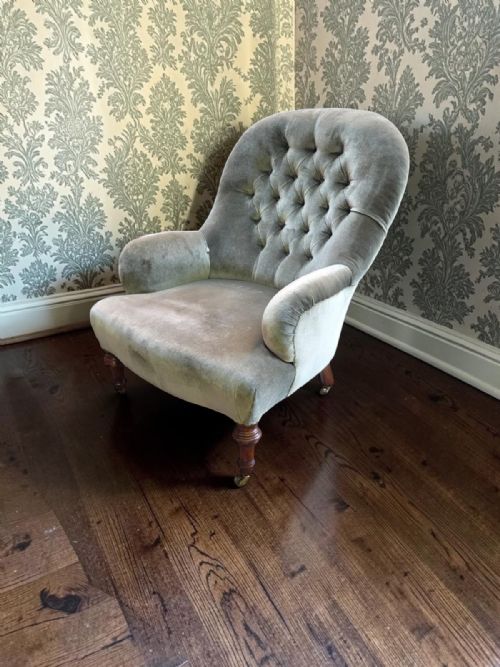
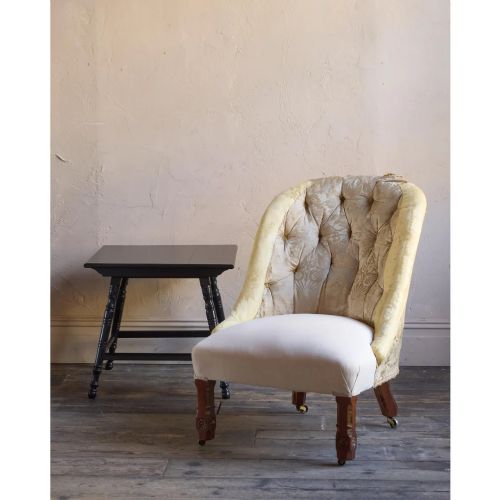
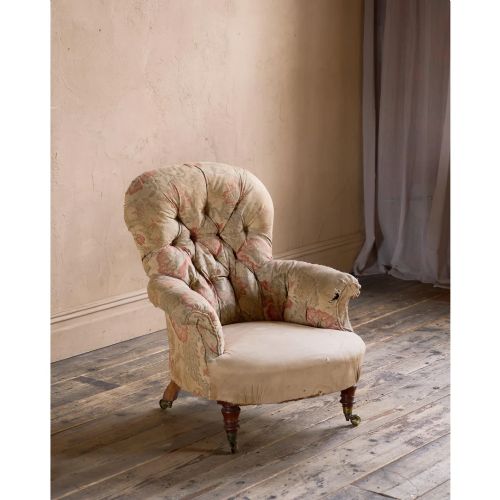
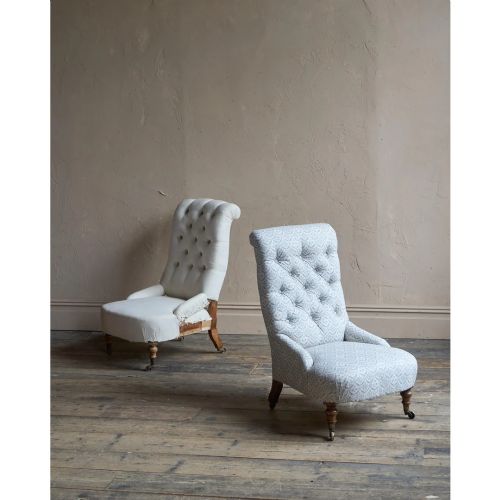
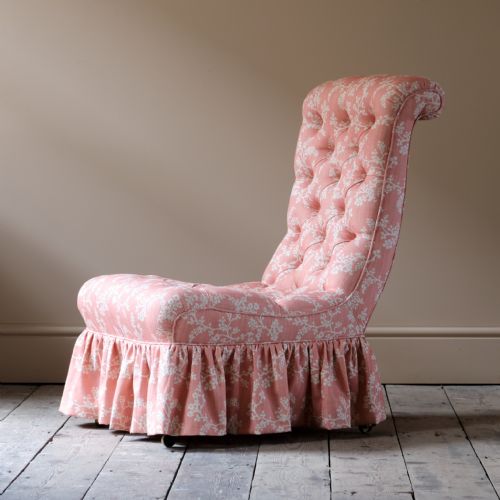
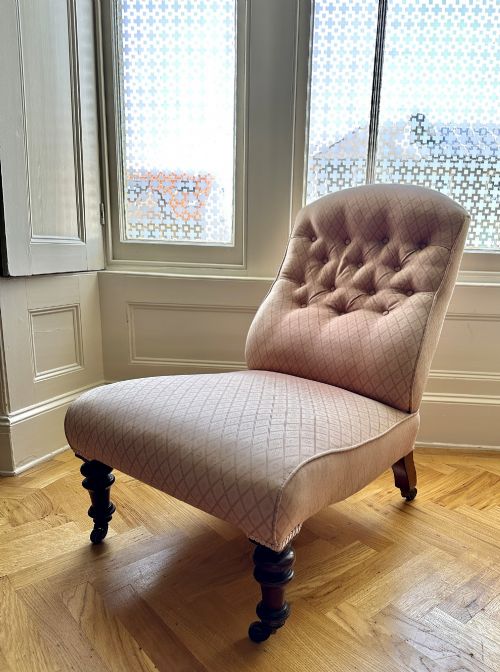
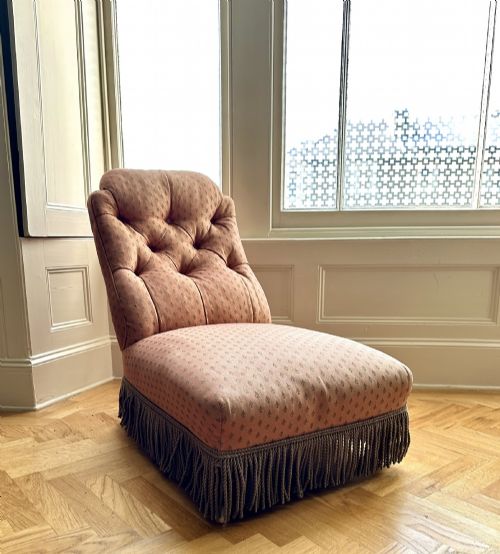
A tufted nursing chair brings low seating and deep buttoning together, offering a comfortable seat for dressing or fireside repose.
Tufted Nursing Chair
A tufted nursing chair is typically encountered as a Victorian or Edwardian low-slung seat designed for comfort and ease by the hearth or bedroom. These pieces appear in forms such as slipper chairs, bedroom chairs, and salon chairs, often featuring compact proportions suited to private chambers.
The pieces listed on this page span the nineteenth century and the Edwardian era, taking shape as walnut or mahogany framed armchairs, tub chairs, and rocking chairs. Makers during these periods focused on low seats paired with sprung upholstered backs that welcomed relaxed posture.
How they were made
Frames rely on timbers such as walnut, mahogany, rosewood, and timber, shaped with cabriole legs or turned supports, and occasionally augmented with iron frames or brass details. Carved woodwork frames the upholstered core, grounding the soft textiles in rigid structure.
Upholstery defines the surface, utilising velvet, fabric, leather, and linen secured with deep buttoning and sometimes finished with fringe. Craftsmen padded the springs and webbed bases by hand to achieve the characteristic plump contours.
Tufted Nursing Chair Retail Price Guide 2026
Typical asking prices for tufted nursing chair among the pieces listed under this phrase on Sellingantiques today, from the lower quarter to the upper quarter. They describe what is for sale here now, not the wider market.
What varies in quality
The integrity of the internal wooden frame and the precision of the carved walnut or mahogany set superior examples apart from standard seating. Carving depth on cabriole legs and the execution of the show-wood frame signal the ambition of the original workshop.
Upholstery execution dictates daily comfort, where tightly secured buttoning and dense sprung foundations separate finely built parlour chairs from simpler domestic seating. The choice of covering materials, from rich velvet to smooth leather, also marks the tier of the piece.
Holland and Sons·Howard and Sons·Gillows
The Tufted Nursing Chair Glossary
- Button back
- An upholstery technique where deep buttons are pulled through the padding at regular intervals to create geometric tufting. This method secures the internal stuffing while giving the chair a textured profile.
- Slipper chair
- A low-set upholstered armchair designed historically for ladies to sit whilst dressing. These chairs lack arms to accommodate voluminous nineteenth-century garments.
- Cabriole leg
- A furniture leg that curves outward in a convex arc and then bends inward in a concave arc, ending in a pad or carved foot. It is frequently seen on mid-nineteenth-century walnut and mahogany frames.
- Spoon back
- An upholstered chair back shaped in a concave oval resembling the bowl of a spoon. This contour fits the spine of the sitter closely.
- Tub chair
- An armchair with a rounded, enclosed back that curves continuously into the arms. The low profile provides a sheltering seat for bedrooms and salons.
Tufted Nursing Chair: Frequently Asked Questions
What is a tufted nursing chair used for?
These low-seated chairs were traditionally placed in bedrooms or nurseries to provide comfortable seating for nursing infants or dressing. Their compact scale allowed them to fit easily beside fireplaces and dressing tables.
In modern rooms, they serve as accent chairs in bedrooms or small living spaces where standard high-backed armchairs would overwhelm the proportions.
How do I date a Victorian armchair?
Dating relies on observing the frame timber, leg style, and construction methods. Mid-nineteenth-century pieces often feature rosewood or mahogany with elaborate carving, while later Victorian examples turn toward walnut or ebonised finishes.
Upholstery techniques also shift over the decades, moving from traditional horsehair stuffing to iron frames and coil springs as the century progressed.
Are these chairs comfortable for daily sitting?
Their low height and deep sprung padding make them surprisingly supportive for reading or relaxing. The lack of high arms on slipper chair variants allows for flexible seating positions.
Original spring interiors provide a firm, resilient bounce that differs notably from modern foam cushions, offering a distinct traditional sit.
What is the difference between a nursing chair and a slipper chair?
Nursing chairs generally feature a low seat and an upholstered back designed for relaxed seated tasks, sometimes including low armrests. Slipper chairs share the low profile but typically omit arms entirely to accommodate heavy historical skirts.
Both types overlap heavily in nineteenth-century domestic interiors and share similar compact proportions.