

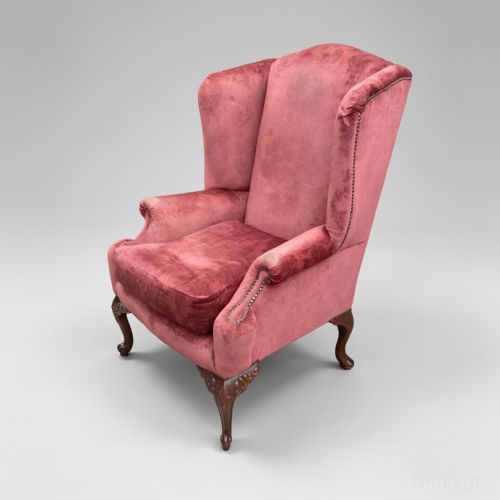
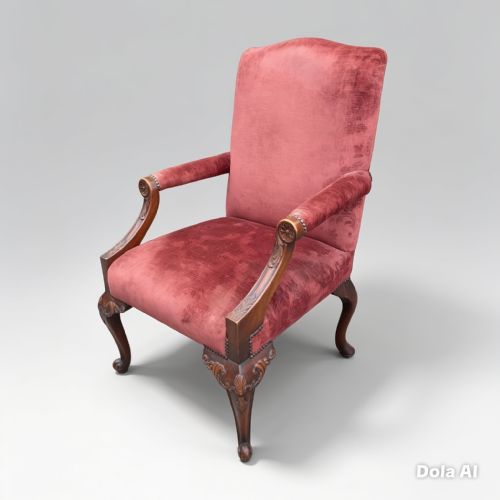
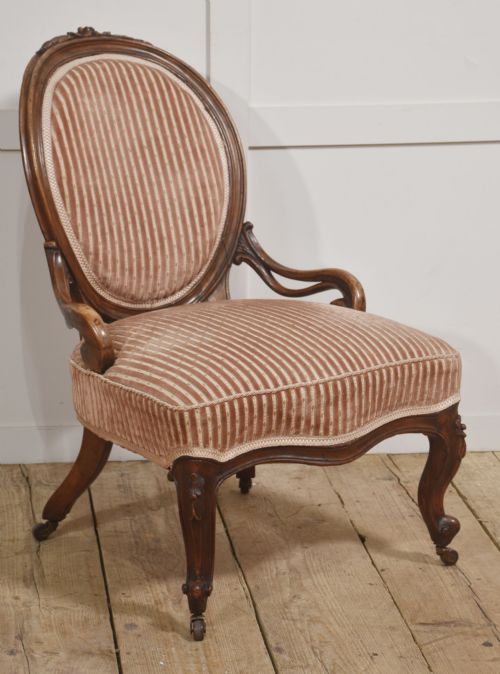


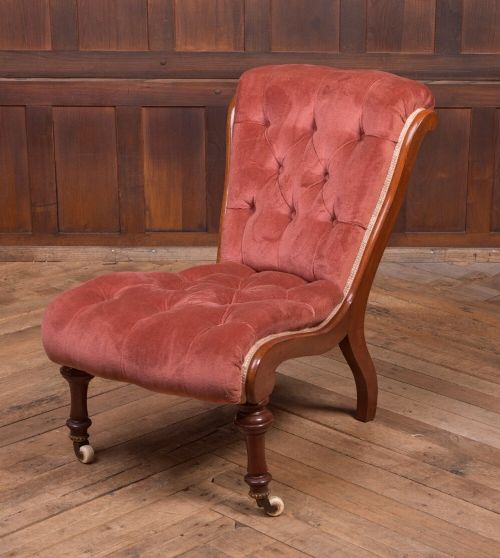


Rose Velvet Armchair
Rose velvet armchairs bring rich Victorian and Georgian style into a room, offering tactile warmth and classic seating.
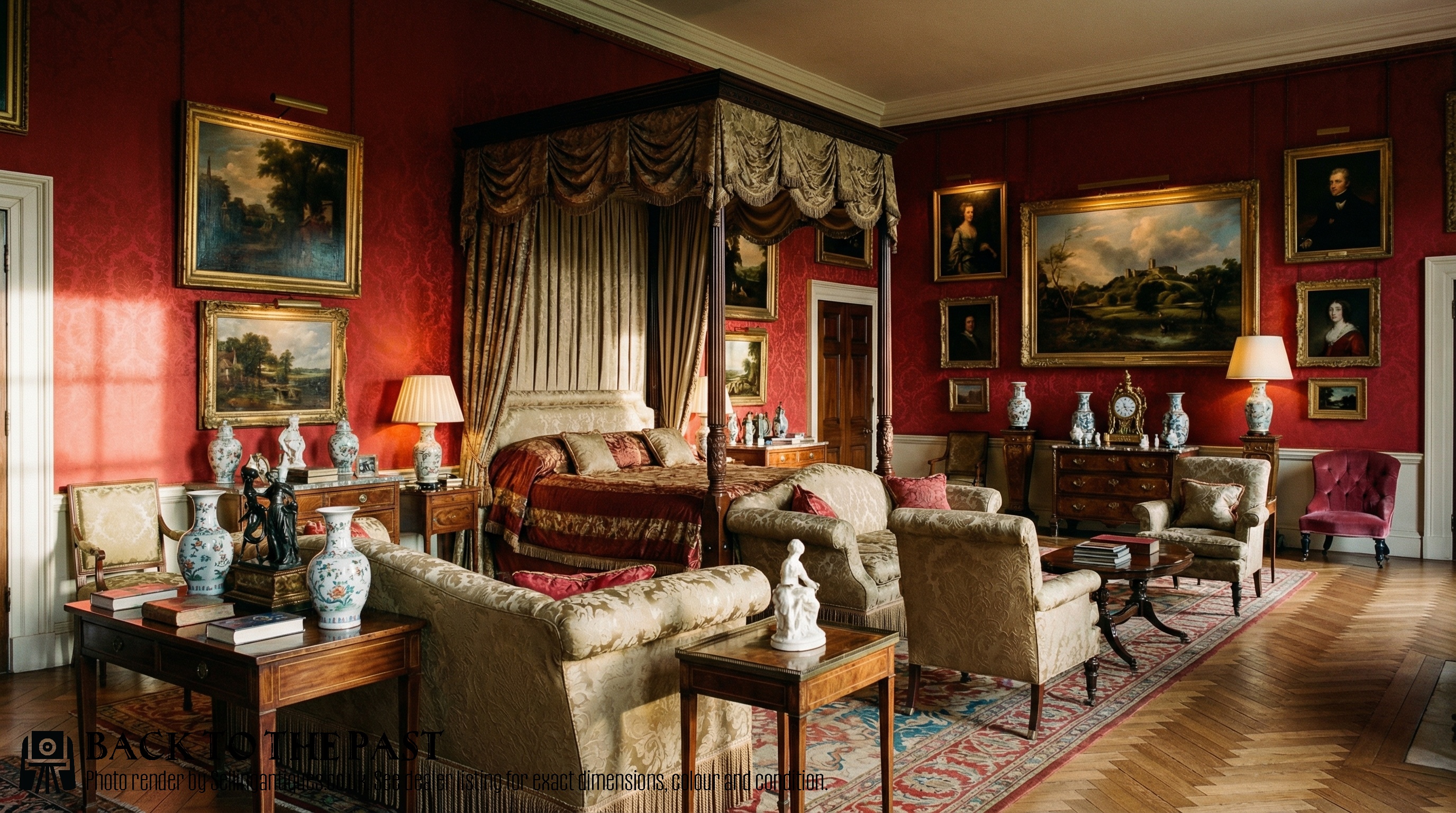
What these pieces are
A rose velvet armchair delivers traditional seating across nineteenth-century and Victorian periods. Buyers search for this phrase to find armchairs, accent chairs, library chairs, fireside chairs, and bedroom chairs upholstered in pink or rose velvet.
The most common forms on this page include open armchairs, spoonback chairs, and oval back designs. These pieces range from Victorian Rococo Revival models to George III style library chairs and French Louis XV style fauteuils.
Origins span English country houses and continental workshops, incorporating walnut, mahogany, rosewood, hardwood, and painted frames. Each variation offers distinct nineteenth-century craftsmanship suited to period and eclectic interiors alike.
How they were made
Frames are constructed from solid hardwoods such as walnut, mahogany, and rosewood, carved into open arms, show frames, and curved backs. Joinery relies on traditional methods suited to supporting upholstered weight.
Upholstery utilises velvet fabric in rose and pink tones, secured with buttoning and fine detailing. Metal components such as brass castors often support the feet on heavy timber legs.
Specialised forms include show frame construction where polished timber remains visible around the upholstered panels, alongside painted finishes on French-style frames.
Retail Price Guide 2026
Typical UK retail prices for rose velvet armchair, calculated from the Sellingantiques database of over a million retail prices indexed since 2003. This retail price guide relies exclusively on Sellingantiques data; no external sources or auction records are used, so the figures do not describe the wider market.
Listings feature nineteen-century pieces incorporating walnut, mahogany, velvet, and brass.
What varies in quality
The distinction between standard production and finer work rests on the precision of timber carving and frame proportion. Superior examples exhibit crisply shaped cabriole or tapered legs and balanced open arms.
Material selection dictates the overall character, with dense hardwoods like walnut and mahogany providing durable structure compared to softer secondary timbers. The integration of the show frame and buttoned upholstery reveals the maker's skill.
Gillows
The Rose Velvet Armchair Glossary
- Show frame
- A wooden structural framework left exposed around the upholstered portions of an armchair. This highlights the carved timber grain and style.
- Spoonback
- An upholstered chair back shaped like the bowl of a spoon, conforming to the human spine. It is a common Victorian seating feature.
- Fauteuil
- An open-arm armchair with wooden sides originating in France. These typically feature upholstered arm pads and exposed carved frames.
- Gainsborough chair
- A wide, low-seated armchair with padded armrests designed in the eighteenth century. These frequent study and library spaces.
Frequently Asked Questions
What periods do these armchairs come from?
These armchairs date primarily from the nineteenth century, encompassing the Victorian era and earlier stylistic revivals. Examples draw upon George III and Louis XV design traditions.
Construction methods and timber choices reflect the prevailing cabinet-making standards of these periods.
Where should I place a velvet armchair?
These chairs suit studies, bedrooms, and libraries as accent or fireside seating. Their compact open-arm formats allow placement without dominating a room.
Pairing them with wooden side tables creates a functional reading or relaxation corner.
How do I identify a Victorian armchair?
Victorian armchairs often feature walnut or mahogany show frames, button-backed upholstery, and curved spoonback forms. Stylistic nods to earlier periods frequently appear alongside revival ornamentation.
Timber finishes and heavy construction methods point directly to nineteenth-century workshop practices.
What woods are used in the frames?
Makers utilised dense timbers such as walnut, mahogany, rosewood, and general hardwood. These materials provided the structural strength needed for carved open arms and legs.
Painted finishes also appear on specific continental frames.