


Black Wooden Armchair
A black wooden armchair brings dark gravity to a room, offering strong silhouettes built from ebonised timber, painted hardwood, and polished ebony.
Black Wooden Armchair
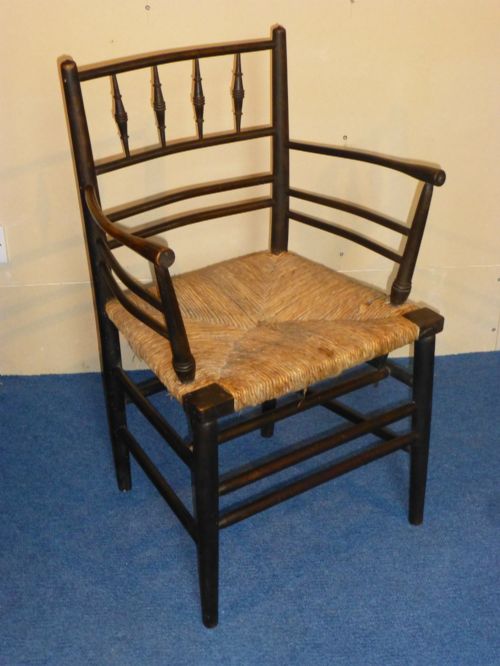
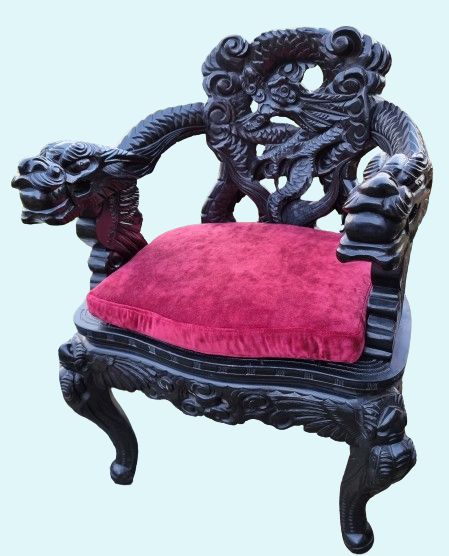
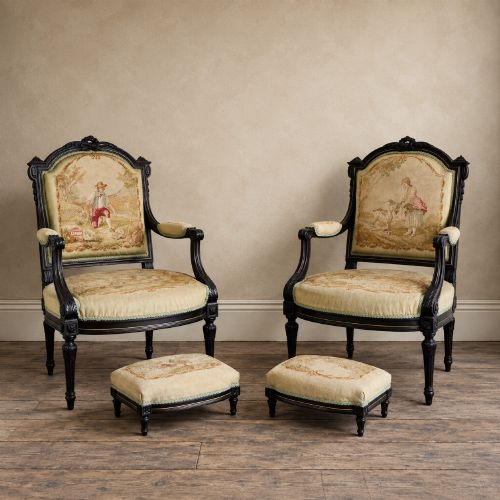
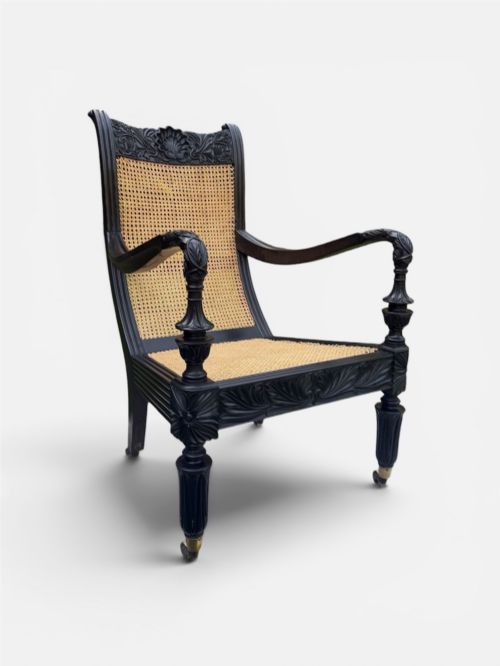
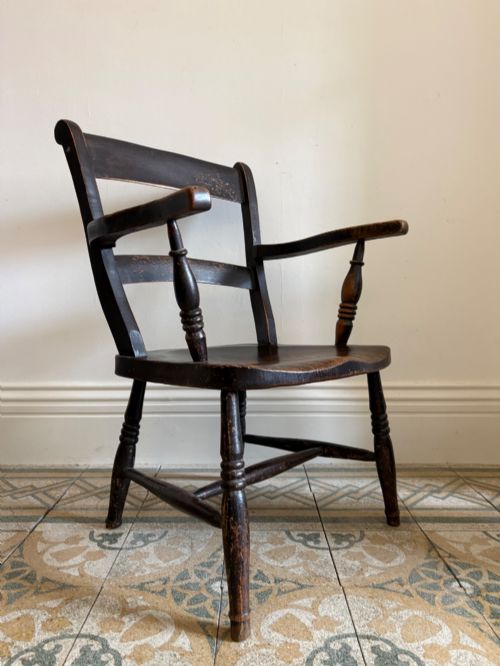
When you search for a black wooden armchair, you encounter a surprisingly varied lineage spanning formal nineteenth century revival pieces, rustic Windsor forms, and exotic carved imports. The examples gathered here draw heavily on Victorian and earlier traditions, utilising ebonised beech, solid ebony, painted finishes, and dark hardwoods.
Most frequent on this page are nineteenth century ebonised chairs reflecting the Aesthetic Movement, alongside sturdy country Windsors in ash and elm, and intricately carved oriental or Anglo-Indian hardwood seats. These designs range from low nursing chairs and rocking chairs to grand library seats and dining armchairs.
Makers and workshops of note, such as Morris & Co or Hindley & Sons, appear among these selections, alongside simpler vernacular pieces from English, Irish, and Welsh makers. Buyers select these dark timber frames to anchor a neutral scheme or to introduce historical weight to a contemporary interior.
Materials and Construction
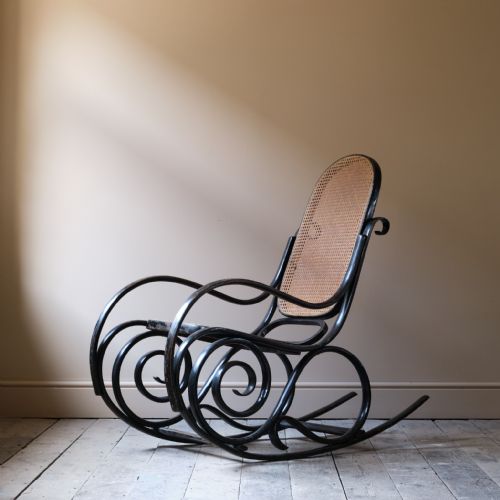
The dark surfaces of these chairs are achieved through multiple methods, most commonly ebonising beech, mahogany, or birch to imitate expensive ebony, alongside the use of direct black paint and solid tropical hardwoods. Artisans combined these dense woods with traditional joinery, steam-bending for bentwood rockers, and hand-carving for oriental and revival frames.
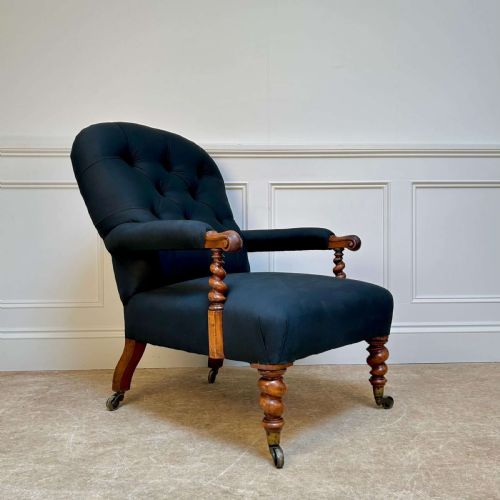
Upholstery and seating materials vary according to the period and region, incorporating woven cane, leather, plush velvet, and patterned fabric inserts. Detail work often includes gilt highlights, brass mounts, and subtle turning, particularly seen in Thames Valley Windsors and Welsh vernacular chairs.
Black Wooden Armchair Retail Price Guide 2026
Typical asking prices for black wooden armchair among the pieces listed under this phrase on Sellingantiques today, from the lower quarter to the upper quarter. They describe what is for sale here now, not the wider market.
At least one rocking chair invites you to test its Victorian springs while contemplating the serious art of eighteenth century block feet.
Distinctions in Quality
Quality in these dark wooden seats rests primarily on the integrity of the timber and the crispness of the hand-carving or turning. Solid ebony and dense hardwoods show superior weight and durability compared to softer woods reliant entirely on surface paint or ebonising.
Design ambition separates standard production seating from high-end workshop pieces, such as those bearing attribution to known makers like Philip Webb or Hindley & Sons. Original surface treatments, whether aged black paint, early gilding, or untouched cane work, elevate the standing of a piece considerably.
Morris & Co·Hindley & Sons·Collier and Plucknett·Maple & Co
The Black Wooden Armchair Glossary
- Ebonised
- Wood treated with a chemical stain or black paint to resemble genuine ebony. This finish gained immense popularity during the Victorian and Aesthetic Movement periods.
- Windsor chair
- A traditional wooden chair featuring a solid saddle-shaped seat into which the legs and back spindles are separately inserted. Regional variants include Thames Valley and Welsh forms.
- Aesthetic Movement
- A late nineteenth century design style prioritizing art for art's sake, often featuring ebonised surfaces with gilt detailing and Japanese-inspired motifs.
- Cockpen chair
- An eighteenth century Chinese Chippendale style chair characterised by an open lattice back and straight legs. These form a distinctive subset of antique seating.
- Bentwood
- Wood rendered pliable by steam and pressed into curved shapes. This technique defines the lightweight rocking chairs and salon seats of the nineteenth and twentieth centuries.
Black Wooden Armchair: Frequently Asked Questions
How do I date a black wooden armchair?
Dating relies on identifying the underlying wood species, construction methods, and stylistic cues such as Victorian ebonising or eighteenth century block feet. Comparing the joinery and turning against documented period examples provides the most reliable timeline.
Surface finishes also offer clues, as original black paint or ebonising differs significantly from modern synthetic coatings. Maker marks or attribution labels, when present, narrow the manufacturing period further.
Where should I place an ebonised chair?
An ebonised chair works effectively as a standalone accent piece in a brightly lit corner, contrasting sharply against pale walls or neutral upholstery. They suit studies, drawing rooms, and bedrooms where their dark silhouettes provide structural anchor points.
Pairing them with lighter wood furniture prevents a room from feeling heavy while highlighting the carved or turned details of the frame. Rocking chairs and low nursing versions suit relaxed living spaces.
Are black painted chairs original?
Many chairs from the eighteenth and nineteenth centuries were painted or ebonised during manufacture, particularly within the Aesthetic Movement and Victorian revivals. Examining the wear patterns and underlying timber reveals whether the black finish is original to the piece.
Swedish and English vernacular chairs frequently retain their early or original paint layers, which contribute substantially to their historical character and visual appeal.
What is the difference between ebonised wood and solid ebony?
Solid ebony is a naturally dense, dark tropical hardwood used entirely for luxury furniture construction. Ebonised wood is typically a domestic timber like beech, birch, or mahogany treated to mimic that dark appearance.
Examination of the underside or unexposed areas usually reveals the lighter base wood beneath an ebonised surface. Both materials yield a dark aesthetic but differ greatly in weight and material cost.