



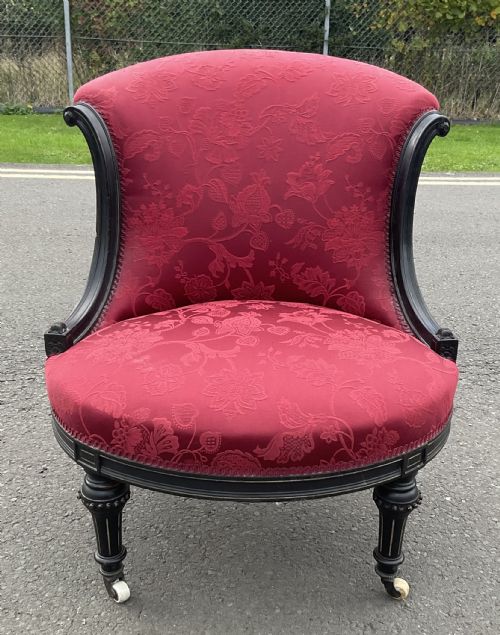


Black Ebonised Slipper Chair
A black ebonised slipper chair is a low-slung, dark-finished seat designed for Victorian ease, offering collectors compact elegance and tactile upholstery.
Black Ebonised Slipper Chair
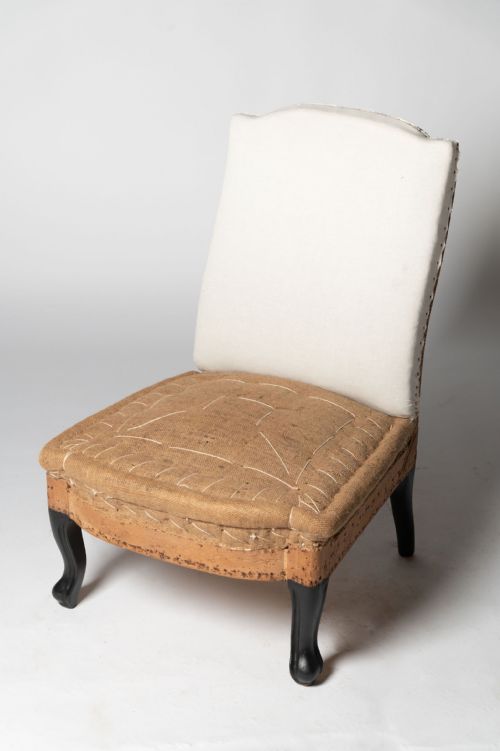
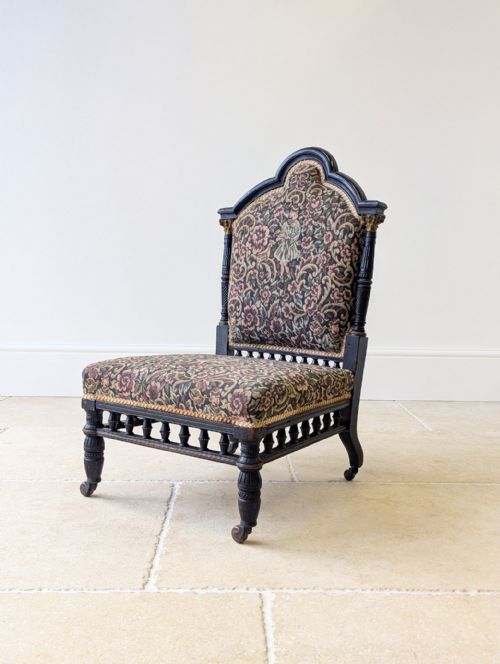
When you search for a black ebonised slipper chair, you encounter a selection of low seating forms designed during the nineteenth century. These items include nursing chairs, side chairs, and salon chairs dating mainly from the Victorian era and the Aesthetic movement.
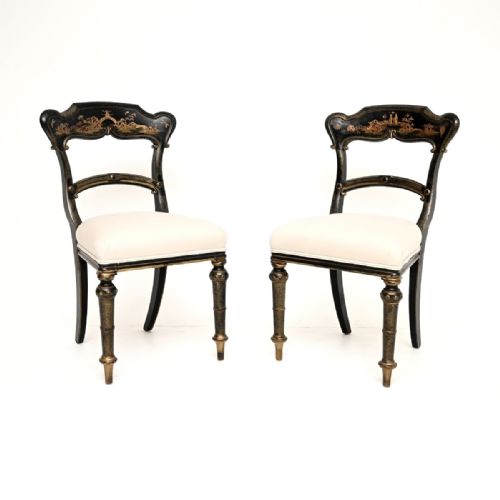
The pieces on this page span the mid to late nineteenth century, encompassing styles such as Victorian Chinoiserie and French nineteenth-century design. You meet forms ranging from small child chairs and tub chairs to bedroom chairs and low lounge seats.
Makers and workshops of the period utilised dark finishes to imitate costly ebony, creating striking silhouettes for domestic interiors. These low chairs serve as functional accent pieces and decorative examples of nineteenth-century craftsmanship.
How they were made
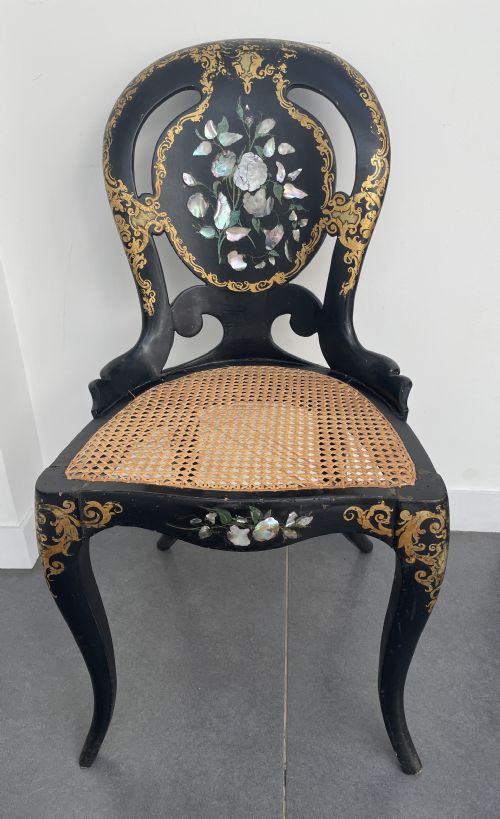
The primary material visible across these listings is ebonised wood, applied to create a dense, dark surface that mimics solid ebony. Artisans combined this blackened timber with brass details, mother-of-pearl inlay, and gilding to enhance the decorative impact.
Upholstery forms a major component of construction, utilising fabrics such as velvet alongside cane panels and papier-mâché structures. These varied materials reflect the diverse manufacturing techniques employed by nineteenth-century cabinet makers and workshops.
Black Ebonised Slipper Chair Retail Price Guide 2026
Typical asking prices for black ebonised slipper chair among the pieces listed under this phrase on Sellingantiques today, from the lower quarter to the upper quarter. They describe what is for sale here now, not the wider market.
Listings feature items from the Victorian era, spanning the 1850s to the late 19th century.
What varies in quality
Quality in a black ebonised slipper chair rests on the refinement of the woodwork, the precision of any mother-of-pearl inlay, and the integrity of the ebonised finish. Superior examples display crisp turning, secure joints, and intricate decorative additions that remain intact.
The choice of secondary materials, such as gilt accents and the retention of period fabric or cane work, distinguishes finer pieces from simpler domestic seating. Construction details and the presence of documented maker attributions further define the upper tier of these nineteenth-century items.
E W Godwin·Maple and Co·Jennens and Bettridge
The Black Ebonised Slipper Chair Glossary
- Ebonised wood
- Timber treated with stain or paint to achieve the deep, dark appearance of ebony. This finish was widely utilised in nineteenth-century cabinet making to provide a uniform, dramatic surface.
- Nursing chair
- A low-seated chair traditionally designed for comfort and ease of infant care in the Victorian bedroom. These pieces feature short legs and supportive, upholstered backs.
- Aesthetic movement
- A late nineteenth-century design philosophy prioritising visual beauty over narrative or moral function. Pieces from this movement often incorporate ebonised surfaces and stylized decorative motifs.
- Mother of pearl
- The iridescent inner layer of mollusc shell used for inlay work on furniture surfaces. Artisans cut thin pieces into geometric or floral shapes to adorn the dark wooden frames.
Black Ebonised Slipper Chair: Frequently Asked Questions
What is an ebonised chair?
An ebonised chair is a wooden seat finished with a black stain or lacquer to imitate expensive ebony wood. This treatment became fashionable during the nineteenth century for drawing rooms and bedrooms.
Craftsmen used various hardwoods for the base structure before applying the dark finish. The resulting surface provides a high-contrast background for gilt details or colourful upholstery fabrics.
How do I date a Victorian nursing chair?
Dating a Victorian nursing chair involves examining the joinery, the upholstery materials, and the decorative style. Pieces from the 1870s and 1880s often exhibit Aesthetic movement characteristics or inlaid mother-of-pearl.
Comparing the turning of the legs and the presence of maker marks helps narrow the decade of manufacture. Nineteenth-century construction methods changed over time, moving from hand-carved elements to machine-assisted production.
Where should I place a slipper chair?
A slipper chair suits bedrooms, dressing rooms, and low-traffic corners of a sitting room. Because of its low seat height, it functions well as an accent piece rather than a primary dining or desk chair.
These compact items fit easily into smaller spaces without dominating the room. Their decorative ebonised frames and textured velvet or cane panels add visual interest to an interior scheme.
Are these chairs comfortable to use daily?
Nineteenth-century slipper and nursing chairs were built for specific domestic tasks rather than lounging for hours. Their low seats and supportive backs offer a distinct posture compared to modern armchairs.
Many surviving examples retain period upholstery that requires careful treatment or professional restoration. Collectors often balance everyday usage with the preservation of delicate nineteenth-century fabrics and frames.