


Black Wood Armchair
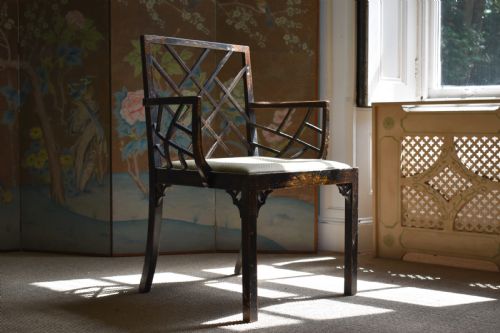
A black wood armchair brings a dark, striking silhouette to a room, ranging from nineteenth-century ebonised frames to carved exotic hardwoods.
Black Wood Armchair
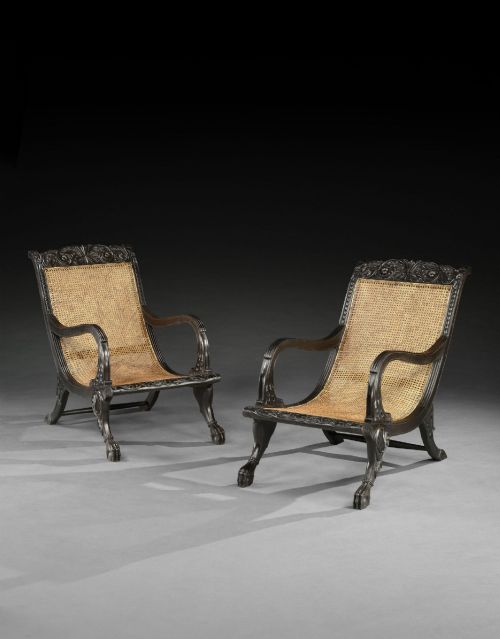
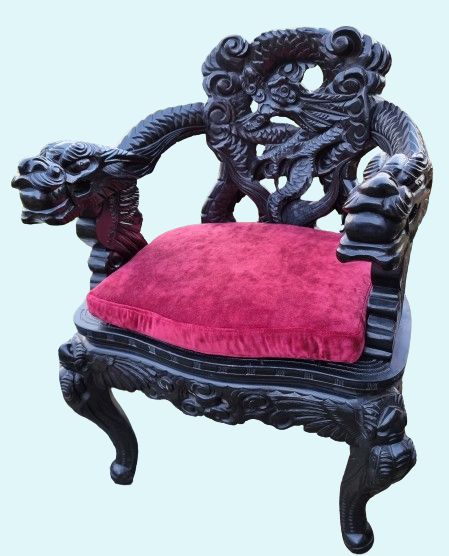
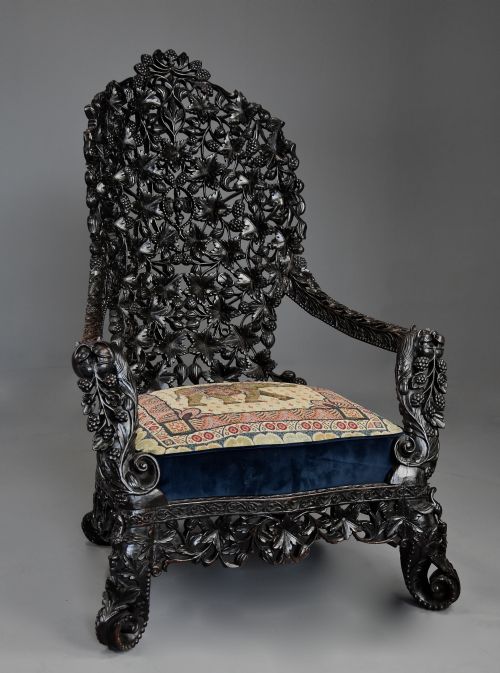
When searching for a black wood armchair, buyers encounter pieces spanning the nineteenth century through the early twentieth century, shaped by Victorian, Arts and Crafts, and regional colonial traditions. These range from solid ebony and Ceylonese carved seating to ebonised beech and birch frames created across Britain, Europe, and Asia.
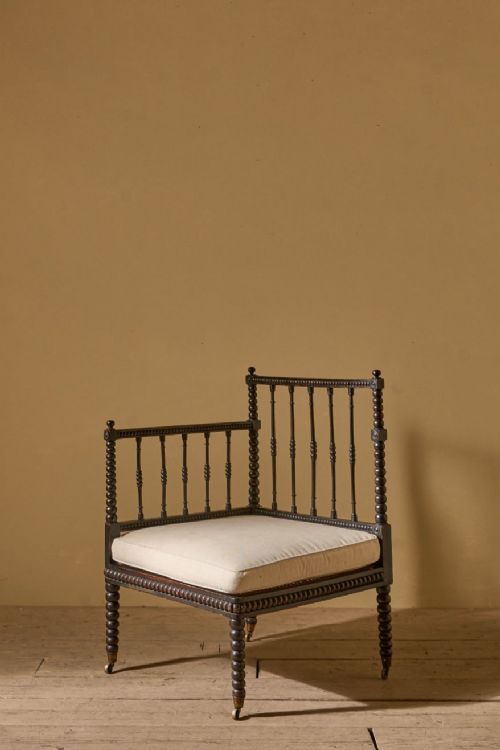
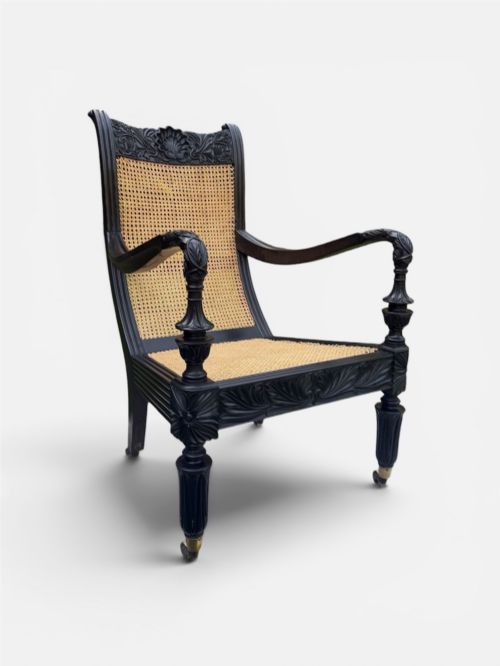
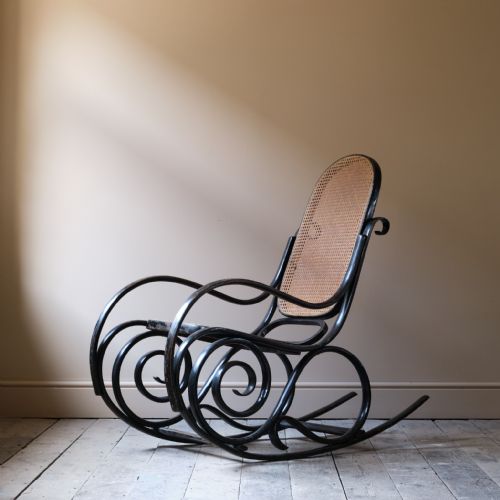
The selections on this page most frequently take the form of ebonised library chairs, salon seating, and rocking chairs, alongside turned corner chairs and Anglo-Indian designs. Many utilise contrasting upholstery such as cane, leather, or velvet to soften the dark timber frame.
How they were made
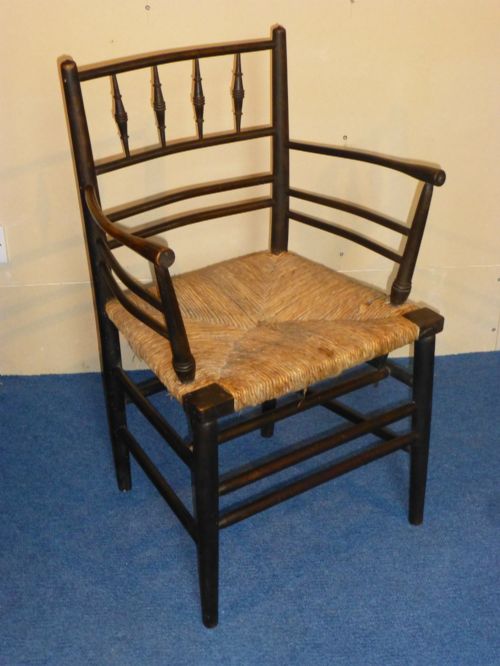
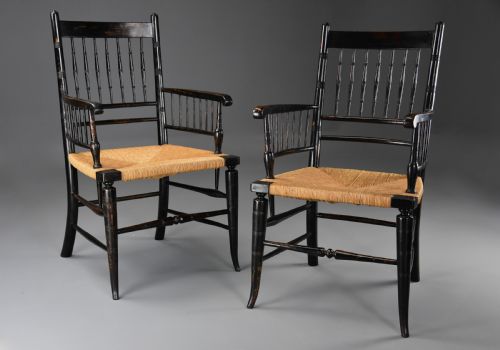
Cabinetmakers constructed these frames using dense timbers like ebony, beech, elm, and birch, often applying an ebonised finish to fruitwood or hardwood to imitate more costly exotic materials. Turning lathes produced bobbin and spindle details, while hand-carving delivered intricate foliage and geometric motifs on oriental and colonial pieces.
Structural integrity relied on traditional joinery such as mortise and tenon joints, sometimes complemented by bentwood techniques seen in rocking chairs. Surfaces were finished with polish, lacquer, or original paint, while seats integrated woven cane, brass accents, or sprung upholstery covered in fabric and leather.
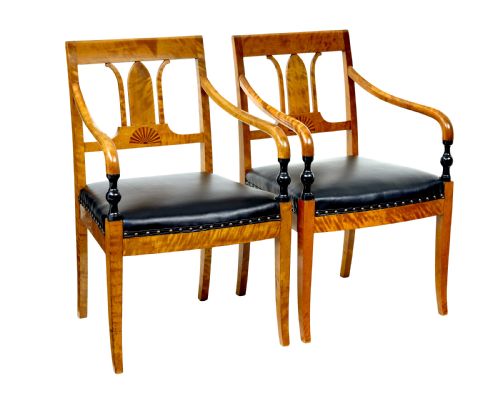
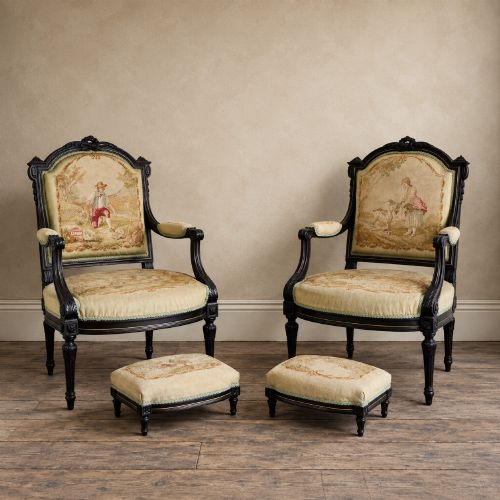
His and hers matching ebonised armchairs allow a nineteenth-century couple to sit in identical gloomy splendor.
What varies in quality
The distinction between ordinary and exceptional examples lies in the depth of hand-carving and the choice of primary timber, where solid ebony or finely figured exotic hardwoods command greater regard than secondary woods simply stained black. The crispness of turning on bobbin legs and the retention of original surface treatments also separate standard production from masterwork output.
Design attribution to notable workshops or specific cabinetmakers elevates a piece, as seen in documented Arts and Crafts or Aesthetic Movement chairs. Furthermore, the integrity of structural joinery and the survival of original elements like cane panels or leather upholstery determine the overall standing of the chair.
Morris & Co·Philip Webb·Collier and Plucknett·Thonet
The Black Wood Armchair Glossary
- Ebonised
- Timber treated with stain, polish, or paint to imitate the dark, dense appearance of solid ebony. This technique gained widespread popularity during the Victorian and Aesthetic Movement periods.
- Cane
- Woven rattan material utilised for chair seats and backs, offering a lightweight and resilient support surface. It appears frequently on Anglo-Indian and nineteenth-century salon seating.
- Bobbin turned
- Wood turned on a lathe to create a series of rounded, bead-like swellings resembling a spool of thread. This decorative turning style is characteristic of seventeenth-century revival and nineteenth-century vernacular furniture.
- Bergere
- An enclosed wooden armchair featuring upholstered sides and a tight seat cushion, often accompanied by cane panels. French periods popularised this comfortable salon form.
- Bentwood
- Wood softened by steam and bent into curved structural components, famously utilised by manufacturers like Thonet. This technique enabled fluid, continuous frames without traditional joints.
Black Wood Armchair: Frequently Asked Questions
How do I identify solid ebony from ebonised wood?
Solid ebony displays a heavy, dense weight and a uniform dark grain throughout the material when examined closely. Ebonised wood reveals the lighter underlying timber, such as beech or birch, if the surface sustains a deep scratch.
Inspect the underside or unpolished areas of the frame to observe the natural grain beneath the black finish. True ebony remains dark and heavy without relying on surface stains.
Where were nineteenth century ebonised armchairs placed?
These dark frames suited formal drawing rooms, libraries, and studies where dramatic silhouettes contrasted against patterned wallpapers. Lighter versions with cane panels also found a place in bedrooms and conservatories.
Victorian interior design favored contrasting tones, making dark seating a deliberate focal point in a brightly lit room. They functioned as reading chairs or decorative accents rather than everyday dining seating.
How should I care for antique cane seats?
Cane requires regular dusting with a soft brush and occasional light moisture to prevent the natural rattan from becoming brittle. Avoid placing these chairs near direct heat sources or dry radiators.
If the cane sags, wiping the underside with a damp sponge and allowing it to dry naturally can tighten the weave. Protect the material from sharp objects and heavy localized pressure.
What defines an Aesthetic Movement armchair?
Aesthetic Movement chairs emphasise simplicity, artistic craftsmanship, and often draw inspiration from Japanese design principles. They frequently utilise ebonised finishes combined with slender proportions and subtle turning.
Unlike ornate Victorian revival styles, these pieces focus on clean lines and functional elegance. Makers associated with this movement prioritised visual harmony over heavy ornamentation.