
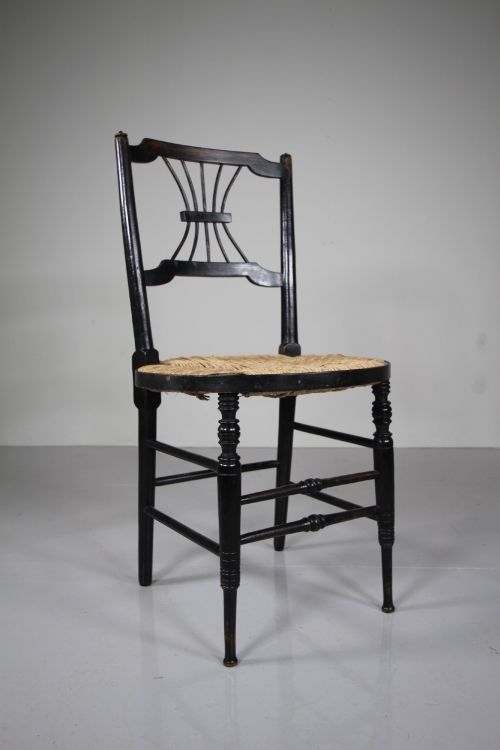
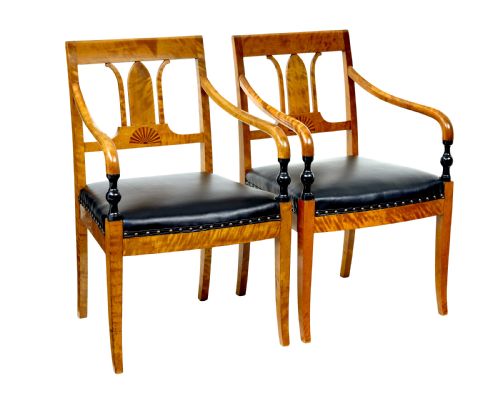
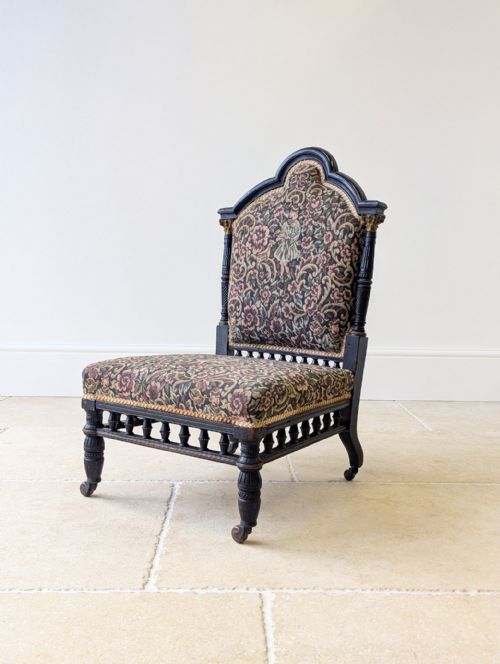
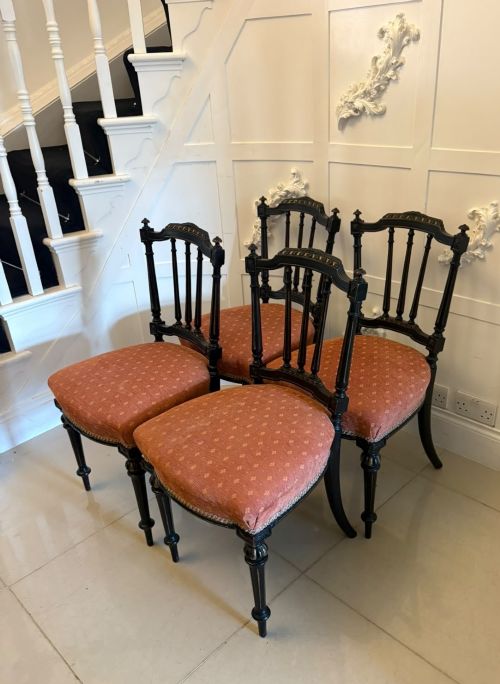
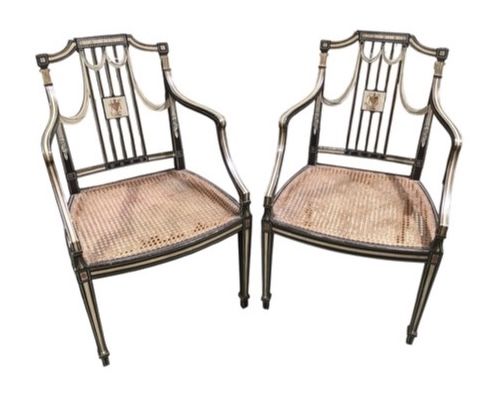
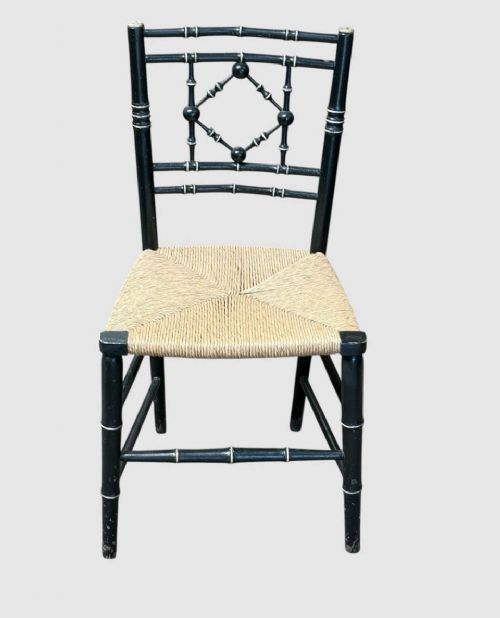


Black Ebonised Side Chair
A black ebonised side chair brings sharp, dark elegance to a room, offering compact seating rooted in centuries of craftsmanship.
Black Ebonised Side Chair
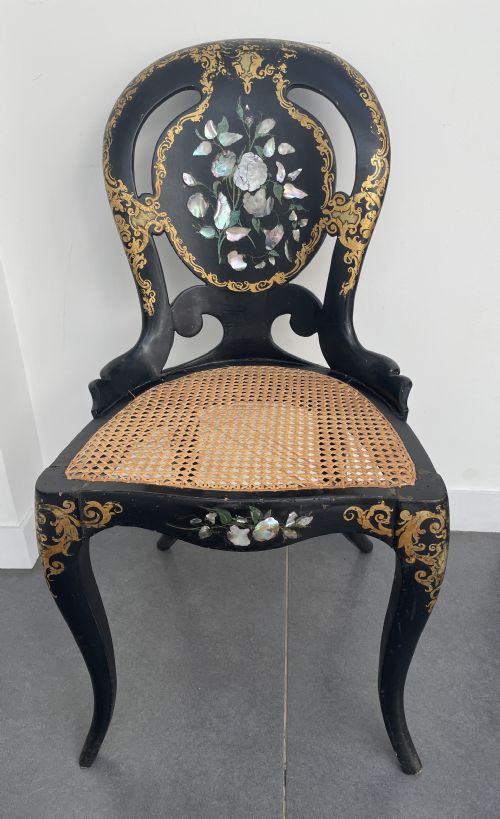
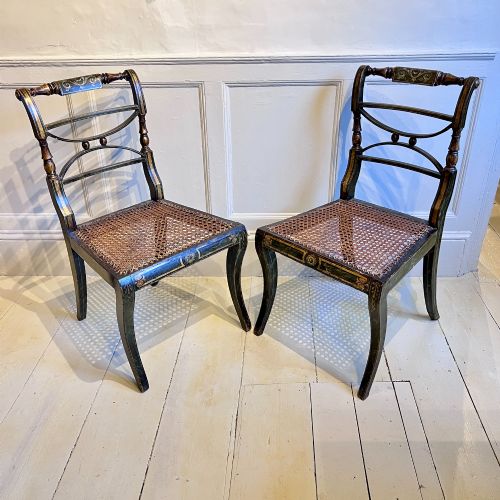
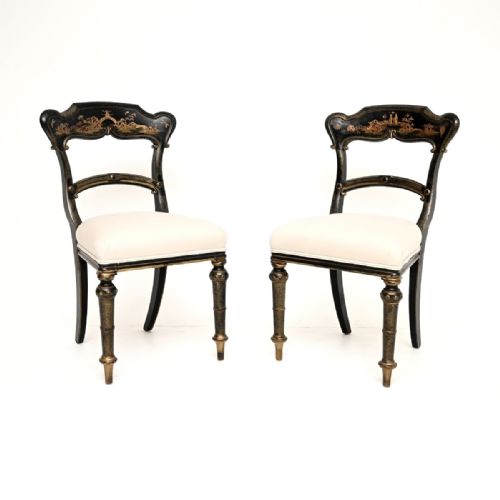
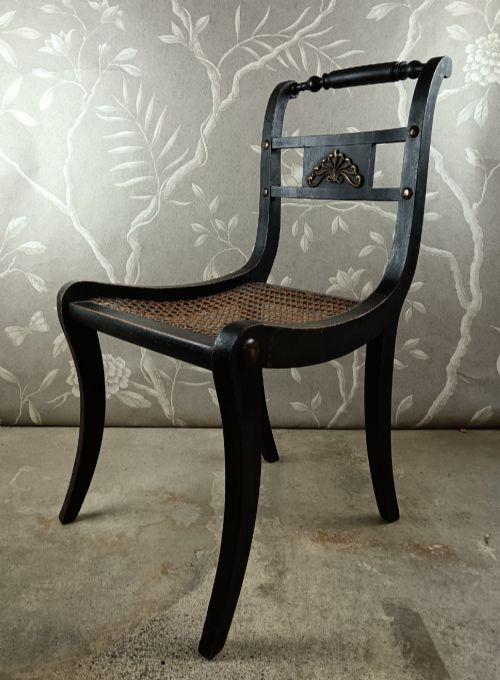
A black ebonised side chair is defined by its darkened wood finish, mimicking costly ebony, and appears frequently in nineteenth-century designs. Buyers browsing this selection encounter pieces spanning the Regency era, the Victorian period, and the early twentieth century, including revival styles.
Originating mostly from British workshops, these chairs served functional and decorative roles in drawing rooms, bedrooms, and parlours. The listings demonstrate how versatile this seating form remained across decades of changing domestic tastes.
Judging Quality
The standard of a black ebonised side chair rests on the crispness of its carving, the integrity of its frame construction, and the retention of its original finish. Superior examples display precise turnings, well-executed gilding or inlay, and stable joints that survive centuries of use.
Lesser pieces show crude surface repairs, flaking paint, or loose joinery where modern adhesives replace traditional pegged construction. The presence of original canework or early upholstery fabric elevates the historical integrity of the piece.
Listings feature ebonised wood combined with cane, brass, rush, and fabric across nineteenth and twentieth-century periods.
William Morris·Collier and Plucknett·Bruce J. Talbert·E W Godwin·LIBERTY of LONDON·PHILIP WEBB·Jennens and Bettridge
The Black Ebonised Side Chair Glossary
- Ebonised
- Wood treated with stain or paint to resemble dense, black ebony. This finish gained popularity during the Victorian era for its stark visual impact.
- Cane
- Woven rattan material used for lightweight, breathable chair seats. It appears frequently on Regency and Victorian seating.
- Aesthetic Movement
- A late nineteenth-century design ethos prioritising beauty over narrative or moral function. Pieces from this movement often feature ebonised surfaces and minimalist lines.
- Gilt
- A thin layer of gold leaf or gold paint applied to highlight carved details on a wooden frame. It creates contrast against the black ebonised body.
- Faux bamboo
- Wood turned and carved to imitate natural bamboo stalks. This decorative technique is common in Regency and Victorian chairs.
Black Ebonised Side Chair: Frequently Asked Questions
What is a black ebonised side chair used for?
These chairs served auxiliary seating duties in dining rooms, parlours, and bedrooms where space was at a premium. Their slender frames allowed them to be tucked against walls when not in use.
Today, they function well as decorative accents in hallways, occasional seats in living spaces, or gathered around a dining table.
How do I care for ebonised wood?
Keep ebonised furniture out of direct sunlight to prevent the black finish from fading or drying out over time. Dust gently with a soft cloth and avoid chemical polishes that can degrade the surface.
Maintain stable indoor humidity levels to protect the underlying wood and prevent old joints from loosening.
Are these chairs comfortable for daily use?
Side chairs were generally designed with upright posture in mind, featuring rigid wooden backs rather than deep cushioning. Upholstered versions offer more padding, while cane seats provide a slight spring.
They suit dining or occasional sitting rather than extended lounging.
How can I tell a Victorian ebonised chair from a Regency one?
Regency ebonised chairs typically display classical influences, sabre legs, or rope-back designs reflecting early nineteenth-century neoclassical tastes. They often incorporate painted details or subtle gilding.
Victorian examples frequently lean towards heavier Aesthetic Movement forms, intricate carvings, or dark japanned surfaces with distinct nineteenth-century proportions.