

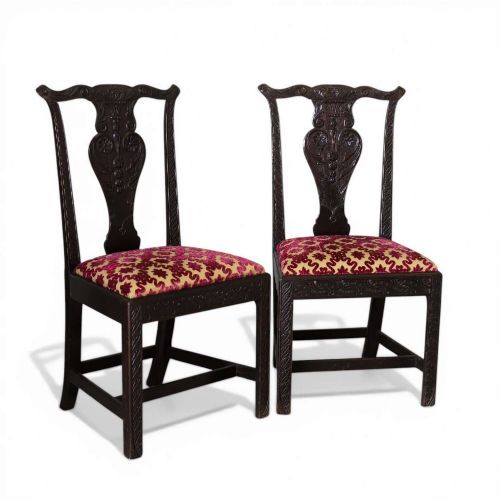


Patterned Upholstered Hall Chair
These patterned upholstered hall chair examples combine heavy timber frames with tactile textiles to anchor an entryway or corridor.
Patterned Upholstered Hall Chair
A patterned upholstered hall chair serves as a functional and decorative seat for an entryway, corridor, or reception space. The selection spans the eighteenth century, the nineteenth century, and the Edwardian era, bringing together distinct historical periods in a single sweep.
The form stretches across various styles, including Georgian, George III, William IV, Victorian, Victorian Gothic, Gothic Revival, and Rococo Revival. Buyers will encounter side chairs, armchairs, dining chairs, and hall chairs shaped from timber and finished with textiles.
Makers of the past employed robust structures designed to withstand the formal entranceways of period homes. Surviving examples demonstrate how seating evolved from simple wooden boards to cushioned pads upholstered in fabrics.
How they were made
Carpenters shaped these seats from hardwoods such as mahogany, oak, walnut, rosewood, beech, and ash, building frames designed for endurance. Joinery methods relied on traditional pegged and dowelled joints to keep the timber stable under regular use.
Workshops applied textiles like velvet, silk, and printed upholstery fabrics over padded foundations, securing the material with brass tacks or hidden fixings. Some pieces incorporate elaborate carved woodwork and inlaid details directly into the wooden frames.
Patterned Upholstered Hall Chair Retail Price Guide 2026
Typical asking prices for patterned upholstered hall chair among the pieces listed under this phrase on Sellingantiques today, from the lower quarter to the upper quarter. They describe what is for sale here now, not the wider market.
Some Victorian examples channeled medieval cathedrals so intensely that visitors might feel inclined to whisper confession before sitting down.
What varies in quality
Quality rests in the crispness of the timber carving and the architectural integrity of the frame. Heavy hardwoods with deep, sharp mouldings and well-preserved joints indicate superior original construction.
The sophistication of the upholstery application and the quality of the textile choice differentiate standard output from high-end commissions. Original fabric choices, specialised silk weaves, and intricate brass detailing elevate individual pieces.
The Patterned Upholstered Hall Chair Glossary
- Hall chair
- A rigid wooden seat traditionally placed in a grand entrance hall for visitors waiting briefly. These items usually feature high wooden backs and solid timber seats.
- Gothic Revival
- An architectural and decorative style drawing on medieval ecclesiastical motifs. Pieces in this category display pointed arches, trefoils, and heavy structural timbers.
- Mahogany
- A durable tropical hardwood prized for its deep reddish-brown tone and resistance to warping. Cabinet makers selected this material for fine eighteenth and nineteenth-century seating.
- Side chair
- An upright chair without arms designed to stand against a wall when not in use around a table or in a hallway. They provide compact seating options for formal rooms.
- Rococo Revival
- A mid-nineteenth-century design movement favouring asymmetrical scrolling, naturalistic floral carvings, and elaborate curves. This style appears on revived walnut and rosewood frames.
Patterned Upholstered Hall Chair: Frequently Asked Questions
Where should I place a hall chair?
These seats suit entryways, grand corridors, and reception spaces where visitors pause briefly. They also function well as decorative accent pieces in bedrooms or studies.
Because many examples feature upright wooden backs and firm cushioning, they take up minimal floor space while adding architectural character to empty corners.
How do I identify the period of a chair?
Look closely at the timber choice, leg style, and carved ornament to determine the era. Eighteenth-century pieces often display restrained Georgian lines, whereas Victorian items lean toward heavier Gothic or Rococo revival details.
Matching the construction techniques and upholstery styles to historical design movements helps confirm the approximate date of manufacture.
Are these chairs comfortable for daily use?
Historical hall seating was primarily built for formal spaces rather than long lounging sessions. Many examples feature upright backs and firm upholstery designed for brief waiting periods.
Buyers seeking everyday seating should examine the depth of the seat and the height of the backrest to ensure it suits their physical comfort.
What is the difference between a side chair and an armchair?
Side chairs are built without armrests, making them narrower and easier to tuck against a wall or around a table. Armchairs include structural arm supports that offer a more enclosed and formal presence.
Both forms utilise similar upholstery fabrics and timber frames within hallway settings.