
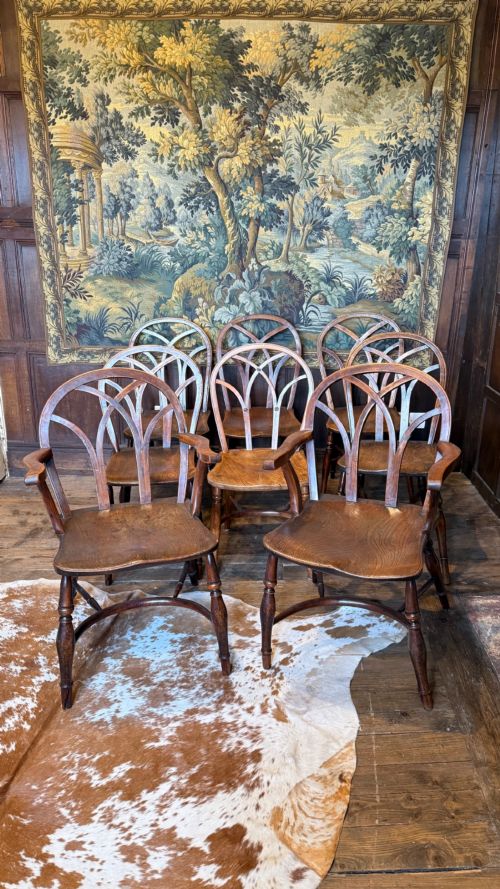


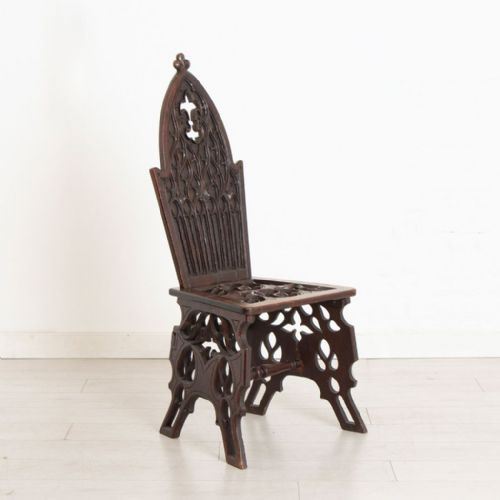


Gothic Arched Dining Chair
A gothic arched dining chair brings pointed lines and architectural presence to a room, offering sturdy timber framing and striking vertical proportions.
Gothic Arched Dining Chair
A gothic arched dining chair draws on medieval ecclesiastical architecture, translating stone tracery and pointed arches into timber seating. These pieces emerge across the eighteenth and nineteenth centuries, spanning Georgian Gothick interpretations and exuberant Victorian Gothic Revival designs.
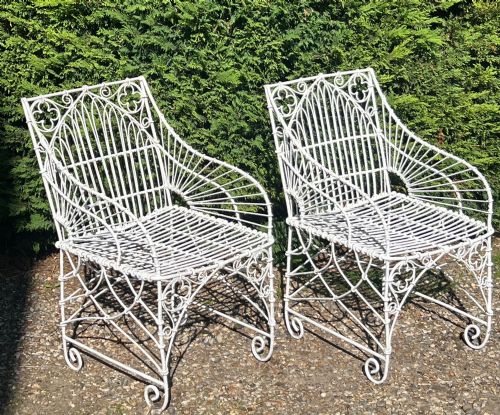
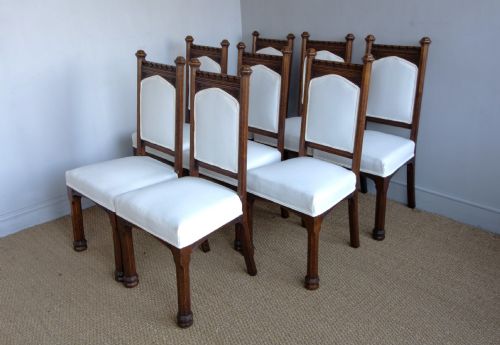
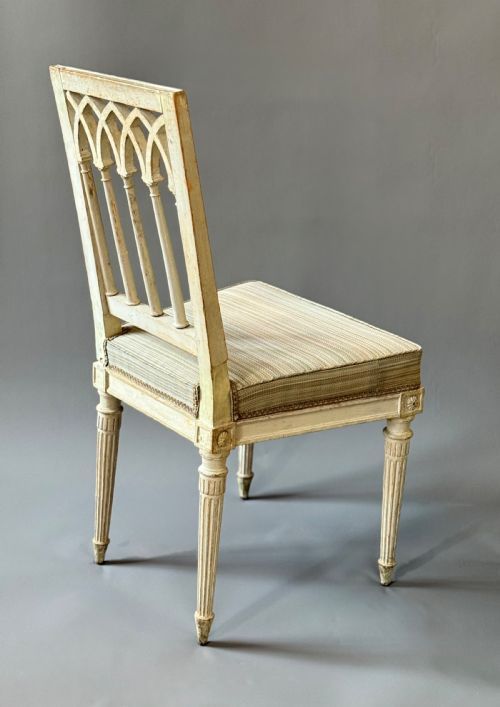
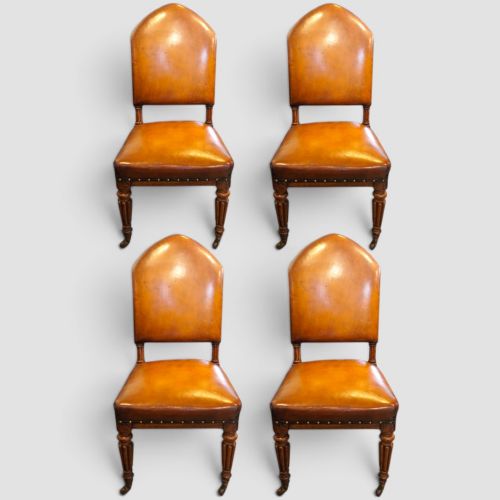
The variants encountered on this page range from heavy oak dining sets with leather seats to mahogany hall chairs and wrought iron garden seats. Makers utilise distinct regional idioms, producing items from provincial English workshops to Parisian ateliers.
Forms encompass standard dining chairs, side chairs, armchairs and sets of matching seats. Oak and mahogany dominate the timber selection, frequently paired with upholstered pads or brass detailing.
Materials and construction
Carpenters shape these chairs from dense hardwoods like oak and mahogany, relying on traditional mortise and tenon joints to secure the upright frames. Turnings and fretwork create the characteristic pointed arches along the backrests.
Secondary materials introduce texture and contrast through leather inserts, woven fabric pads, and painted wooden surfaces finished in grey tones. Iron garden variants utilise forged metal bars shaped into rigid structural curves.
One set of iron garden chairs stubbornly refuses to rust, having spent over a century plotting against the British weather.
Distinguishing quality
The refinement of the tracery carving dictates the distinction between standard provincial output and top-tier commission work. Crisp undercut moulding and balanced proportions indicate a maker with deep mastery of Gothic Revival geometry.
Material selection further elevates a piece, particularly the choice of figured mahogany or dense quartersawn oak with undisturbed patination. Original upholstery foundations and intact brass fittings retain the historical integrity of the framing.
The Gothic Arched Dining Chair Glossary
- Gothic Revival
- An architectural and decorative style reviving medieval forms, prominent throughout the nineteenth century. It applies cathedral motifs to domestic furniture and interior decoration.
- Gothick
- An eighteenth-century precursor to full revivalism, blending rococo curves with pointed medieval arches. This lighter aesthetic appears frequently in Georgian mahogany seating.
- Tracery
- Openwork stonework patterns translated into wooden furniture backs. It forms the skeletal framework of the characteristic pointed arches.
- Quartersawn oak
- Timber cut radially from the growth rings, producing a durable board with prominent medullary rays. Cabinetmakers favour this for stability and decorative figuring.
- Hall chair
- A rigid wooden seat intended for entrance spaces rather than prolonged dining. These pieces often feature carved armorial bearings or deeply shaped solid timber seats.
Gothic Arched Dining Chair: Frequently Asked Questions
How do I date a gothic arched dining chair?
Dating relies on timber species, tool marks, and stylistic shifts between Georgian Gothick lightness and heavy Victorian Gothic Revival proportions. Eighteenth-century examples often display simpler mahogany framing, whereas nineteenth-century pieces lean into heavier oak carving and applied architectural details.
Examination of the underside and joint construction reveals assembly methods that change across the decades. Machine-cut components point towards later nineteenth-century production, while hand-shaped tenons indicate earlier work.
Are these chairs comfortable for daily dining?
Most historic examples feature upright wooden seats or shallow leather pads designed for formal posture rather than lounging. Chairs with padded leather or fabric inserts offer slightly more softness during extended seating.
Buyers often pair sturdy oak sets with modern dining tables by ensuring adequate seat height clearance. The upright backs naturally encourage an attentive posture suited to traditional dining.
How should I maintain wooden gothic chairs?
Timber surfaces require occasional application of traditional beeswax to nourish the grain and preserve the historic finish. Avoiding direct sunlight and stable room humidity prevents the timber from splitting along old joint lines.
Leather and fabric inserts benefit from gentle dusting and specialised conditioning appropriate to their age. Keeping the wrought iron garden variants dry prevents surface oxidation from compromising the metal.
What is the difference between hall chairs and dining chairs?
Hall chairs feature solid wooden seats and rigid backs intended for brief use in entranceways, often bearing carved family crests or dramatic arched panels. Dining chairs prioritize multiple seating arrangements around a table and frequently include upholstered pads for comfort.
Proportions also differ, with hall chairs generally standing taller and narrower to command attention against a hallway wall. Dining versions are scaled for clearance beneath standard table rails.