
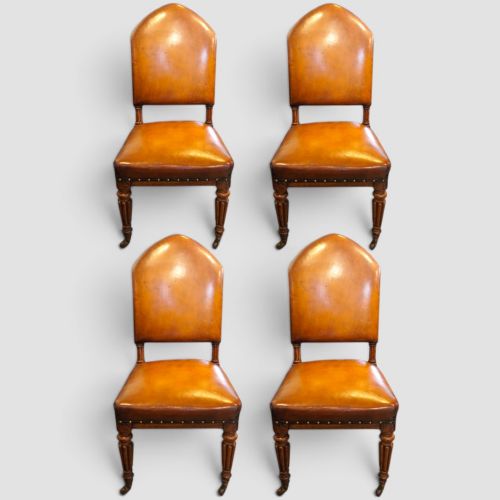
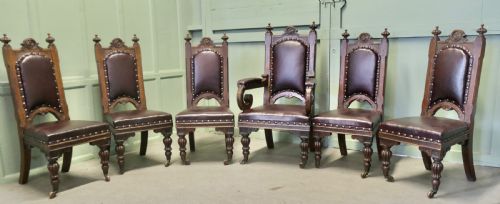
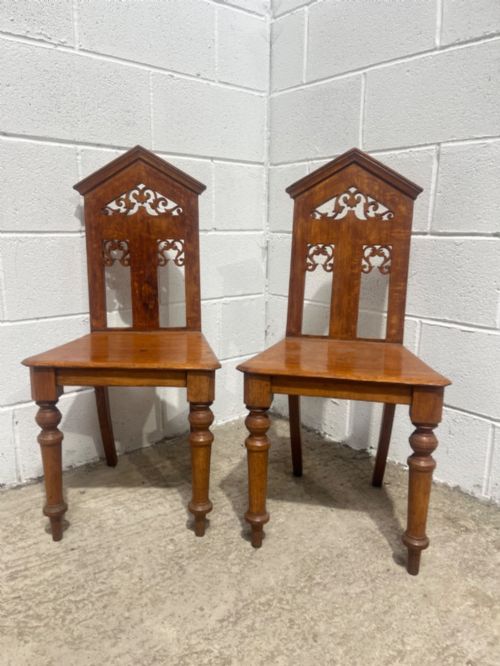
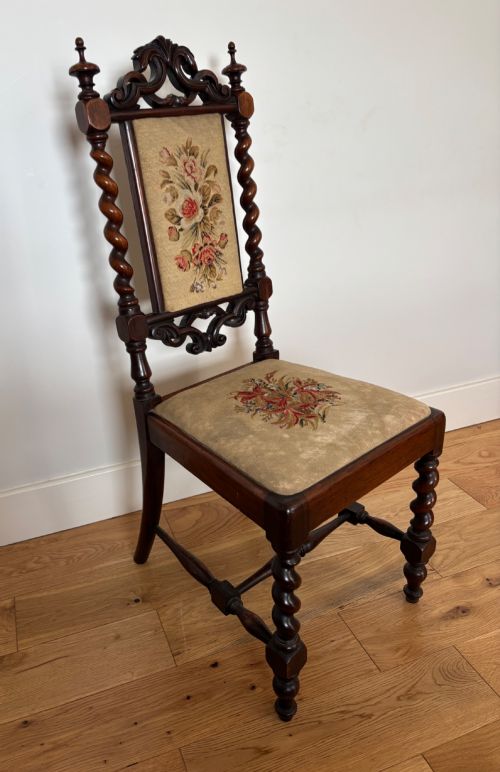
Gothic Carved Side Chairs
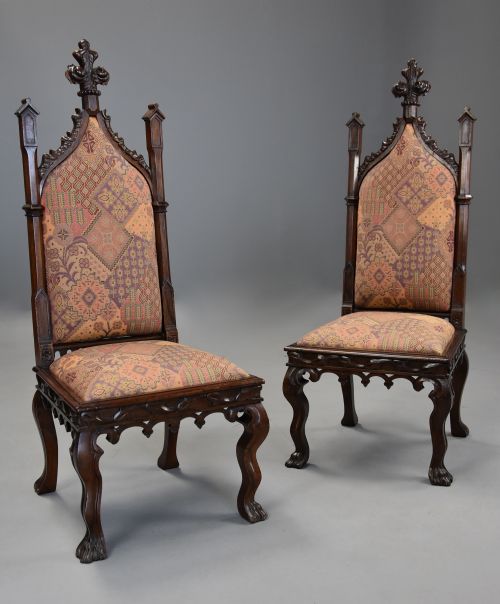
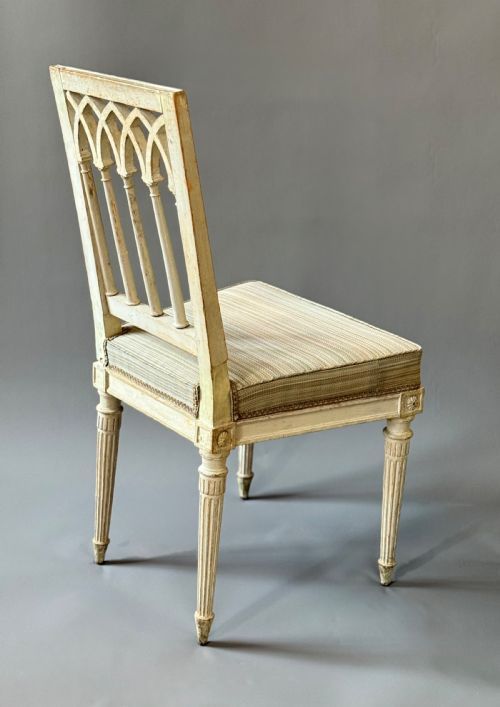
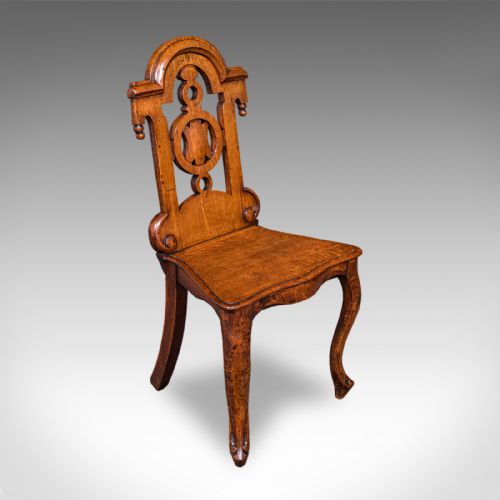
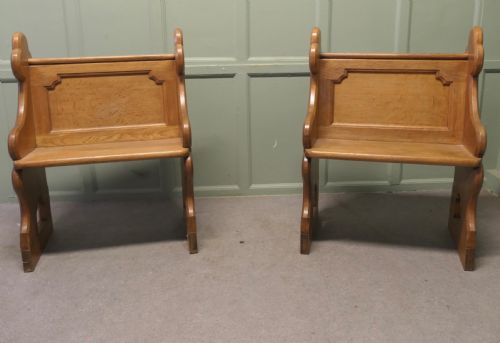
These gothic carved side chairs bring heavy historic ornament and sturdy timber frames straight into domestic rooms, mostly arriving from the nineteenth century.
Gothic Carved Side Chairs
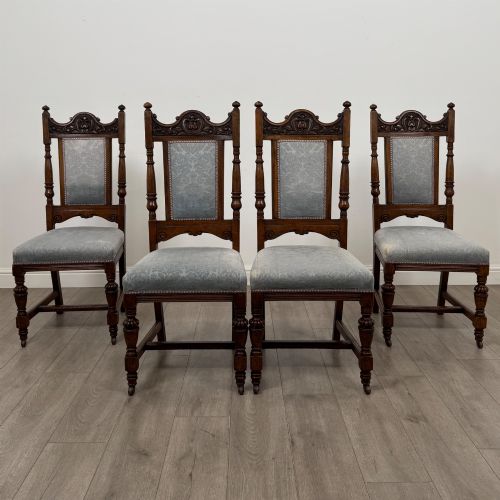
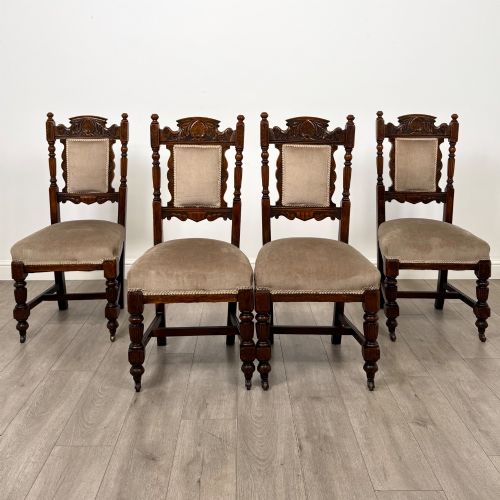
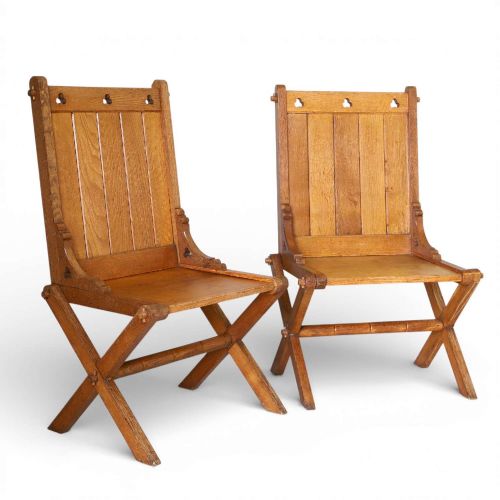
When you search for gothic carved side chairs, you encounter seating built primarily during the Victorian era, spanning specific iterations like Gothic Revival, Jacobean Revival, and Arts and Crafts styles.
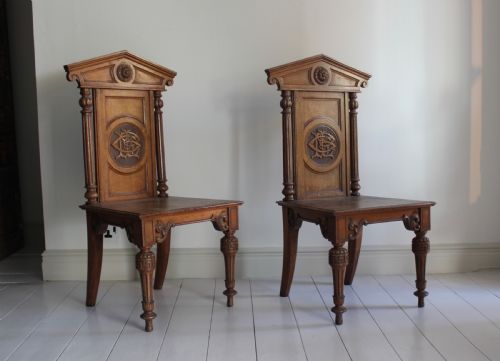
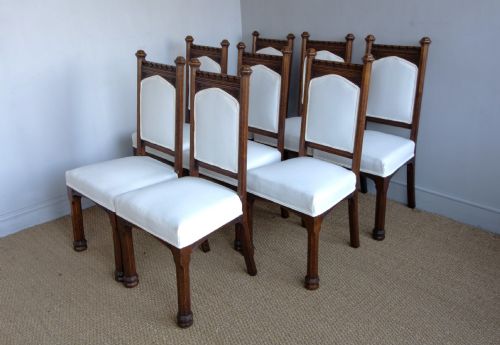
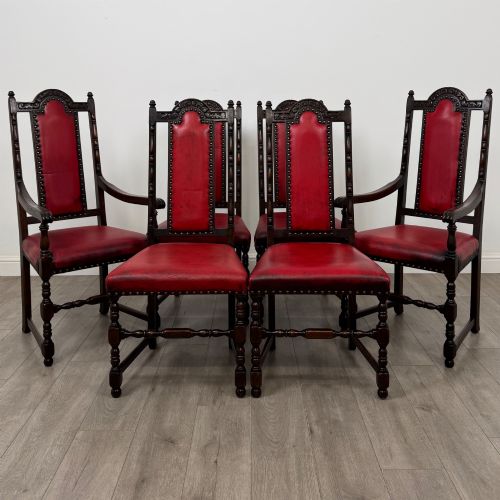
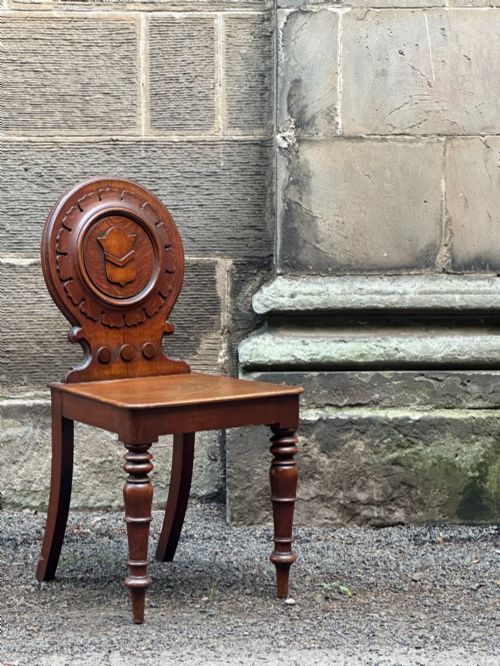
The dominant forms on this page are oak and walnut hall chairs and dining sets, often featuring high backs and heraldic details.
These pieces served formal reception spaces and dining rooms, reflecting a nineteenth-century fascination with medieval design.
Materials and construction
Cabinetmakers relied heavily on solid oak, walnut, rosewood, and mahogany, shaping dense timber into upright frames with deep hand-carving.
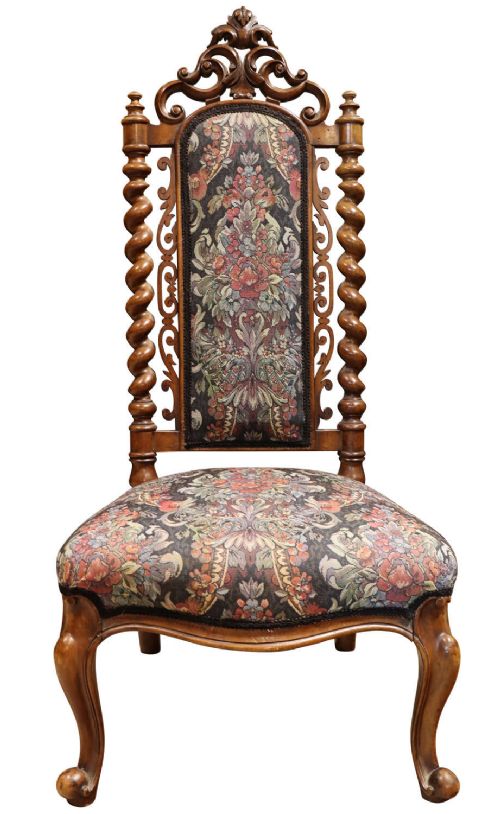
Upholstery materials such as leather, tapestry, and other textiles appear fixed to seats with brass elements, contrasting against the dark wood structures.
Some chairs sport heraldic shield backs so imposing that guests might accidentally pledge fealty before sitting down to dinner.
Judgements of quality
Execution of the carved ornament dictates distinction, separating deep, sharp tracery and heraldic shields from shallow, mechanical impressions.
Integrity of timber joints and retention of original maker labels or stamps heavily influence the standing of an individual chair or set.
W.A. Willcocks·Bruce Talbert·Gillows
The Gothic Carved Side Chairs Glossary
- Gothic Revival
- An architectural and decorative movement reviving medieval forms. It heavily influences the pointed arches and tracery seen on these chairs.
- Hall chair
- A rigid, timber-seated chair placed in entrance halls for brief seating or displaying family crests. They typically lack upholstered arms or soft padding.
- Trefoil
- A graphic ornament composed of three overlapping rings or lobes. This motif frequently appears pierced through wooden chair backs.
- Barley twist
- A woodworking technique turning timber into a spiral column. It adds texture to the legs and stretchers of Victorian seating.
Gothic Carved Side Chairs: Frequently Asked Questions
How do I spot a genuine nineteenth century gothic chair?
Examine the timber surfaces for hand-cut tool marks and natural oxidation that build up over decades of use.
Check the joinery methods beneath the seat to confirm traditional peg construction rather than modern metal screws.
Can I use these antique chairs for everyday dining?
Solid oak and walnut frames provide robust structural support suitable for regular daily seating around a table.
Ensure the joints remain firm and consider the upright posture required by high wooden backs.
What is the difference between a hall chair and a dining chair?
Hall chairs feature rigid wooden seats and decorative carved backs designed for display in entrance spaces rather than long sitting.
Dining chairs often incorporate leather or textile upholstery to offer greater comfort during meals.
How do I care for antique leather and oak seats?
Feed dried leather periodically with a suitable conservation wax to prevent cracking while keeping the original hide intact.
Clean the carved oak frames using a soft brush and avoid placing them near direct heat sources that dry the timber.