




Nineteenth Century Gothic Chairs
Nineteenth century gothic chairs bring medieval architectural drama into domestic spaces through heavy carved timber and pointed arched details.
Nineteenth Century Gothic Chairs
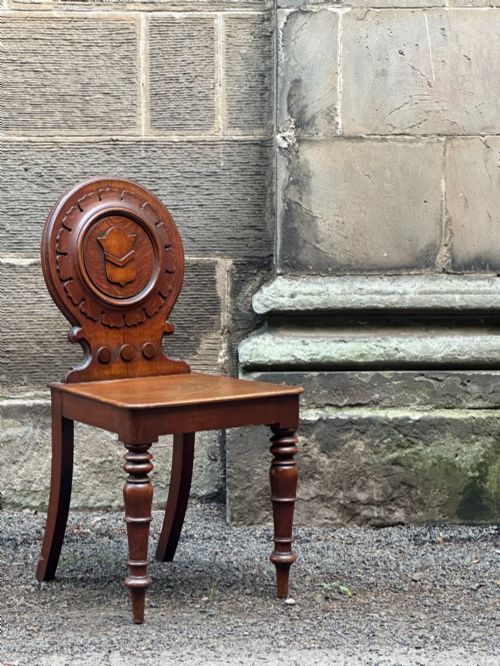
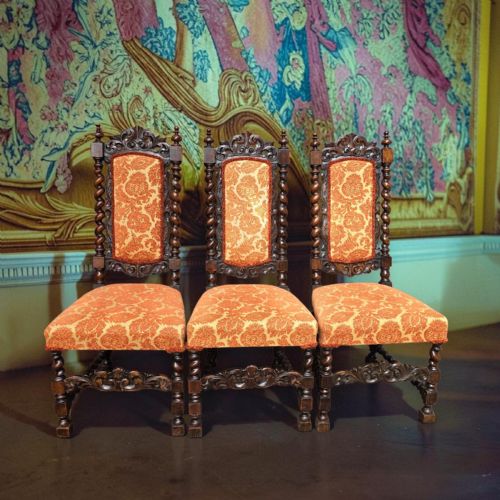
Nineteenth century gothic chairs draw heavily upon medieval ecclesiastical design, translating stone ornamentation into domestic wooden seating. Buyers exploring nineteenth century gothic chairs encounter various forms, with oak hall chairs and dining sets appearing most frequently on this page.
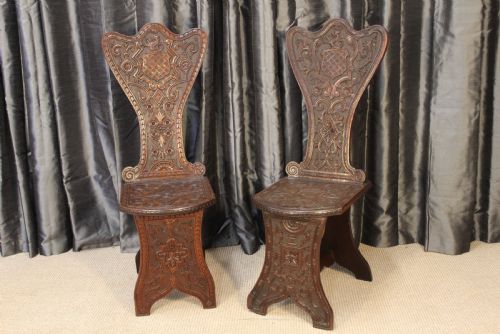
The selection spans sturdy English oak designs alongside French sets and Italian sgabello variants. Makers of the period utilised pattern books by figures such as A.W.N. Pugin to translate cathedral motifs into domestic chairs.
Armchairs, side chairs and folding Glastonbury forms make up the domestic repertoire of these nineteenth century pieces. Pitch pine and walnut also emerge among the timber varieties alongside heavier oak constructions.
Distinctions in craftsmanship
Quality rests upon the crispness of the timber carving and the selection of dense, well-figured oak or pitch pine. Superior examples exhibit deep relief work and careful joinery that remains rigid over generations of use.
The integration of specific design sources, such as documented Pugin patterns or French revival forms, elevates particular chairs above standard commercial production. Original upholstery elements and intact brass detailing also contribute to the standing of a piece.
One clever library armchair transforms into steps, proving nineteenth century Victorians loved secret furniture mechanisms.
The Nineteenth Century Gothic Chairs Glossary
- Glastonbury chair
- A traditional folding armchair with an X-framed base and sloped back, often associated with ecclesiastical revival designs. These chairs typically feature inscribed religious or secular mottoes along the top rail.
- Sgabello
- A lightweight wooden chair originating in the Italian Renaissance, featuring a supportive backrest and trestle-like slab legs rather than four conventional posts. Such chairs were traditionally placed in hallways for brief seating.
- Tracery
- Openwork ornamentation in stone or timber derived from Gothic window designs. This pattern frequently decorates the backs of nineteenth century chairs.
- Barley twist
- A turned wooden furniture leg resembling a twisted rope. This technique was popular in seventeenth-century furniture and revived during the Victorian era.
- Metamorphic furniture
- Pieces engineered to transform into alternative forms, such as a library armchair that unfolds into a set of steps. These multifunctional items required precise mechanical joints.
Nineteenth Century Gothic Chairs: Frequently Asked Questions
How do I use a gothic hall chair?
Hall chairs were historically placed in grand entranceways to provide brief seating for callers waiting to be announced. Today, they function well in hallways or as accent seating where floor space is limited.
Their upright backs and sturdy wooden construction encourage proper posture rather than lounging. Many collectors also use them as decorative statement pieces in dining rooms or studies.
What is a Glastonbury chair?
A Glastonbury chair is a specific type of ecclesiastical armchair featuring intersecting X-shaped legs and arms that slot together without complex hardware. This design derives from an ancient relic chair preserved at Glastonbury Abbey.
They offer a compact seating footprint while retaining a distinct medieval aesthetic. The folding construction made them practical for occasional seating in domestic settings.
Are these chairs comfortable for daily dining?
Many nineteenth century dining chairs feature solid wooden seats which prioritize durability and architectural form over plush padding. Sets that incorporate upholstered pads in leather or velvet offer a softer sit.
Buyers planning daily use often select padded variants or add removable cushions that complement the period aesthetic. The upright backs naturally encourage dining posture.