



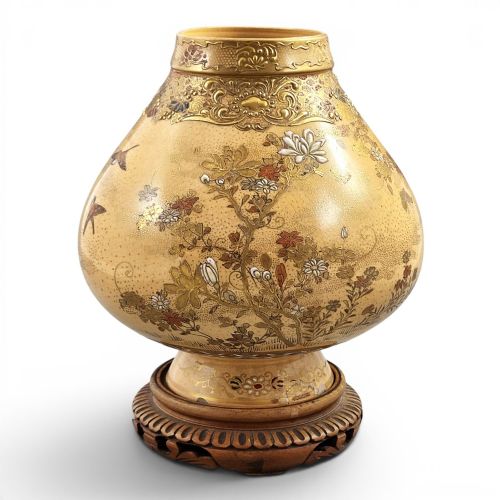


Gilt Earthenware Urn
These gilt earthenware urn pieces bring together delicate ceramic forms and rich metallic details, offering a distinct focal point for any room.
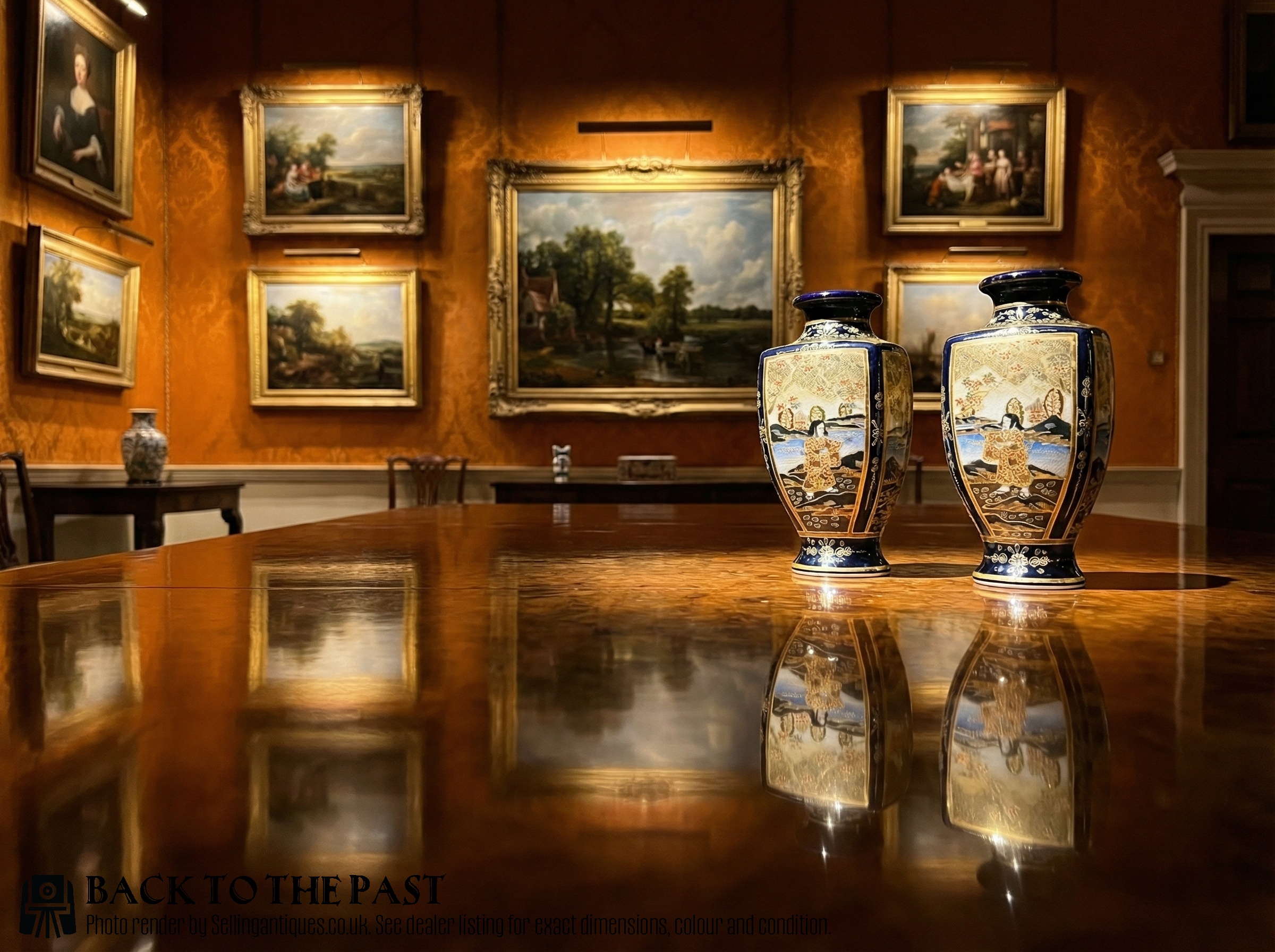
Gilt Earthenware Urn
A gilt earthenware urn takes the form of a decorative vessel, often configured as a baluster vase, hexagonal container, or lidded incense burner. When searching for a gilt earthenware urn, buyers encounter Japanese Satsuma ware from the nineteenth and early twentieth centuries alongside British production.
The objects span periods from the Victorian and Edwardian eras into the nineteen-twenties and nineteen-thirties, reflecting both Meiji craftsmanship and later decorative styles. These vessels serve primarily as ornamental centrepieces rather than functional containers for cut flowers.
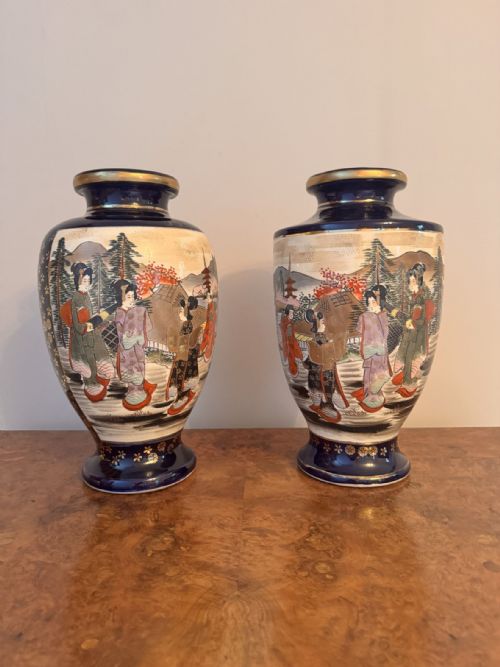
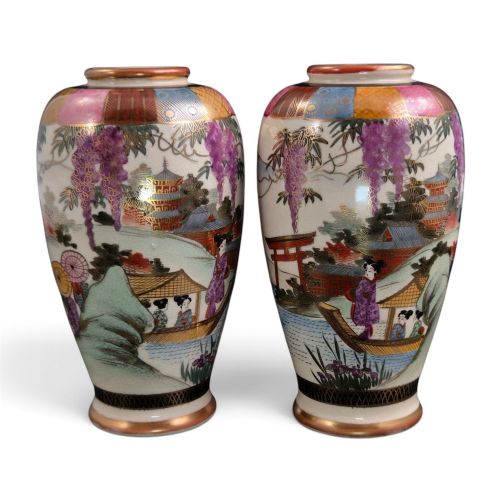
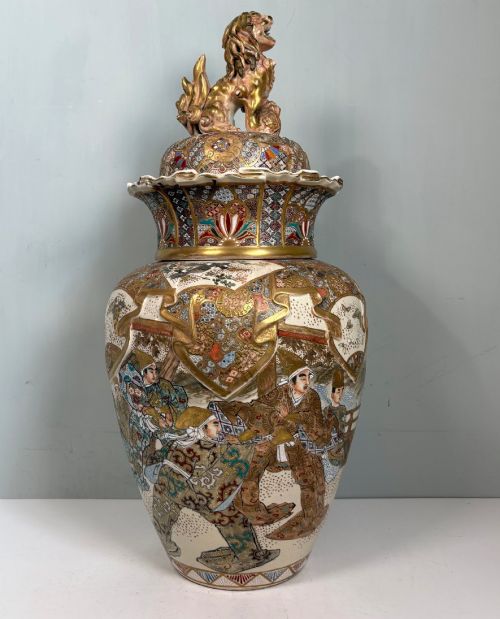
Most examples found within this selection are Japanese ceramic vases decorated with intricate figurative panels, floral scenes, and rich metallic highlights. Forms range from miniature cabinet pieces to monumental display vessels designed for grand interiors.
How they were made
Makers shaped local earthenware bodies on the potter's wheel or formed them within moulds, creating stable ceramic vessels ready for glazing. Artisans then applied colourful enamel paints alongside textured relief work known as moriage.
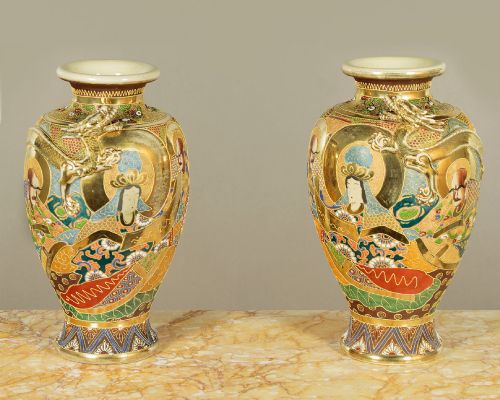
Gold leaf and gilt pigments were hand-painted onto the ceramic surface to frame intricate scenes of court figures, landscapes, and dragons. Wood bases occasionally accompanied these vessels, providing stable display platforms for delicate ceramic feet.
Gilt Earthenware Urn Retail Price Guide 2026
Typical asking prices for gilt earthenware urn among the pieces listed under this phrase on Sellingantiques today, from the lower quarter to the upper quarter. They describe what is for sale here now, not the wider market.
Arhats and dragons occasionally share a single ceramic vessel with serene wisteria gardens.
What varies in quality
The distinction between standard commercial output and exceptional studio work lies in the precision and density of the hand-painted decoration. Master workshops achieved finer lines in their figural processions and landscapes, utilising heavier gold leaf layers that caught the light distinctly.
Signed pieces from renowned kilns and identified artists demonstrate superior mastery over generic trade wares produced in larger quantities. The complexity of the vessel form, such as intricate bamboo-handle shapes or complex hexagonal geometries, further separates ambitious studio pieces from simpler production.
Maruni Kobe·Kinkōzan·Chosei·Nanzan·Seiko-en Chokei·Kizan·Hakusan·Hododa
The Gilt Earthenware Urn Glossary
- Moriage
- A decorative technique using piped clay slip to build up raised patterns and textures on the ceramic surface before glazing and gilding. This creates a tactile, three-dimensional effect across floral and figural designs.
- Satsuma
- A type of Japanese earthenware featuring a crackle-glaze finish, typically decorated with polychrome enamels and extensive gilding. The style originated in the Satsuma Province and gained immense popularity for export during the Meiji period.
- Koro
- A traditional Japanese incense burner featuring a perforated cover to allow aromatic smoke to escape. These vessels often stand on small feet and incorporate handles.
- Baluster
- A vase shape characterised by a rounded body that tapers toward a narrow neck and flares slightly at the rim. This traditional silhouette offers balanced proportions for display.
- Mon
- A Japanese heraldic badge or crest used to identify families or clans. These crests frequently appear on high-quality ceramic pieces to denote patronage or origin.
Gilt Earthenware Urn: Frequently Asked Questions
What is a gilt earthenware urn used for?
These vessels functioned primarily as ornamental display pieces within nineteenth and early twentieth-century interiors. Their detailed enamel work and gold ornamentation made them ideal for drawing rooms and cabinet displays.
Unlike utilitarian pottery, many included fitted lids or incense-burning configurations intended for aesthetic appreciation rather than practical holding tasks.
How do I identify a Meiji period piece?
Meiji period items generally date between eighteen sixty-eight and nineteen twelve, aligning with the reign of Emperor Meiji. Look for characteristic Satsuma earthenware bodies featuring fine crackle glazes and dense figural scenes.
Many of these objects bear painted artist signatures or workshop marks on the underside, pointing to specific Kyoto kilns and makers.
How should I display these urns at home?
Place these decorative vessels on sturdy surfaces away from high-traffic areas to protect their delicate handles and painted surfaces from accidental knocks. Ensure they sit out of direct sunlight to prevent the enamel colours and gilt work from fading over time.
Pairing them with stable wooden bases or enclosed cabinet shelving helps showcase their intricate detail safely.