





Meiji Era Painted Ceramic
These Japanese meiji era painted ceramic pieces combine intricate hand-painted decoration with rich gilding, offering collectors exceptional historical craftsmanship.
Meiji Era Painted Ceramic
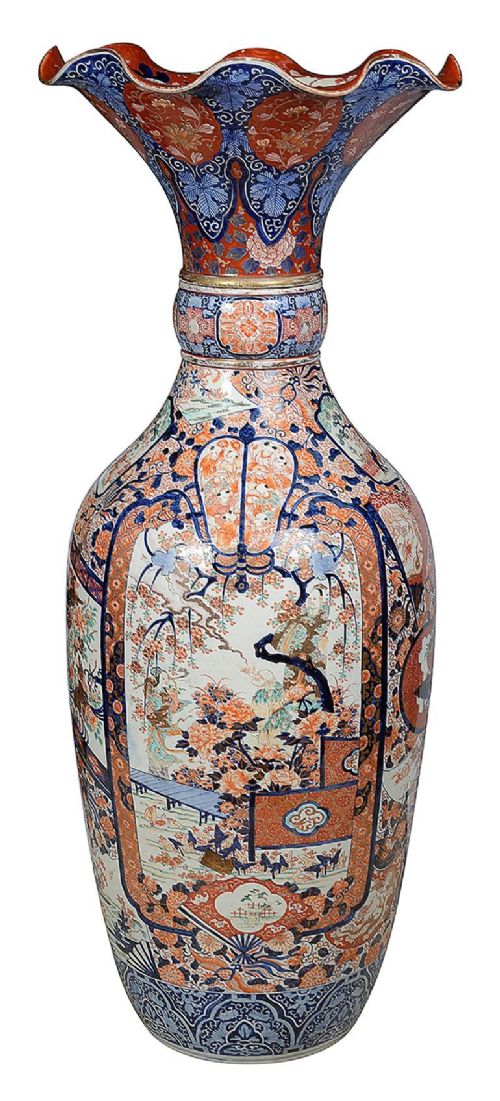
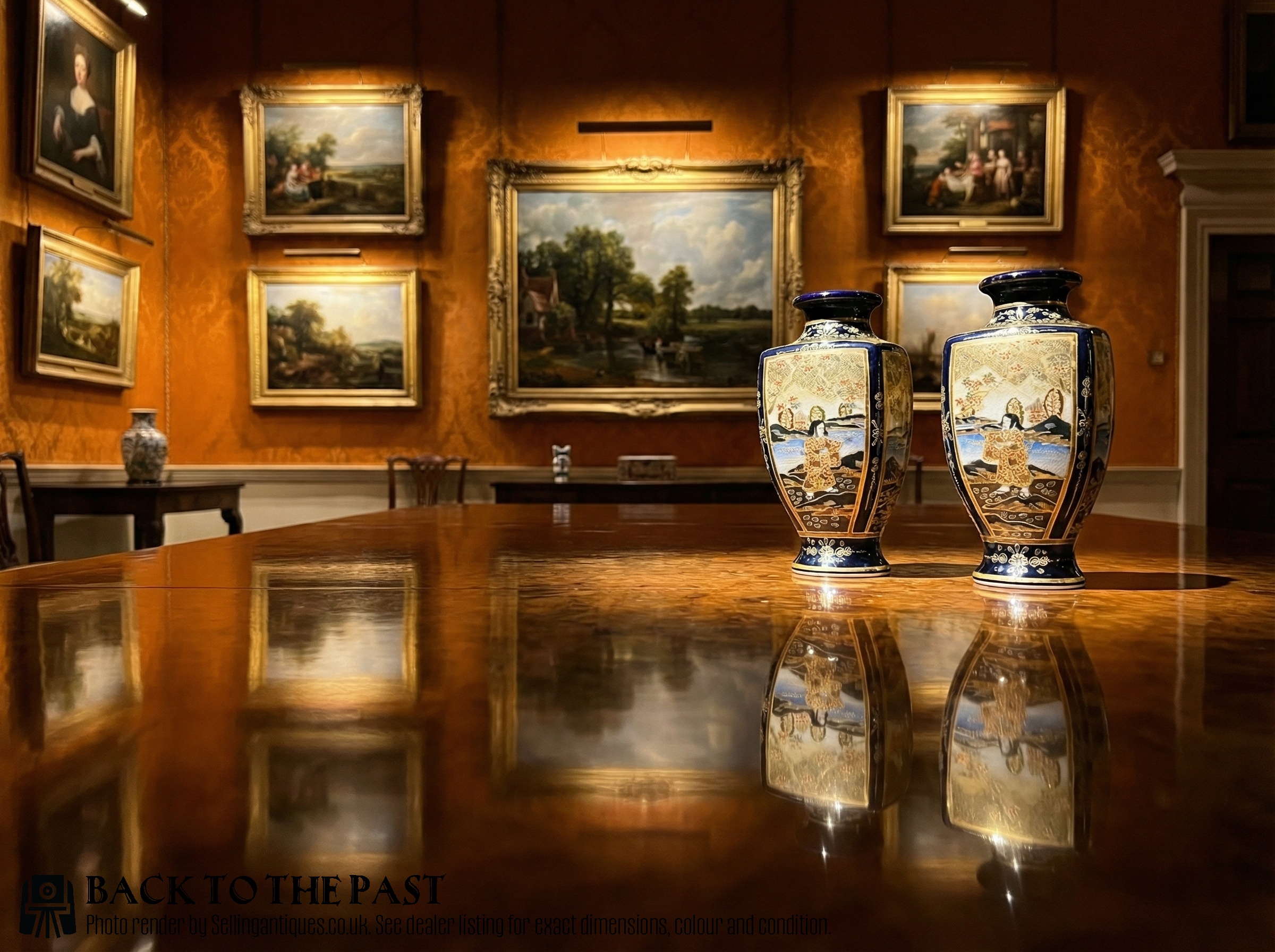
Buyers encounter distinct styles such as large floor vases, garniture sets, and delicate miniature vessels originating from Kyoto and other significant production centres. These works reflect the artistic output of the Japanese Meiji period, spanning periods from eighteen eighty to nineteen hundred.
Vessels often display elaborate figurative scenes depicting samurai, women, and children beneath camellia trees, or complex natural motifs featuring koi fish. Such items serve primarily as decorative focal points within interiors, ranging from compact cabinet pieces to substantial statement floor vases.
Materials and Construction
Artisans formed these objects using earthenware and porcelain bodies, which provided the foundational surfaces for subsequent painting and glazing techniques. Wood frequently appears as a complementary element in mounting or display contexts.
Makers applied intricate enamel designs, cobalt pigments, and gold leaf or gold gilt to the ceramic surfaces, often combining lacquer over black paint for added texture. These decorative layers were then fired to achieve durable, vibrant finishes across plates, chargers, and vases.
Meiji Era Painted Ceramic Retail Price Guide 2026
Typical asking prices for meiji era painted ceramic among the pieces listed under this phrase on Sellingantiques today, from the lower quarter to the upper quarter. They describe what is for sale here now, not the wider market.
Koi fish swim endlessly across black lacquer, outlasting the eras that painted them.
Evaluating Quality
Quality in these ceramic pieces rests upon the precision of the hand-painted brushwork and the complexity of the figurative or natural scenes depicted. Master artisans achieved superior definition in facial expressions, garment patterns, and botanical details.
The application and preservation of gold leaf, enamel, and gold gilt further distinguish finer works from standard production items. Pieces bearing recognised artist signatures or workshop marks generally demonstrate a higher tier of execution.
Kozan·Chosei·Shuzan·Yasuda·Kotobuki do
The Meiji Era Painted Ceramic Glossary
- Satsuma
- A type of Japanese earthenware featuring a crackle ivory glaze decorated with polychrome enamels and gold. It originated in Satsuma Province and became widely produced in Kyoto during the Meiji period.
- Imari
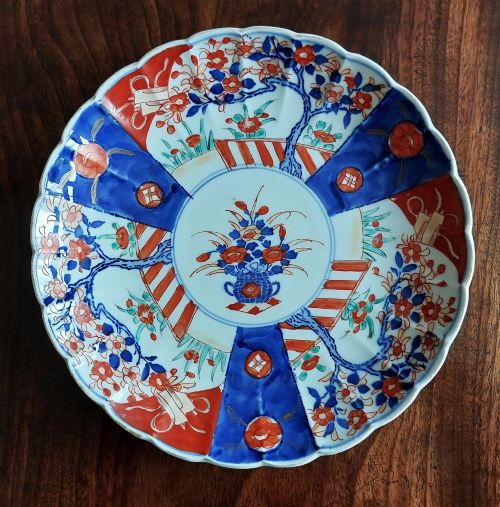
- A traditional style of Japanese porcelain characterised by underglaze blue, iron red, gold, and green enamel colours. These wares were heavily exported and prized for their ornate geometric and floral designs.
- Kutani
- A style of Japanese porcelain known for bold colour palettes, predominantly featuring greens, blues, yellows, purples, and reds. Artisans utilised these vibrant tones to cover surfaces with dense pictorial narratives.
- Garniture
- A matching set of vases or ornamental vessels designed for symmetrical display on a mantelpiece or cabinet top. They typically comprise three or five pieces of graduated or uniform size.
- Koro
- A traditional Japanese incense burner fitted with a pierced lid to release fragrance. These vessels often take miniature forms supported by small feet.
- Charger
- A large ornamental decorative dish intended for display on a wall or stand rather than for practical dining use. These items showcase expansive painted compositions across their broad surfaces.
Meiji Era Painted Ceramic: Frequently Asked Questions
What is Satsuma ware?
Satsuma ware is a distinct category of Japanese pottery recognised by its characteristic ivory-coloured earthenware body and fine crackle glaze. Artisans decorated these surfaces with detailed polychrome enamels and rich gold highlights.
These pieces often depict traditional historical scenes, samurai figures, and natural motifs such as flowers and birds. They were produced extensively during the Meiji period for both domestic use and international export.
How do I identify Imari porcelain?
Imari porcelain is readily identified by its distinctive palette, which traditionally combines underglaze cobalt blue with iron red and abundant gold gilt. The resulting designs are typically dense, incorporating brocade patterns and floral arrangements.
Unlike softer earthenware, Imari pieces utilise a durable porcelain body that produces a clear ring when tapped. The style originated in the town of Arita and was shipped through the port of Imari.
Where were these ceramics made?
These ceramics were produced in various kilns and workshops across Japan during the late nineteenth and early twentieth centuries, with Kyoto emerging as a primary centre for Satsuma production. Other regions specialised in Kutani porcelain and Imari wares.
Master craftsmen worked within established urban studios and potteries, often marking their output to signify the workshop or individual painter responsible for the decoration.
What do artist signatures indicate?
Artist signatures and workshop marks on the base of these ceramics denote the maker, studio, or specific painter involved in the creation of the piece. These inscriptions help attribute works to notable Meiji period figures.
Finding a clear signature often points to higher quality craftsmanship and provides greater context regarding the geographic origin and dating of the ceramic.