


Gilded Slip Mirror
A gilded slip mirror brings warmth and depth to a room through traditional framing and reflective glass.
Gilded Slip Mirror
When you search for a gilded slip mirror, you encounter wall mirrors and overmantel mirrors defined by distinct internal mouldings. The listings show forms ranging from circular convex glasses to large triptych overmantels.
Most examples originate from the Regency period and the nineteenth century, alongside later revivals. These pieces function as architectural focal points within domestic interiors.
How they were made
Craftsmen shaped frames from woods such as mahogany, walnut, pine, and ebonised wood, applying gesso to prepare surfaces for gilding. Giltwood finishes provide the characteristic metallic lustre seen across the pieces.
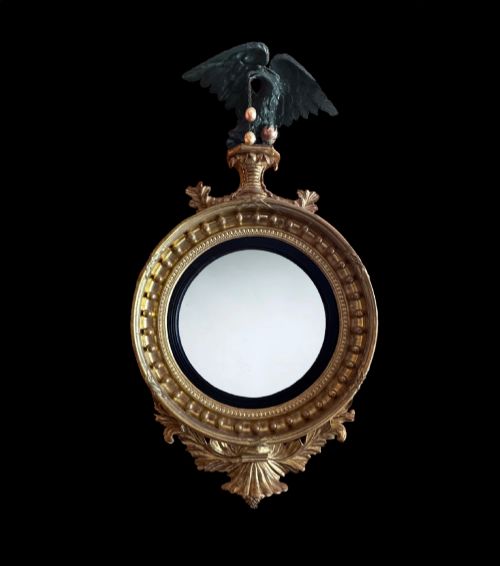
Mirror glass sits within these structures, often accompanied by slip elements in ebonised wood or gilt finishes. Carved details like eagle surmounts and acanthus columns appear on specific wall and overmantel formats.
Listings for gilded slip mirrors span the Regency, Victorian, and Georgian periods, utilising materials like gesso, walnut, and ebonised wood.
What varies in quality
The precision of the carved ornament separates standard framing from superior examples. Crisp details on eagle mounts and acanthus decoration indicate skilled workmanship.
The integrity of the original gilding and the condition of the mirror glass determine the overall character. Deeper moulding profiles and balanced proportions distinguish finer pieces.
The Gilded Slip Mirror Glossary
- Slip
- A narrow inner frame or moulding set between the main frame and the glass. This component is frequently ebonised or gilded.
- Convex mirror
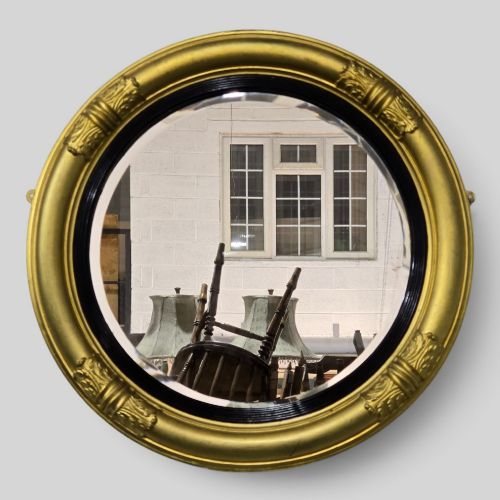
- A round mirror featuring a curved glass surface that reflects a wide, distorted field of view. These forms often incorporate spherical frames.
- Giltwood
- Timber coated with fine layers of gold leaf over a prepared gesso ground. This technique creates a luminous metallic surface.
- Overmantel mirror
- A wide mirror designed to hang above a fireplace mantelpiece. These pieces often feature triptych glass panels or architectural columns.
- Girandole
- A wall mirror fitted with attached candle sconces on the frame. The polished branches reflect additional candlelight into the room.
Gilded Slip Mirror: Frequently Asked Questions
How do I hang a heavy convex mirror?
These mirrors require secure wall fixings due to the weight of the timber frame and glass. Proper structural anchors ensure the piece remains safe.
Position the mirror at eye level to make the most of the convex reflection within the room.
What is an ebonised slip?
An ebonised slip is the dark inner border surrounding the mirror glass. It creates visual contrast against the outer giltwood frame.
This technique mimics ebony wood using stained or painted timber.
Where should I place an overmantel mirror?
Overmantel mirrors sit traditionally above a fireplace. Their generous proportions help anchor the wall space.
They also function effectively on large drawing room walls to bounce natural light.
How do I identify a Regency period mirror?
Regency mirrors frequently feature circular convex forms with reeded ebonised slips and ball-decorated frames. Eagle surmounts are another common period indicator.
Construction details and timber types help confirm the age of the piece.