


Antique Walnut Looking Glass
An antique walnut looking glass brings deep grain and warm tone to a wall, capturing centuries of domestic reflection.
Antique Walnut Looking Glass
An antique walnut looking glass is a wall mirror framed in rich timber, appearing across periods from William and Mary through the Edwardian era. You will find examples ranging from early eighteenth century cushion frames to nineteenth century fretwork and revival styles.
Most pieces function as wall mirrors or overmantle looking glasses, taking rectangular, arched, or architectural forms. The selection includes Dutch marquetry pieces, George II period designs, and French Louis Philippe interpretations.
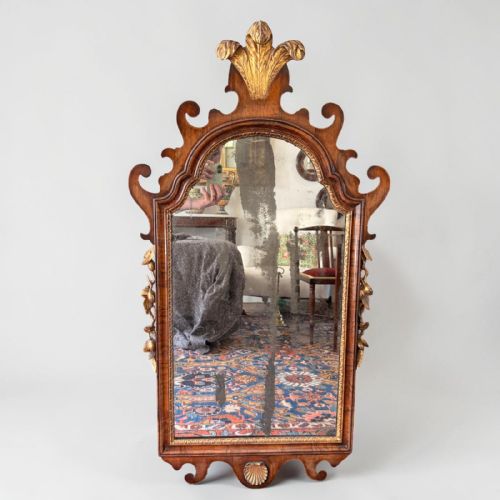
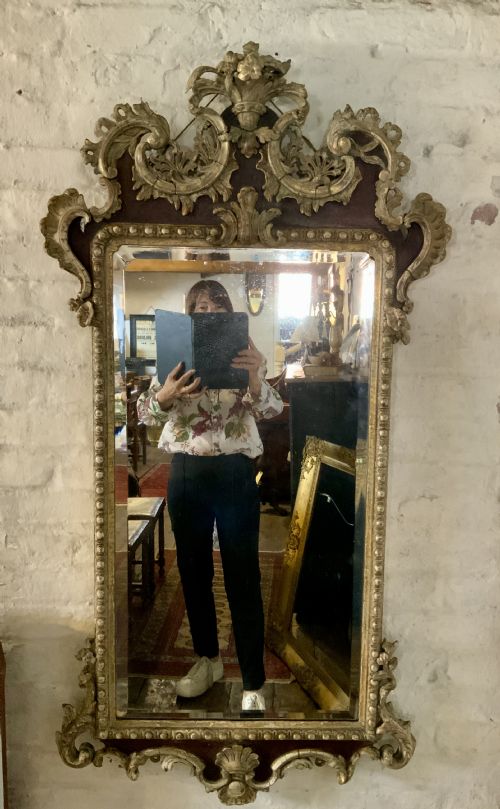
Makers utilised the distinctive grain of walnut, often enhancing the timber with parcel gilt, boxwood stringing, or gesso details. These mirrors served both utilitarian and decorative purposes in reception halls and formal rooms.
Materials and construction
Frames are constructed from walnut, frequently featuring burr walnut veneers or marquetry inlay set into the primary timber. Craftsmen added parcel gilt elements, boxwood accents, and carved gesso to highlight architectural mouldings and sight edges.
Mirror glass varies from early Vauxhall plates with bevels to later replacements fitted within the historical frames. Joinery methods include pegged joints and cushion mouldings designed to hold heavy glass securely.
The listings span from 1700 to the Edwardian era, featuring walnut, giltwood, gesso, and boxwood across George II, Queen Anne, and French Louis Philippe styles.
Markers of quality
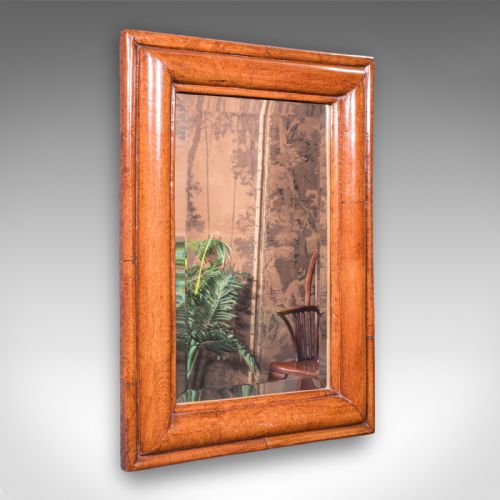
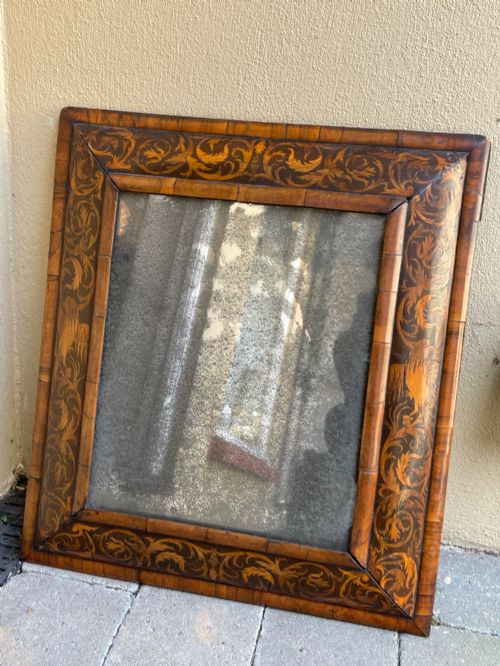
Quality rests in the depth of the walnut timber and the crispness of the carved details or fretwork. Early cushion frames show intricate marquetry inlay, whilst later pieces rely on the natural figure of burr walnut.
The integration of original parcel gilt and gesso work distinguishes finer examples. Proportions play a role, with larger scale pieces demonstrating balanced sight lines and substantial architectural presence.
The Antique Walnut Looking Glass Glossary
- Parcel gilt
- Partly gilded with gold leaf. This technique highlights carved mouldings and details against the dark walnut timber.
- Vauxhall mirror
- A mirror plate featuring a bevelled edge, produced by the famous London glasshouse. These plates often show slight age foxing.
- Marquetry
- Inlaid patterns of wood veneer forming decorative motifs. Craftsmen utilised this on cushion mirrors and Dutch wall pieces.
- Gesso
- A plaster mixture applied to wood frames before gilding. It provides a smooth base for intricate carved decorations.
- Cushion mirror
- A frame with a rounded, convex profile resembling a cushion. This style appeared during the late seventeenth and early eighteenth centuries.
Antique Walnut Looking Glass: Frequently Asked Questions
How do I hang a heavy looking glass?
Ensure the wall fixings engage directly with structural studs or use heavy-duty wall anchors rated for the weight of the timber frame.
Check that the original hanging rings or modern strap hangers on the back are secure before mounting the piece at eye level.
Are the mirror plates original?
Many early looking glasses retain their original Vauxhall plates, which often exhibit characteristic oxidation, speckling, and light foxing.
Replacement glass is common in pieces that survived centuries of use, so inspect the plate for bevels and thickness.
How do I clean walnut frames?
Dust the timber gently with a dry, soft cloth to remove surface particles without disturbing the grain or any parcel gilt sections.
Avoid commercial liquid polishes and waxes that build up residue over time, opting instead for professional conservation products if needed.
What rooms suit these mirrors?
Reception halls, dining rooms, and parlours provide traditional settings where the dark wood tones complement period furniture.
Overmantle placement remains a classic choice, reflecting light and adding architectural depth to living spaces.
How do I date a walnut mirror?
Examine the construction methods, backboards, and framing styles, such as William and Mary cushion moulding or Georgian fretwork.
Material choices like boxwood stringing and the presence of parcel gilt or gesso also point toward specific design periods.