

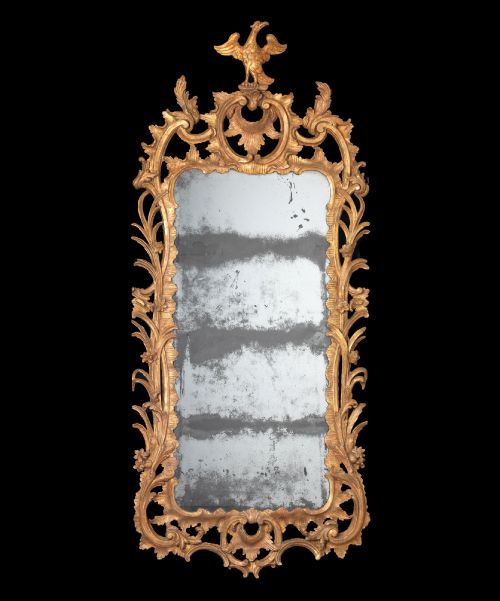
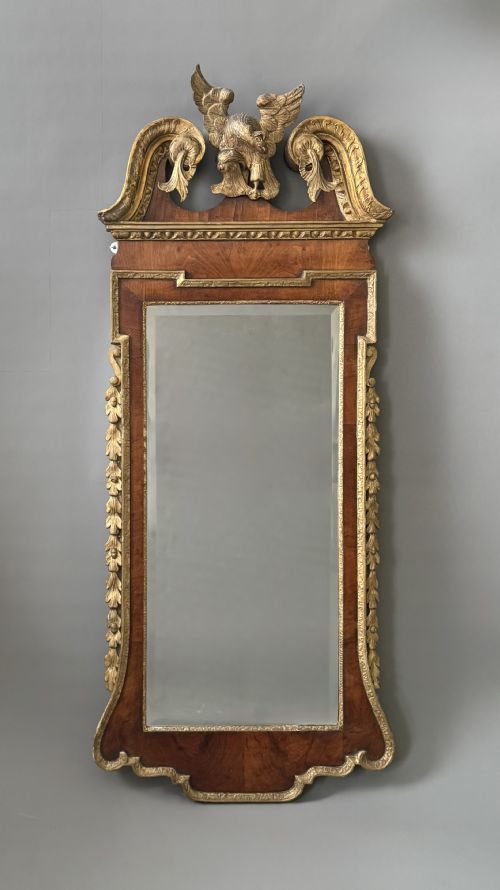
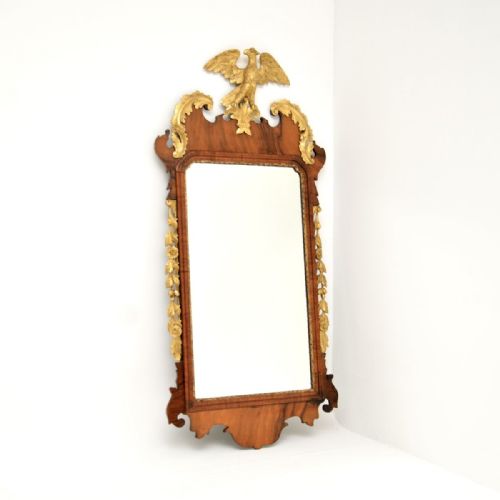
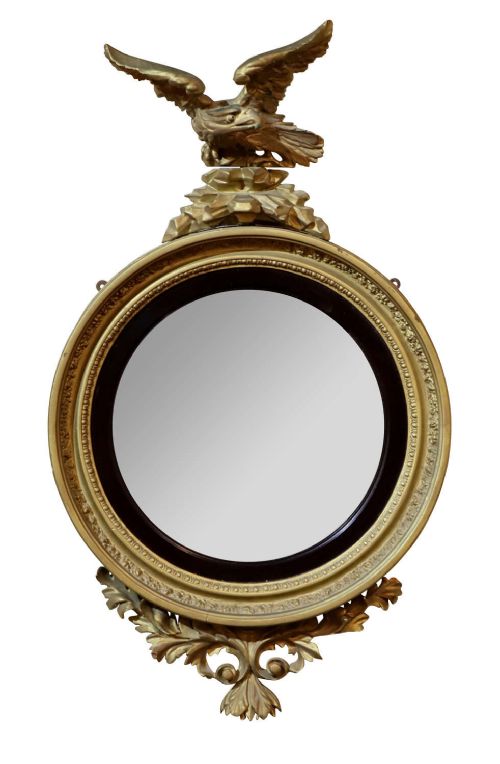




Carved Eagle Mirror
A carved eagle mirror brings historical presence to a room, using classical bird crests and gilt frames to command attention.
Carved Eagle Mirror
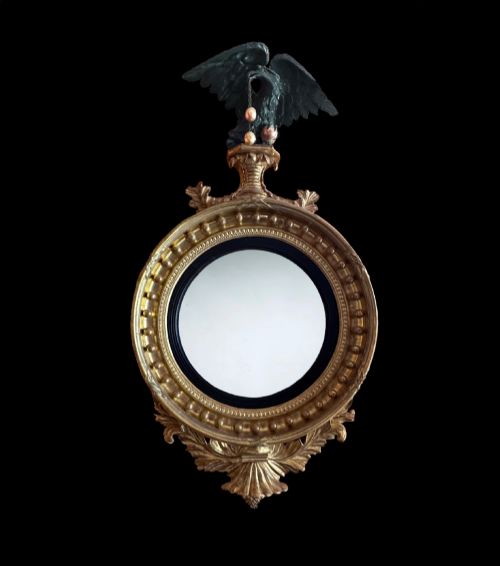
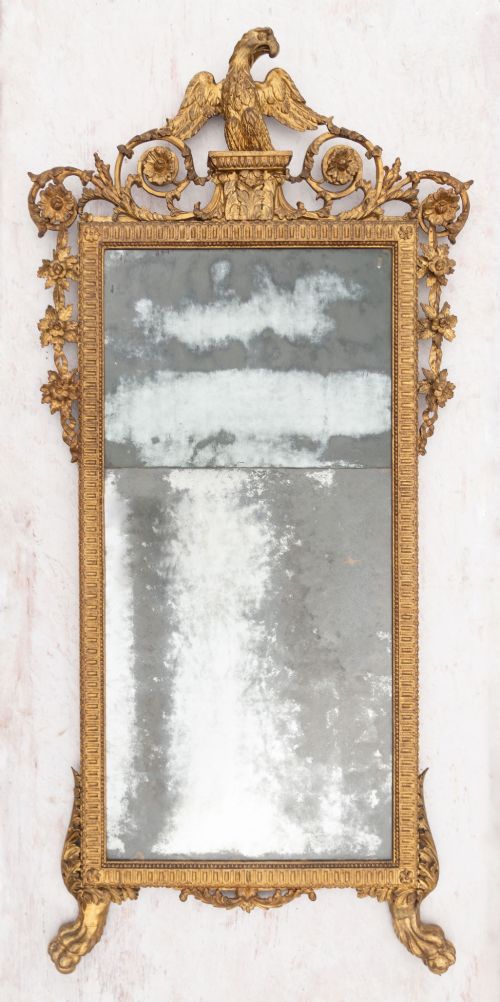
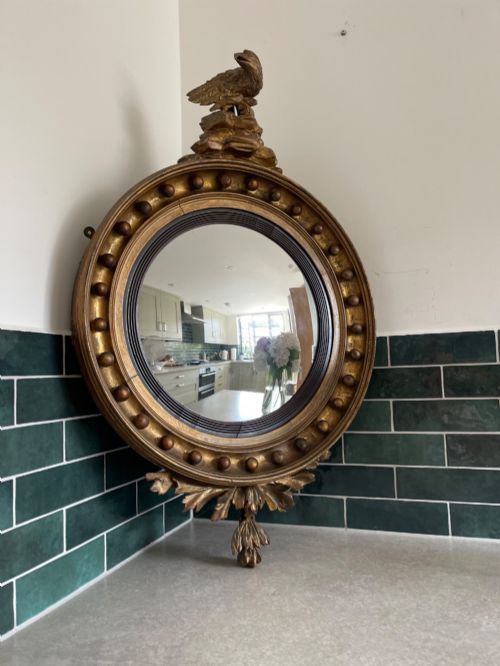
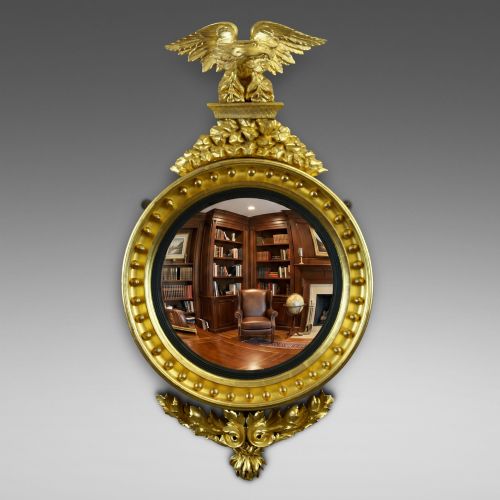
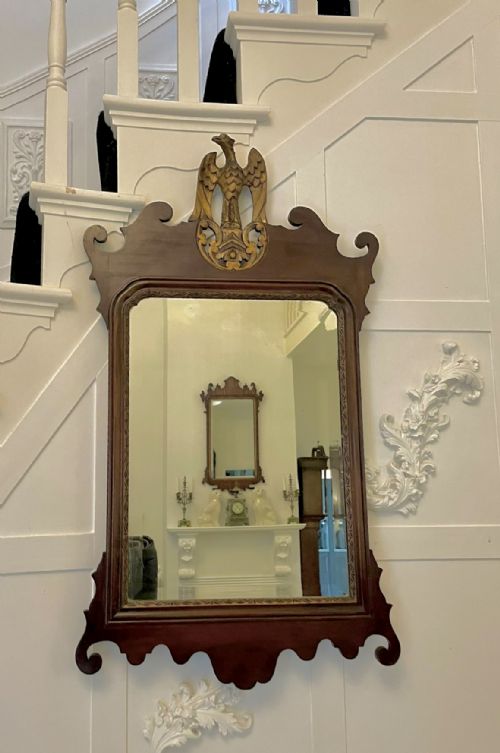
A carved eagle mirror is a framed wall glass featuring a carved raptor surmount, most frequently encountered in round convex formats from the Regency and Georgian periods. These pieces combine functional reflection with assertive bird carvings perched at the crest, often holding chains or balls in their beak.
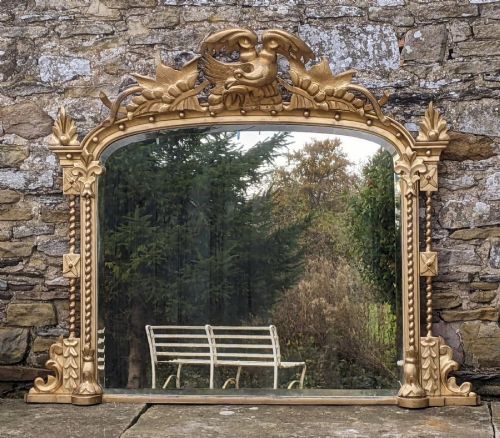
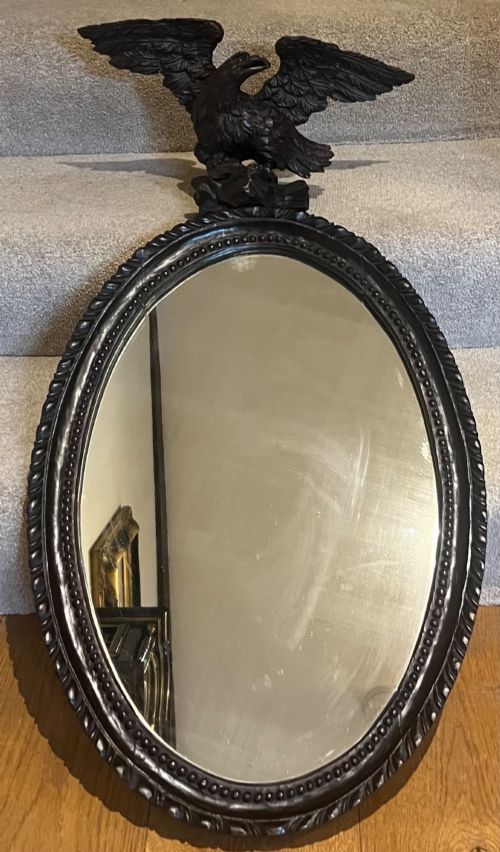
The selections span centuries from the eighteenth through to the Edwardian era, taking form as circular convex glasses, rectangular wall mirrors, and large overmantels. Walnut, mahogany, and giltwood provide the primary structures for these ornithological ornaments.
Originating in formal interiors, these wall mirrors use the eagle motif to project authority and classical taste. The design draws on stylistic revivals from George II and Chippendale traditions alongside authentic period manufacture.
How they were made
Makers shaped these frames from solid timbers including mahogany, walnut, and ebonised wood, applying carved gesso layers to build up intricate surface ornamentation. Gilding with gold leaf onto gesso grounds created the bright reflective surfaces characteristic of Regency and Georgian examples.
Convex mirror glasses were blown and silvered by hand, creating curved surfaces that gathered light across an entire interior space. Wood carvers worked the bird figures in the round, rendering feather details and wing spreads with deep relief before mounting them to the frame crests.
Carved Eagle Mirror Retail Price Guide 2026
Typical asking prices for carved eagle mirror among the pieces listed under this phrase on Sellingantiques today, from the lower quarter to the upper quarter. They describe what is for sale here now, not the wider market.
Many of these eagles spend centuries clutching little chains in their beaks, keeping watch over generations of drawing rooms.
What varies in quality
The definition and depth of the wood carving separate superior examples from simpler production, particularly in the rendering of the eagle feathers and talons. Crisp chisel work on the bird surmount and balanced proportions in the surrounding frame indicate higher workshop standards.
The survival of original gilding and gesso without heavy restoration preserves the intended brilliance of the piece. Additionally, the clarity and age of the mirror glass itself contribute significantly to the character and integrity of the surviving object.
The Carved Eagle Mirror Glossary
- Convex mirror
- A circular glass curved outward to provide a wide-angle reflection of the room. These are often fitted with eagle crests.
- Giltwood
- Timber coated with gold leaf applied over a prepared gesso base. This technique defines the bright finish of many period frames.
- Gesso
- A plaster mixture applied to wood frames to create a smooth surface for carving or gilding. It allows for intricate relief ornamentation.
- Parcel gilt
- A decorative treatment where parts of a wooden frame are gilded while remaining areas show natural timber like walnut or mahogany.
- Surmount
- An ornamental feature placed at the very top of a mirror frame. The eagle serves this exact role on these pieces.
- Girandole
- A mirror featuring attached candle sconces on the frame. These branch out to multiply the light reflected in the room.
Carved Eagle Mirror: Frequently Asked Questions
Where should I hang a convex mirror?
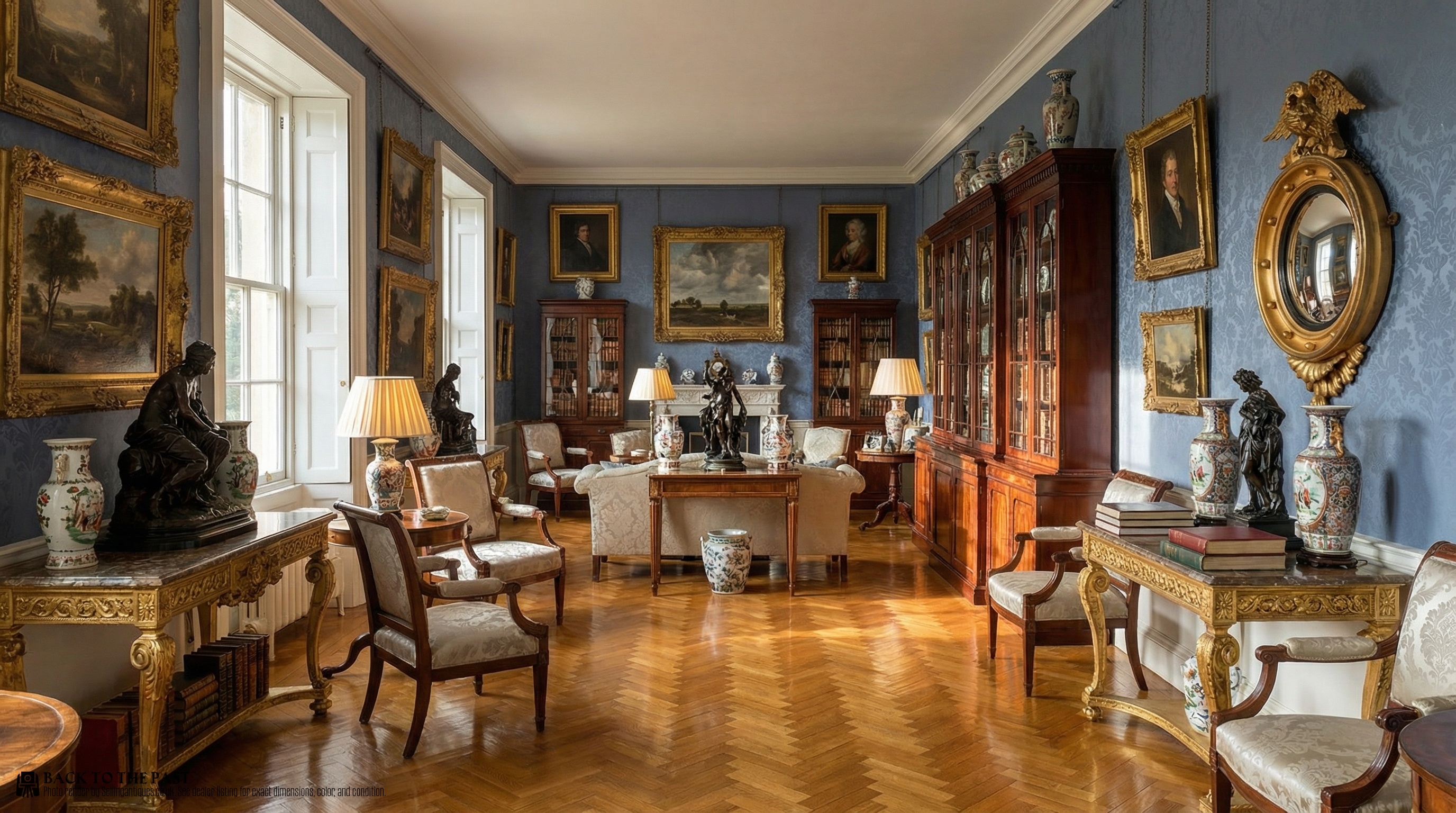
These round glasses work best on principal walls where they can gather light from windows and reflect the breadth of an interior.
Because convex mirrors shrink the field of view into a wide spherical perspective, placing them opposite a light source maximises their decorative impact.
How do I identify a Regency period mirror?
Regency pieces often display circular convex forms framed in giltwood with reeded ebony inner rings and heavy eagle crests.
Look for construction methods appropriate to the early nineteenth century, including timber backboards and hand-applied gesso mouldings.
Are Black Forest mirrors different from English ones?
Black Forest mirrors utilise distinct deep-relief carvings in natural timber, frequently featuring walnut without the gilt finishes common in Georgian work.
The carving style on these continental pieces tends towards naturalistic foliage and powerful bird forms rather than classical architectural symmetry.
How do I clean an antique gilt frame?
Dust giltwood surfaces gently with a soft, dry brush to prevent the removal of thin gold leaf layers.
Avoid liquid cleaners entirely, as moisture and chemicals damage both historic gesso and nineteenth-century gilding.