
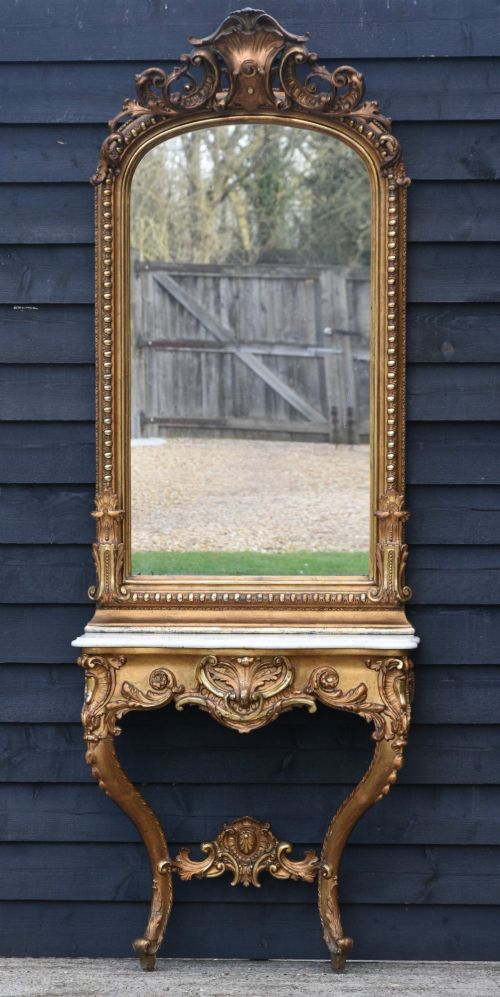
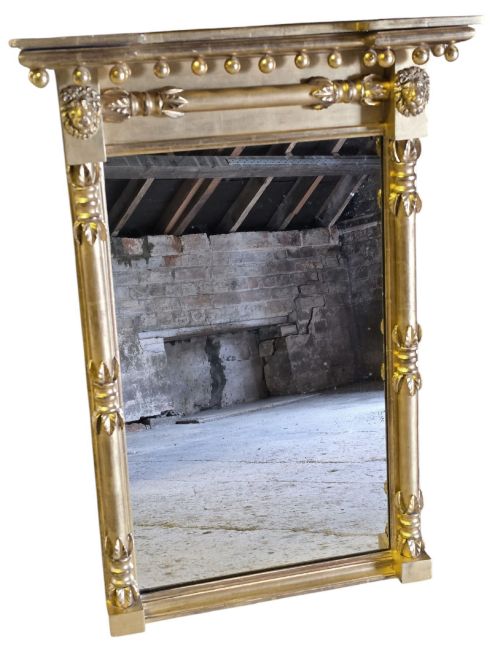
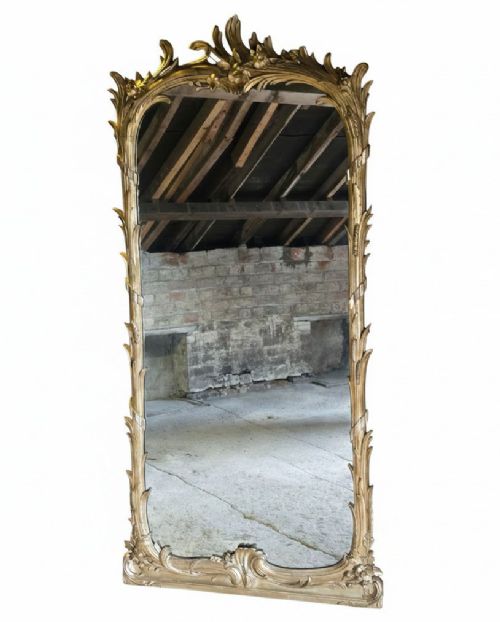
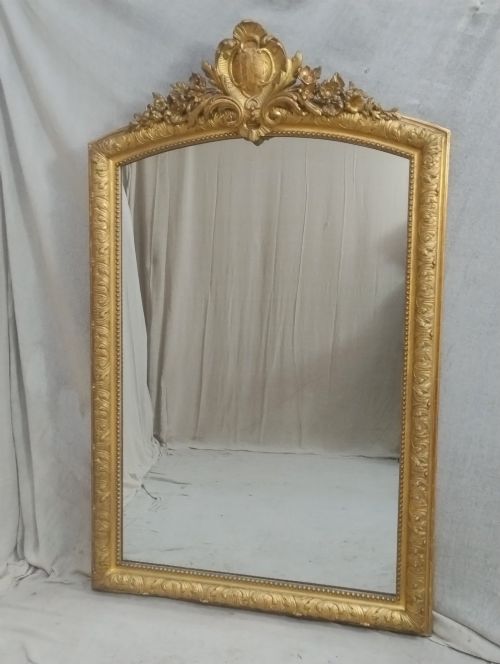
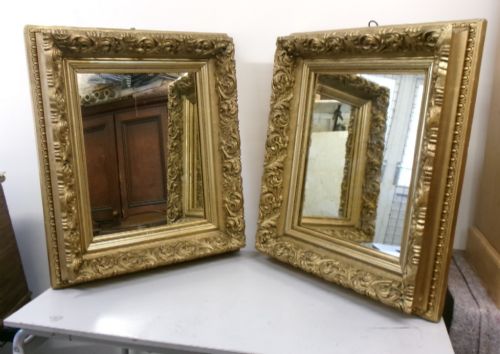

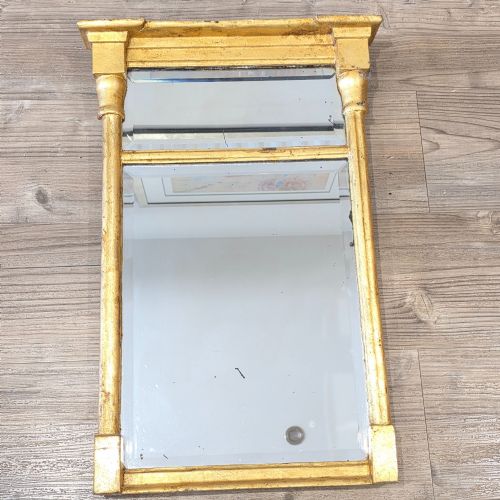
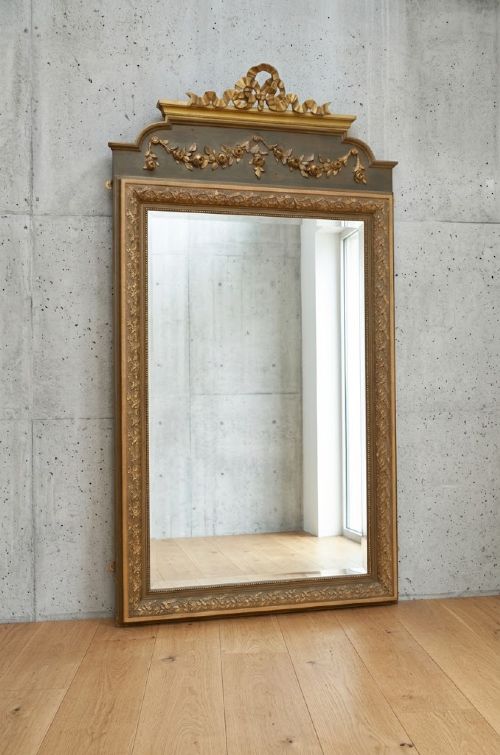
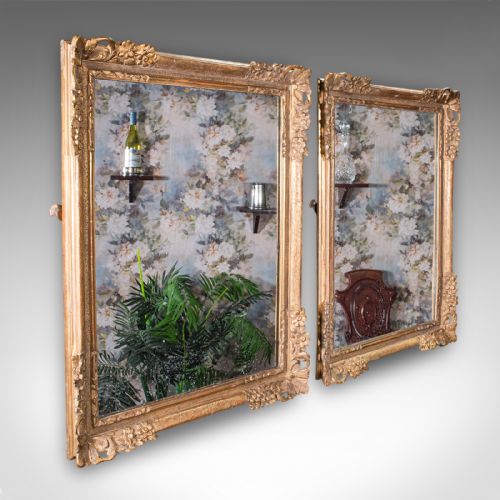
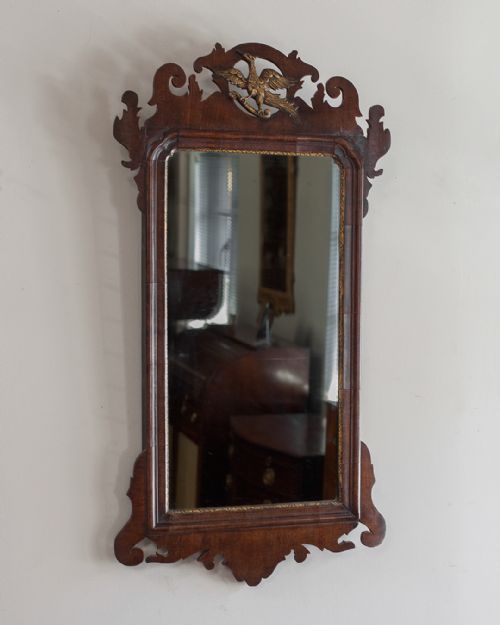
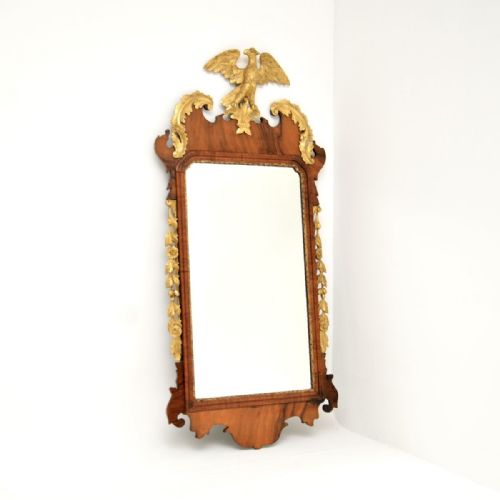
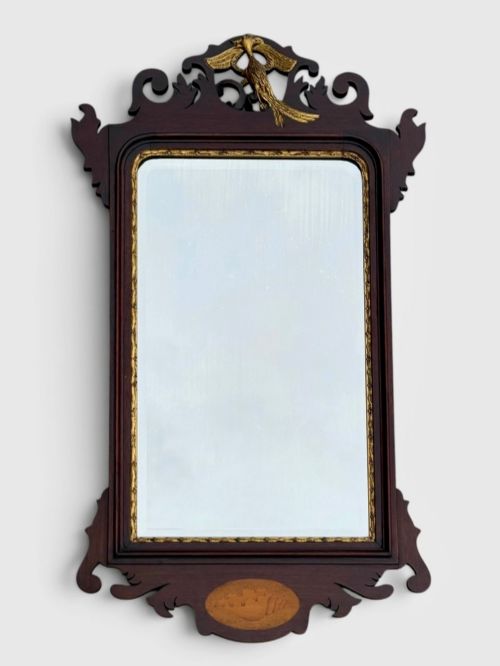
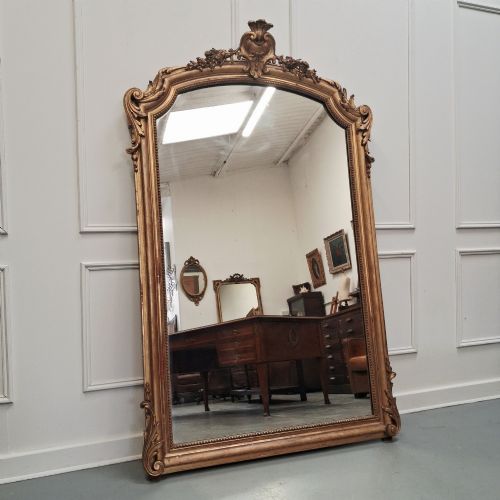
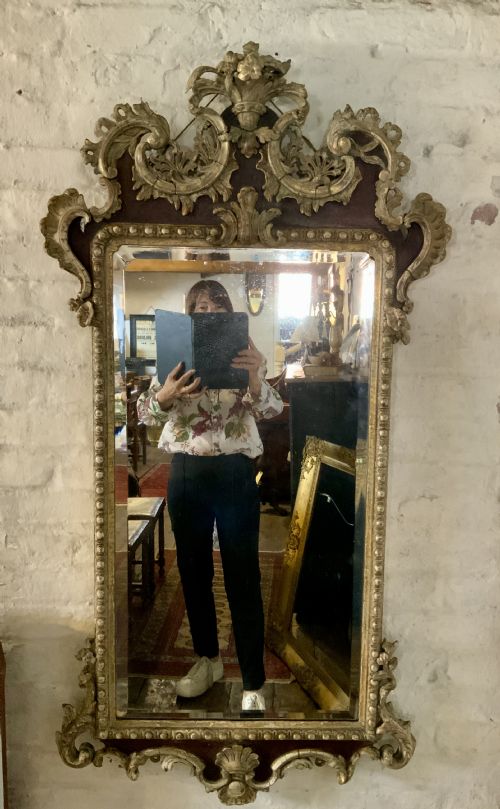
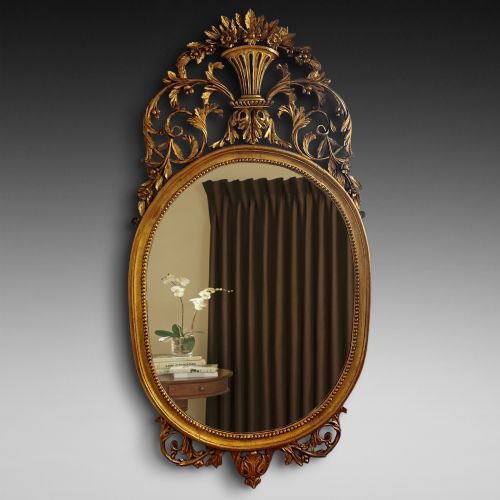
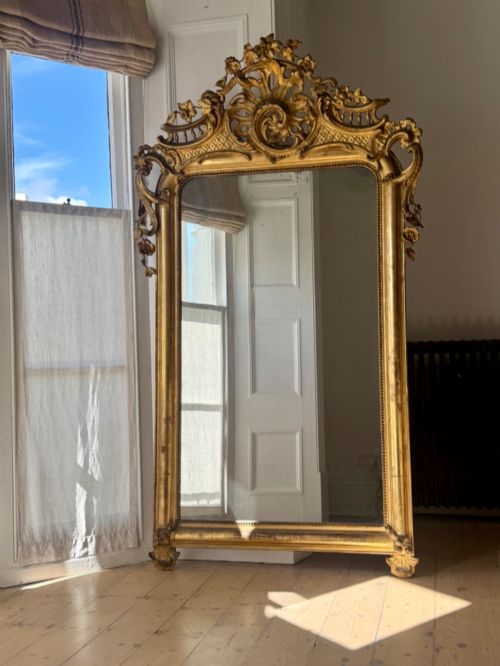
Gilded Pier Mirror
When you search for a gilded pier mirror, you are looking at tall, vertical looking glasses designed to hang between windows or above console tables.
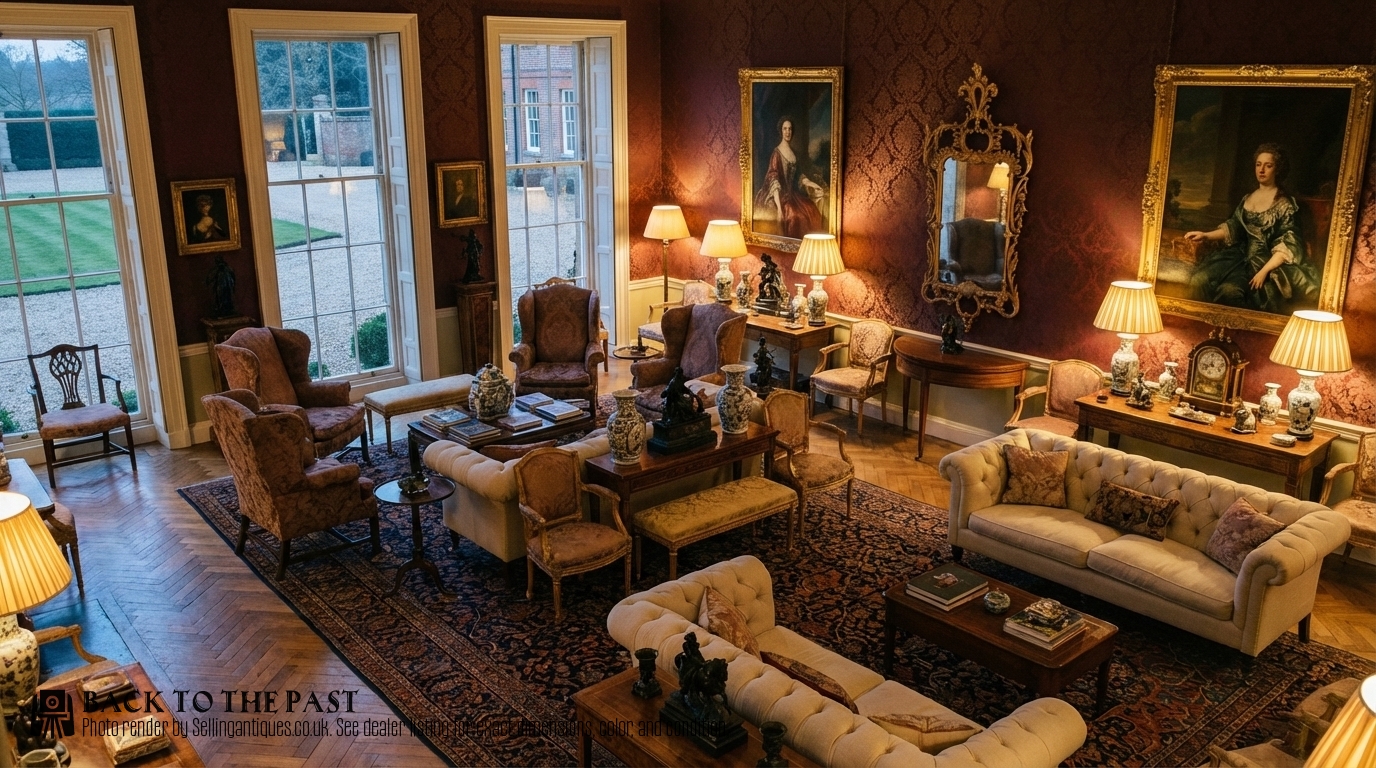
Gilded Pier Mirror
A gilded pier mirror sits between architectural openings, originally intended to reflect light into darker corners of formal rooms. You will frequently encounter examples from the eighteenth and nineteenth centuries, spanning Georgian, Regency, and Napoleon III eras.
The vertical proportions dominate the category, often accompanied by console tables, trumeau panels, or verre églomise sections above the main glass plate. English and French workshops produced the majority of these pieces, utilising classical motifs such as lion masks, pineapple finials, and ribbon crests.
Surviving examples range from modest domestic looking glasses to monumental wall mirrors designed for country house drawing rooms. The evidence shows frequent appearances of neoclassical styling, Rococo revival curves, and parcel gilt highlights on mahogany or walnut frames.
Materials and Construction
Makers built the foundational frames using timbers such as pine, oak, mahogany, or walnut, which provided a stable base for decorative carving and gesso work. Craftsmen applied layers of gesso to the carved wooden frame to create a smooth, responsive surface for gilding.
Water gilding or oil gilding techniques applied thin sheets of gold leaf to the prepared surface, capturing light and producing a rich metallic sheen. Many early pieces incorporate original mercury glass plates, while others feature reverse-painted verre églomise panels set into the upper portion of the frame.
Gilded Pier Mirror Retail Price Guide 2026
Typical asking prices for gilded pier mirror among the pieces listed under this phrase on Sellingantiques today, from the lower quarter to the upper quarter. They describe what is for sale here now, not the wider market.
A few lucky mirrors still keep their original marriage inscriptions and pastoral oil paintings tucked safely above the glass.
Markers of Quality and Craft
The depth and crispness of the hand-carved wood ornamentation dictate the baseline quality of the frame. Superior pieces display finely detailed relief work in the gesso and wood, whereas lesser examples rely on cast composition ornament applied to simpler structures.
The integrity of the reflective surface matters greatly, with original mercury glass plates or intact verre églomise panels commanding higher regard among collectors. Furthermore, the cohesion between the original gilding layers and the underlying structure reveals the care taken during initial manufacture.
Gillows Of Lancaster·Pier Luigi Colli·Nosotti
The Gilded Pier Mirror Glossary
- Giltwood
- Wood that has been coated with gold leaf or gold paint. This finish defines the reflective, luminous appearance characteristic of formal period mirrors.
- Verre Eglomise
- A cold decoration technique where design is applied to the reverse of glass using gold or silver leaf and pigment. It frequently appears in the upper panels of Regency pier glasses.
- Gesso
- A plaster mix applied to wood frames to create a smooth surface for carving and gilding. It allows for intricate relief details that hold gold leaf effectively.
- Trumeau
- A decorative wall panel featuring a mirror combined with an oil painting or carved motif. These tall pieces were popular in French interiors.
- Mercury Glass
- A silvered glass type produced by coating the inner walls of double-walled blown glass with a liquid mercury amalgam. It creates a distinctive, mottled reflection found on older mirrors.
- Pier Glass
- A large mirror designed to hang on the wall space between two windows. It often pairs with a matching console table situated directly beneath it.
Gilded Pier Mirror: Frequently Asked Questions
What is a pier mirror?
A pier mirror is a tall, vertical looking glass specifically designed to hang on the narrow wall space, known as the pier, situated between two windows. These mirrors were traditionally positioned to bounce natural light back into the room.
Over time, makers adapted the form to sit above console tables or mantelpieces, incorporating decorative crests, painted panels, and carved giltwood frames to suit formal interiors.
Where should I hang a pier mirror?
These mirrors suit locations with sufficient vertical wall space due to their tall proportions. Placing one above a console table, a low sideboard, or in an entrance hallway highlights their architectural origins.
Ensure the wall fixings can support the substantial weight of a heavily carved wooden and glass frame, particularly for large nineteenth-century examples.
How do I spot original glass?
Original glass plates often exhibit minor foxing, subtle surface distortion, and slight darkening at the edges where the backing has aged. Mercury glass displays a deep, warm reflection rather than the flat clarity of modern float glass.
Examining the back of the mirror reveals how the plate is secured into the frame, with older pieces typically utilising traditional wooden battens and hand-cut wedges.