


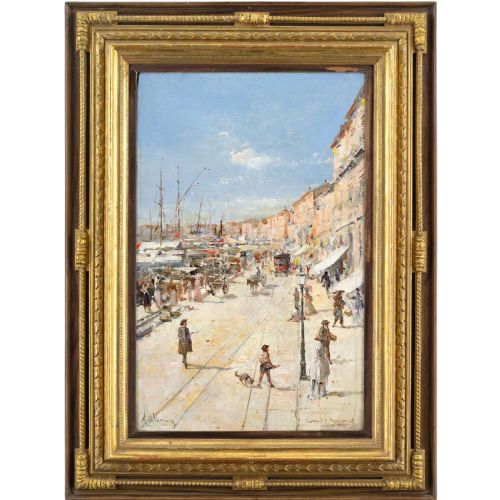
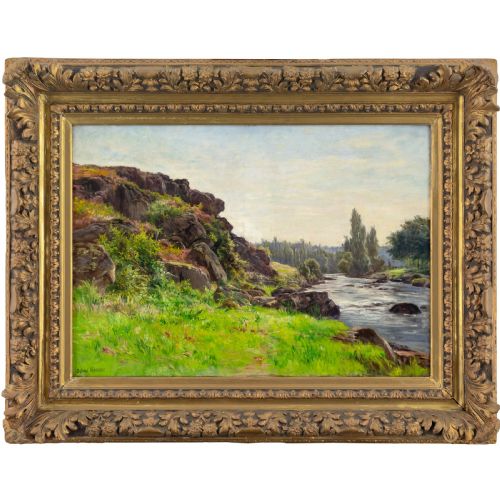
Gilded Frame Landscape
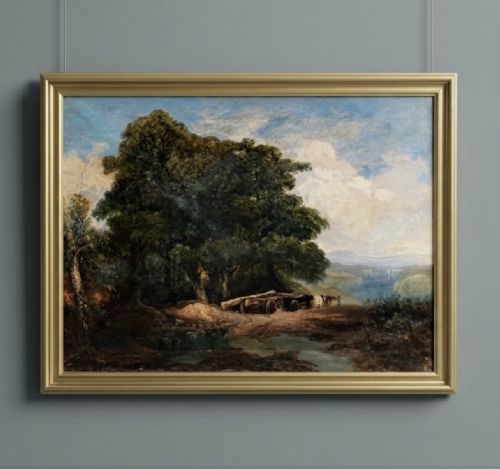
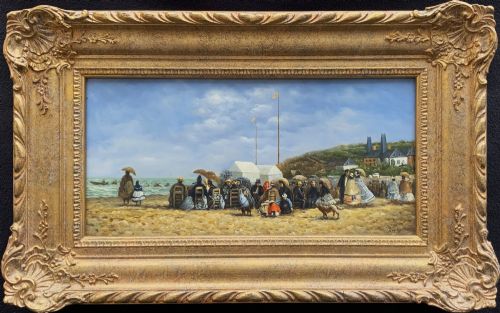
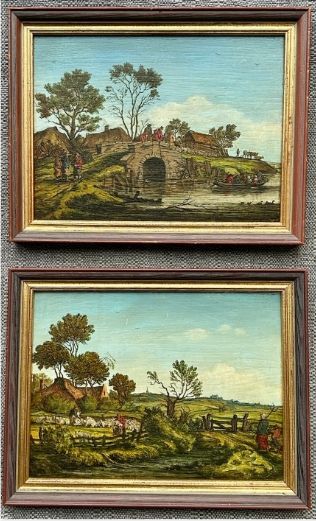
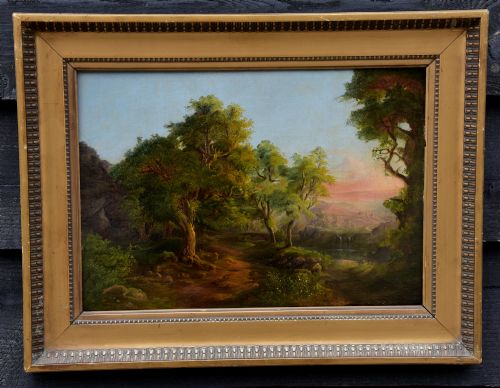
A gilded frame landscape brings warmth and depth to a room, offering a window into pastoral and rural scenes through historic oil paintings.
What a gilded frame landscape is
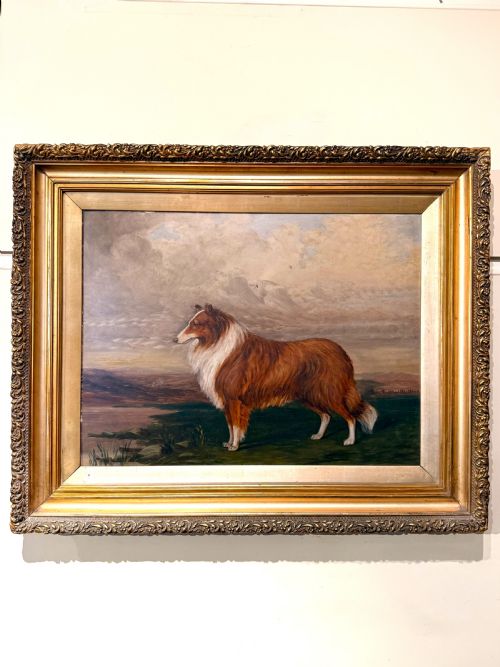
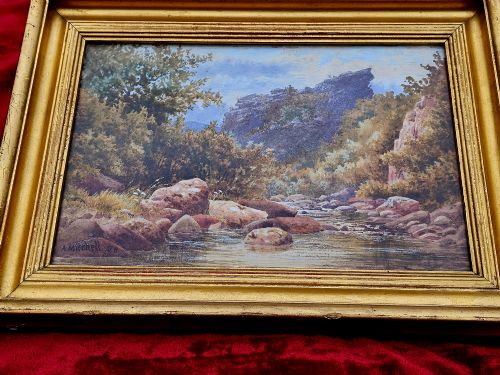
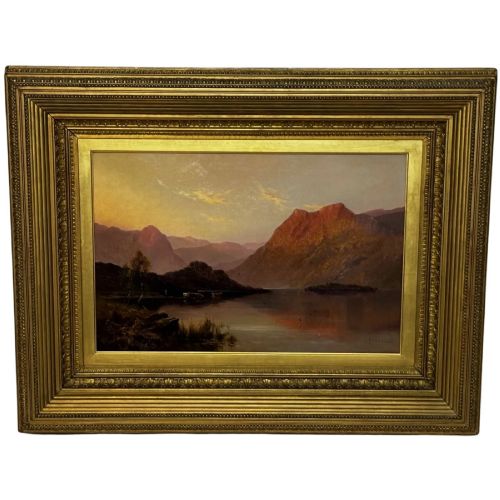
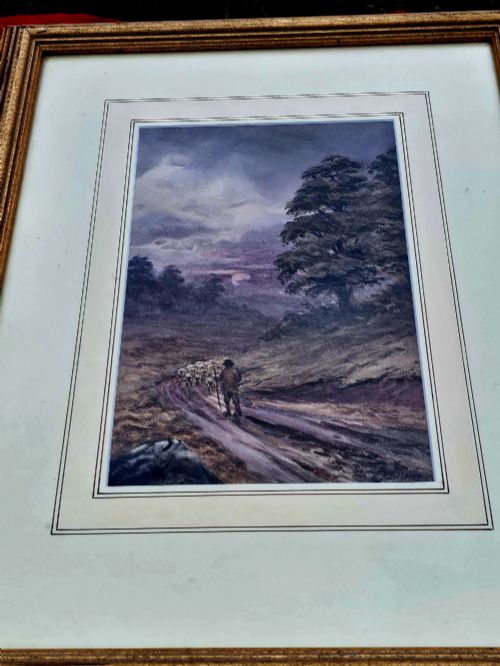
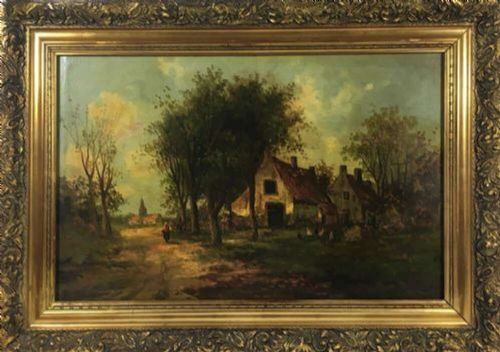
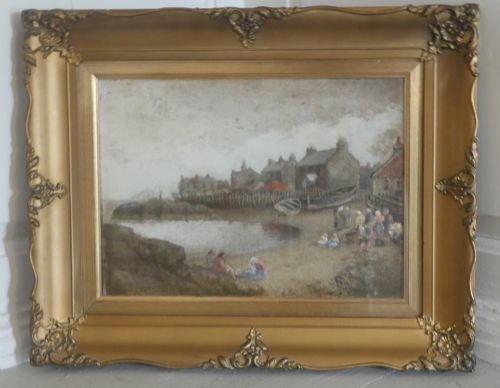
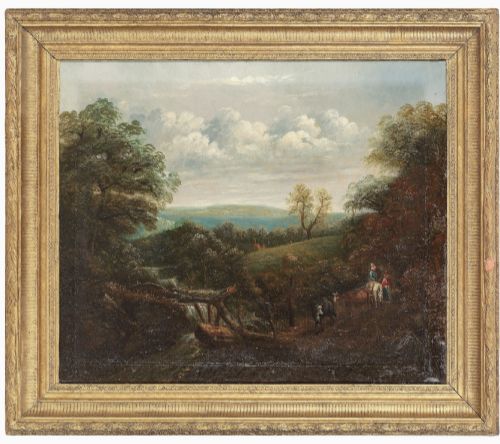
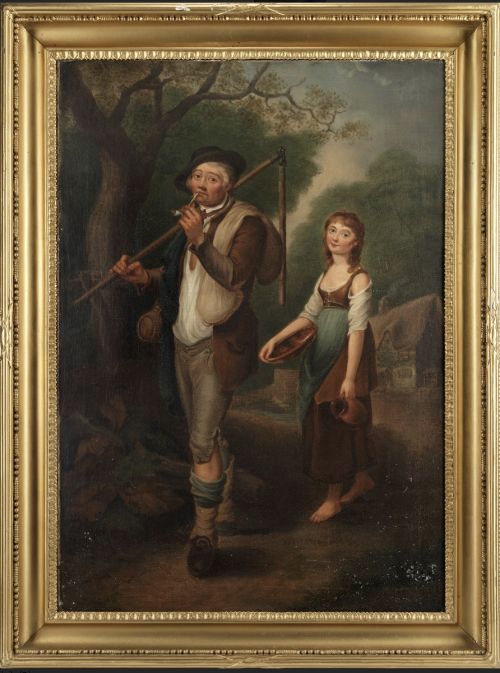
A gilded frame landscape is an oil painting depicting rural views, figures, or rivers, housed within a frame finished in gold leaf or gilt. These works draw the eye with their combination of painted scenery and ornate or carved borders.
The pieces on this page span the 19th century up to 1930, capturing diverse approaches from the Norwich School and British School to naïve folk art. You encounter river views, harvest scenes, and country paths rendered in oil on canvas.
Rural landscapes dominate the selection, often featuring figures, cattle, or historic architecture like San Simeone Piccolo. Each piece pairs an artist's vision of nature with the traditional brilliance of gilded woodwork.
How they were made
The artworks themselves are created with oil paint applied to canvas, wood, or milk glass, utilising traditional brushwork to build light and shadow. Pigments capture the subtleties of skies, water, and foliage in pastoral settings.
The frames are constructed from wood, then coated in gesso before the application of metal leaf or gilt to achieve their bright metallic finish. Carved details and swept profiles are shaped by hand to complement the artwork within.
Retail Price Guide 2026
Typical UK retail prices for gilded frame landscape, calculated from the Sellingantiques database of over a million retail prices indexed since 2003. This retail price guide relies exclusively on Sellingantiques data; no external sources or auction records are used, so the figures do not describe the wider market.
Listings feature oil on canvas and milk glass, set within gesso and gilt wood frames.
What varies in quality
Quality rests in the handling of light and detail by the artist, distinguishing works with atmospheric depth from simpler naive or folk compositions. Brushwork that achieves natural movement in water, foliage, and figures elevates a piece significantly.
The craftsmanship of the frame dictates much of the visual impact, with deeply carved, swept gilded wood providing a richer context than plain mouldings. The harmony between the painting's preservation and the integrity of its original gilt frame defines the upper tier.
Henry H Parker·Ernest Walbourn·Pat Nasmyth·Robert Mann
The Gilded Frame Landscape Glossary
- Gesso
- A plaster-like mixture applied to wooden frame bases to provide a smooth surface for gilding.
- Giltwood
- Wood that has been coated with gold leaf or a gold-coloured metallic finish.
- Norwich School
- A regional group of artists inspired by the Norfolk landscape, active from the early 19th century.
- Naive Art
- Work created by self-taught artists, characterised by a direct and simplified perspective.
- Swept Frame
- A frame featuring curved, flowing mouldings that sweep outwards towards the corners.
Frequently Asked Questions
What periods do these paintings come from?
The selection primarily dates from the 19th century, extending to around 1900 and 1930. These eras encompass Victorian academic work as well as regional school paintings.
Earlier examples from the 18th century also appear, often housed in heavy carved and gilded wooden surrounds.
How do I hang a heavy gilded frame?
Substantial frames require secure wall fixings, such as screws driven into wall studs or heavy-duty picture hooks rated for the weight. Ensure the hanging wire and D-rings on the reverse are robust and properly attached.
Because the gesso and gilt can be sensitive to knocks, place the painting where it will not be brushed against in high-traffic areas.
Are the frames original to the paintings?
Many pieces retain their period frames, which were designed or selected to complement the artwork's style and date. Carved and swept gilded frames often share the age of the canvas they enclose.
Over the decades, some paintings have been paired with period-appropriate replacements that match the aesthetic of the original artist's era.
How should I clean a gilded frame?
Dust the gilded surfaces gently with a soft, dry brush or a feather duster to remove loose particles. Avoid using water, chemical cleaners, or damp cloths, as moisture can lift the delicate gold leaf and gesso.
Professional conservators should handle any deeper cleaning or repair work to prevent damage to the historic finish.