


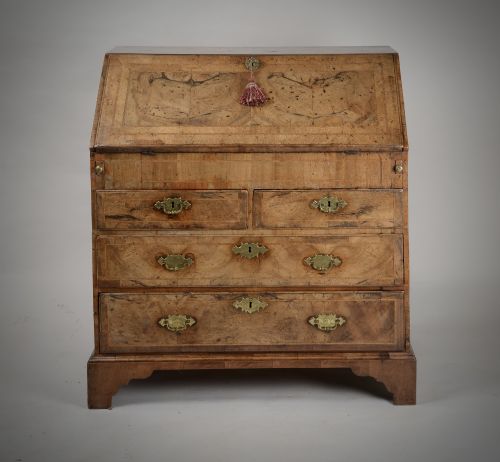
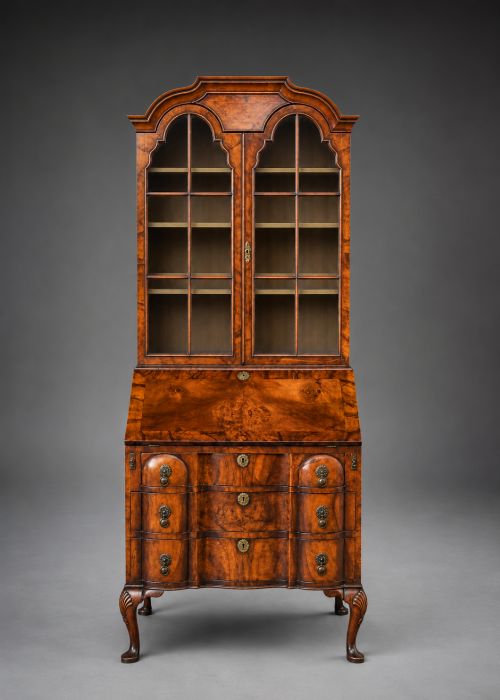
Georgian Walnut Bureau Desk
A georgian walnut bureau desk brings together figured timber and fitted compartments, offering a writing surface that conceals private papers.
Georgian Walnut Bureau Desk
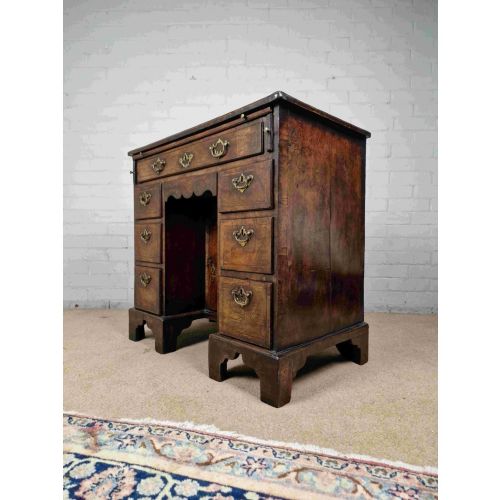
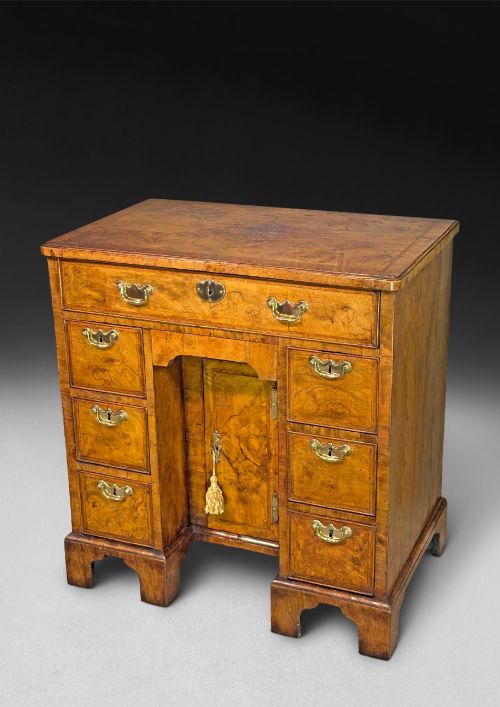
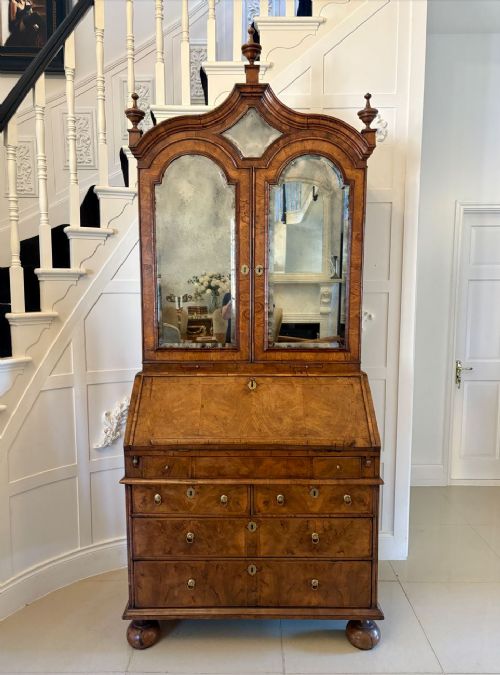
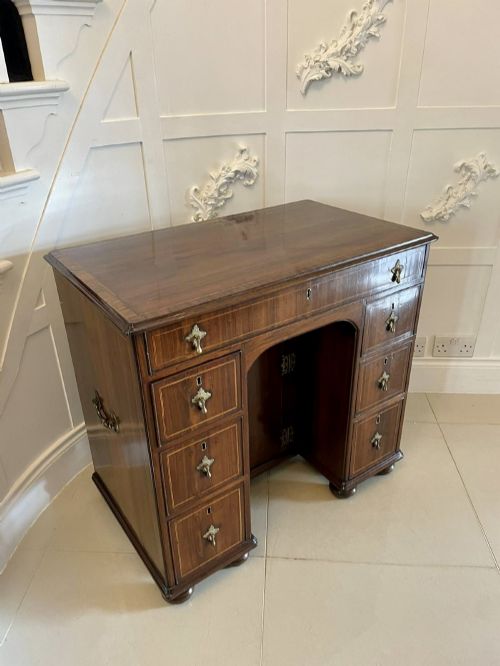
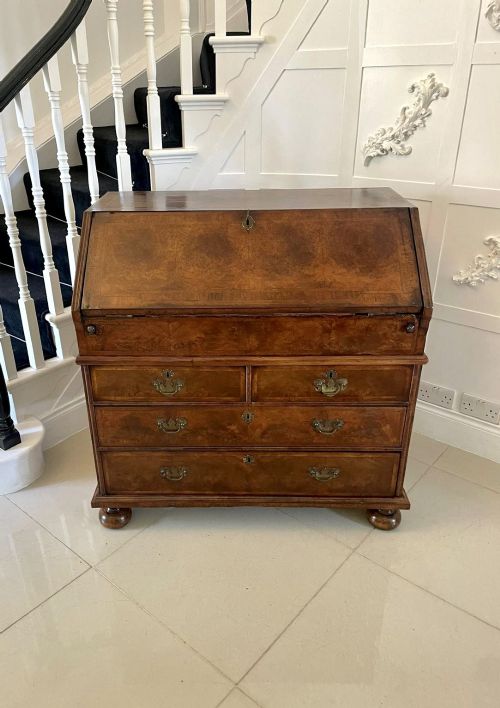
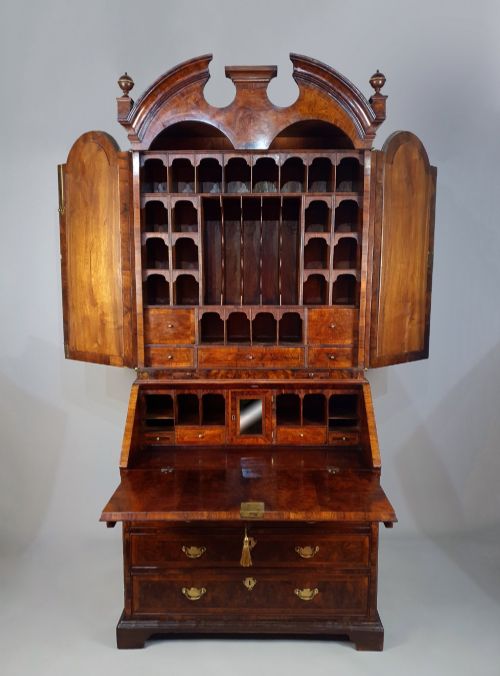
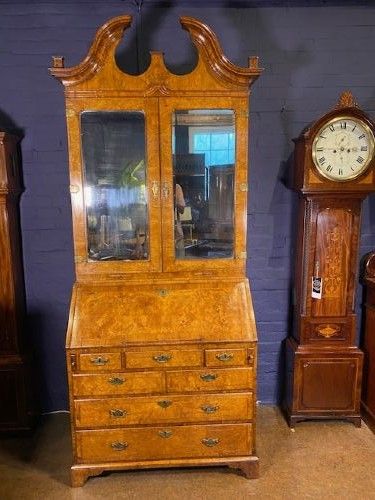
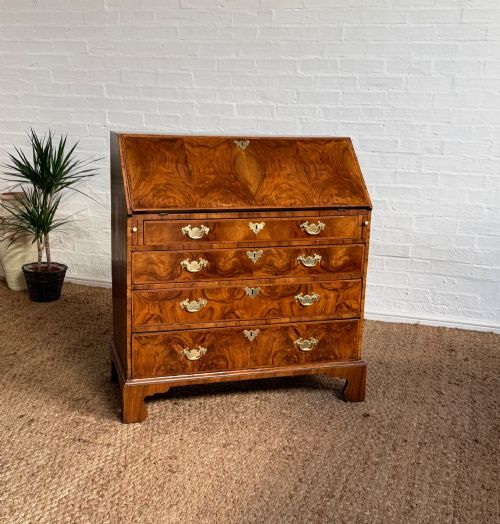
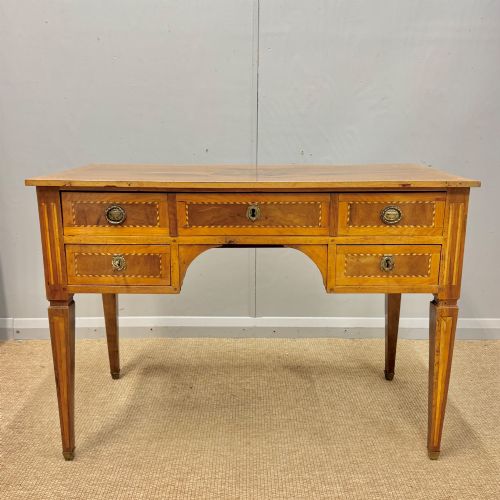
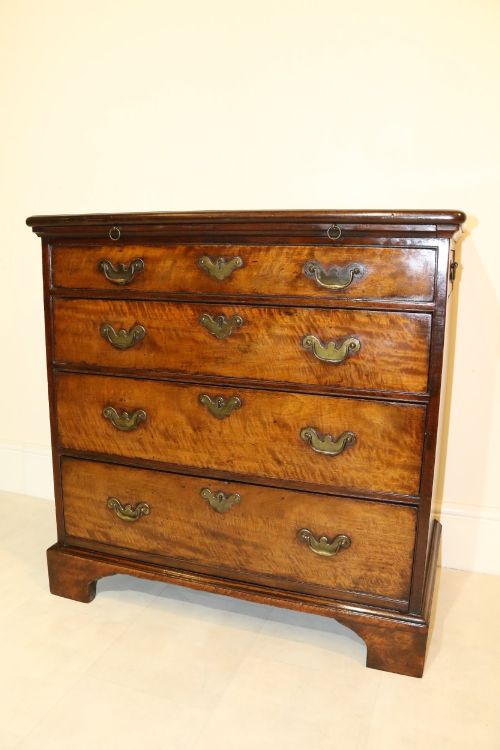
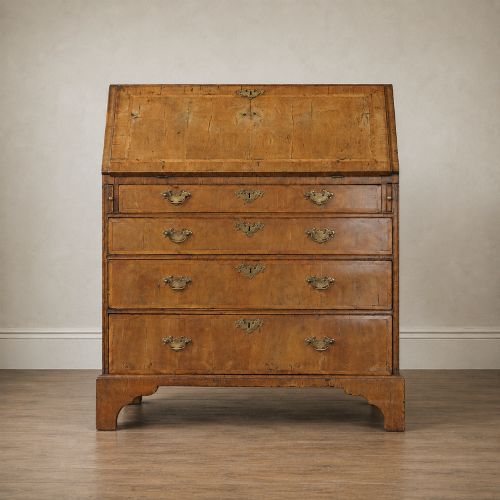
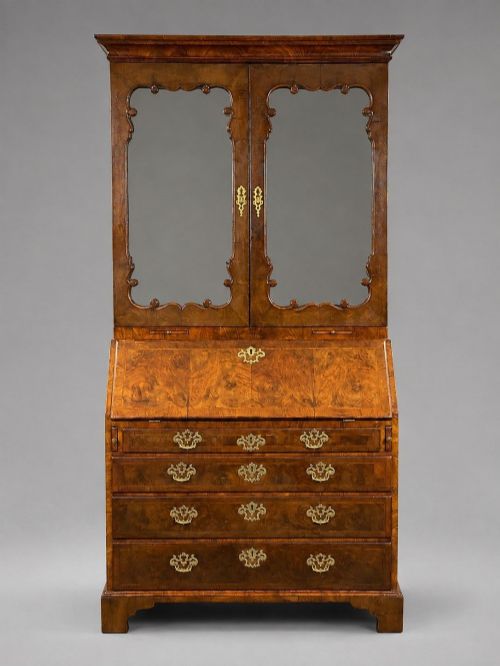
A georgian walnut bureau desk primarily takes the form of a fall-front writing cabinet, often incorporating internal pigeonholes and small drawers behind the sloping lid. Buyers also encounter taller bureau bookcases and compact kneehole desks designed for domestic writing and storage.
The pieces originate predominantly from the eighteenth century, spanning periods from William and Mary through the reigns of Queen Anne, George I, and George II. Later revivals from the nineteenth and twentieth centuries also appear, maintaining traditional forms.
The selection ranges from simple fall-front writing chests to glazed bureau bookcases fitted with candle slides and elaborate crossbanded borders.
Materials and Construction
Craftsmen built these pieces using solid oak or pine for internal carcases, applying figured walnut, burr walnut, or fiddleback veneers to the exterior surfaces. Featherbanding and herringbone stringing often accent the borders of the fall-front flap and drawer fronts.
Makers utilised brass for drop handles, escutcheons, and hinges, while secondary woods like oak support the interiors of drawers constructed with hand-cut dovetails. Writing surfaces frequently incorporate red or green leather inserts surrounded by blind tooling.
Listings feature walnut, burr walnut, and oak timbers across pieces dated from the seventeenth century through to the 1930s.
Distinctions in Standard
The character of the timber surface dictates much of the visual appeal, with tightly patterned burr walnut or figured grain commanding greater appreciation than plain veneers. The crispness of inlaid herringbone stringing and featherbanding also marks the skill of the original workshop.
Internal arrangement complexity separates standard items from exceptional examples, particularly where secret compartments, carved pigeonholes, and well-proportioned small drawers remain intact. The survival of original brass hardware and untouched drawer linings contributes significantly to the integrity of a piece.
maples of london
The Georgian Walnut Bureau Desk Glossary
- Bureau
- A writing cabinet featuring a sloping fall-front lid that opens to reveal a fitted interior of small drawers and pigeonholes.
- Escritoire
- A tall writing cabinet or desk, often fitted with a fall-front writing flap and multiple internal compartments behind doors.
- Featherbanding
- A decorative inlay technique using two strips of veneer laid diagonally to form a herringbone pattern resembling a feather.
- Kneehole desk
- A compact desk featuring a central recess for the sitter's legs, flanked by pedestals of small drawers.
- Crossbanding
- A border strip of veneer laid perpendicular to the surrounding grain to frame drawer fronts or writing flaps.
Georgian Walnut Bureau Desk: Frequently Asked Questions
What is inside a bureau desk?
Lifting the sloping fall-front reveals a fitted interior comprising small drawers, pigeonholes, and occasionally concealed compartments for papers.
Many examples also incorporate central sliding sections or small central doors designed to secure confidential items.
How do I tell early walnut from later revivals?
Early pieces from the eighteenth century display hand-cut dovetails, oak secondary woods, and traditional cabinet-making methods consistent with their period.
Revival pieces from the twentieth century often utilise modern internal construction while attempting to replicate earlier walnut veneers and styles.
Where were these desks used?
These writing desks served domestic functions in private studies, drawing rooms, and bedchambers for correspondence and record-keeping.
The fall-front design allowed owners to conceal unfinished letters and writing materials quickly when visitors arrived.
What is a bureau bookcase?
A bureau bookcase combines a writing bureau base with an upper glazed or panelled cabinet designed for storing books and display items.
These taller two-part pieces often feature candle slides positioned beneath the upper doors to illuminate the workspace below.