

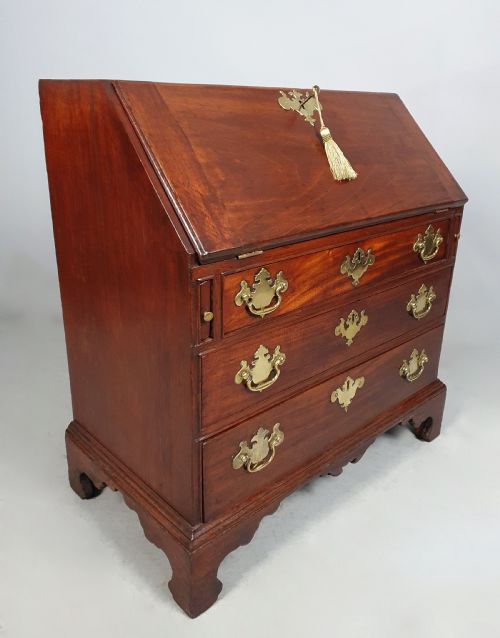


George II Fall Front Bureau
A george ii fall front bureau is a substantial mid-Georgian writing desk with a hinged flap, combining practical storage with fine cabinetwork.
George II Fall Front Bureau
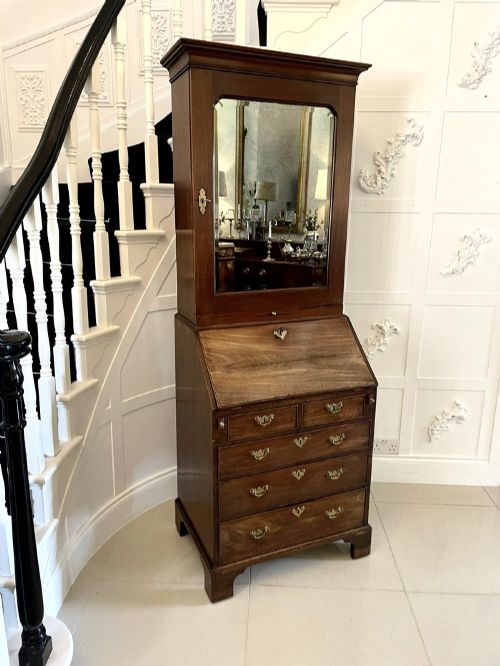
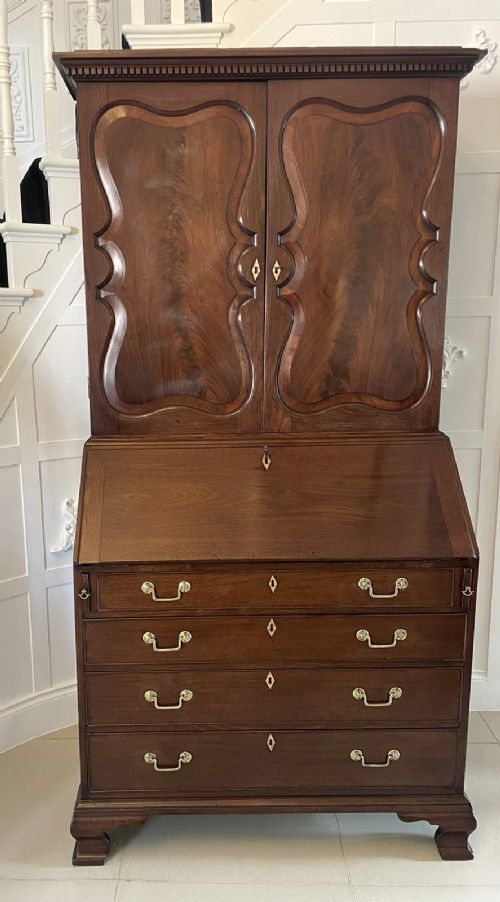
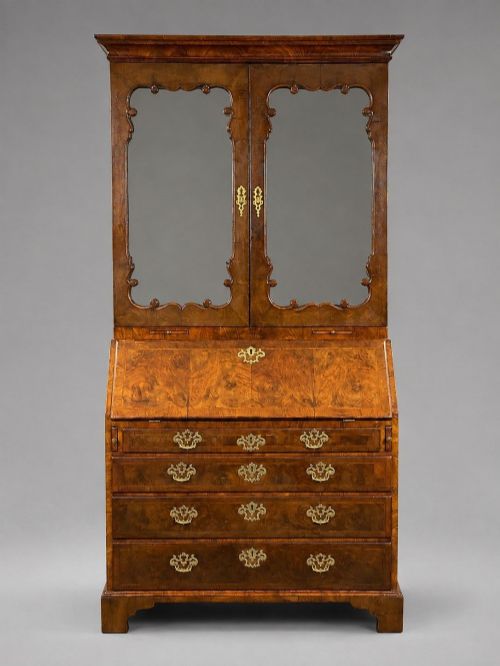
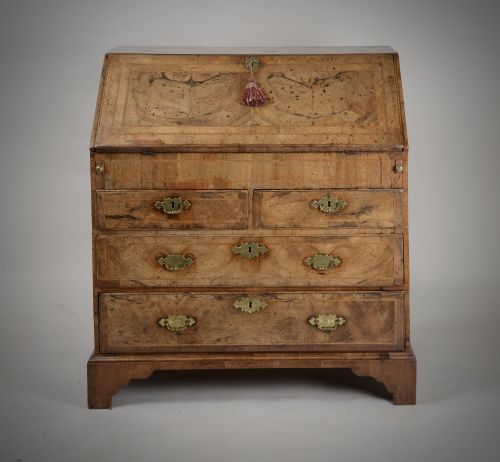
A george ii fall front bureau is a form of writing furniture designed during the mid-eighteenth century, typically standing on bracket feet with a sloping flap that drops to reveal an interior arrangement of pigeonholes and small drawers.
The pieces appearing on this page span several timber types and structural formats, including both standalone sloping desks and taller bureau bookcases fitted with upper shelving or cabinet doors.
Examples from this period originate in the eighteenth century, categorized under Georgian styles and constructed in walnut, mahogany, oak, elm, or fruitwood.
How they were made
Cabinetmakers constructed these writing desks using solid timbers and decorative veneers such as burr walnut, figured mahogany, and red walnut, often applied over secondary woods like oak or cedarwood.
Internal components incorporate small drawers, secret compartments, and pigeonholes joined with traditional dovetailed construction, while exterior surfaces rely on brass hardware for handles and escutcheons.
George II Fall Front Bureau Retail Price Guide 2026
Typical asking prices for george ii fall front bureau among the pieces listed under this phrase on Sellingantiques today, from the lower quarter to the upper quarter. They describe what is for sale here now, not the wider market.
Several pieces feature hidden internal compartments designed for secret papers, reminding us that eighteenth-century correspondents valued their privacy.
What varies in quality
Quality in a george ii fall front bureau is determined by the selection of figured timbers, such as burr walnut or dense Cuban mahogany, and the precision of the cabinetmaker's veneering.
The complexity of the interior fitted compartments, the retention of original brass fittings, and the integrity of the bracket feet and fall-front hinges further separate standard examples from finer works.
Giles Grendey
The George II Fall Front Bureau Glossary
- Fall-front bureau
- A desk featuring a hinged sloping writing flap that opens forward to reveal an internal arrangement of small drawers and pigeonholes. This surface provides a flat writing area when lowered.
- Bureau bookcase
- A taller furniture form combining a writing desk on the lower section with glazed or panelled cabinet doors above for book storage. These pieces dominate the larger formats seen in eighteenth-century rooms.
- Burr walnut
- A highly figured wood veneer obtained from walnut tree growths, valued for its swirling patterns. Cabinetmakers utilised this material on high-status Georgian surfaces.
- Escritoire
- An alternative term for a writing cabinet or desk, sometimes applied to bureau forms in period documentation. It originates from the French term for writing.
- Bracket feet
- Small, architectural foot supports shaped like brackets that elevate the base of the bureau off the floor. They are typical of mid-eighteenth-century case furniture.
George II Fall Front Bureau: Frequently Asked Questions
What is a fall front bureau?
A fall front bureau is a compact writing desk featuring a sloping wooden flap that drops down to form a writing surface. Inside, it conceals a fitted nest of small drawers and pigeonholes for correspondence.
In the Georgian period, these desks served as personal storage for letters and documents in private rooms. The hinged flap locked shut to keep contents secure when not in use.
What is the difference between walnut and mahogany bureaus?
Walnut bureaus generally date from the earlier part of the eighteenth century and frequently employ figured or burr veneers. Mahogany versions became more common as global trade routes shifted timber availability.
Both timbers were handled with high skill by period cabinetmakers, but walnut surfaces tend to show warmer honey tones compared to the deeper red-brown hues of Cuban mahogany.
How should I care for an antique bureau?
Keep wooden furniture away from direct sunlight and stable relative humidity to protect antique veneers and solid timbers. Regular dusting with a dry cloth maintains the polish.
Avoid placing hot or damp items directly on the sloping writing surface. Wax polish applied sparingly preserves the finish without building up excessive residue.