
Brown Writing Desk
A brown writing desk is a practical workspace built from timber, spanning periods from the eighteenth century to the twentieth.
Brown Writing Desk
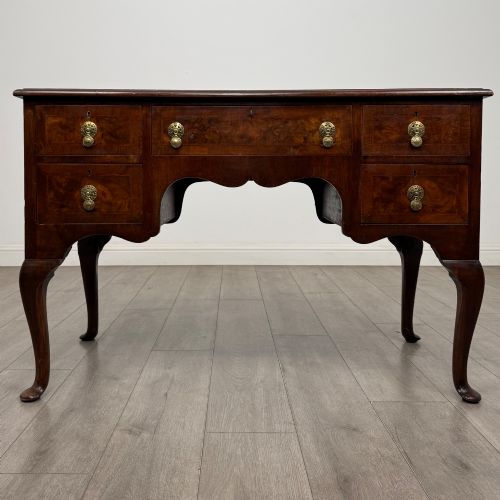
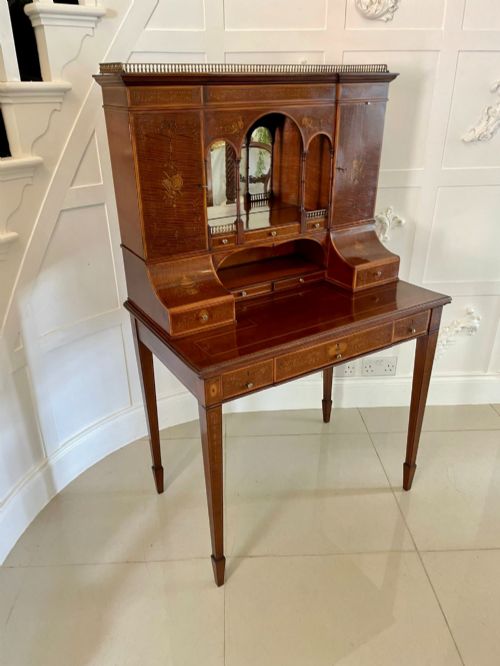
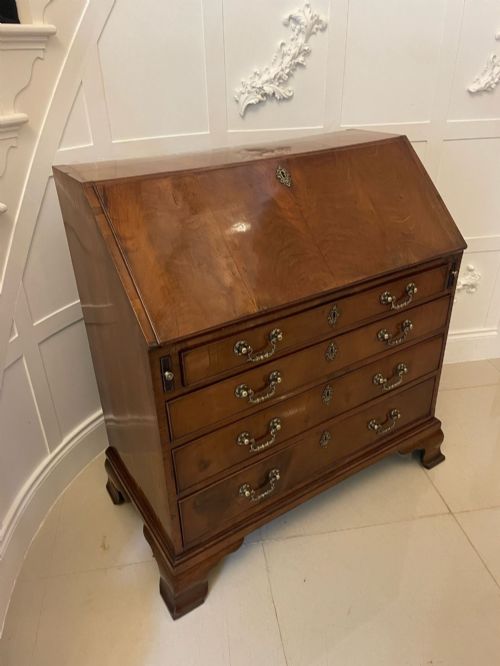
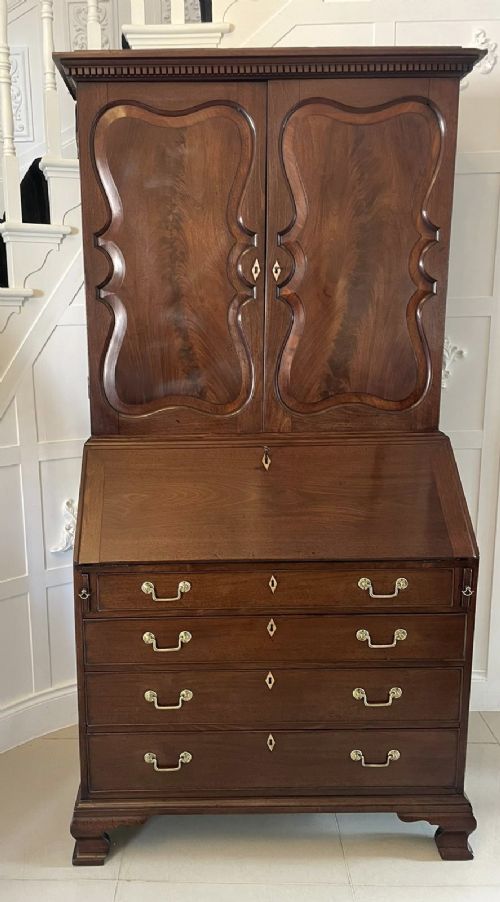
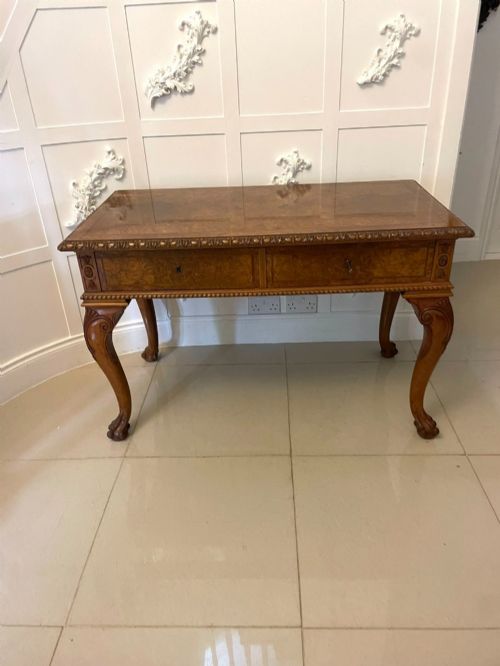
A brown writing desk encompasses various practical forms designed for correspondence and paperwork, including kneehole desks, writing tables, pedestals, bureaux, and secretaire bookcases. Pieces emerge from distinct eras such as the Georgian, Victorian, and Edwardian periods, utilising timbers like mahogany, oak, and walnut.
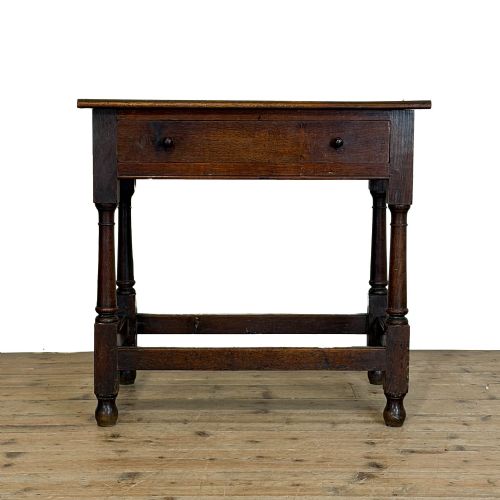
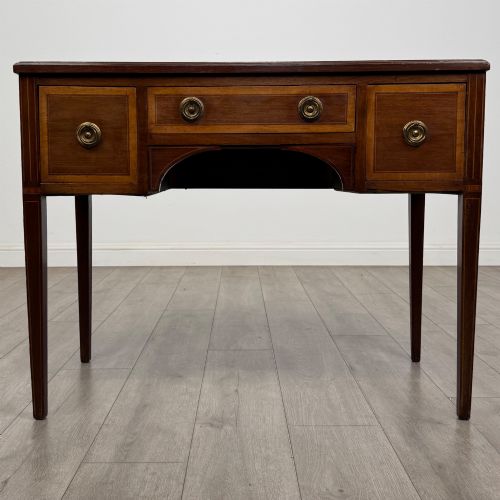
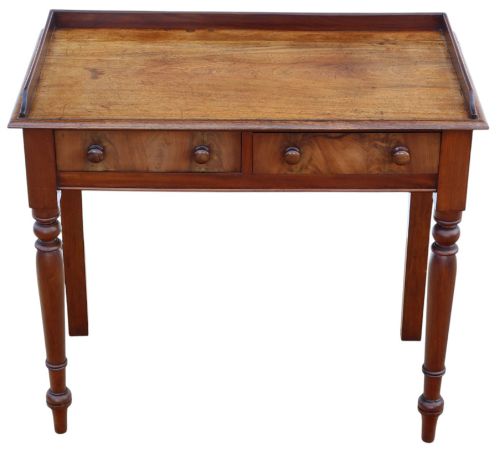
The most common versions met on this page are mahogany and oak writing tables alongside pedestal desks from the nineteenth and early twentieth centuries. These range from simple two-drawer oak tables to large flame mahogany partners desks built in Georgian style.
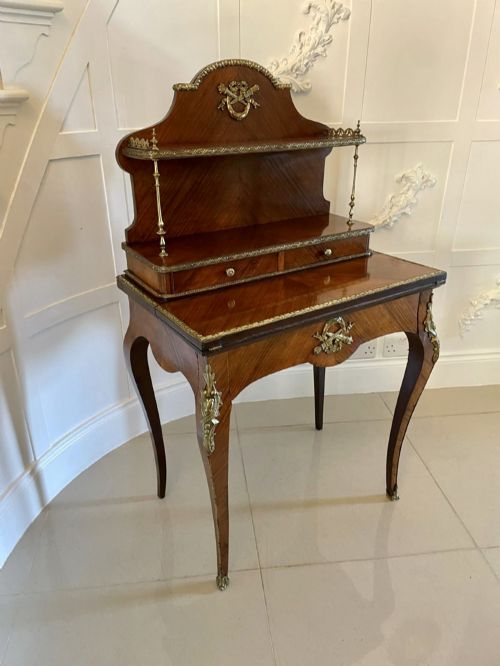
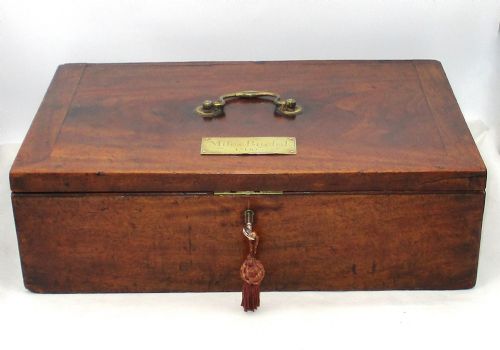
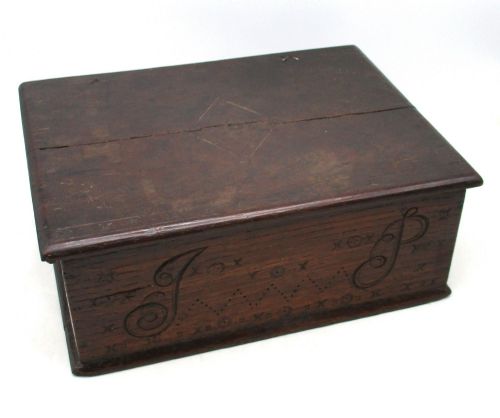
Buyers also encounter specialised forms like bureau bookcases and compact document boxes, reflecting changing domestic habits across the eighteenth, nineteenth, and twentieth centuries. Each piece combines storage drawers with writing surfaces, utilising historical revival styles including Queen Anne and French Rococo.
Materials and technique
Cabinetmakers constructed these brown writing desks using solid timbers and veneers of mahogany, oak, walnut, burr walnut, rosewood, and kingwood. Timber selection dictated the visual character, utilising figured grains, flame patterns, and marquetry inlays.
Secondary materials such as leather provided durable writing surfaces, while brass hardware fitted drawers and cabinet doors. Construction techniques included dovetailed drawer construction and framed panelling, ensuring structural stability across heavy pedestals and writing tables.
Materials span mahogany, oak, walnut, burr walnut, rosewood, kingwood, satinwood, yew wood, brass, leather, and glass across multiple historical periods.
Judging quality
Quality in a brown writing desk rests on the selection of figured timbers, such as burr walnut or flame mahogany, and the precision of floral marquetry inlays. Superior examples display carefully matched grain patterns across large surfaces like pedestals and bureau falls.
Construction methods distinguish finer workshop output, evident in hand-dovetailed drawer linings, substantial brass fittings, and integrated secondary timbers like oak. The integration of freestanding finished backs and balanced proportions elevates standard writing tables into exceptional pieces.
Gillows·Trollope and sons
The Brown Writing Desk Glossary
- Bureau
- A sloping writing flap enclosing pigeonholes and small drawers above a set of main drawers. This form allows a compact writing surface that conceals paperwork when closed.
- Kneehole desk
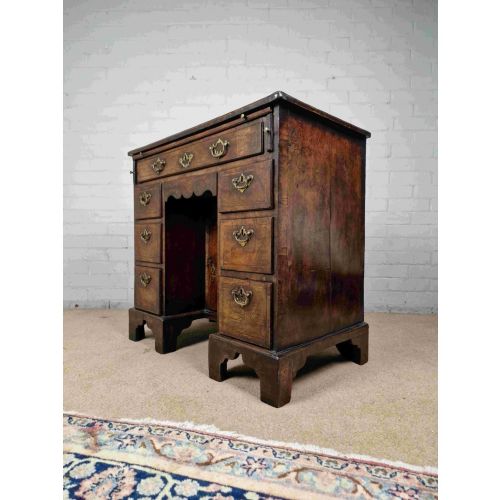
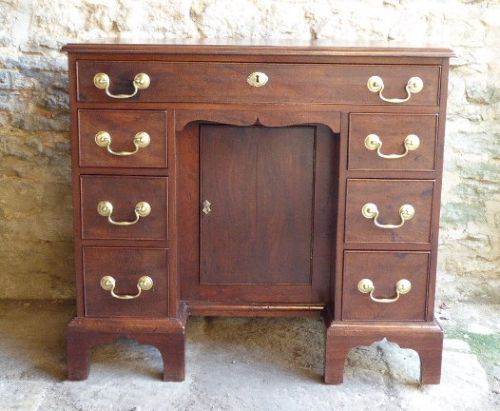
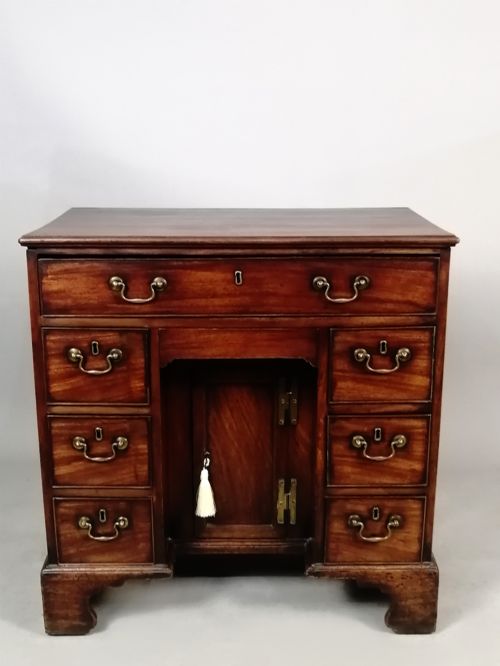
- A small pedestal desk featuring a central recessed space for the user's legs, flanked by banks of small drawers. They appeared frequently in walnut and mahogany during the eighteenth century.
- Partners desk
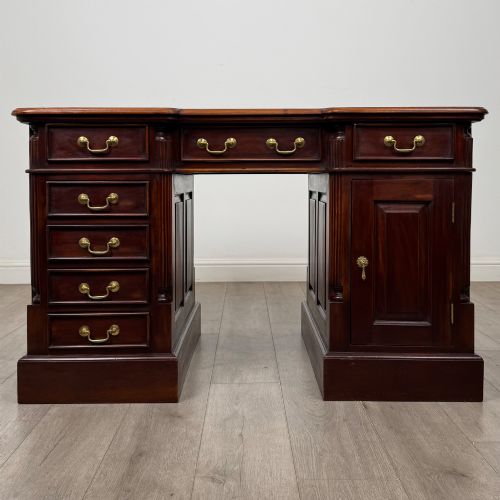
- A large pedestal desk designed to accommodate two people working opposite each other, featuring drawers and cupboards on both sides. They are frequently constructed in mahogany.
- Marquetry
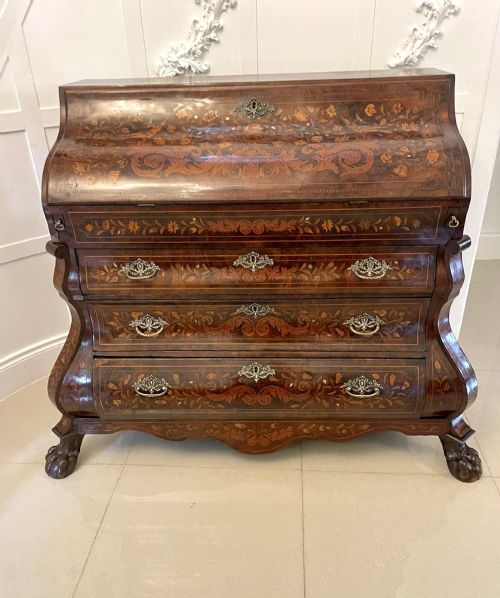
- Decorative patterns formed by inserting thin pieces of wood veneer and other materials into a wooden surface. This technique creates floral and geometric designs on bureau falls and tabletops.
- Secretaire bookcase
- A tall cabinet combining a glazed upper bookcase with a lower section containing a fitted writing drawer or drop-front desk. They utilise fine timbers such as mahogany and burr walnut.
Brown Writing Desk: Frequently Asked Questions
What is a brown writing desk?
A brown writing desk is a traditional timber workspace designed for correspondence, featuring drawers, writing surfaces, and storage compartments.
These pieces span multiple centuries, utilising materials like mahogany, oak, and walnut in forms ranging from simple writing tables to grand partners desks.
How do I date a brown writing desk?
Dating relies on identifying structural characteristics, timber types, and revival styles associated with periods like the Georgian, Victorian, and Edwardian eras.
Earlier pieces from the eighteenth century frequently employ walnut and oak with kneehole configurations, while later nineteenth-century examples often feature pedestal designs in mahogany.
Were these desks used for writing?
These desks served as primary domestic and commercial workspaces for handling correspondence, accounts, and official documents.
Many incorporate specialised compartments, leather writing inserts, and locking drawers to secure private papers and writing materials.
How do I care for a wooden desk?
Preserving a antique wooden surface involves keeping the timber away from direct heat sources and sudden humidity changes to prevent warping.
Applying appropriate wax polishes helps maintain the finish of mahogany, oak, and walnut without damaging historic veneers and brass mounts.