
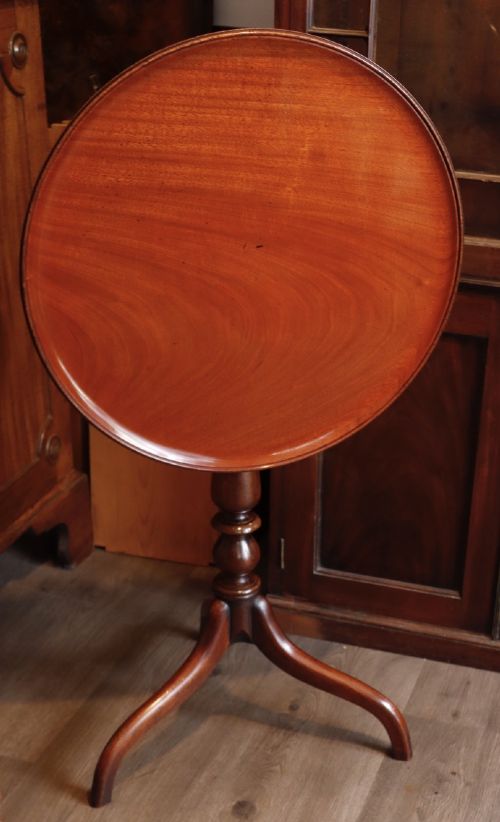
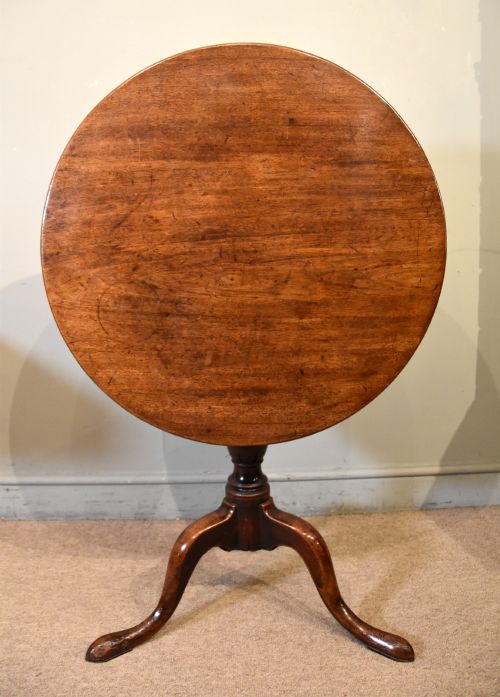
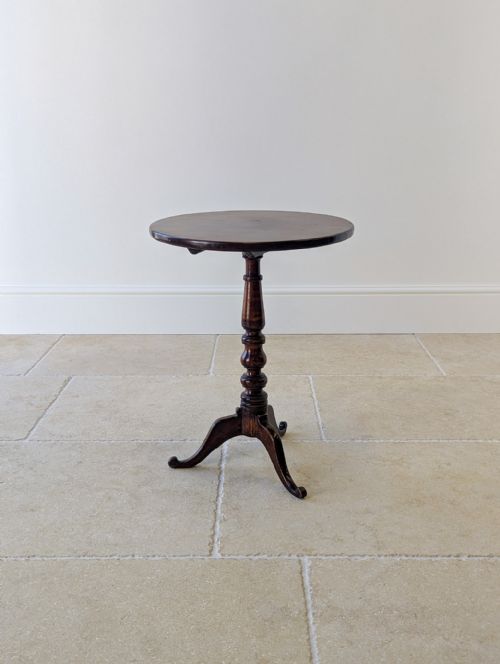

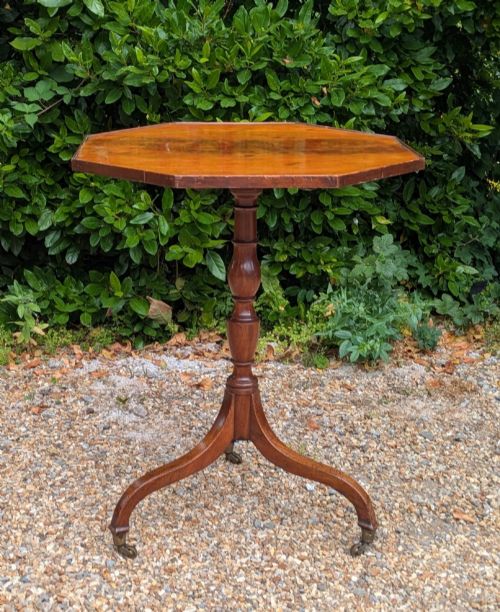
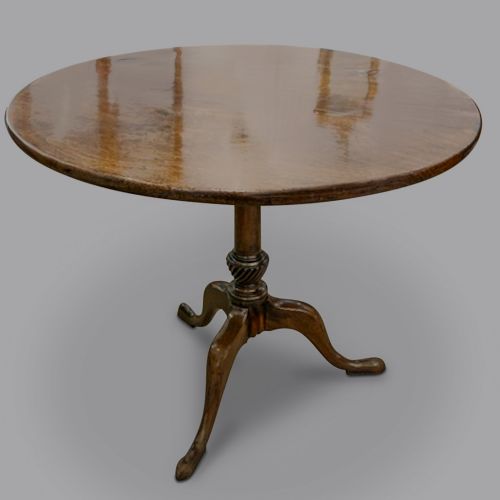
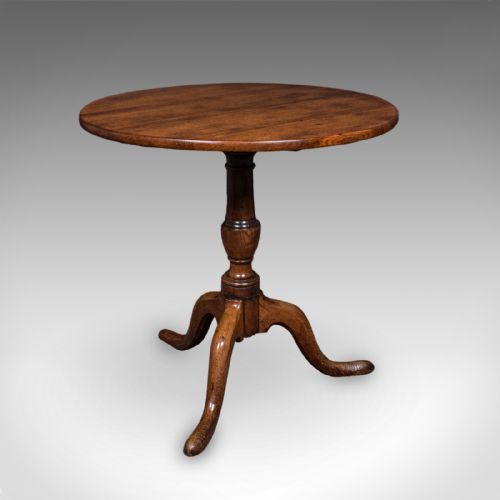
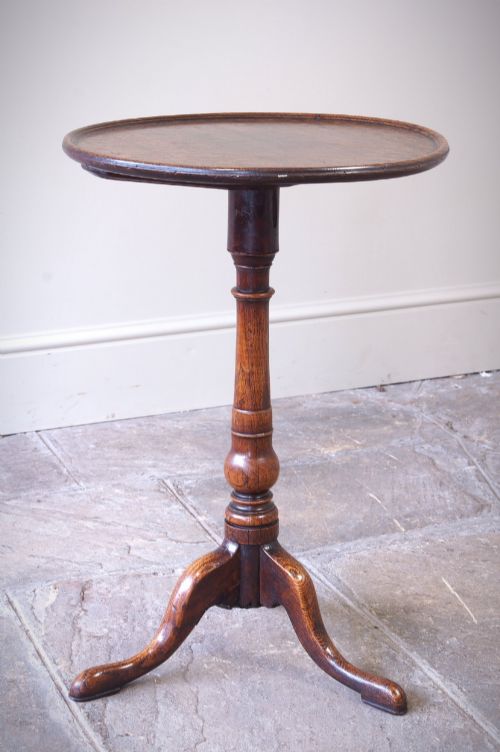
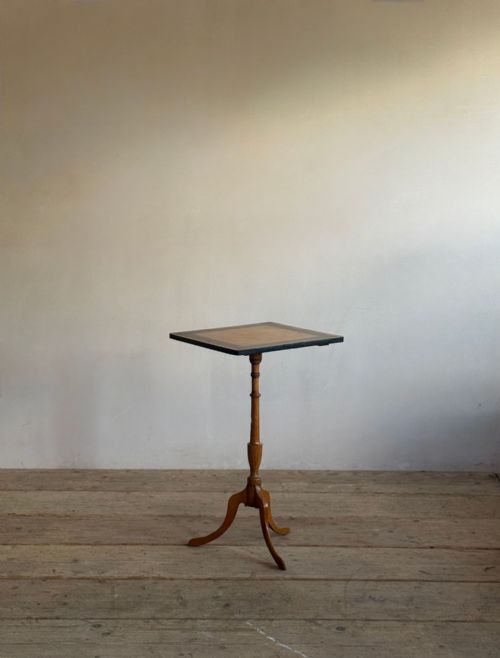
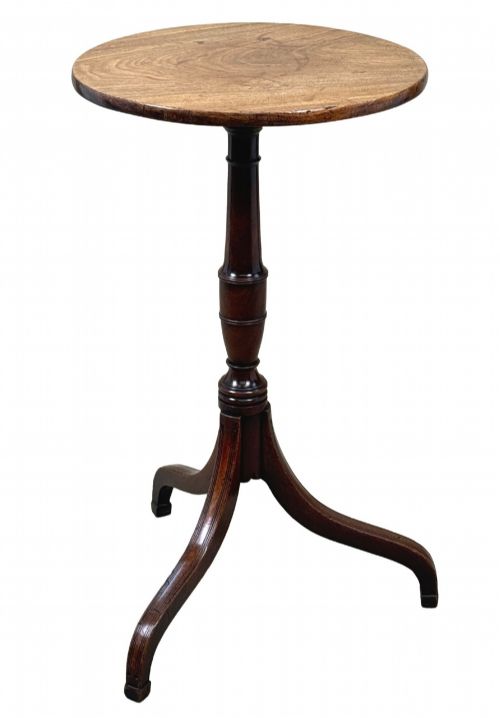
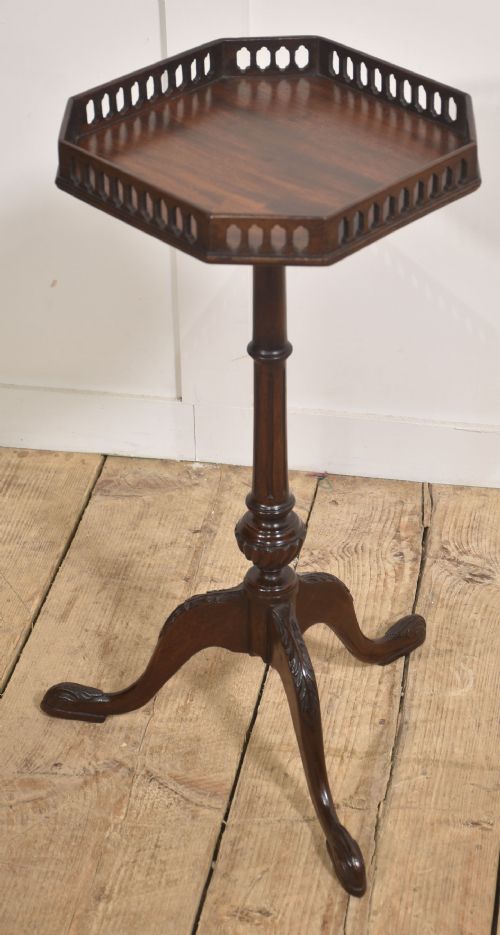
Georgian Turned Stem Table
A georgian turned stem table is a compact tripod piece designed to hold a single candle, glass, or book near an armchair.
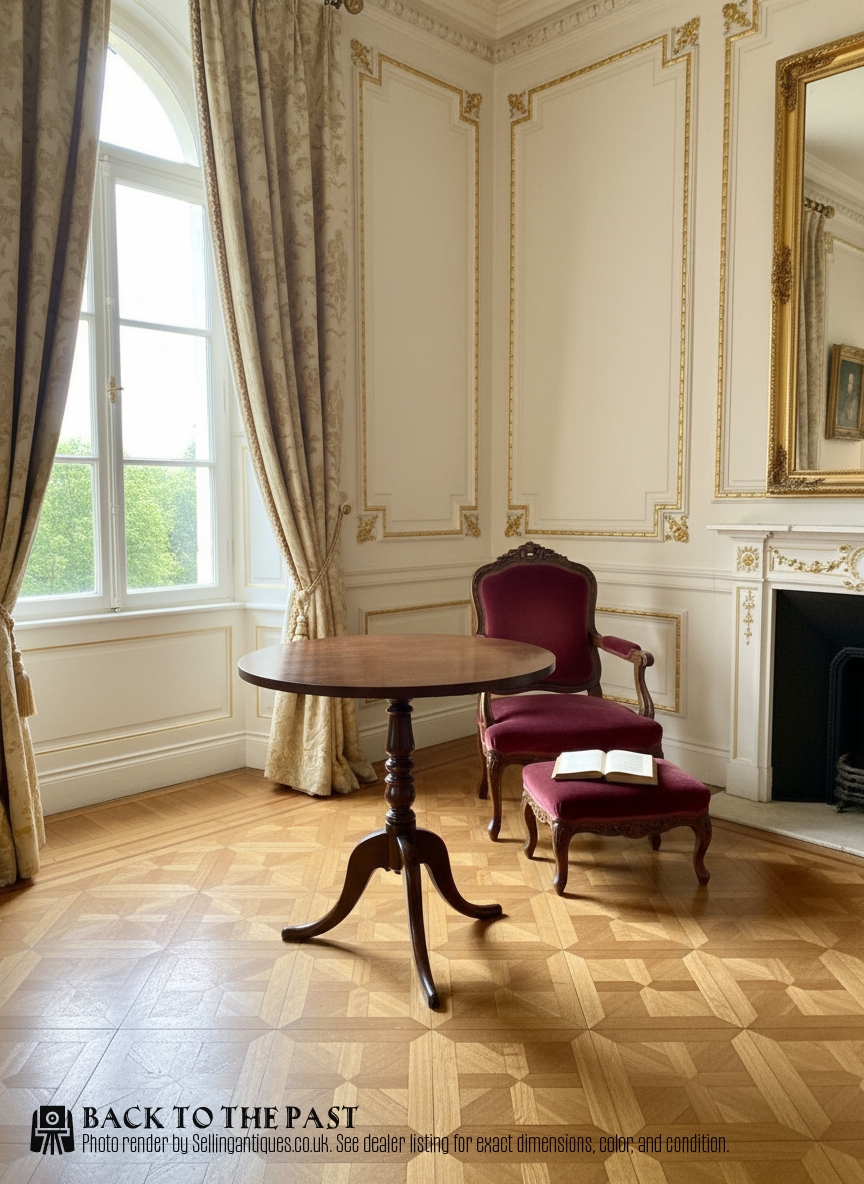
Georgian Turned Stem Table
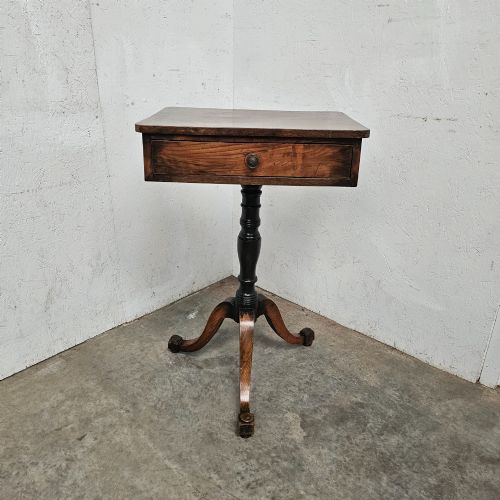
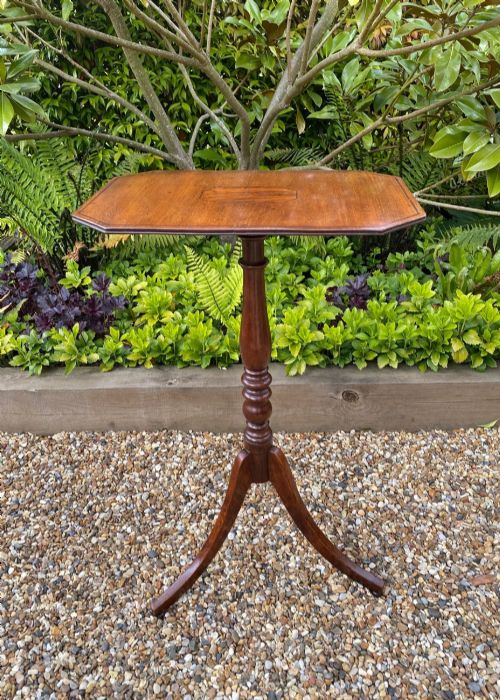
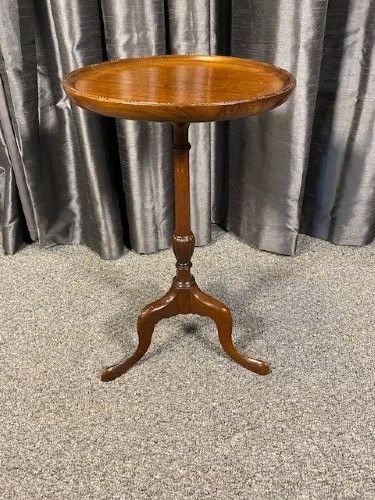
When searching for a georgian turned stem table, a buyer encounters small occasional pieces designed to stand beside chairs or in corners. The most frequent forms on this page include circular wine tables, candle stands, and tilt-top tripod tables from the eighteenth and nineteenth centuries. These pieces were made to be easily moved around a room as needed for evening illumination or small refreshments.
The material vocabulary spans native English hardwoods like oak, elm, fruitwood, and yew alongside imported timbers such as mahogany and rosewood. Examples range from simple country furniture in mixed woods to sophisticated urban pieces with dish tops, penwork decoration, or plum pudding mahogany veneers. Origins stretch across Georgian, Regency, and Victorian periods, including later revivals that emulate earlier forms.
How they were made
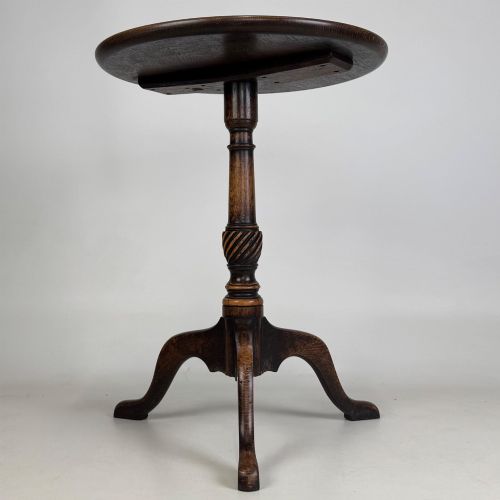
Cabinetmakers constructed these pieces using a central turned stem supported by three legs splaying outwards for stability. The top often connected to the pedestal through a birdcage or tilt-top mechanism, allowing the surface to fold flat against the stem when not in use.
Makers utilised solid timbers or applied fine veneers to circular tops, turning the central columns on a lathe to achieve baluster, vase, or columnar profiles. Secondary woods like beech or oak frequently formed the internal framing and lesser components of the tripod base.
Listings feature periods spanning from the eighteenth century through the Victorian era, alongside twentieth-century revival pieces.
What varies in quality
Quality rests primarily on the choice of timber and the crispness of the turning on the central stem. Superior examples display figured mahogany, rich fruitwood, or dense yew with well-proportioned legs that terminate cleanly in pad or snake feet.
Another factor is the integration and integrity of the mechanisms, such as the tilt action or the block connecting the top to the shaft. Tables retaining their original brass catches, unwarped circular tops, and tight joints sit firmly at the upper end of the scale.
The Georgian Turned Stem Table Glossary
- Tripod table
- A small freestanding table supported by a single central pillar resting on three legs. This construction prevented wobbling on uneven floorboards.
- Tilt-top action
- A mechanical hinge beneath the tabletop allowing the surface to pivot vertically. This allowed the table to be stored flush against a wall when floor space was required.
- Wine table
- A small circular occasional table designed specifically to hold a bottle and glasses. They frequently feature raised edges or dished tops to prevent items from sliding off.
- Candle stand
- A tall, slender occasional table intended to elevate a light source beside a seat. They share the tripod form of wine tables but often possess smaller surfaces.
- Plum pudding mahogany
- A highly prized cut of mahogany displaying swirling, speckled figuring resembling traditional Christmas pudding. It is found on select high-status pieces.
Georgian Turned Stem Table: Frequently Asked Questions
What is a turned stem table used for?
These tables served flexible domestic purposes in eighteenth and nineteenth-century rooms. They were easily carried to hold tea equipment, reading material, or candlesticks beside seating areas.
Today, they function as compact side tables or lamp stands in living spaces. Their small footprint makes them ideal for tight corners or beside armchairs.
How do I spot a tilt-top table?
Look beneath the circular top for a wooden catch or a pivoting block mechanism. This allows the surface to unlock and rotate ninety degrees into a vertical position.
Original mechanisms should move smoothly without excessive play in the hinge. Many period examples retain this feature to save space when not in use.
Are these tables made of solid mahogany?
Many examples utilise solid native or imported hardwoods such as oak, elm, and mahogany. Finer formal pieces often feature decorative veneers laid over a secondary timber core.
Country versions tend to employ regional woods like fruitwood, sycamore, or ash. Examining the underside reveals the construction methods and secondary timbers used by the maker.
How do I date a tripod table?
Dating relies on stylistic cues in the leg profile, turning shape, and method of construction. Earlier eighteenth-century forms often feature slender cabriole legs with pad feet, while later Regency and Victorian versions show heavier pedestals or platform bases.
Construction marks, such as hand-cut dovetails and timber shrinkage patterns, also help confirm the age of the piece.