
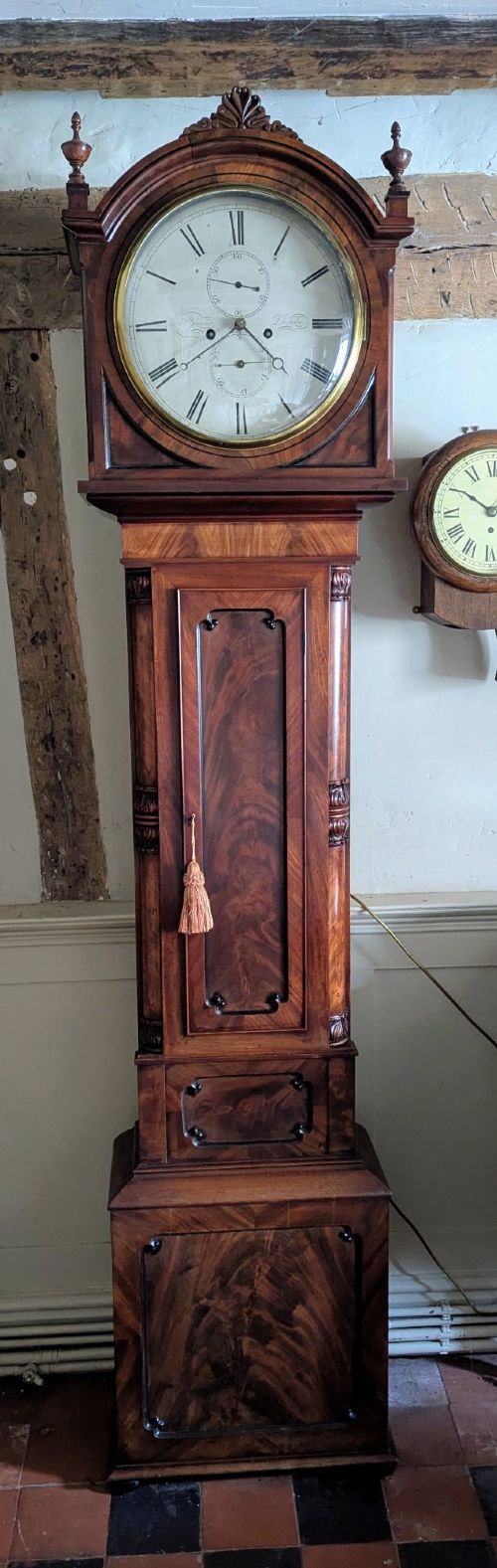
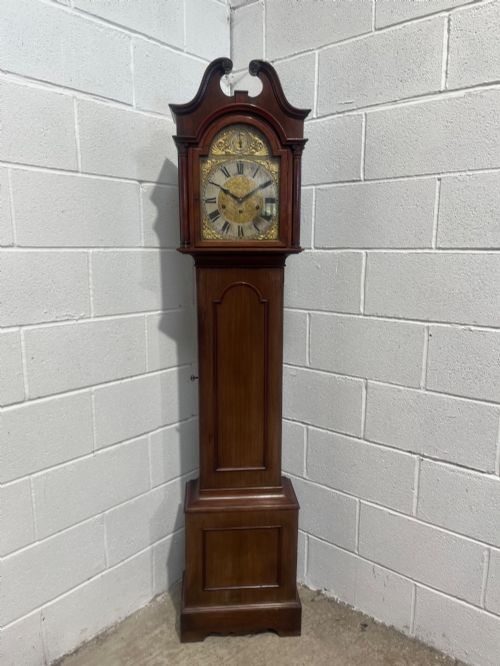
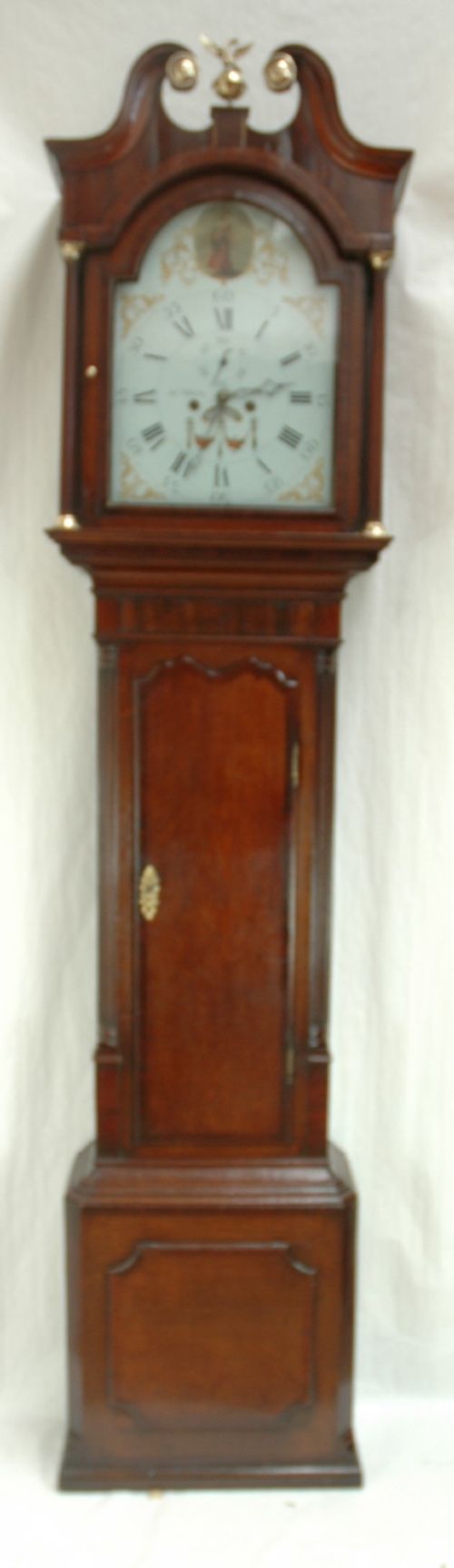
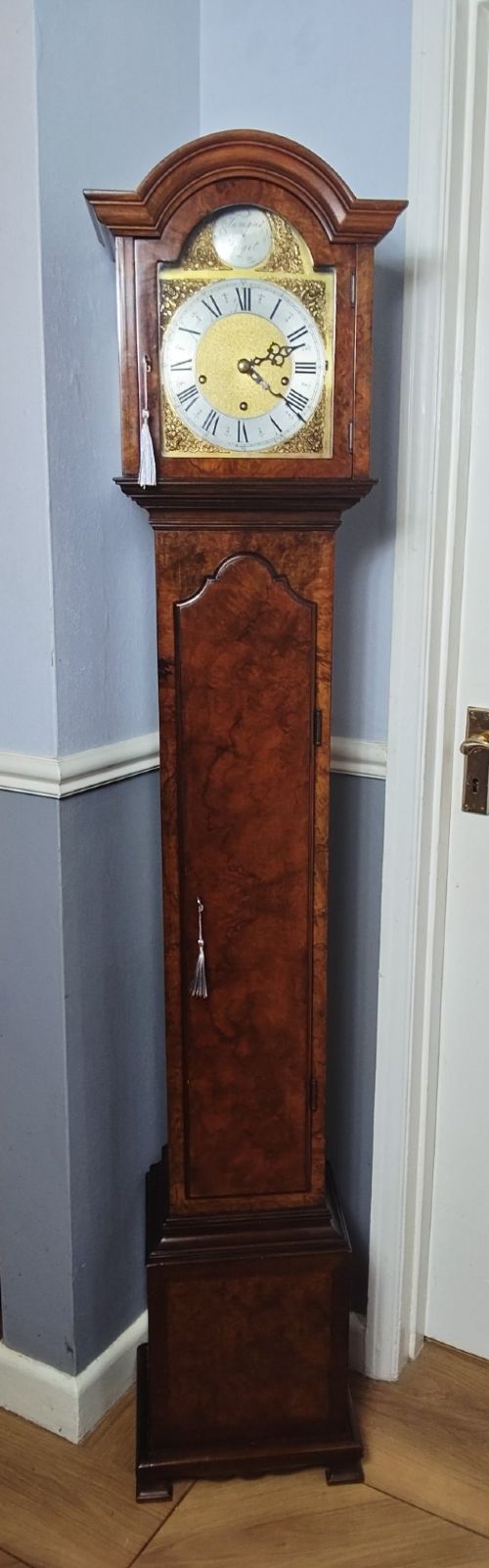
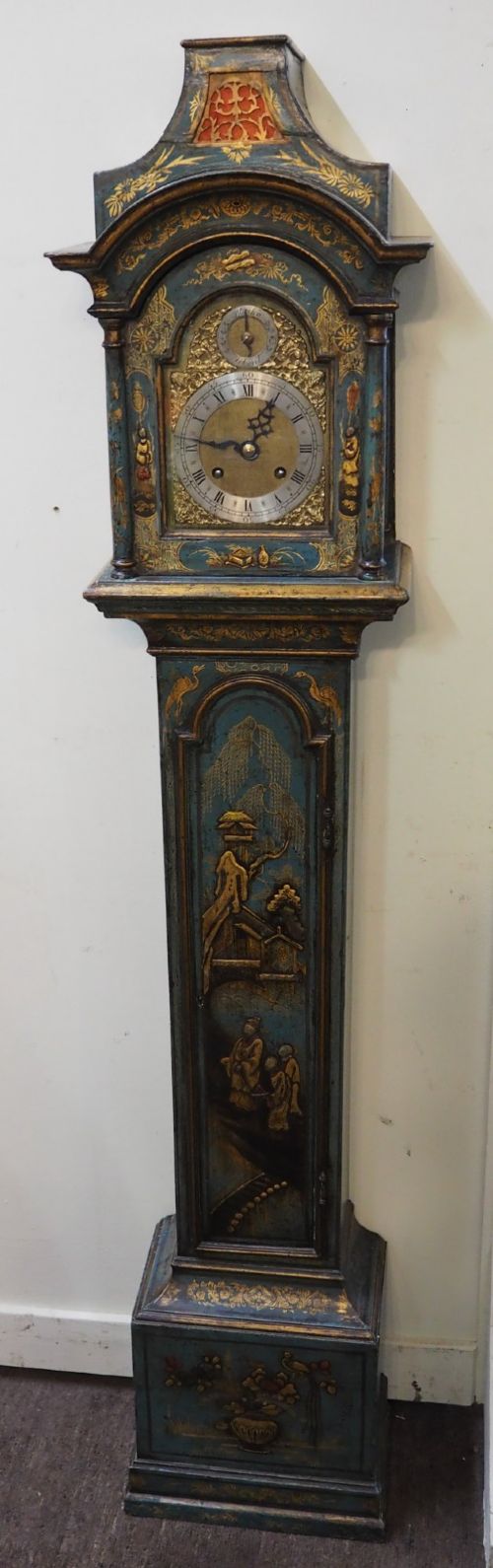
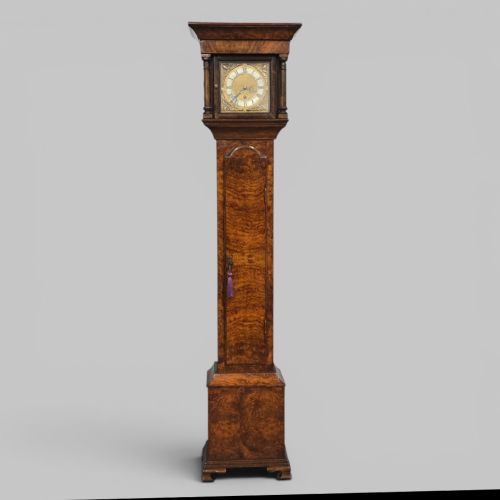


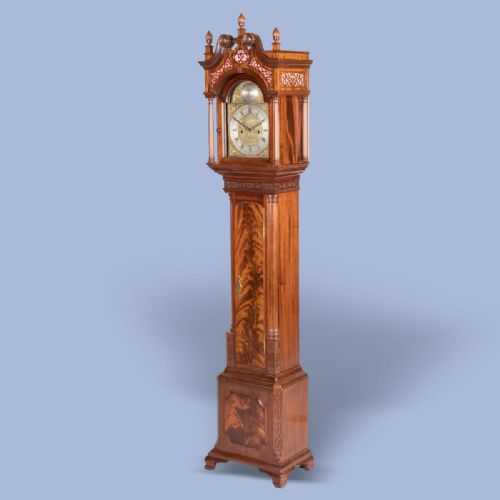

Georgian Style Grandfather Clock
A georgian style grandfather clock brings monumental presence to a room, uniting mechanical ingenuity with centuries of cabinetmaking tradition.
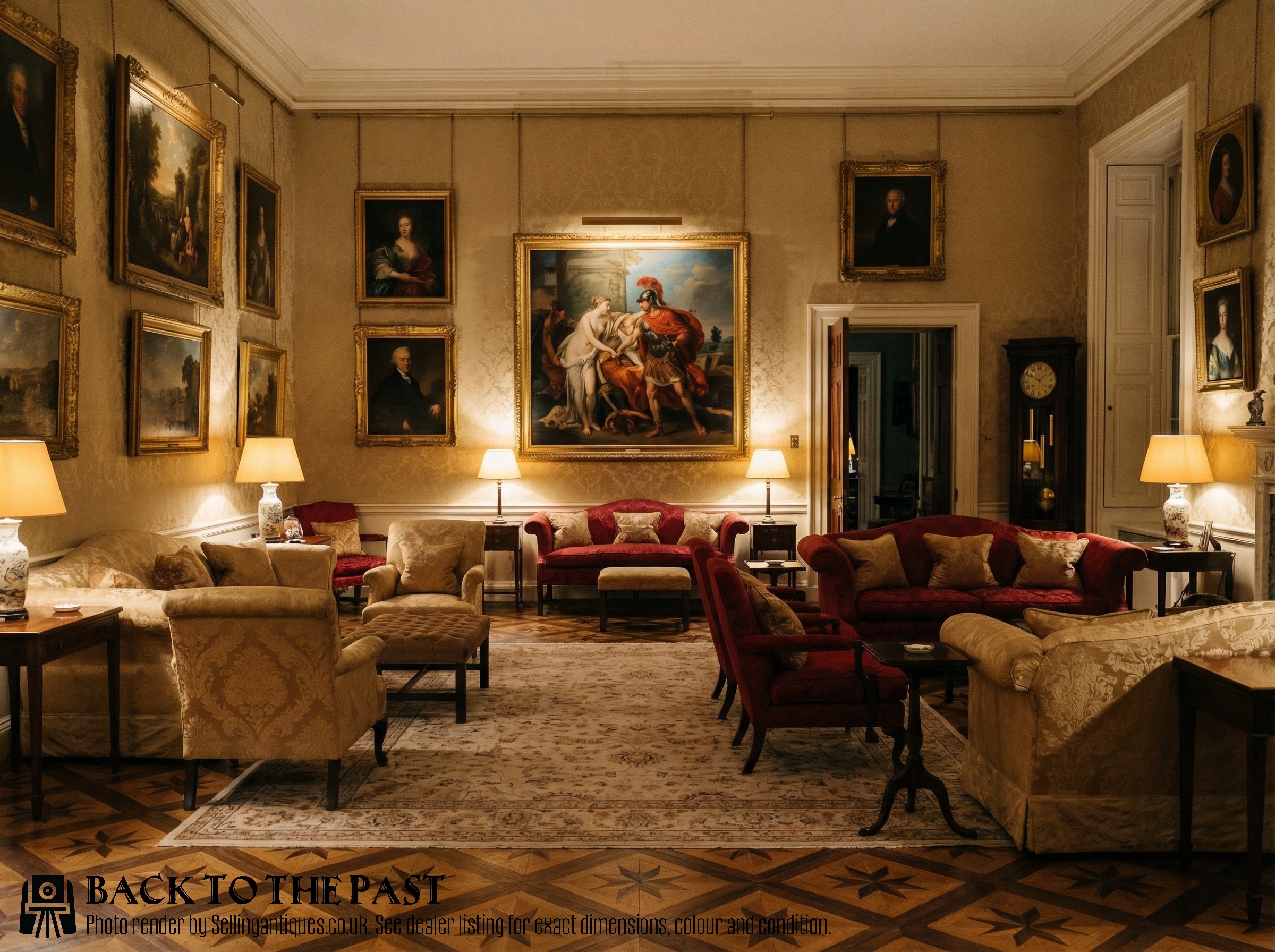
Georgian Style Grandfather Clock
A georgian style grandfather clock encompasses tall floor-standing timepieces, frequently referred to in listings as longcase or grandmother clocks depending on their height and proportions. These vertical clocks span diverse periods from the eighteenth century onwards, with revivals and later interpretations appearing frequently.
The selection ranges from full-scale architectural domestic regulators to smaller proportioned grandmother and miniature longcase variations. Mahogany, walnut, oak, and lacquered finishes dominate the structural forms across the periods represented.
Makers recorded in the archive and current listings include notable names such as Lister & Sons, Camerer Cuss & Co, Gardner of London, and Dent of London, alongside numerous unlabelled examples.
Materials and construction
Cabinetmakers utilised dense hardwoods including mahogany, walnut, burr walnut, and oak to build the tall trunk and hood enclosures, often incorporating intricate marquetry and gold leaf highlights.
Decorative surfaces frequently showcase lacquer work, particularly in chinoiserie interpretations, paired with glass viewing doors and brass dial components.
Georgian Style Grandfather Clock Retail Price Guide 2026
Typical asking prices for georgian style grandfather clock among the pieces listed under this phrase on Sellingantiques today, from the lower quarter to the upper quarter. They describe what is for sale here now, not the wider market.
Some miniature longcase clocks stand barely taller than a hearth cat, proving big time can come in very small boxes.
Assessing quality and execution
Superior examples display crisp carving, highly figured timber grains such as burr walnut, and sophisticated musical movements playing on bells or gongs.
Proportions also dictate distinction, separating diminutive grandmother clocks and small proportioned regulators from standard domestic longcase pieces.
LISTER & SONS·Camerer Cuss & Co·Gardner of London·DENT OF LONDON
The Georgian Style Grandfather Clock Glossary
- Longcase clock
- A tall pendulum clock enclosed in a wooden case, commonly known as a grandfather clock.
- Grandmother clock
- A smaller, more slender version of the traditional longcase clock, typically produced in the twentieth century.
- Chinoiserie
- A decorative style reflecting Chinese artistic influences, often executed in lacquer on clock cases.
- Regulator
- A precision pendulum clock used as a standard for checking the time of other clocks.
Georgian Style Grandfather Clock: Frequently Asked Questions
How do I tell a grandfather clock from a grandmother clock?
Grandfather clocks are the standard full-sized tall case timepieces that stand directly on the floor. Grandmother clocks are smaller, more slender scaled versions.
Both styles share similar mechanical layouts and hood designs, differing primarily in overall height and floor footprint.
What is a domestic regulator?
A domestic regulator is a high-precision clock designed for exact timekeeping within a household setting. These pieces focus on mechanical accuracy rather than complex musical chimes.
Such clocks often feature clear, easy-to-read dials and steady, deliberate pendulum beats.
How do I live with a longcase clock?
Longcase clocks require a stable, dry interior wall away from direct heat sources to keep the timber case from shifting. Setting them up correctly on a level floor ensures the pendulum swings evenly.
Winding and setting routines depend entirely on whether the movement is an eight-day or quarter-chiming mechanism.
What does quarter chiming mean?
Quarter chiming refers to a movement that plays a sequence of notes every fifteen minutes, usually leading up to striking the full hour. Systems like Westminster chimes utilise multiple bells or gongs.
These mechanical complications add layers of sound and require additional gear trains within the clock hood.