
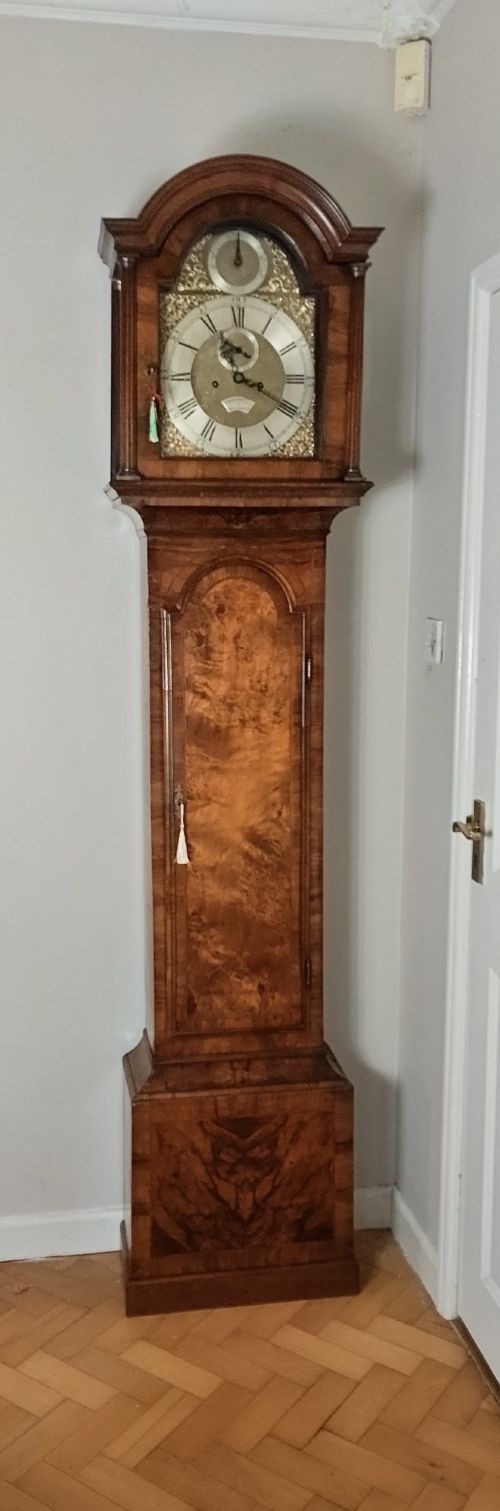
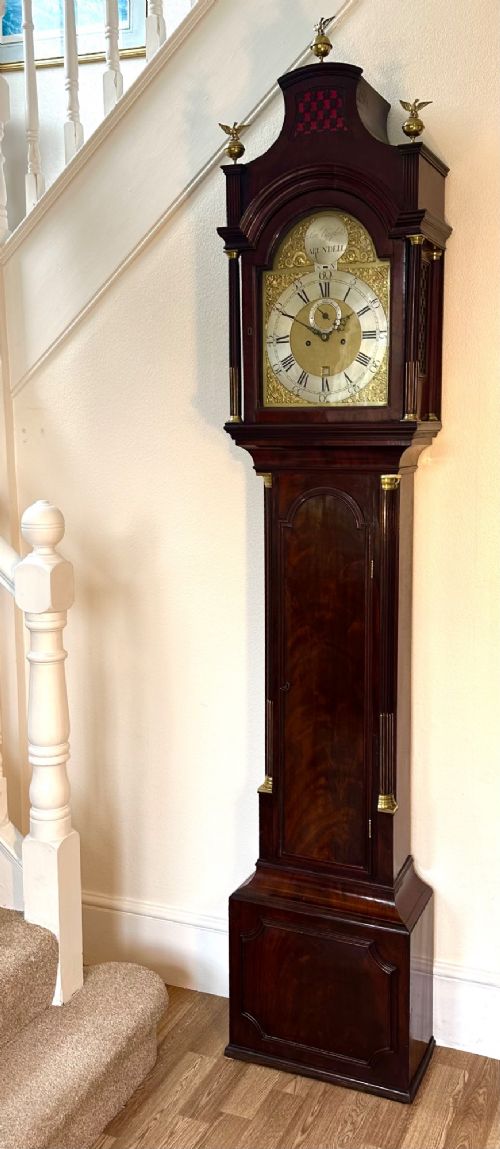
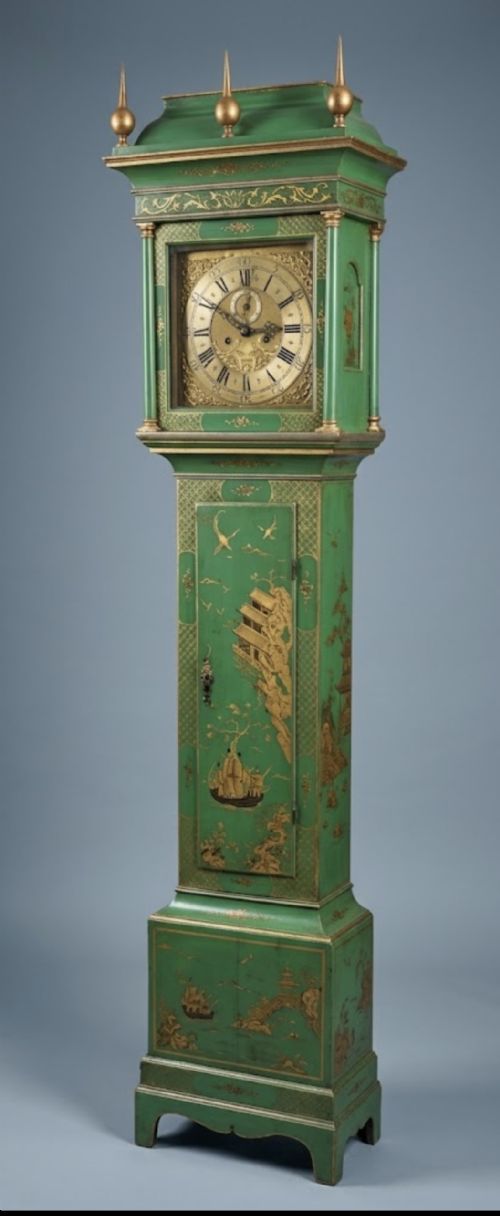
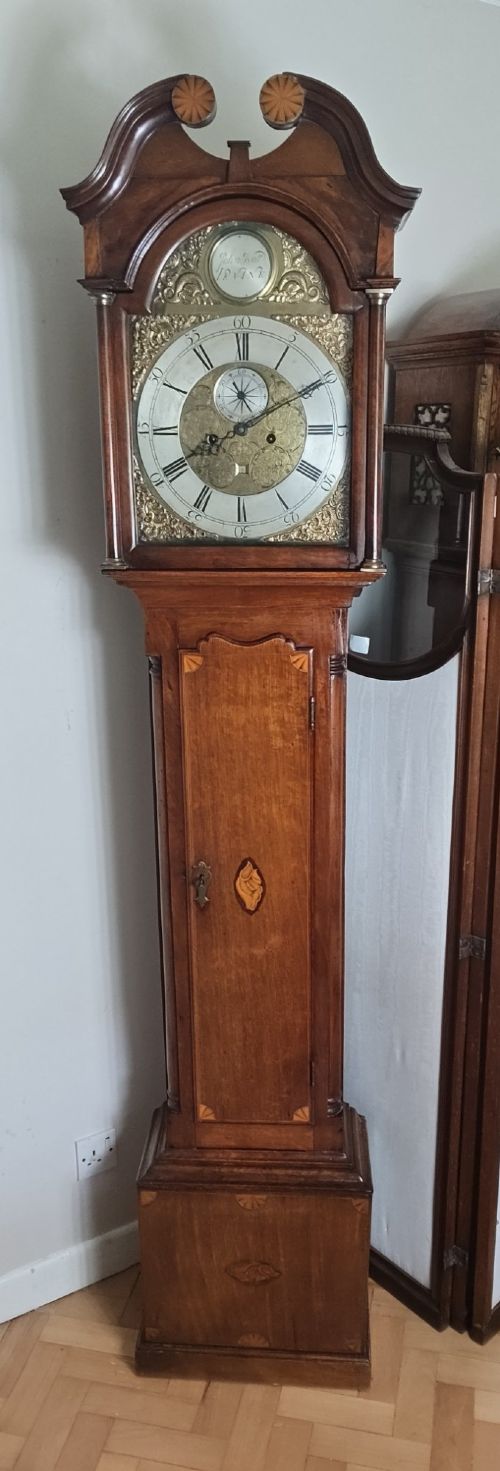
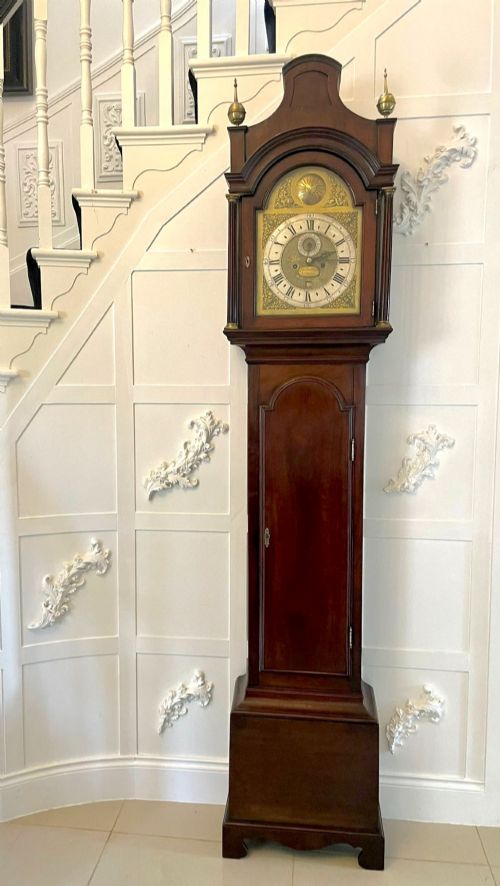
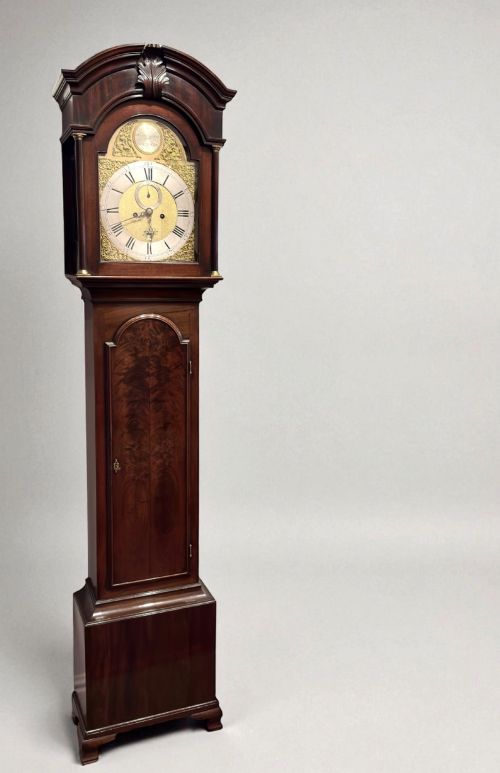
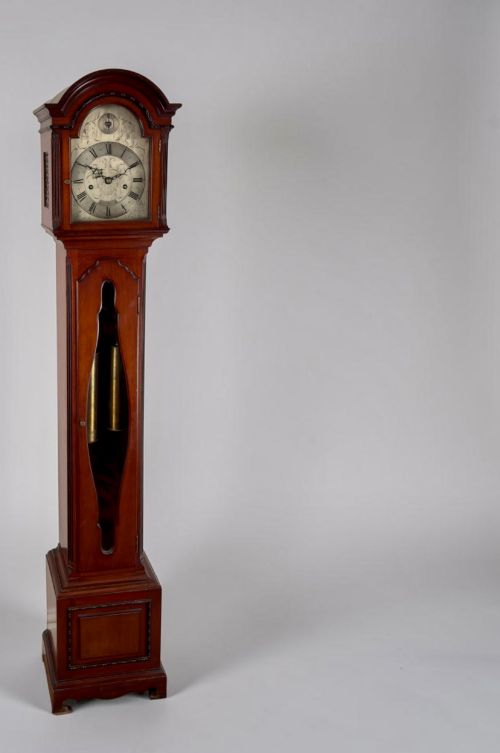
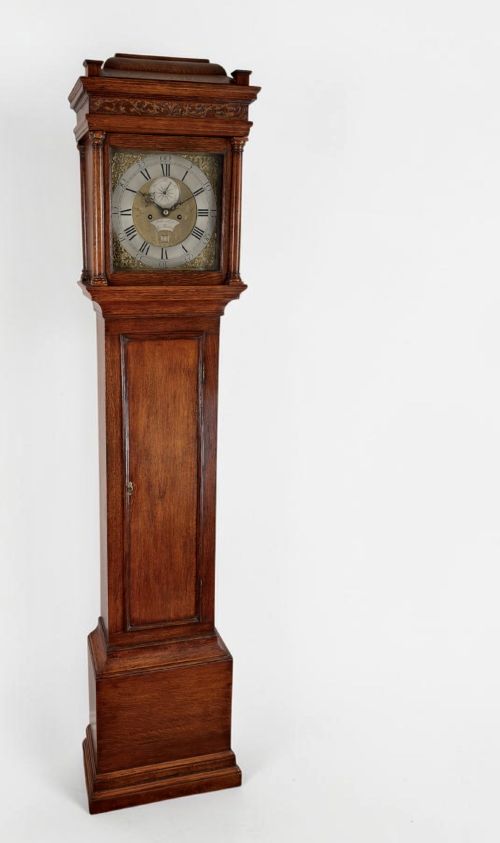


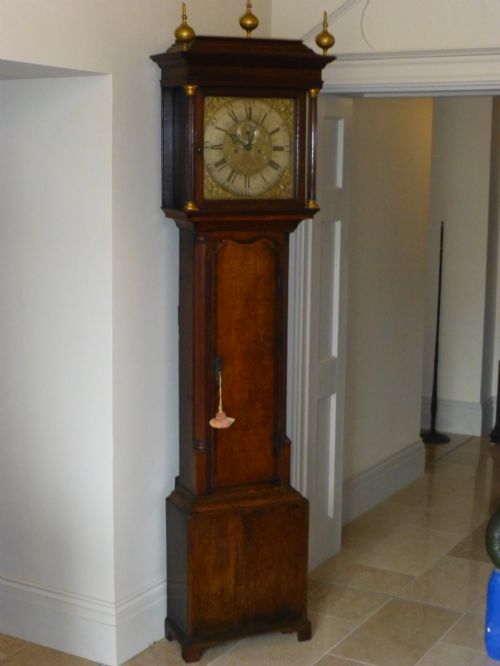
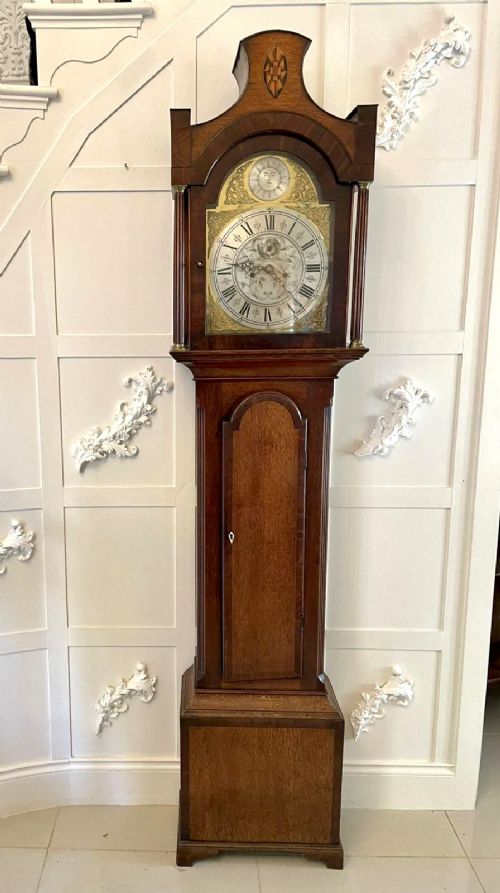
Brass Longcase Clock
A brass longcase clock measures the hours with weighty mechanical rhythm while anchoring a room in centuries of cabinetmaking tradition.

Brass Longcase Clock
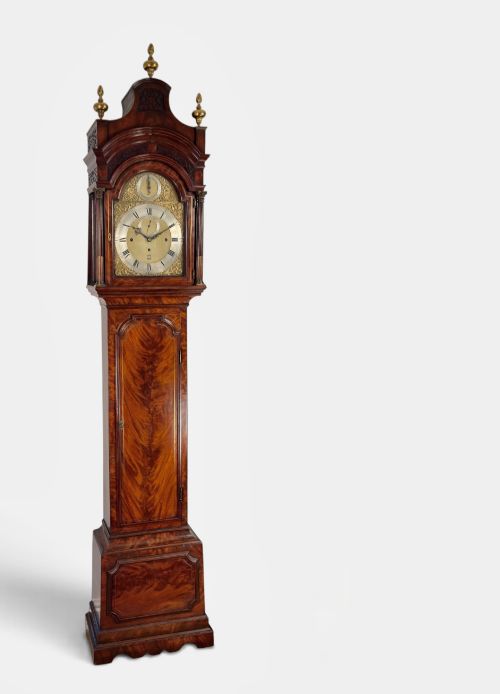
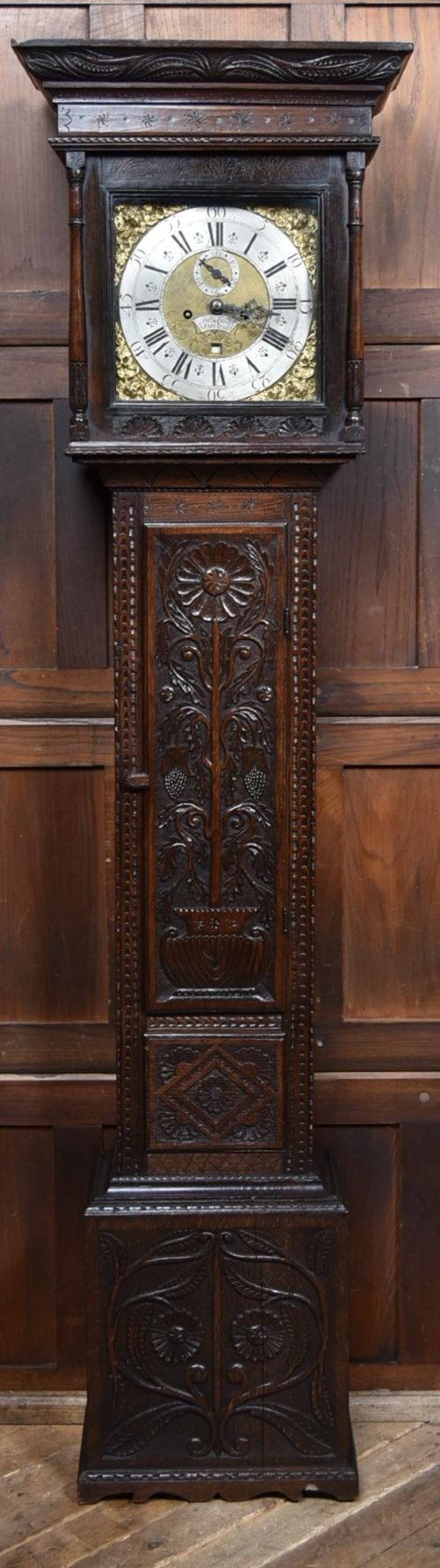
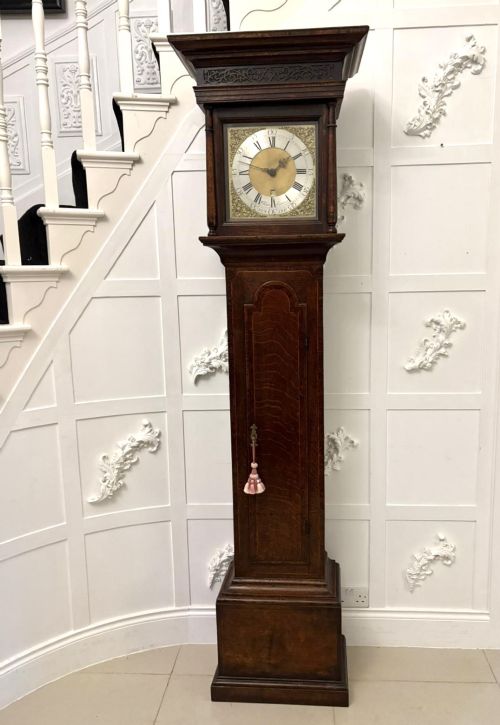
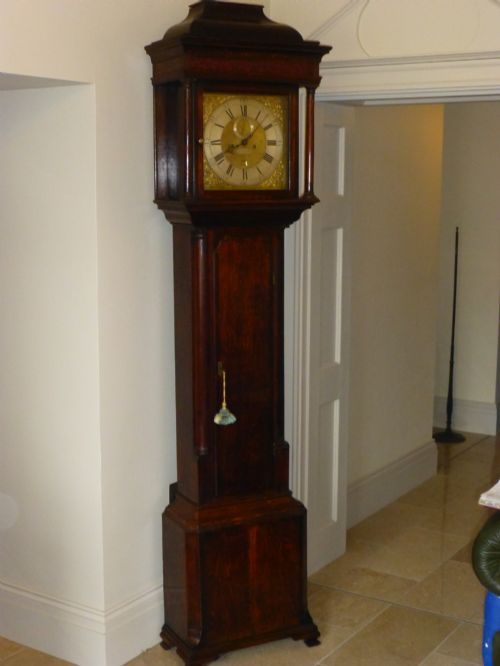
A brass longcase clock is a tall floor-standing timepiece housing a weight-driven movement behind a brass dial, commonly known as a grandfather or grandmother clock.
The pieces on this page span the eighteenth, nineteenth and early twentieth centuries, encompassing Georgian proportions, Victorian musical movements and Edwardian smaller scales.
Regional makers from London to Scotland and provincial towns signed dials framed in oak, mahogany or walnut timber cases.
Materials and Construction
Clockmakers cast and engraved brass for the dials, incorporating silvered chapter rings and brass spandrels in the corners, while cabinetmakers constructed tall timber hoods and trunks using oak, mahogany, walnut and burr walnut.
Movements relied on brass wheels, steel pinions and hanging lead or iron weights, housed within cases joined by pegged mortise and tenon construction or dovetailing.
Listings feature oak, mahogany, and walnut cases paired with brass dials across eighteenth-century Georgian and later periods.
Judging Quality
Quality rests in the crispness of the brass engraving on the dial, the depth of character in the timber grain, and the complexity of the movement, whether a simple thirty-hour train or an eight-day striking or musical mechanism.
Proportion and case architecture separate standard production from superior workshop output, seen in well-balanced hood columns, arched dial plates and secondary woods chosen for internal framing.
Charles Shuckburgh·John Ellicott·James McCabe·William Jourdain·Benjamin Taylor
The Brass Longcase Clock Glossary
- Chapter ring
- The circular metal ring on the clock face bearing the hour numerals. It is frequently silvered to contrast against yellow brass spandrels.
- Spandrels
- Decorative metal ornaments placed in the four corners of the dial surrounding the chapter ring. They evolved from cast brass scrolling foliage in the early eighteenth century to rococo designs later.
- Grandmother clock
- A smaller version of the traditional longcase clock produced during the twentieth century. These shorter floor clocks suit modern ceiling heights while retaining weight-driven movements.
- Moon dial
- A secondary rotating disc located in the arch of the dial that tracks lunar phases. It uses painted imagery to show the waxing and waning of the moon.
- Strike silent
- A mechanism that allows the user to silence the hour-striking train at night. It prevents the bell or gongs from sounding during sleeping hours.
Brass Longcase Clock: Frequently Asked Questions
How do I wind a longcase clock?
Winding requires raising the internal weights using a crank key inserted into winding holes on the dial face. Care must be taken not to overwind the mechanism.
Most eight-day movements need attention weekly, while thirty-hour models require daily or more frequent winding depending on the cord arrangement.
What is the difference between a grandfather and a grandmother clock?
Grandfather clocks are full-height floor clocks generally standing over six feet tall, housing long pendulums and heavy weights. They date primarily from the eighteenth and nineteenth centuries.
Grandmother clocks are significantly shorter versions produced mainly in the Edwardian period and early twentieth century to fit smaller domestic spaces.
How do I date a brass longcase clock?
Dating relies on dial style, case timber, and maker signatures recorded in horological archives. Square dials without arches usually point toward earlier eighteenth-century manufacture.
Arch top dials, mahogany veneers, and painted moon phases typically indicate late eighteenth-century George III production or nineteenth-century revival work.
Where should I place a longcase clock in my home?
Longcase clocks require a stable, dry interior wall away from direct sunlight, central heating vents, and exterior doors. Temperature fluctuations affect the timber case and oil viscosity.
The floor must be level to ensure the pendulum swings evenly and the escapement ticks in a uniform, steady beat.