


Georgian Stationery Box
These georgian stationery box pieces bring period order to a desk, crafted in robust timbers to house correspondence and papers.
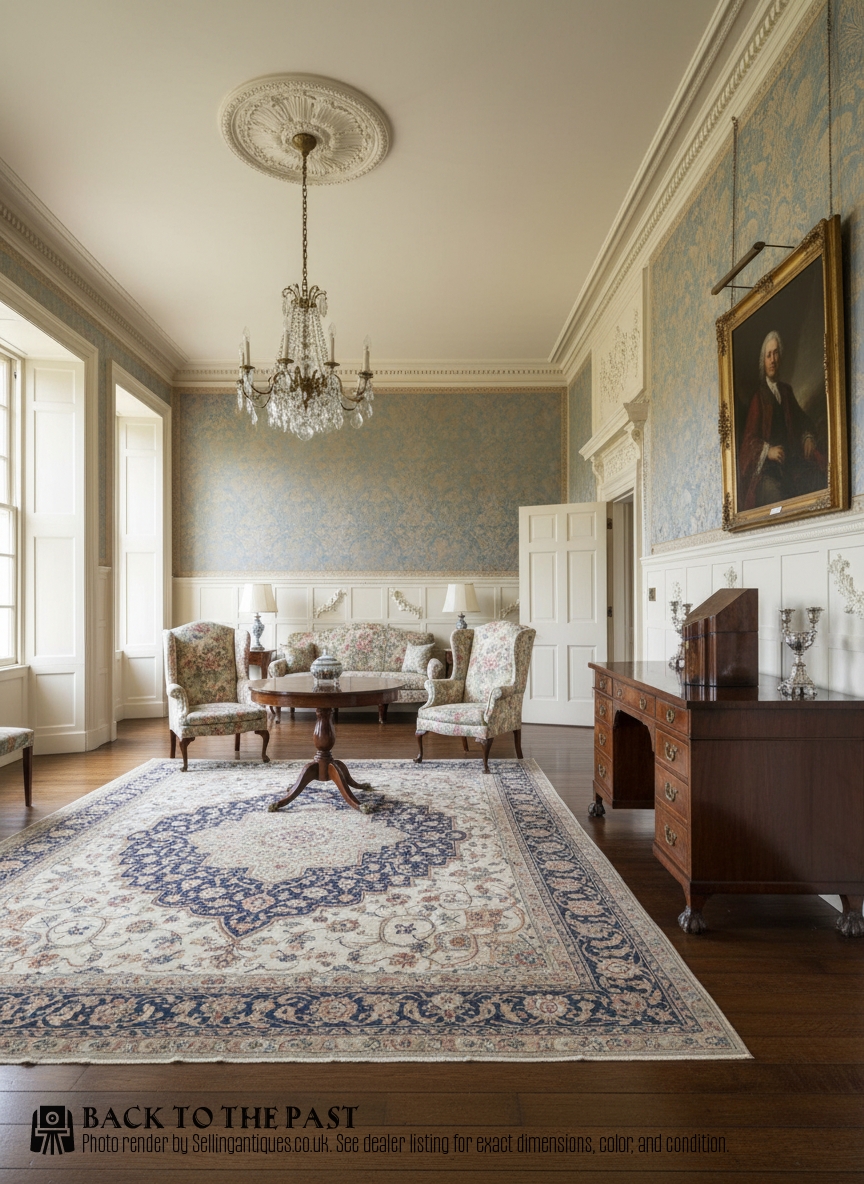
Georgian Stationery Box
A georgian stationery box encompasses desk accessories, writing slopes, and knife boxes that serve to organise letters and writing materials. The pieces found here span the eighteenth century, the Regency era, and later Victorian periods, reflecting shifting domestic habits.
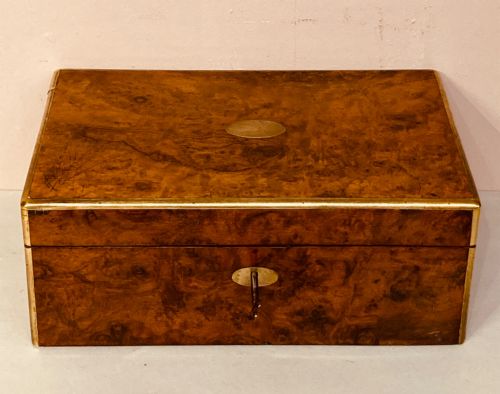
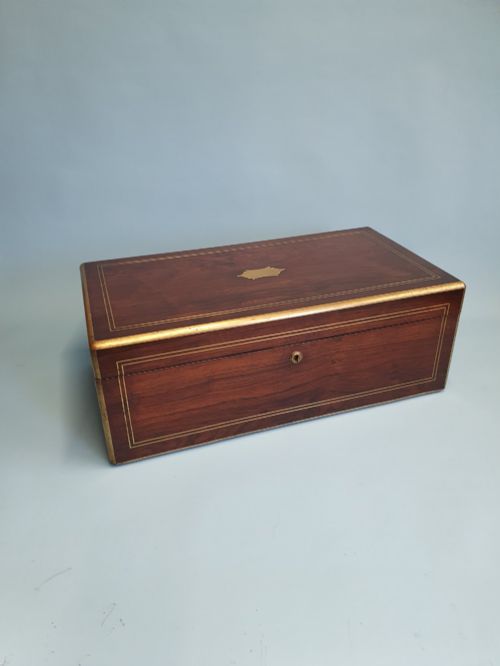
Mahogany and rosewood dominate the selection, often complemented by satinwood, burr walnut, and brass fittings. Many examples double as writing boxes or slope cabinets, showing how utilitarian forms adapted for correspondence over time.
Materials and construction
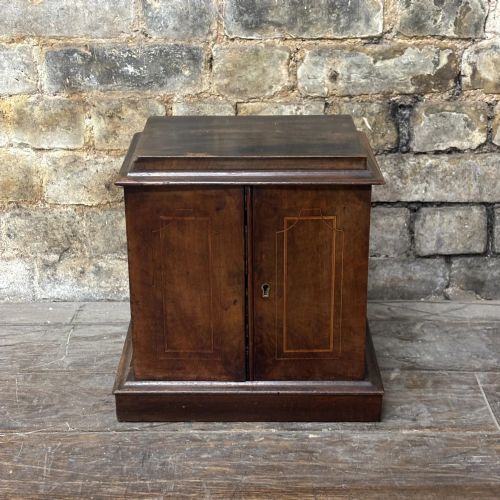
Cabinet makers utilised dense hardwoods such as mahogany and rosewood, constructing sturdy carcases designed to withstand daily desk use. Inlays in satinwood and ebony added decorative contrast to the primary timber surfaces.
Brass featured heavily in structural corners, escutcheons, and campaign mounts to protect edges and reinforce joints. Secret drawers and internal partitions required precise joinery within compact desk compartments.
Listings feature mahogany, rosewood, satinwood, and burr walnut across pieces from the Georgian, Regency, and Victorian periods.
Judging quality and execution
Quality rests upon the selection of figured timber veneers and the crispness of brass inlay or mounts. Superior examples display tight grain matching and carefully fitted interior compartments that operate smoothly.
The sophistication of internal mechanisms, such as secret drawer releases or folding writing surfaces, distinguishes finer workshop production from standard utility boxes.
The Georgian Stationery Box Glossary
- Writing slope
- A portable box with a slanted lid that folds down to create a writing surface while storing paper inside. These slope forms often incorporate interior inkwell recesses and secret compartments.
- Campaign box
- A piece constructed for travel, equipped with recessed brass handles and reinforced corners to endure transit. These sturdy items utilise durable timbers and tight joinery.
- Knife box
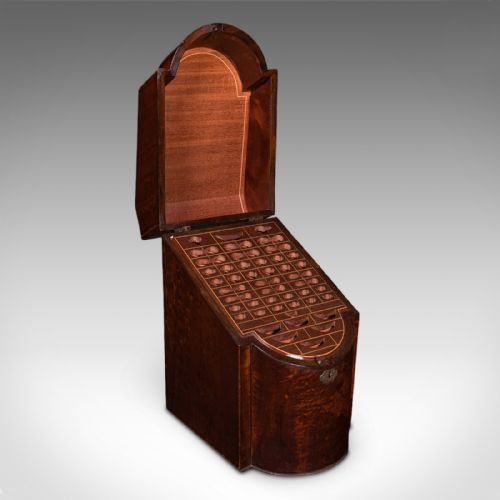
- A vertical wooden container with a sloping lid, originally designed for cutlery but frequently utilised or adapted for stationery. Georgian iterations often exhibit serpentine fronts and fine mahogany construction.
- Inlay
- A decorative technique inserting contrasting woods or metals into hollowed spaces on the surface timber. Common materials include satinwood, ebony, and brass wire.
- Escutcheon
- A protective metal plate surrounding a keyhole, usually cast in brass to match the box hinges and corner mounts. These plates prevent the timber surrounding the lock from wearing down.
Georgian Stationery Box: Frequently Asked Questions
What is a georgian stationery box used for?
These boxes store letters, paper, and writing implements inside compartmentalised wooden interiors. Many feature dedicated slots for envelopes and documents alongside inkwell recesses.
Historically, they kept personal correspondence private and organised upon a gentleman or lady's desk. Today, they serve a similar desktop function while displaying period cabinet making.
What woods are common in these boxes?
Mahogany and rosewood appear most frequently across the listed items, providing durable surfaces with rich natural grain. Satinwood, burr walnut, and coromandel also feature in finer examples.
Cabinet makers paired these dense primary timbers with contrasting inlay materials like ebony and boxwood. Brass hardware frequently reinforces the corners and edges of these wooden carcases.
Can I use an antique knife box for letters?
Many period knife boxes were converted historically or suit modern use as letter holders and stationery storage. Their vertical compartments and sloping lids accommodate envelopes and small papers efficiently.
Original Georgian knife boxes often share matching proportions and timber construction with dedicated desk boxes. This crossover makes them practical for contemporary desktop organisation.