





Georgian Round Mirror
A georgian round mirror brings historic depth and focused light into a room, drawing the eye with its curved convex plate.
Georgian Round Mirror
When you search for a georgian round mirror, you encounter circular wall plates designed to capture and scatter light across a room. The selection spans the Georgian and Regency periods, stretching into the nineteenth century with later revivals.
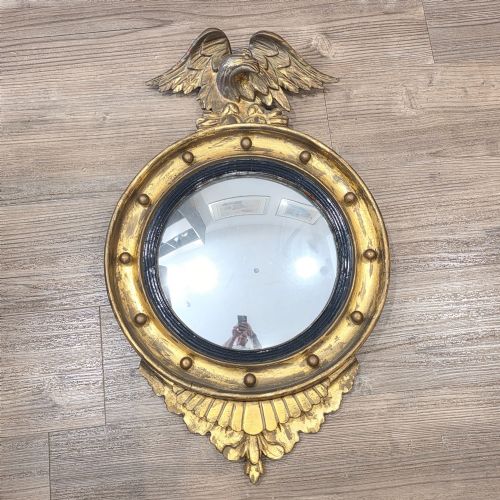
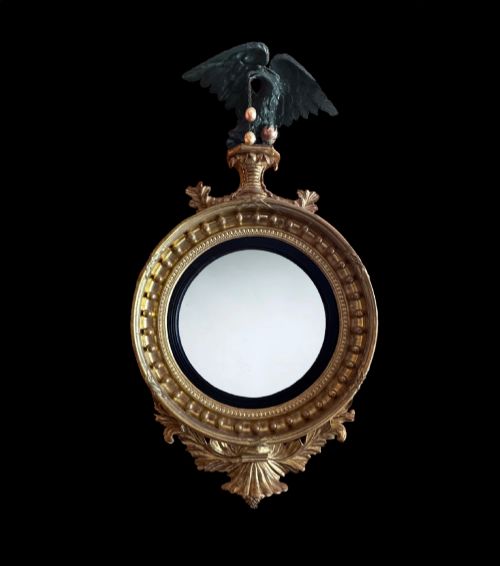
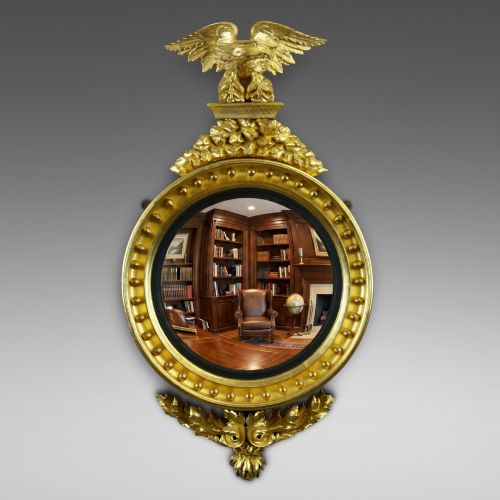
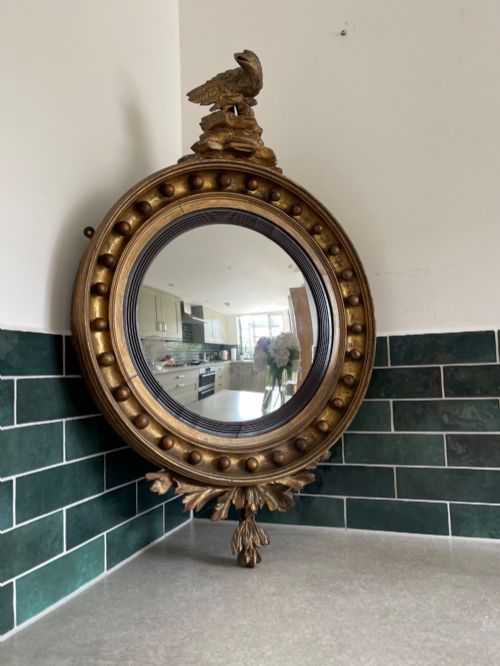
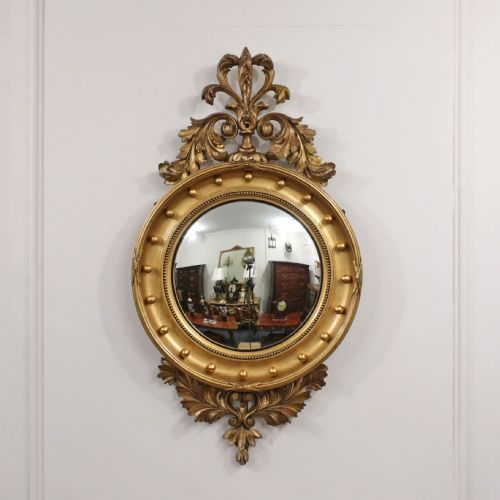
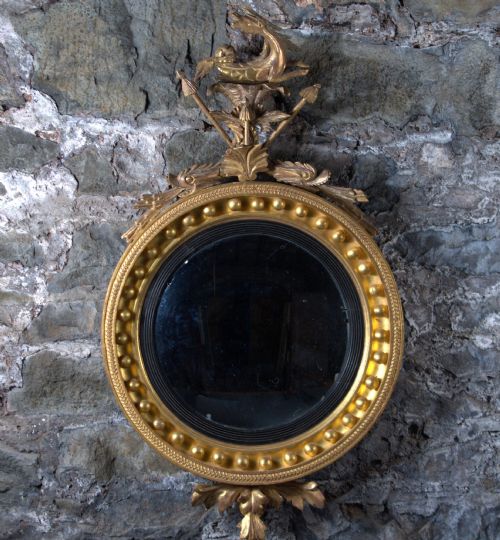
You are most likely to meet convex wall mirrors framed in giltwood, frequently featuring decorative crests such as spread eagles or ebonised inner slips. These pieces function primarily as wall mirrors, though smaller hand mirrors and table plateaux also appear in the record.
Materials and construction
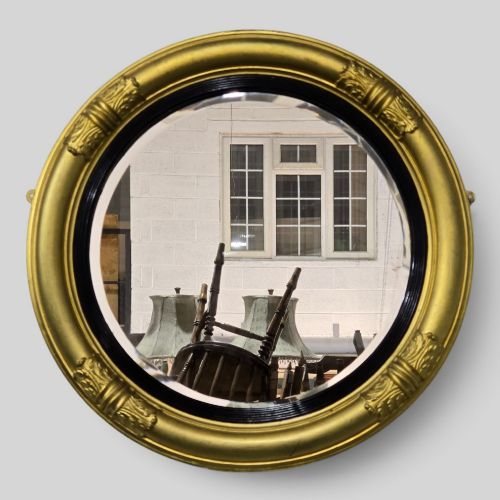
Frames rely heavily on carved wood, giltwood, and gesso, often enriched with ebonised wood details or japanned surfaces. Artisans applied thin layers of gold leaf over gesso to achieve the bright reflective finishes seen on Regency and Georgian examples.
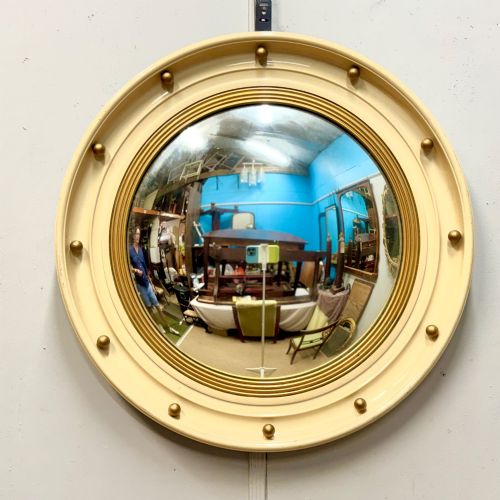
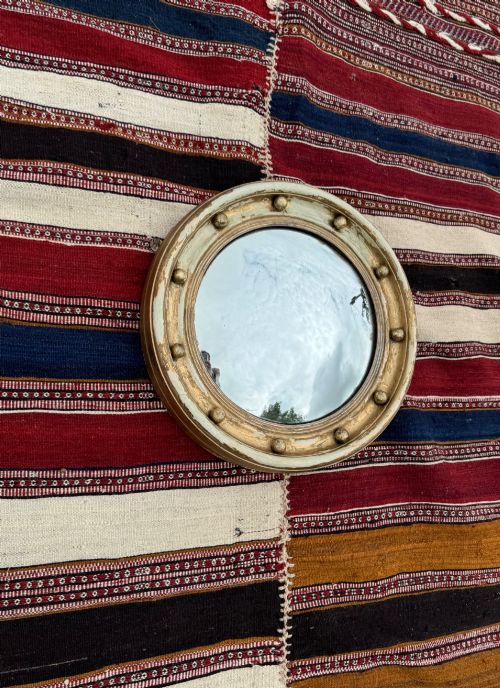
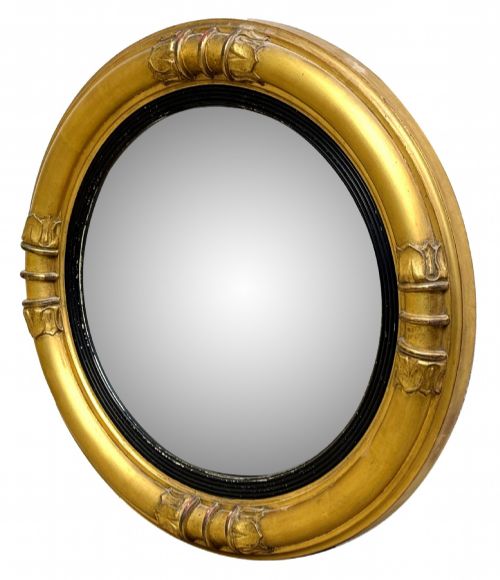
Glass is set as curved convex plates that distort reflections into a wide fish-eye perspective. Supporting structures utilise timber frames, sometimes augmented with brass components and detailed wood carving.
The listings span the eighteenth, nineteenth, and twentieth centuries, incorporating Georgian, Regency, Victorian, and later revival periods.
Distinctions in quality
The standard of carving on the wooden frames and applied crests dictates much of the visual distinction between examples. Crisp details on eagles, dragons, and moulded frames separate finer workshop output from simpler utilitarian pieces.
The preservation of the original gilt surface and the clarity or foxing of the convex glass plate also determine the character of the object. Heavier proportions, grand scale diameters, and deeply moulded timber work generally signal higher ambition in manufacture.
The Georgian Round Mirror Glossary
- Convex glass
- Curved mirror glass that bulges outward to produce a wide-angle, distortion-heavy reflection of the interior. This form was especially popular during the Regency period for monitoring activity across a dining room or hall.
- Giltwood
- Timber carved and coated with gold leaf over a prepared gesso ground. It provides a bright, reflective surface that catches natural daylight.
- Ebonised slip
- A thin dark inner moulding framing the mirror plate, usually finished to imitate ebony wood. It creates visual contrast against the brighter gilt exterior frame.
- Gesso
- A plaster-like mixture applied to wood frames to provide a smooth base for gilding or painting. It allows artisans to carve intricate relief details before applying gold leaf.
- Butlers mirror
- A round wall mirror traditionally hung in service areas or halls to oversee large spaces. These typically feature convex glass plates and straightforward timber frames.
Georgian Round Mirror: Frequently Asked Questions
Where should I hang a convex mirror?
These mirrors excel in entrance halls, dining rooms, and smaller studies where their wide-angle reflection can open up the space. Positioning them opposite a window maximises the amount of daylight they project back into the room.
Because they project outwards from the wall, ensure they hang at a comfortable eye level away from heavy household traffic. Their primary historical function was practical observation, so placement in reception areas suits their design.
How do I identify a Regency period frame?
Regency frames often display classical motifs such as reeding, balls set within a hollow moulding, and carved crests featuring eagles or dragons. The timber is frequently gilded with gesso preparation, and ebonised slips commonly frame the glass.
Comparing the proportions and weight of the timber helps distinguish authentic early pieces from later nineteenth-century revivals. The depth of the moulding and the crispness of the carving offer reliable clues to the date.
Why is the glass curved?
Convex glass was manufactured to provide a panoramic view of an entire room from a single vantage point. This optical property made them popular in domestic and commercial interiors for surveillance and ambient light distribution.
The curved plate gathers light from a wide angle and concentrates it into a compact, circular reflection. This distinct visual effect defines the genre across Georgian and Regency examples.
What is foxing on a mirror plate?
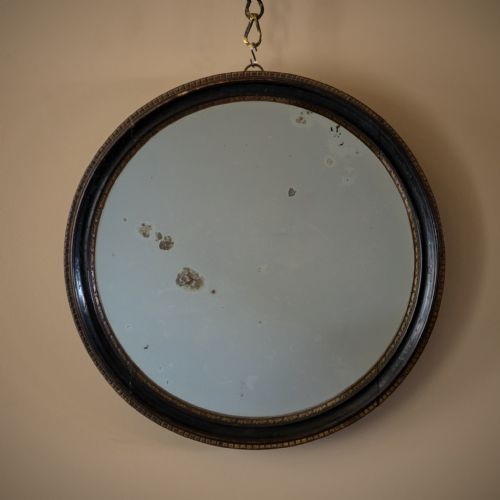
Foxing refers to the small brown spots and patches that develop behind the glass over decades of exposure to moisture and air. It indicates age and shows that the mirror retains its original reflective backing rather than modern replacement glass.
Many collectors appreciate foxing for the authentic historic character it brings to an antique wall mirror. It softens the reflection and highlights the passage of time.