

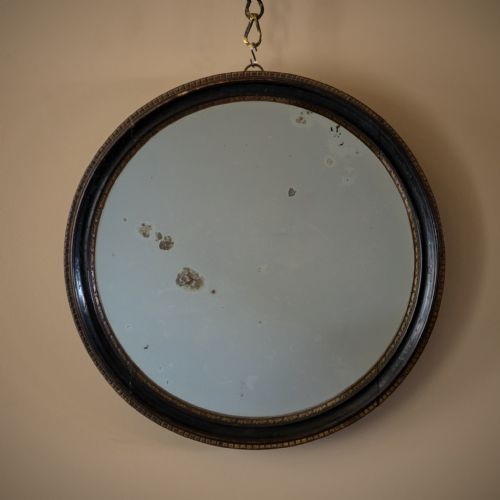
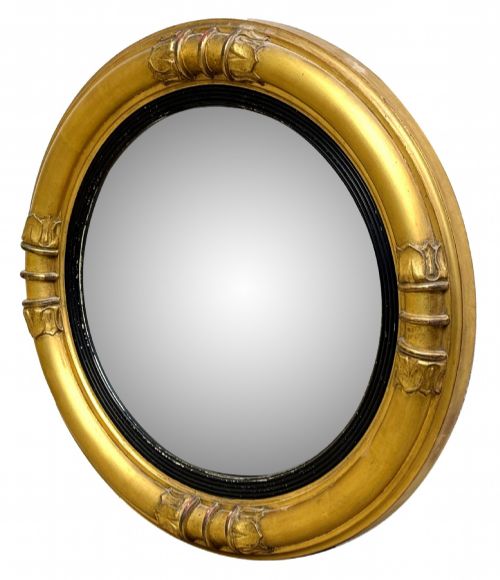
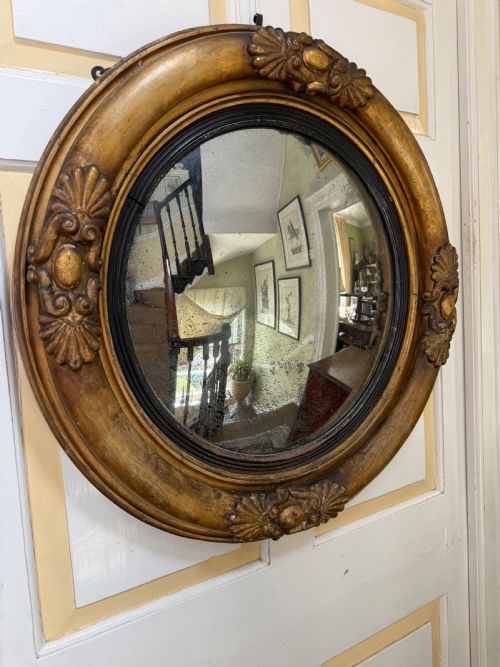


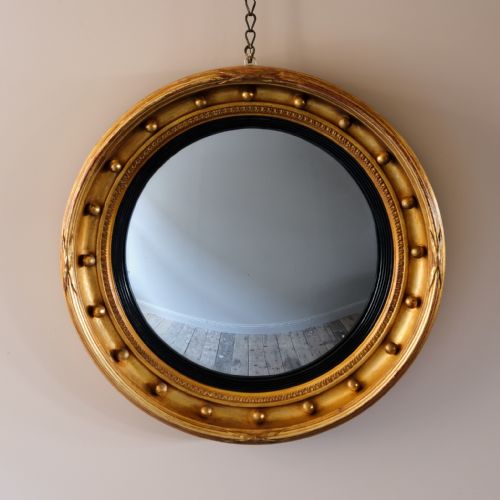
Ebonised Circular Mirror
An ebonised circular mirror brings depth and focus to a room through curved glass and dark timber frames.
Ebonised Circular Mirror
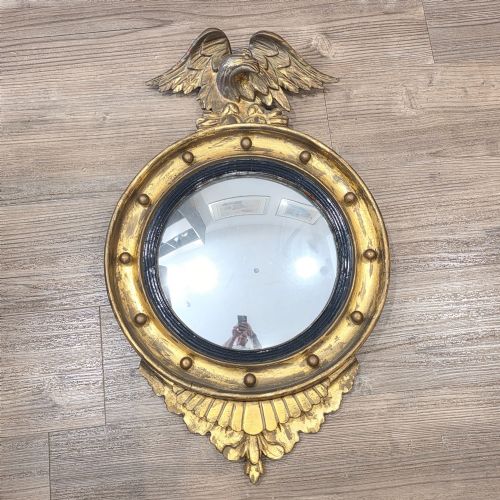
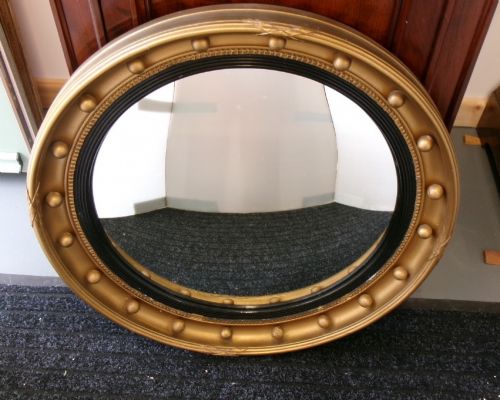
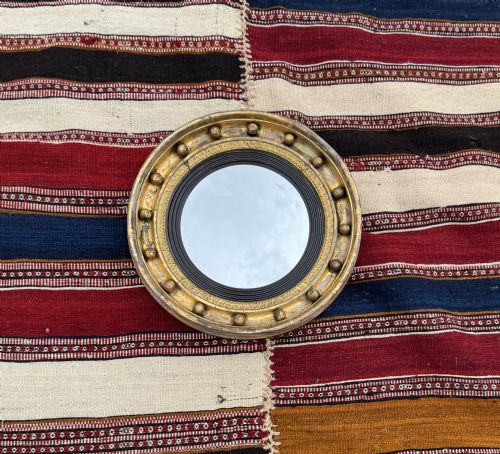
An ebonised circular mirror takes the form of a round wall glass, often featuring convex plates that capture a wide view of an interior. These pieces appear frequently across the Regency and Victorian periods, alongside revival styles from the nineteenth and early twentieth centuries.
Buyers encounter wall mirrors, hand mirrors, and table plateaus built to round proportions. The design serves both functional and decorative purposes, historically placed to reflect light into darker corners of a room.
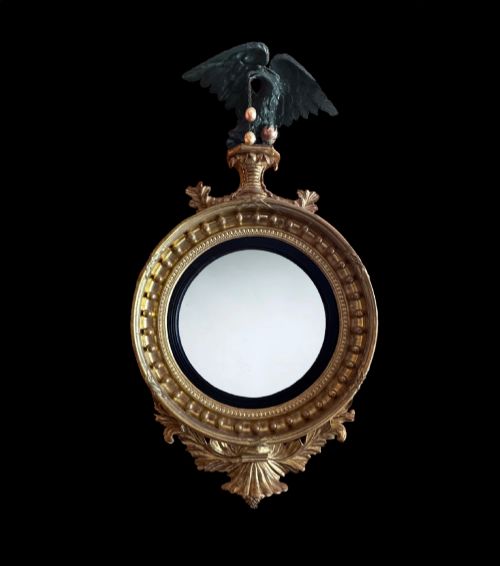
The selection ranges from small hand-held items to large wall-hanging pieces mounted with eagles or carved detailing. Most examples combine dark ebonised wood with gilt accents, anchoring the circular form against the wall.
Materials and construction
Frames are constructed from wood, gesso, and metal, treated with ebonisation techniques to simulate ebony. Giltwood and lacquer details frequently accompany the dark timber, adding contrast to the circular moulding.
Convex mirror glass forms the optical centre of these objects, requiring careful silvering and shaping to achieve the curved reflection. Structural elements rely on traditional joinery within wood and carved plaster layers.
Convex mirrors were historically known as butler's mirrors because their wide field of vision allowed servants to monitor the entire dining table from a corner.
Factors of quality
The clarity and distortion of the convex glass plate dictate the visual success of the piece. Superior examples maintain an even silvering across the curved surface without distracting blemishes.
Carved ornaments such as spread eagles and gesso moulding display varying degrees of hand skill. Crispness in the foliage and stability in the framing timbers separate standard production from finer workmanship.
The Ebonised Circular Mirror Glossary
- Convex glass
- Curved mirror plate that projects outward, creating a wide-angle reflection of the surrounding interior space. This form was especially popular during the Regency period.
- Ebonisation
- Process of treating wood, such as oak or other timbers, to give it the dark appearance of ebony. This finish provides a stark contrast against gilt details.
- Gesso
- Plaster-like mixture applied to wood frames and carved into decorative relief patterns before gilding or painting. It allows for intricate surface ornamentation.
- Table plateau
- Mirrored tray placed on dining tables to hold centrepieces and reflect candlelight. These items share the circular glass construction of wall mirrors.
- Surmount
- Decorative carving placed at the top of a mirror frame, such as a spread eagle or crest. It adds height and formal presence to the piece.
Ebonised Circular Mirror: Frequently Asked Questions
How do I hang a heavy mirror?
Hanging a heavy wall mirror requires securing fixings directly into masonry or wall studs using rated brackets. The weight of the wooden frame and glass plate demands reliable wall anchors.
Ensure the hanging wire or integrated metal loops match the load capacity of the hardware. Professional installation is often recommended for larger framed pieces.
How do I clean an antique mirror?
Clean antique glass gently using a soft microfibre cloth and a mild, ammonia-free cleaning solution applied to the cloth rather than directly onto the plate. Avoid harsh chemicals that can damage aged silvering.
Dust the ebonised wood frame with a dry brush and avoid excessive moisture on carved gesso or gilt surfaces. Regular gentle dusting preserves the historic finish.
Are these mirrors original?
Authentic pieces from the Regency and Victorian eras display historical wear to the frame construction and silvering behind the glass. Examination of the timber backing and joinery reveals the age of the structure.
Many listings distinguish between original plates and later replacements. Reviewing the period details helps confirm the manufacturing era of the object.