




Victorian Convex Mirror
A Victorian convex mirror distorts the room in a wide curve, pulling light and space into a single striking round glass.
Victorian Convex Mirror
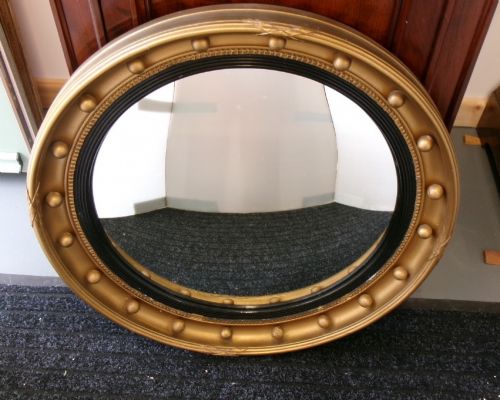
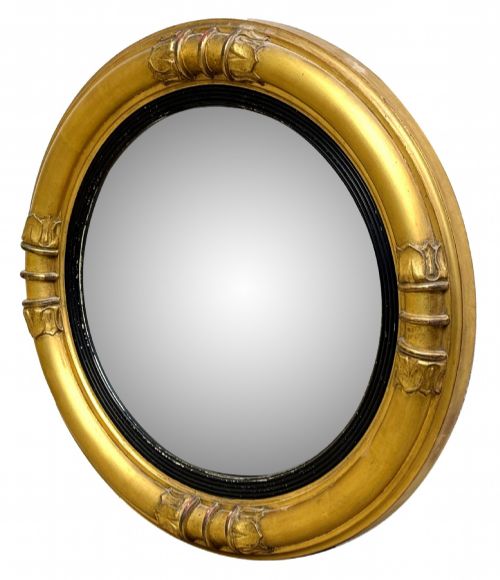
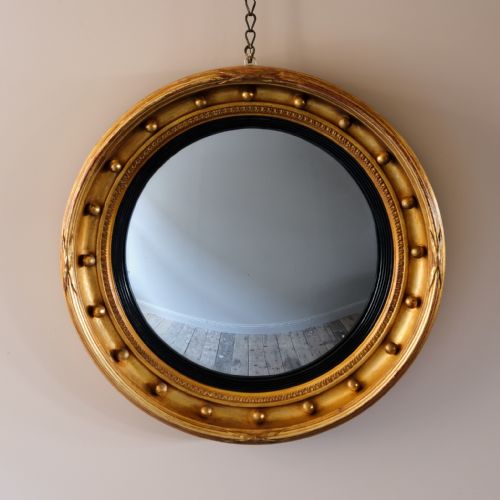
A victorian convex mirror gathers the whole room into a curved glass, often called a sorcerer's or witch's mirror. These wall-hanging pieces appear most frequently in giltwood frames, sometimes accompanied by ebonised wood or mahogany timbers from the nineteenth century.
You will encounter pieces ranging from small domestic hall mirrors to larger decorative plates featuring carved eagle crests or porthole designs. The forms span the Victorian era proper as well as nineteenth-century revivals of Regency styles.
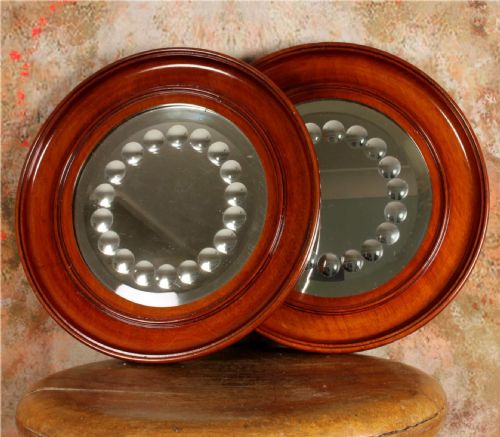
The archive shows these round plates set into frames of gold leaf, copper, and velvet backing. While standard wall mirrors dominate the selection, plateau mirrors and wheel barometers with convex centres also surface.
Materials and Construction
Makers shaped the heavy curved glass and set it within wooden frames built from mahogany, oak, or softwood carcase timber. Giltwood and gesso surfaces received layers of gold leaf to catch the interior light.
Decorative elements like ebonised wood details or carved eagles were applied to the upper sections of the frames. Velvet surrounds and copper housings also appear among the records, showing variety in the secondary materials.
Victorian Convex Mirror Retail Price Guide 2026
Typical asking prices for victorian convex mirror among the pieces listed under this phrase on Sellingantiques today, from the lower quarter to the upper quarter. They describe what is for sale here now, not the wider market.
The listings combine walnut, mahogany, oak, and ebonised wood with traditional giltwood and gesso finishes.
Judging Quality and Craftsmanship
The weight and depth of the frame carving separate standard pieces from the finest examples. Crisp gesso work and well-preserved gold leaf indicate superior workshop production.
The clarity of the curved glass and the tightness of the frame joints dictate the overall standard. Original surface patination on the timber and gilding remains a primary indicator of authenticity.
The Victorian Convex Mirror Glossary
- Convex mirror
- A round glass curved outward to reflect a wide-angle view of the interior space. It concentrates light into the centre of the room.
- Giltwood
- Timber coated with fine gold leaf over a prepared gesso ground. This finish provides the bright reflective surface seen on many nineteenth-century frames.
- Ebonised wood
- Timber treated with a dark stain or finish to imitate ebony. It provides a stark contrast against gilt details.
- Gesso
- A plaster mixture applied to wood frames to create a smooth surface for gilding and carving. It allows for crisp decorative moulding.
- Plateau mirror
- A mirrored tray or wall piece designed to sit flat or hang, reflecting objects placed before it. Some examples utilise convex glass.
- Wheel barometer
- A weather-measuring instrument housed in a timber case featuring a dial and a central convex mirror. Mahogany onion-top cases are typical of this form.
Victorian Convex Mirror: Frequently Asked Questions
How do I hang a heavy convex mirror safely?
These pieces carry considerable weight due to the thick curved glass and timber frames. Secure your fixings directly into wall studs or utilise heavy-duty wall anchors rated for the load.
Check that the hanging ring or chain on the reverse is firmly attached to the frame structure rather than decorative trim alone.
What is the difference between a sorcerer's mirror and a standard mirror?
A sorcerer's mirror uses a spherical glass plate that yields a wide, fish-eye reflection of the entire room. Traditional flat mirrors provide a true-scale, direct view without the curved distortion.
Historical superstition held that these convex glasses warded off evil spirits by trapping them in the distorted reflection.
Why do some convex mirrors feature an eagle on top?
The eagle motif draws on Regency and Victorian classical revival designs, symbolising strength and majesty. These birds often stand with wings outspread atop the upper frame, holding a chain or ball in their beak.
Frames featuring eagles generally represent a higher tier of decorative ambition in nineteenth-century workshops.