







Georgian Style Convex Mirror
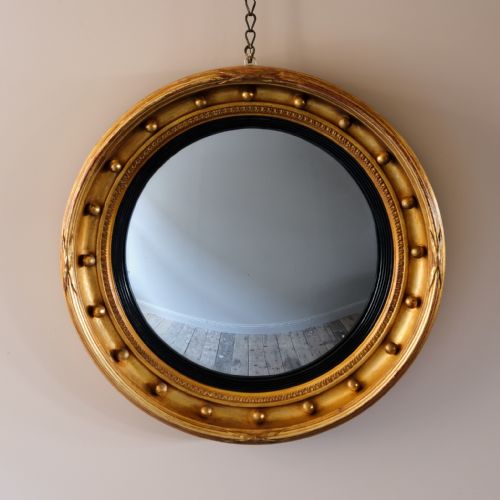
A georgian style convex mirror pulls light across a room with its curving glass, offering the characteristic round reflection that defined nineteenth-century interiors.
Georgian Style Convex Mirror
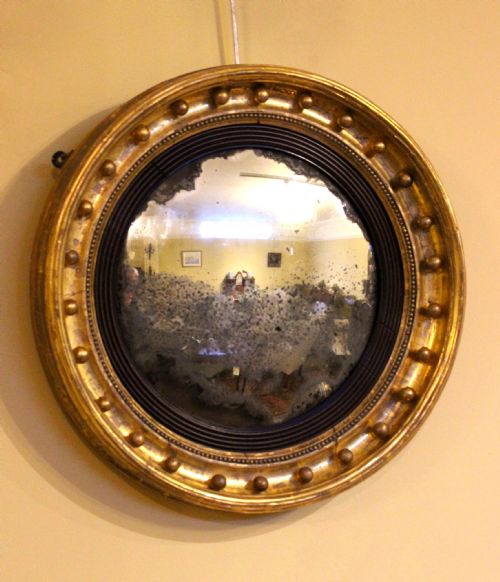
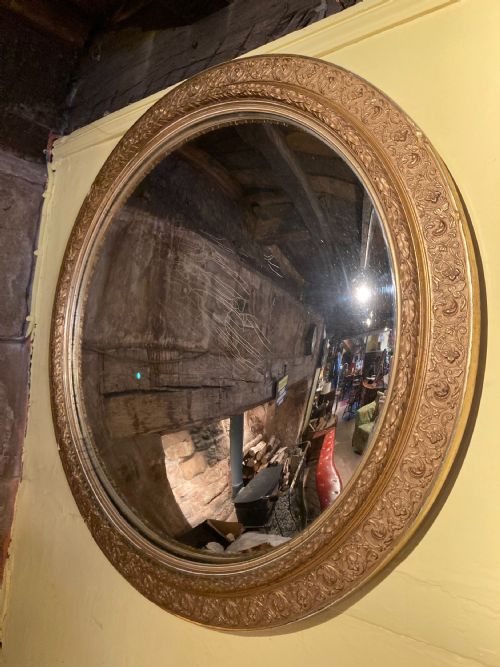
A georgian style convex mirror brings together the round wall-hanging format and curved glass seen across the nineteenth century. The listings on this page span the Regency period through to the Victorian era and the early twentieth century.
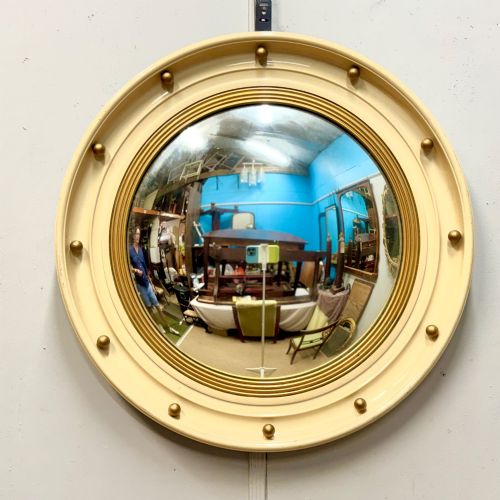
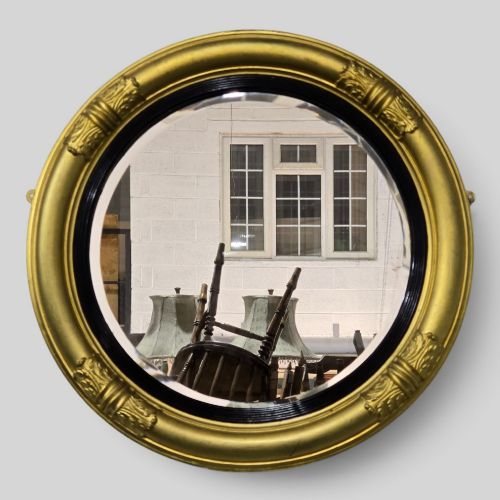
Most examples found here take the form of round gilt wood or gesso frames, often described as butler's mirrors. Variations include ebonised wood, painted finishes, and occasional brass and mahogany combinations.
Originating in historical reception rooms and halls, these mirrors serve primarily to gather light from across a space. The format persists through revival periods, with Regency style pieces appearing alongside genuine nineteenth-century work.
Construction and materials
Makers shaped these frames from wood, applying layers of gesso to build up decorative mouldings and surface detail. Giltwood and gilded finishes predominate, giving the circular frames their bright metallic sheen.
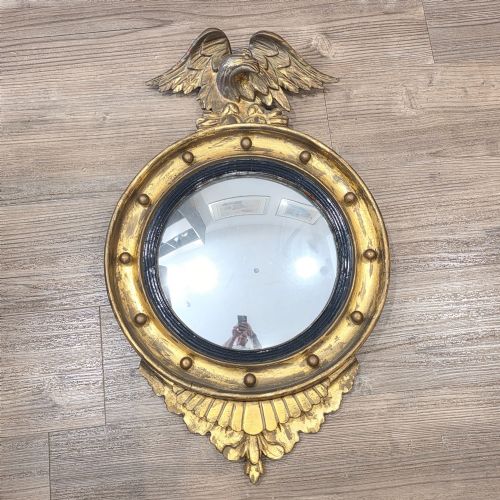
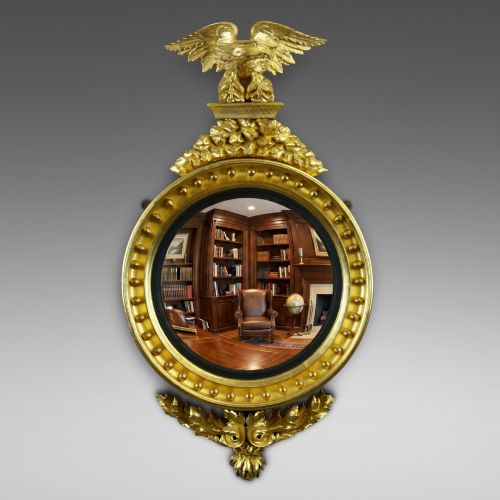
The convex glass itself sits within a recessed rebate, sometimes accompanied by an inner ebonised reeded slip. Frames frequently feature carved crests, such as spread eagles, surmounting the circular glass.
Georgian Style Convex Mirror Retail Price Guide 2026
Typical asking prices for georgian style convex mirror among the pieces listed under this phrase on Sellingantiques today, from the lower quarter to the upper quarter. They describe what is for sale here now, not the wider market.
A stately spread eagle keeps watch from the top of at least one frame, supervising the reflections below.
Assessing quality in convex mirrors
Quality rests in the crispness of the gesso moulding and the depth of the gilding across the frame. Finer pieces retain sharp detail in carved crests and decorative motifs rather than softened edges.
The preservation of the original convex glass plate and the stability of the timber frame distinguish better examples. Uniformity in the gilt surface and the integrity of the joinery mark the division between standard production and superior work.
The Georgian Style Convex Mirror Glossary
- Convex glass
- Curved glass that projects outward, creating a distorted panoramic reflection of the room. This spherical form gathers light from a wide angle.
- Gesso
- A plaster mixture applied to wood frames to create a smooth surface for gilding. It allows for intricate moulded details and ornamentation.
- Giltwood
- Timber covered with a thin layer of gold leaf. It provides a luminous surface that catches and reflects ambient light.
- Ebonised wood
- Timber treated to resemble ebony, usually through staining or painting. This dark finish often appears on inner slips within the frame.
- Regency style
- A design aesthetic drawing on the principles of the Regency era. Pieces in this style were frequently produced during later revival periods.
Georgian Style Convex Mirror: Frequently Asked Questions
Where should I hang a convex mirror?
These mirrors function best opposite a window or light source to maximise the reflection across the interior.
Their compact circular proportions suit hallways, dining rooms, and smaller wall spaces where they draw the eye.
How do I date a convex mirror?
Dating relies on examining the construction methods of the timber frame and the composition of the gesso layers.
Earlier pieces from the Regency period display distinct joinery and carving styles compared to later nineteenth-century revivals.
What is a butler's mirror?
A butler's mirror is a specific round convex glass form traditionally used to monitor activity in large rooms.
These pieces often feature simple circular frames designed for functional placement in domestic interiors.
Are these mirrors heavy?
The weight depends primarily on the timber frame and the thickness of the glass plate.
Secure wall fixings are essential to support the frame safely during display.