

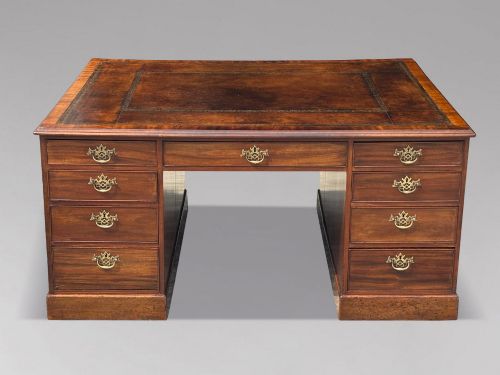


Georgian Library Table
A georgian library table brings the substance of a traditional study into a modern room with timber, leather, and proportion.
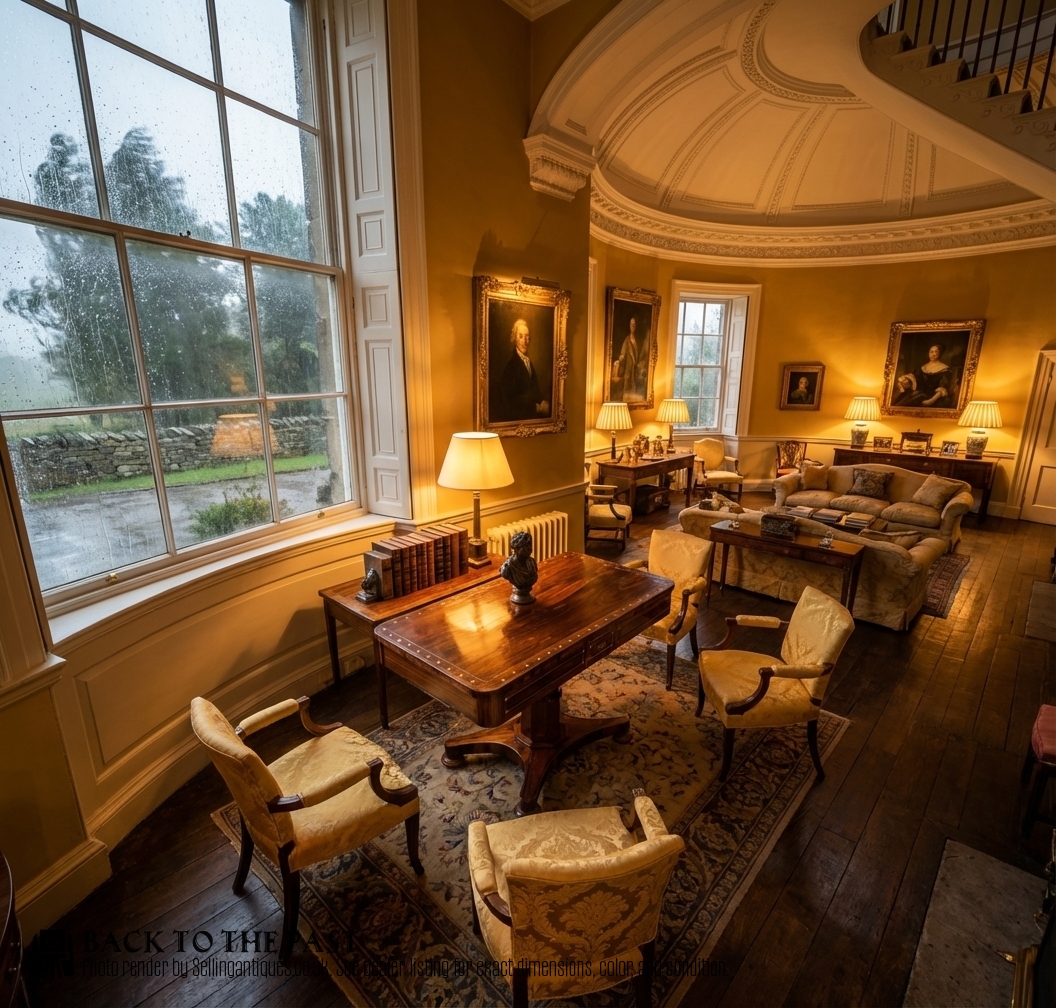
Georgian Library Table
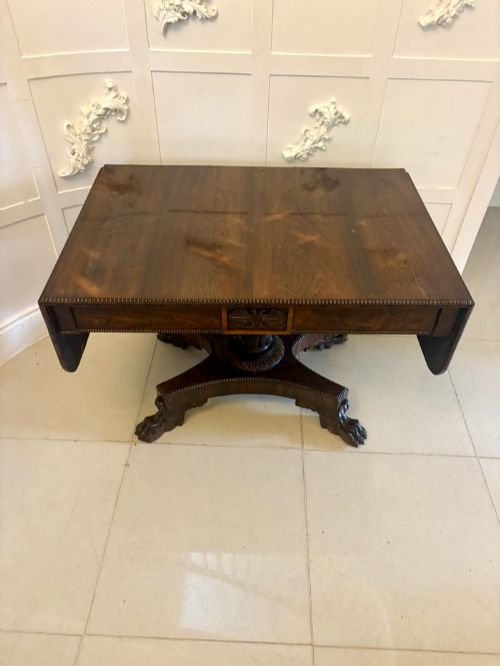
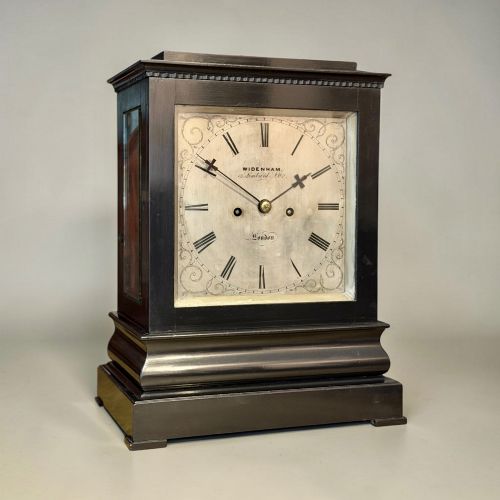
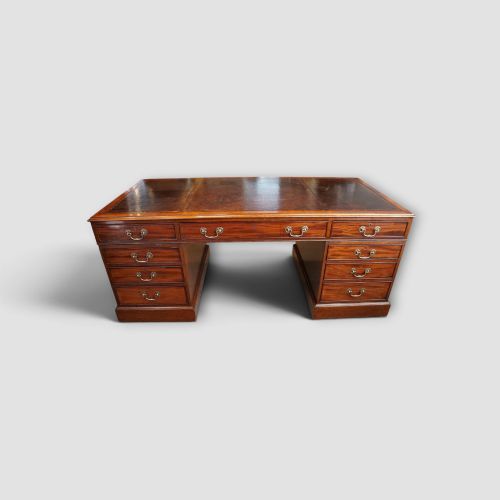
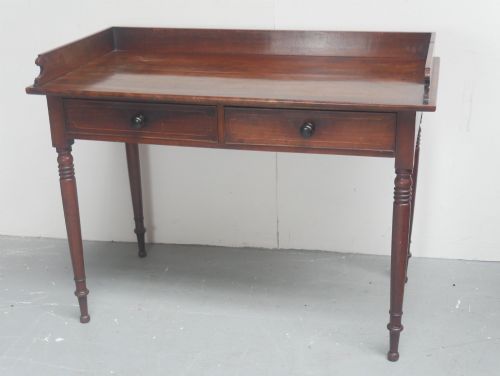
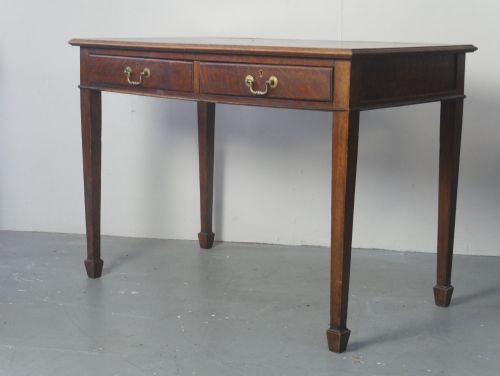
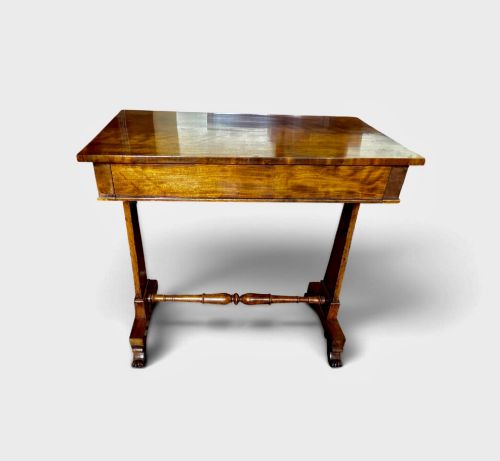
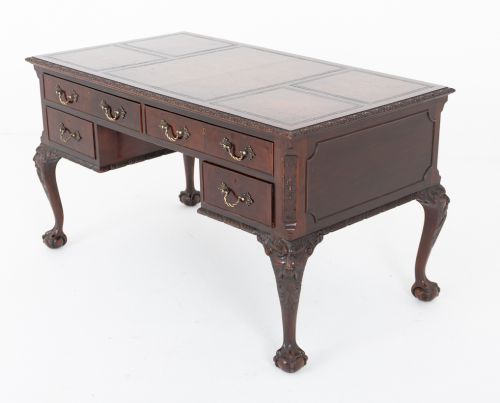
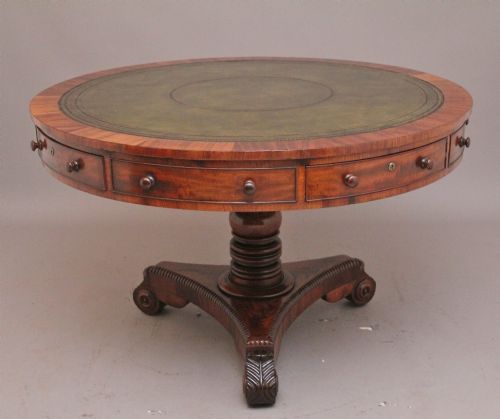
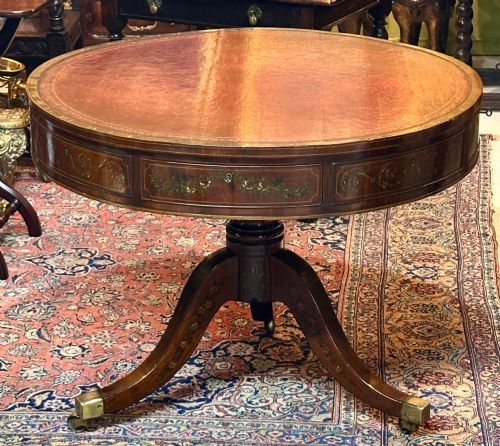
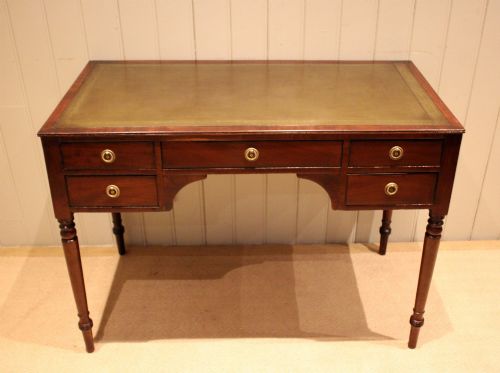
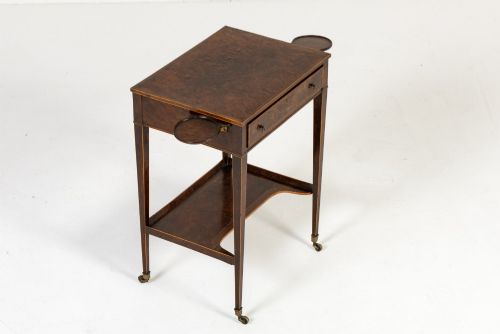
A georgian library table is a substantial freestanding piece designed to sit in the centre of a room rather than against a wall, offering a generous surface for reading and writing. The pieces seen here span the Georgian, Regency, and Victorian eras, taking the form of large partners desks, circular drum tables, and rectangular writing tables.
Mahogany is the dominant timber across the selection, often accompanied by rosewood, oak, and burr yew wood, frequently inset with tooled leather writing surfaces. Many examples feature multiple drawers, drop leaves, or pedestal bases, reflecting the practical demands of historic libraries and studies.

How They Were Made
Cabinetmakers utilised solid mahogany and carefully selected veneers applied to secondary timbers, bringing stability and deep colour to large tops. Brass mounts, castors, and handles provided functional strength and subtle contrast to the dark timber.
Writing surfaces were typically inset with vegetable-tanned leather, frequently tooled with gilt borders by hand. Joinery relied on precise dovetails for drawer construction and sturdy framing to support heavy loads of books and papers.
Georgian Library Table Retail Price Guide 2026
Typical asking prices for georgian library table among the pieces listed under this phrase on Sellingantiques today, from the lower quarter to the upper quarter. They describe what is for sale here now, not the wider market.
Object types recorded across these listings include drum tables, partners desks, and reading tables.
What Varies in Quality
The standard of a georgian library table rests on the choice of timber and the restraint of its carving. Finer pieces display well-figured grain patterns and crisp, hand-cut mouldings rather than heavy machine-produced ornamentation.
Proportion and functionality separate standard examples from exceptional ones, particularly in the balance of the pedestal supports and the smooth operation of the drawers. Original brass hardware and untouched patination on the timber surface indicate a higher tier of preservation.
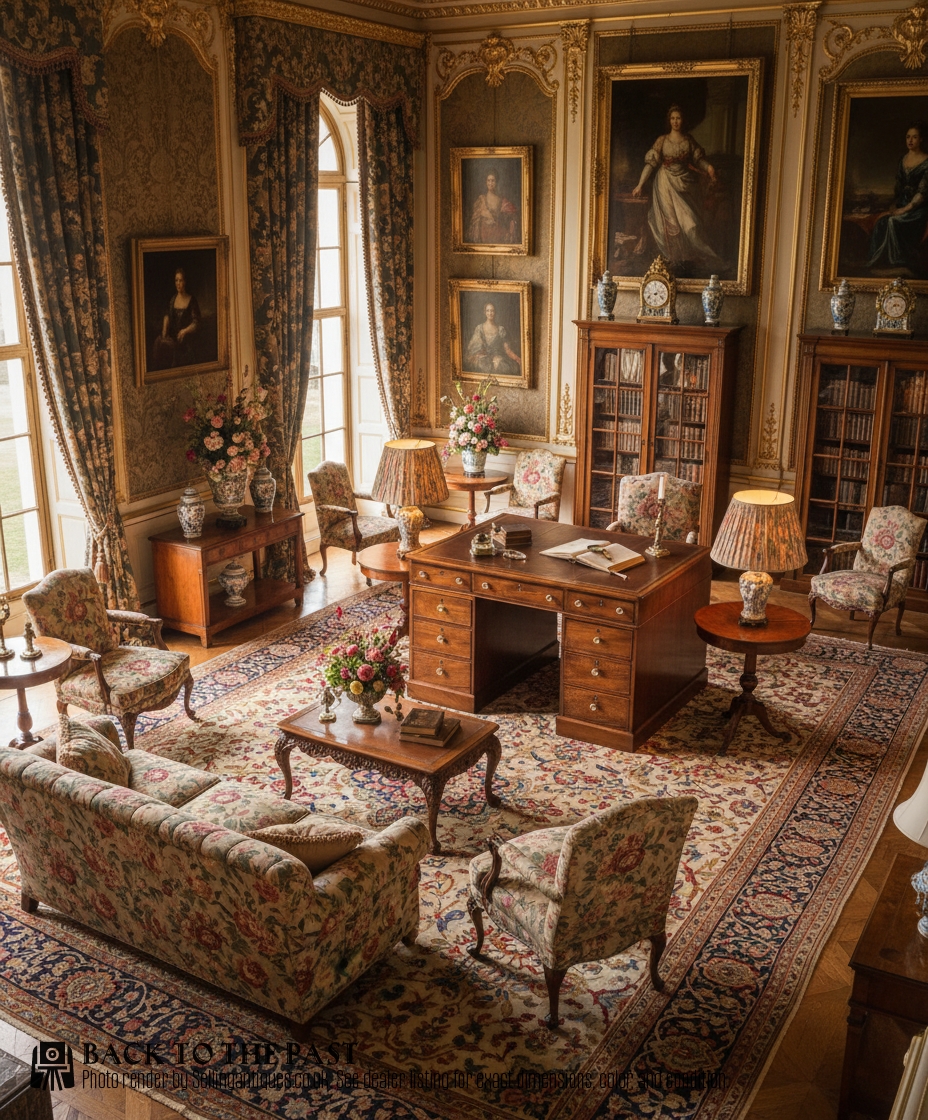
The Georgian Library Table Glossary
- Drum Table
- A circular library table with a deep top containing a ring of drawers, typically supported on a central pillar and tripod legs.
- Partners Desk
- A large double-sided desk designed for two people to work opposite one another, featuring banks of drawers on both faces.
- Sofa Table
- A rectangular table with drop leaves on either end, originally designed to stand in front of a sofa in a drawing room.
- Brass Inlay
- The technique of cutting thin strips of brass into recesses in the wood surface to form decorative geometric or floral patterns.
- Patina
- The surface sheen and softening of colour developed by wood and leather through decades of handling and exposure to light.
Georgian Library Table: Frequently Asked Questions
Where should I place a library table?
These tables are designed to be viewed from all sides, making them ideal for the centre of a study or living room rather than pushed against a wall.
Their finished backs and freestanding proportions allow them to anchor a room while providing practical surface area.
How do I care for the leather top?
The leather writing surfaces benefit from occasional light dusting and minimal moisture to prevent the tooling from drying out.
A neutral wax or specialised leather conditioner helps maintain the supple texture of the hide over time.
Are these tables suitable for daily computer use?
Many people use these tables as executive desks because their generous proportions easily accommodate modern laptops and desktop accessories.
The sturdy construction and large surface area make them practical for contemporary working environments.
How do I distinguish Georgian from Victorian pieces?
Georgian and Regency pieces tend to show cleaner architectural lines and restrained proportions, while later Victorian revivals often feature heavier carving and darker ebonised details.
Examining the secondary timbers inside the drawers often helps clarify the period of construction.