
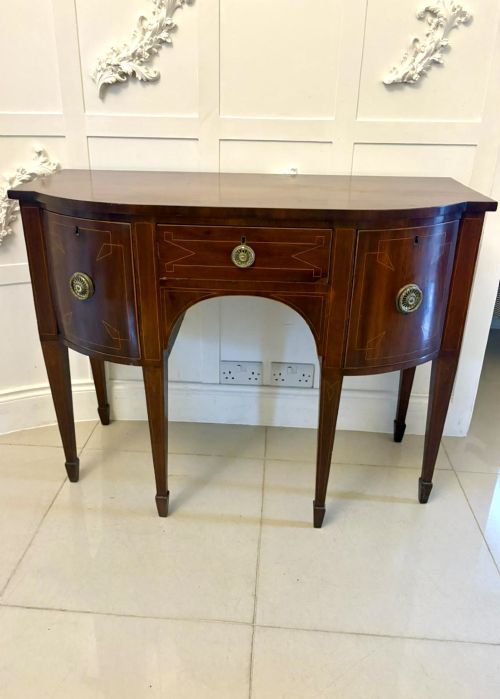
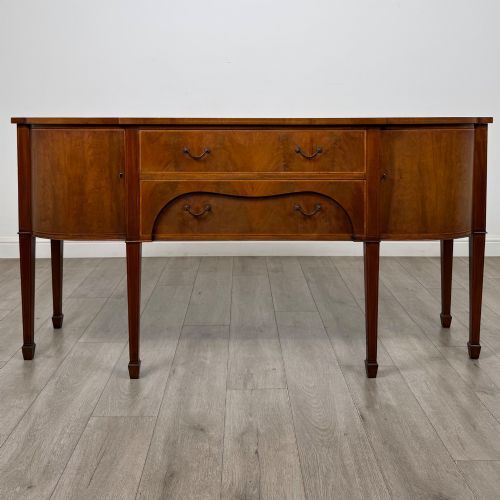
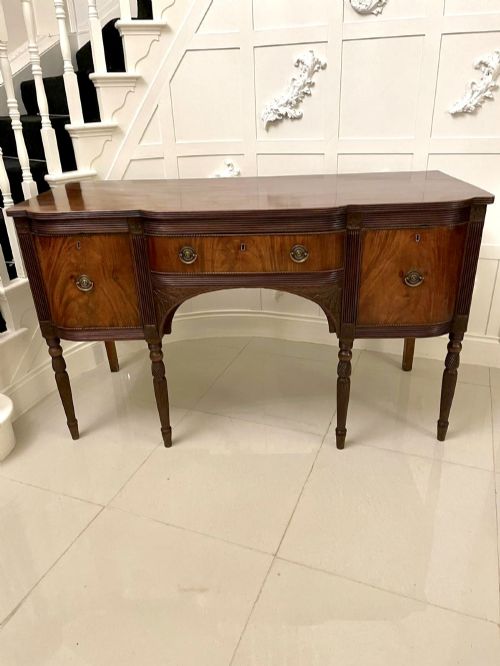
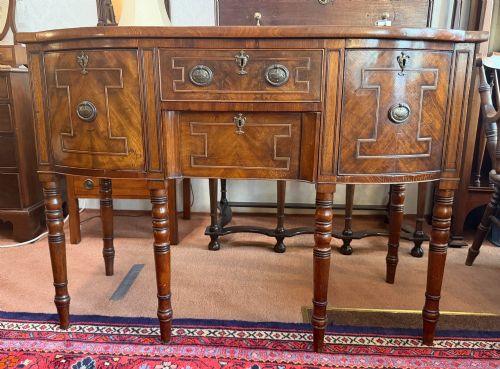
Georgian Dining Credenza
A georgian dining credenza brings architectural presence and formal symmetry to a room, offering deep storage through refined cabinetwork.
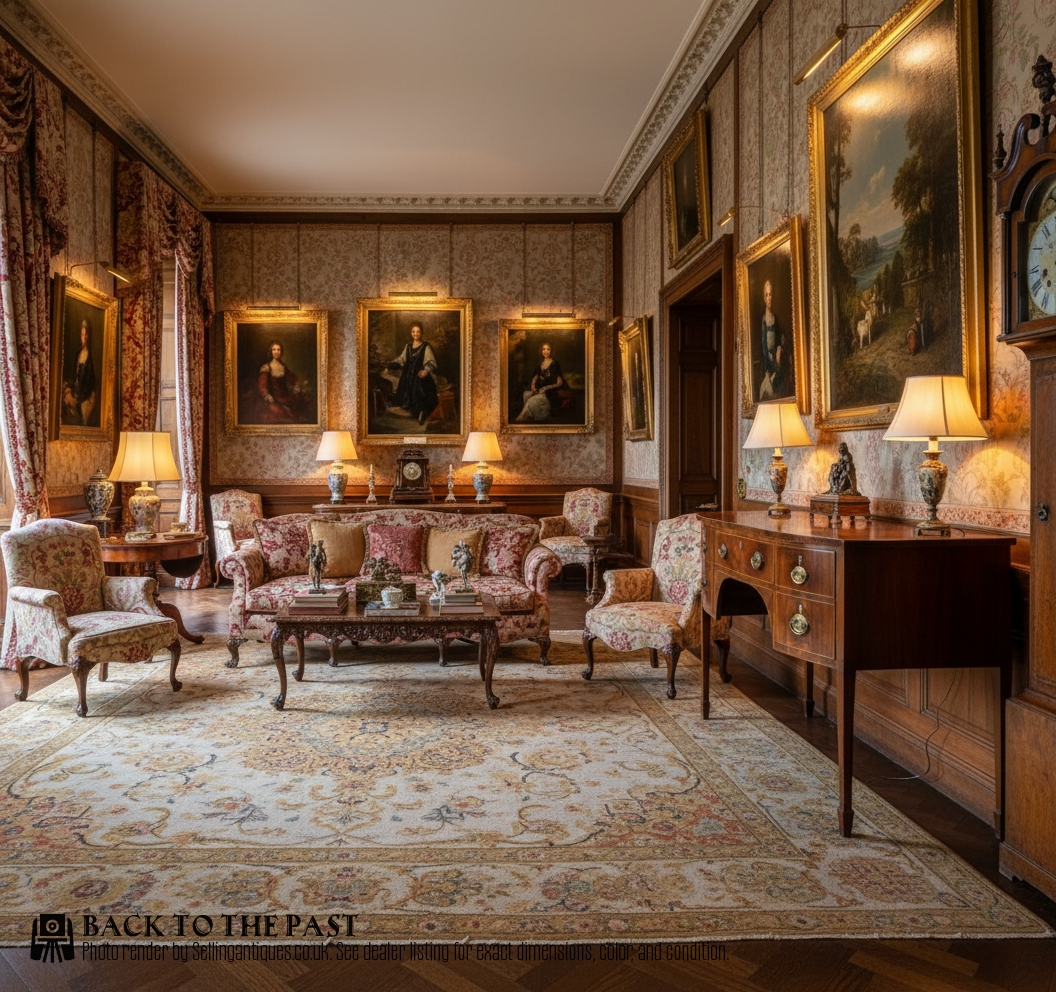
Georgian Dining Credenza
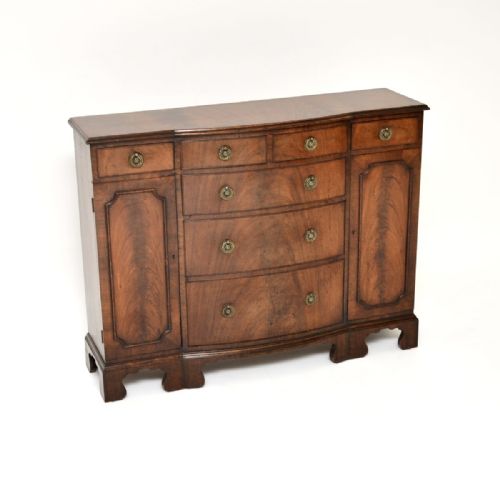
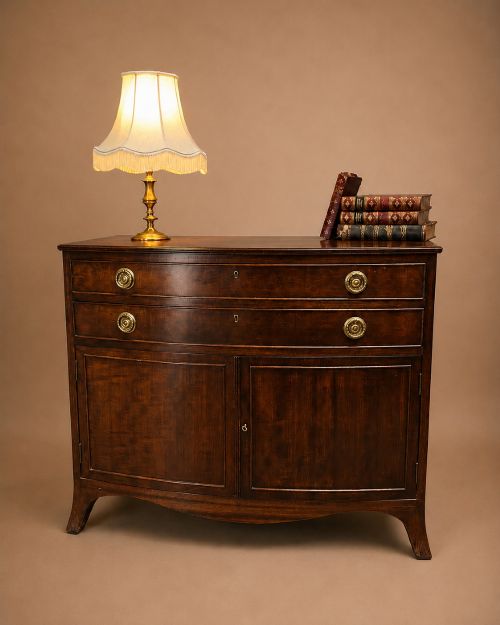
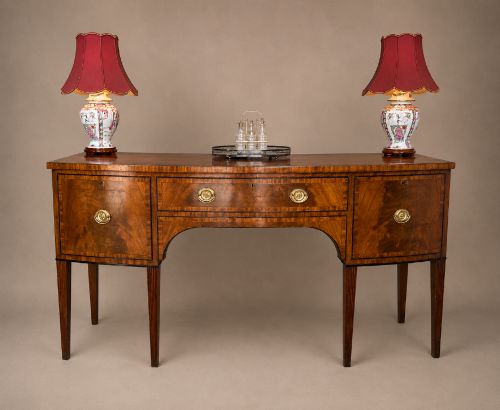
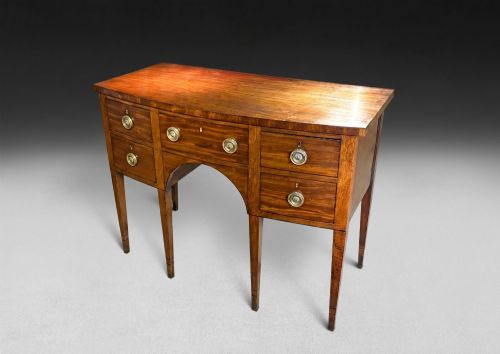
A georgian dining credenza encompasses sideboards, side cabinets, and chiffoniers originating predominantly from the Georgian, Regency, and Edwardian eras. These pieces serve dining and living spaces by providing surface display and concealed storage for tableware.
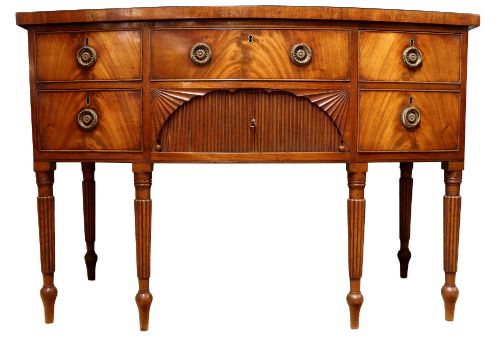
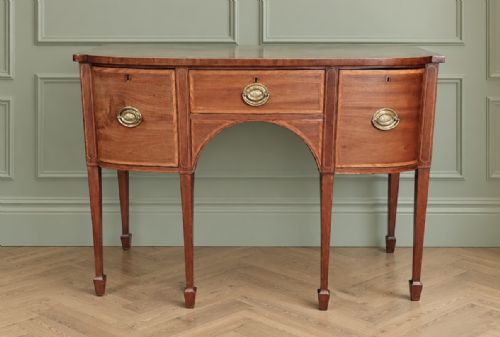
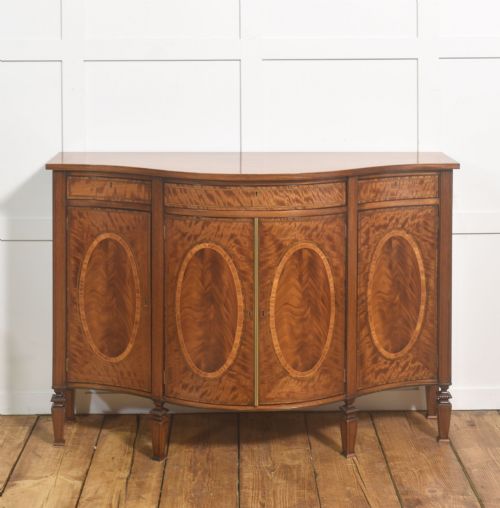
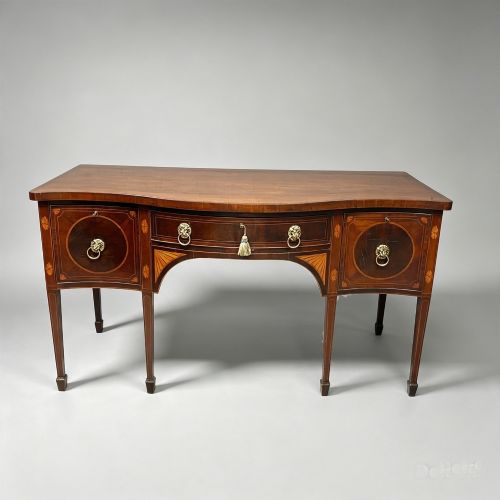
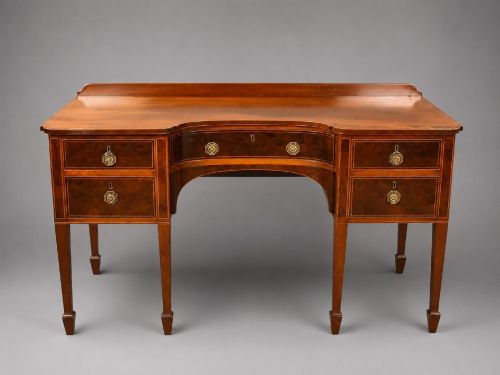
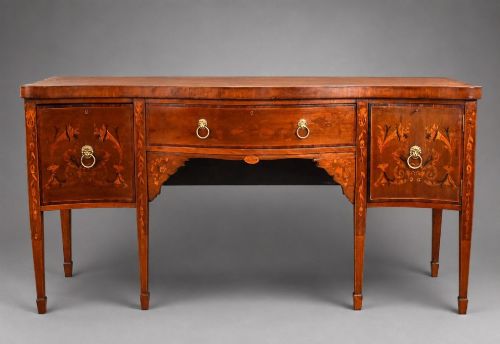
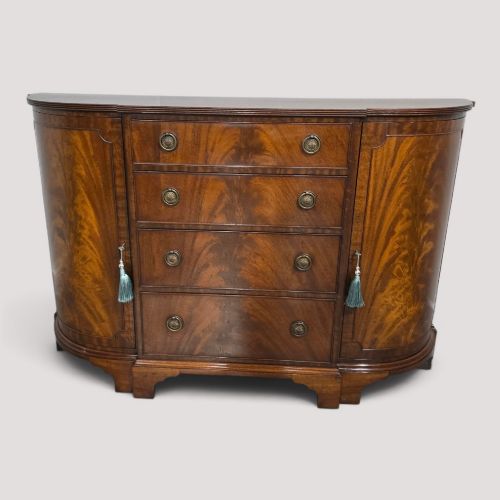
The form appears most frequently as a mahogany sideboard with bow fronts, serpentine fronts, or breakfront configurations. Pieces range from straightforward George III designs to later Sheraton Revival interpretations.
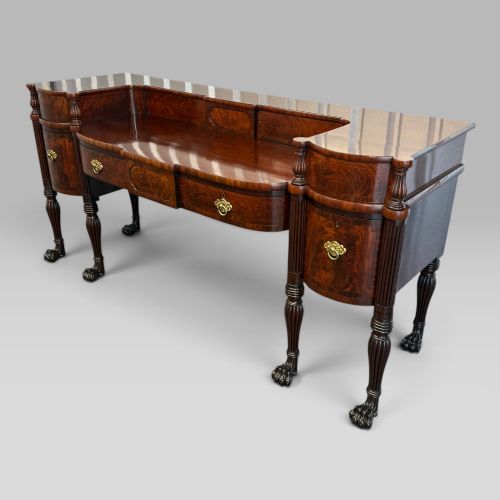
Makers and regional workshops produced substantial variations, including pedestal sideboards and stage-back variants. Oak dresser bases and smaller cupboards also populate the category alongside formal dining room storage.
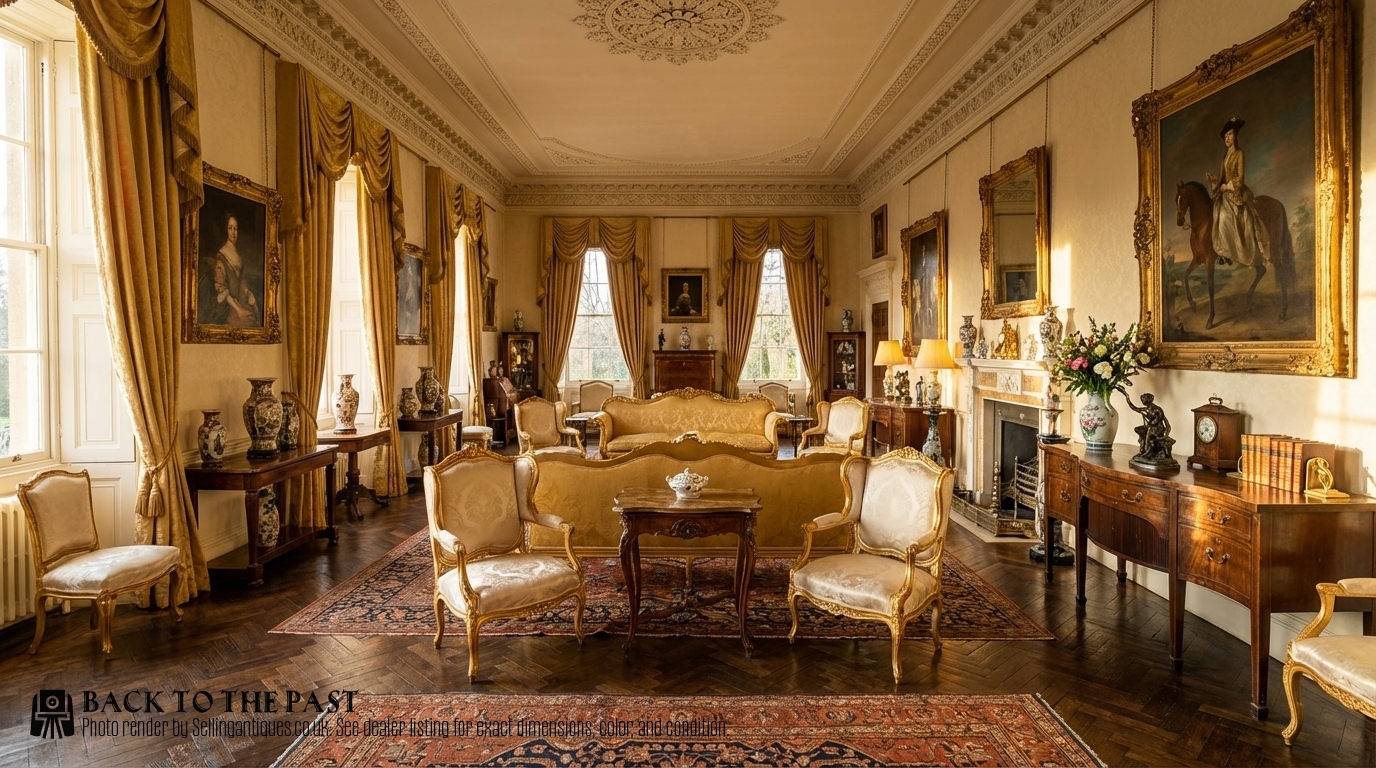
Materials and Technique
Makers constructed these pieces principally in solid mahogany and flame mahogany veneer, often selecting figured timber for prominent drawer fronts and cabinet doors. Secondary woods provide structural stability inside the carcase.
Decorative surface work relies on boxwood and satinwood inlay, creating contrasting borders and geometric motifs. Brass hardware, including handles and occasional lion paw feet, completes the construction details.
Georgian Dining Credenza Retail Price Guide 2026
Typical asking prices for georgian dining credenza among the pieces listed under this phrase on Sellingantiques today, from the lower quarter to the upper quarter. They describe what is for sale here now, not the wider market.
Listings feature mahogany, oak, and satinwood alongside brass hardware across Georgian, Regency, and Edwardian periods.
Evaluating Construction
Quality rests upon the selection of timber figures and the precision of the cabinetmaker's joinery. Finely figured flame mahogany veneer paired with crisp satinwood and boxwood inlay distinguishes higher tier pieces from plain alternatives.
Proportion and the handling of curved fronts, such as bow-front and serpentine shapes, dictate the refinement of the form. Integrated details like carved lion paw feet and intact period brassware elevate the status of the piece.
M. D. Miller & Sons Nottingham
The Georgian Dining Credenza Glossary
- Bow front
- A cabinet front that curves outward in a convex arc. This shape softens the linear geometry of a dining room.
- Serpentine front
- A cabinet front featuring a central convex curve flanked by concave sweeps. The profile demands expert woodworking to achieve balanced proportions.
- Breakfront
- A large piece of furniture where the central section projects forward from the flanking cupboards. It creates a stronger architectural shadow.
- Flame mahogany
- Mahogany veneer cut to reveal a distinctive flickering flame pattern in the grain. Cabinetmakers reserved this timber for principal display surfaces.
- Chiffonier
- A compact low sideboard or cabinet featuring shelves or a raised back. It evolved during the nineteenth century for smaller parlour spaces.
Georgian Dining Credenza: Frequently Asked Questions
Where did they place a dining credenza?
Dining rooms accommodated these pieces against main walls to serve food and store silver during meals.
Their substantial length also suited large hallways and drawing rooms for general display.
How do I spot a George III piece?
George III pieces display restrained classical proportions, often combining straight or bow fronts with fine boxwood stringing.
Timber choice leans toward dense, rich mahogany with patinated surfaces built up over generations.
What is a pedestal sideboard?
A pedestal sideboard consists of a central table flanked by two separate pedestal cupboards, popular during the Regency period.
This arrangement created an imposing architectural facade suitable for formal dining apartments.
How do I care for mahogany surfaces?
Routine maintenance requires simple dusting with a dry cloth and occasional application of traditional wax polish.
Direct sunlight and extreme temperature changes must be avoided to protect the timber and veneer.