



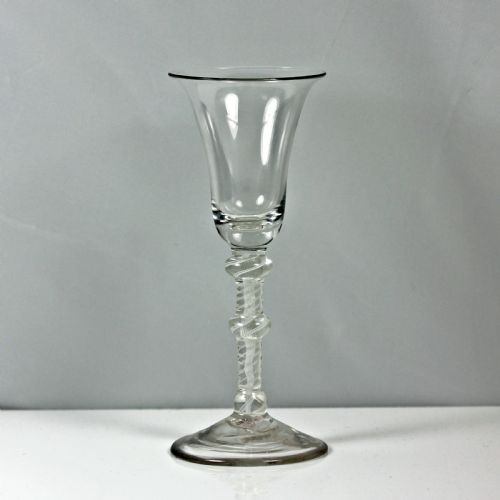


Georgian Cordial Stemware
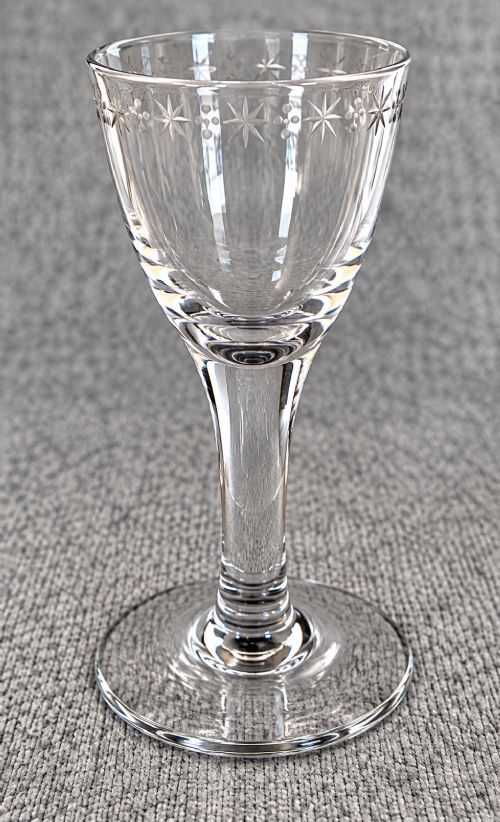
Georgian cordial stemware brings together small-capacity vessels designed for strong spirits, featuring slender stems and refined bowls.
Georgian Cordial Stemware
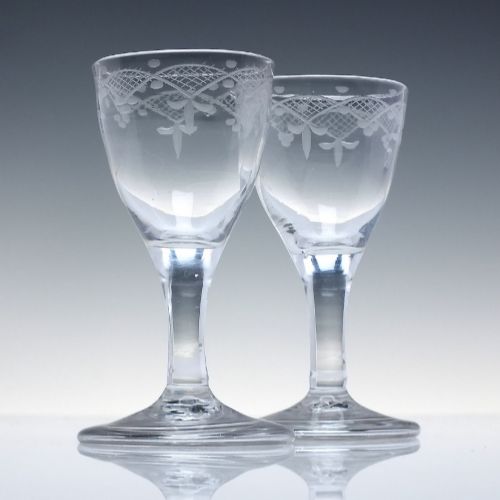
When you search for georgian cordial stemware, you encounter small drinking vessels designed specifically for concentrated liqueurs and drams during the eighteenth and early nineteenth centuries. These pieces typically feature narrower bowls and sturdier or more decorative stems than standard wine glasses of the period.
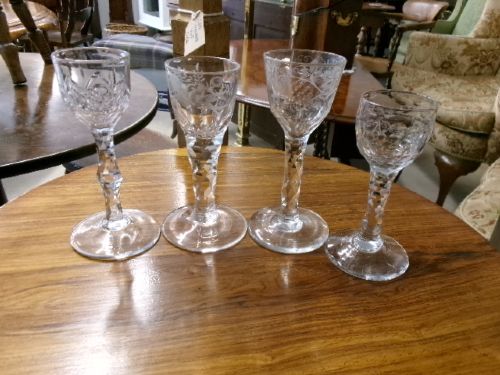
The selection here draws primarily from eighteenth-century English production, spanning periods from the early baluster forms through the height of twist stems and later faceted designs. You will frequently find dram glasses, gin glasses, and dedicated cordials alongside related wine glass forms.
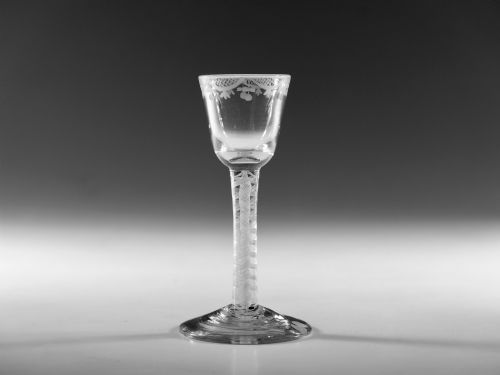
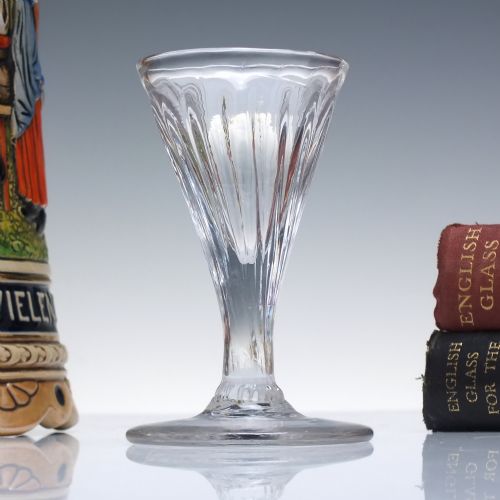
Examples range from plain or ribbed dram glasses with folded feet to intricate opaque and air twist stems made for formal dining tables and private gatherings. The forms reflect the social habits of the Georgian era, where strong spirits were served in modest quantities.
How these glasses were crafted
The makers utilised lead glass and flint glass, working hot metal by hand to form the bowls, stems, and feet of each piece. This high-lead formulation allowed glassmakers to draw out slender stems and achieve brilliant clarity.
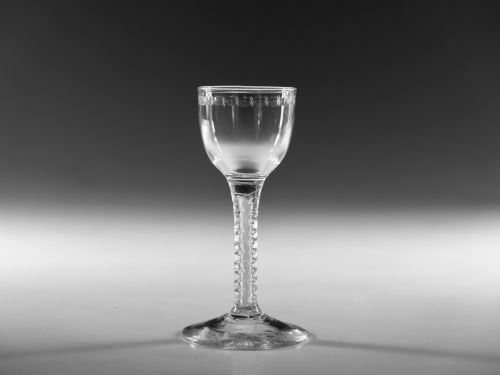
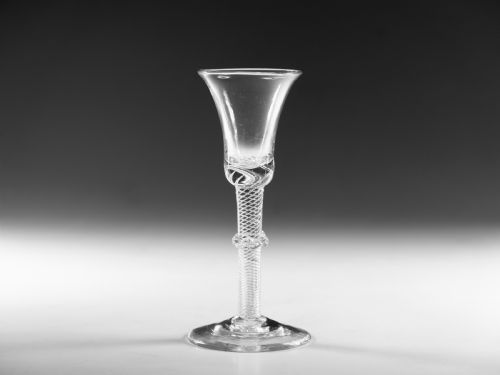
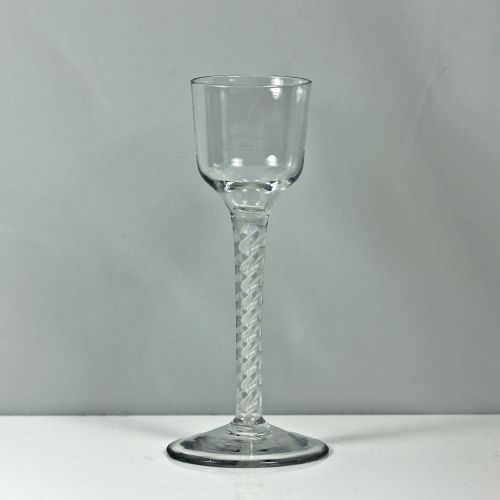
Techniques such as air twists, mercury twists, and opaque twists were achieved by trapping tiny air channels or white enamel rods within the molten metal before drawing and manipulating the stem. Rib moulding and facet cutting were subsequently applied while the glass was warm or after cooling to create texture and catch the light.
Listings feature lead glass and hand-blown glass across eighteenth-century periods including George II and the wider Georgian era.
What separates the finest examples
Quality rests upon the proportion and balance between the bowl, stem, and foot, alongside the crispness of any twist or facet work. Finer stems display precise regularity in their internal air or enamel threads without distortion.
The Georgian Cordial Stemware Glossary
- Air twist
- A stem containing spiral threads of trapped air created by drawing canes of bubble-filled glass.
- Baluster
- A heavy, swelling stem form reminiscent of architectural pillars, popular in early eighteenth-century English drinking vessels.
- Folded foot
- A base edge turned under during manufacture to provide extra stability and a smooth rim.
- Opaque twist
- A stem incorporating one or more white or coloured enamel glass rods twisted within clear metal.
- Ratafia glass
- A tall, narrow glass designed for sweet fruit liqueurs or cordials, featuring a slender flute-like bowl.
Georgian Cordial Stemware: Frequently Asked Questions
What is the difference between a cordial glass and a wine glass?
Cordial glasses generally feature noticeably smaller bowls and heavier stems designed to hold concentrated spirits rather than table wine.
The restricted capacity reflects the potency of the drinks served during the Georgian period.
How can I identify an air twist stem?
An air twist contains continuous spiral threads of tiny bubbles running down the interior of the transparent glass stem.
Looking closely under good light reveals these delicate internal channels formed during the pulling of the hot metal.
Why do some glasses have folded feet?
Makers folded the rim of the foot underneath itself while the glass was hot to strengthen the edge against chipping.
This practical feature also adds a pleasing tactile weight to the base of early eighteenth-century stemware.
What periods do these glasses cover?
The pieces span the eighteenth century and into the Regency period, encompassing various reigns from George II onwards.
Styles evolved from early heavy balusters to lighter twist stems and later faceted Regency designs.