



Georgian Folded Foot Glass
Georgian folded foot glass drinking vessels and tazzas bring tactile weight and early English craftsmanship directly to your table.
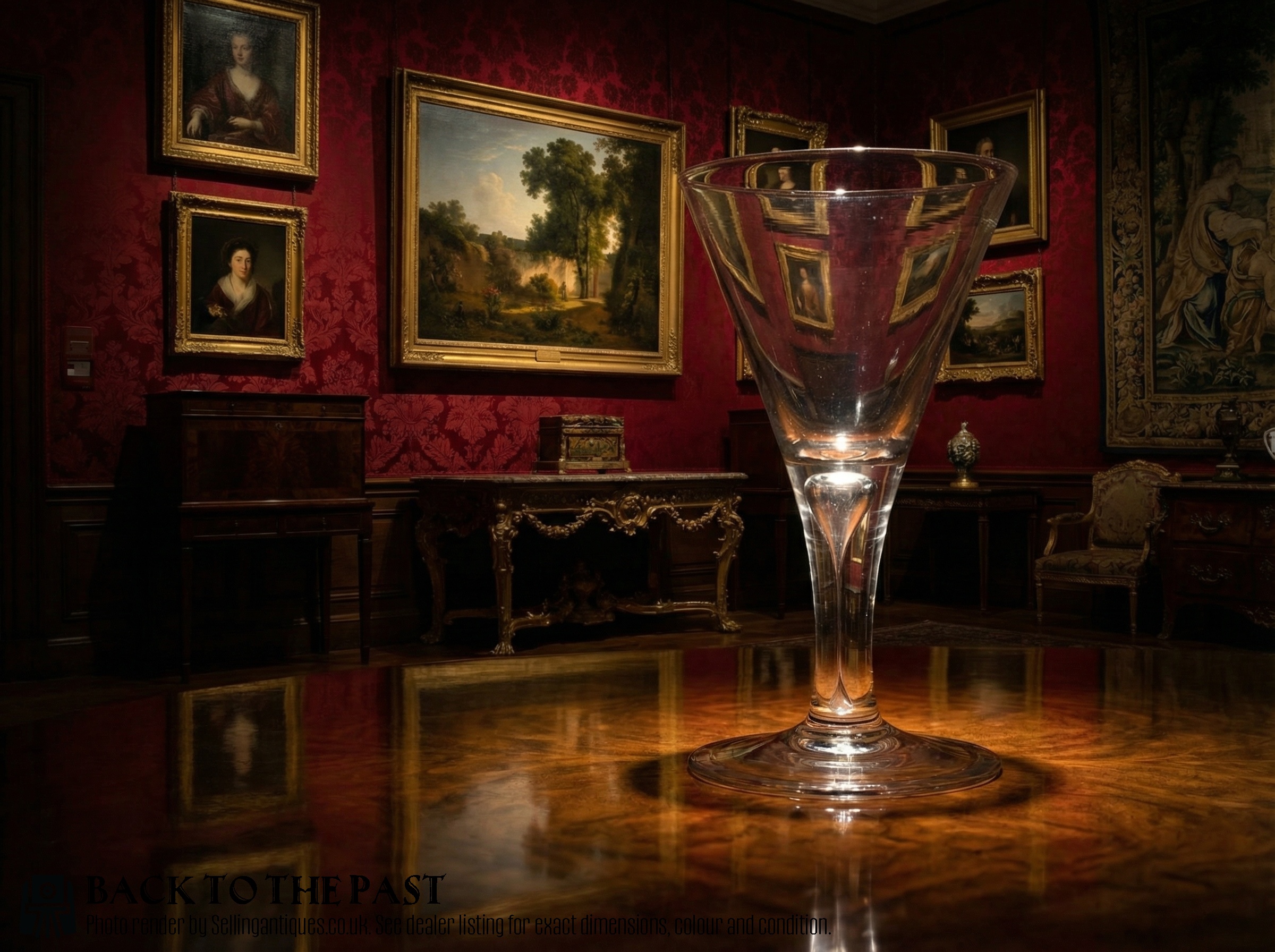
Georgian Folded Foot Glass
A georgian folded foot glass represents a specific group of drinking vessels and serving pieces produced during the eighteenth century, primarily incorporating lead glass and clear glass. Buyers seek these items for their distinct tactile rims and historic origins spanning the 1700s to the late Georgian period.
The assortment on this page concentrates on stemware, wine glasses, dram glasses, ale glasses, and tazzas featuring the characteristic turned-under rim at the base. These forms date predominantly from the seventeen-thirties through the seventeen-eighties, showcasing plain stems, air twists, and balustroid profiles.
Vessels range from tall trumpet bowls and bell bowls to dwarf ales and wide crystal tazzas with spreading or domed feet. Each piece displays the functional characteristics typical of early British glass manufacture before the nineteenth century standardisation.
Materials and production methods
Craftsmen shaped these items using hand-blown lead glass and flint glass, manipulating the hot metal at the furnace. The distinctive folded foot was created by turning the outer edge of the molten base underneath itself while spinning, adding stability and weight to the vessel.
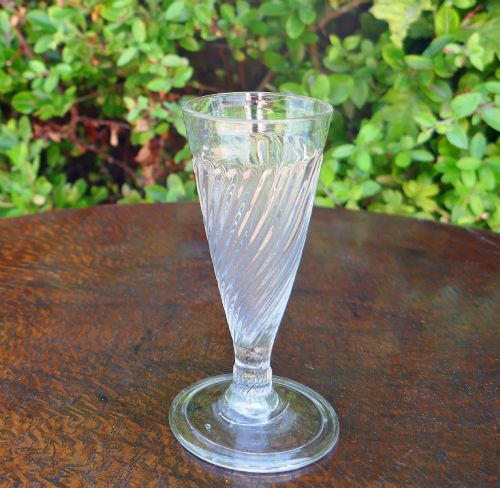
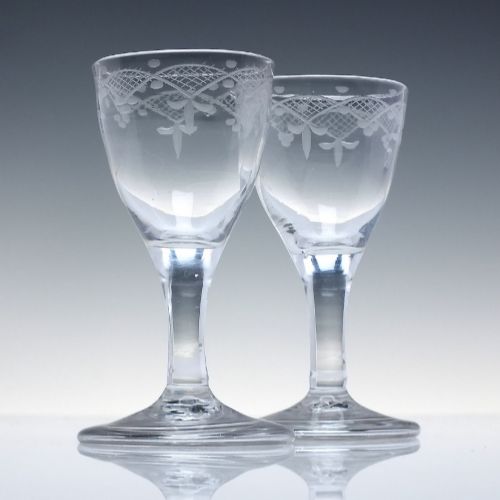
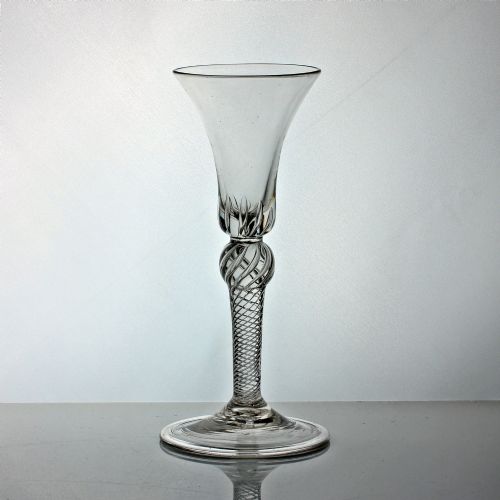
Makers incorporated decorative techniques such as rib moulding, wrythen twisting, and air tear insertion within the stem during the blowing process. Engraved surface decoration on bowls often appeared later, applied by wheel engravers to plain stem wine glasses and dram glasses.
Some dwarf ale glasses were kept small to discourage overindulgence during noisy eighteenth-century tavern toasts.
Factors determining quality
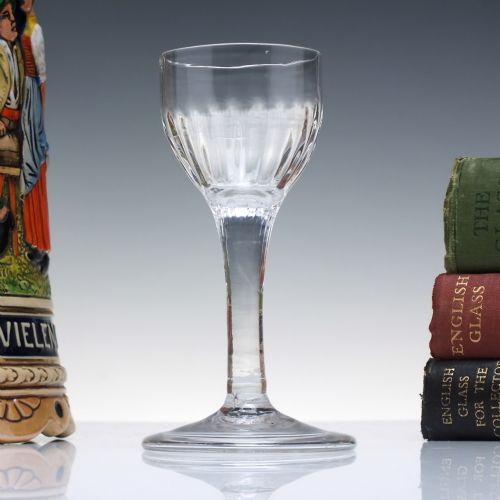
Quality rests upon the crispness of the fold at the base and the proportional balance between bowl, stem, and foot. A neatly turned rim demonstrates superior glasshouse execution compared to a thick or uneven fold.
Clarity of the lead crystal and complexity of internal stem formations, such as multi-spiral air twists or intricate balustroid knops, distinguish finer drinking glasses and tazzas from standard utilitarian wares.
The Georgian Folded Foot Glass Glossary
- Folded foot
- A rim on the base of a glass that has been doubled back underneath itself during manufacture. This technique provides extra weight and a smooth edge.
- Air twist
- A decorative spiral of elongated bubbles enclosed within the stem of a drinking glass. Makers produced this effect by drawing air out from inside the molten metal before twisting.
- Balustroid
- A stem style imitating seventeenth-century architectural balusters, featuring knops and swelling profiles between the foot and the bowl. This form appears frequently on pieces from the seventeen-thirties and forties.
- Tazza
- A wide, shallow serving vessel raised on a central stem and a spreading foot. Examples in this category match the folded foot tradition.
- Wrythen
- A moulded optic pattern creating diagonal or spiralling ribs on the body of a bowl or ale glass. The technique enhances light reflection across the clear metal.
Georgian Folded Foot Glass: Frequently Asked Questions
What is a folded foot on old glass?
A folded foot is a heavy base where the hot rim of the glass was turned underneath itself while hot. This created a smooth, rounded edge that added durability and stability to the vessel.
Glassmakers used this technique extensively during the eighteenth century on wine glasses, ale glasses, and tazzas.
How do I date a georgian folded foot glass?
Dating relies on combining the bowl shape, stem construction, and overall weight of the metal. Plain stems and balustroid profiles often point towards the seventeen-thirties and forties, while air twists and opaque twists generally date slightly later.
The presence of metal characteristics like heavy lead content and tool marks also helps place pieces within the seventeen-hundreds.
Were these glasses used for wine?
Many were designed specifically for wine, while others served for ale, drams of whisky, cordials, or gin. Different bowl forms such as bell, trumpet, or cup bowls suited different beverages of the period.
Tazzas served a different purpose entirely as display or serving dishes for sweetmeats and fruits.