

Clear Glass Drinking Stems
Clear glass drinking stems are historical vessels shaped for wine, ale, and drams, prized for their luminous bowls and intricate internal twists.
Clear Glass Drinking Stems
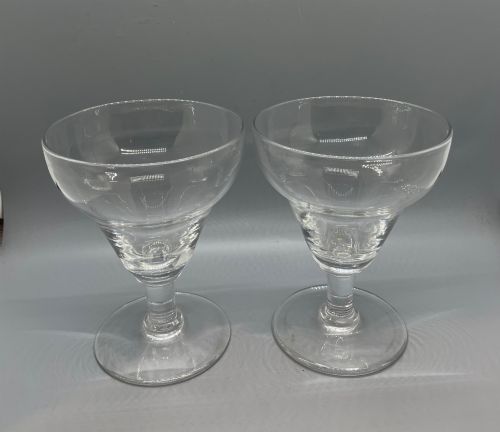
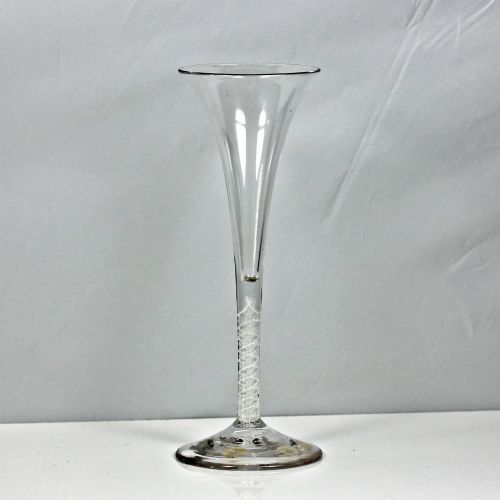
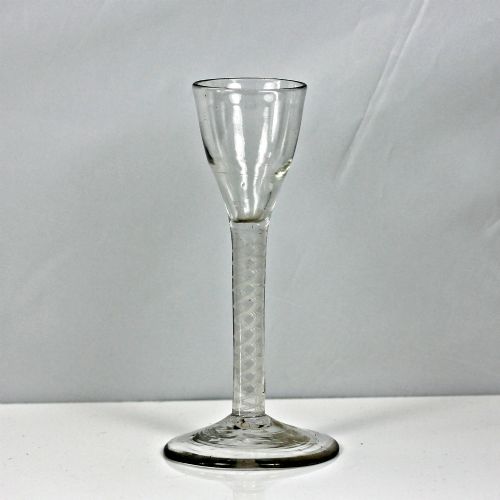
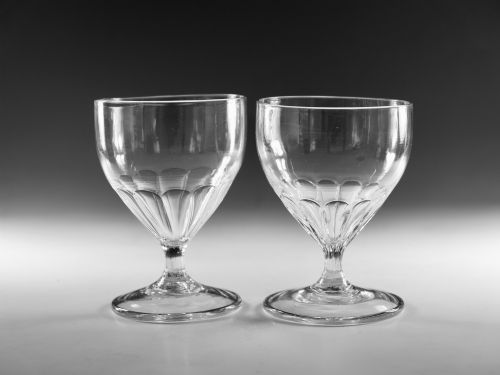
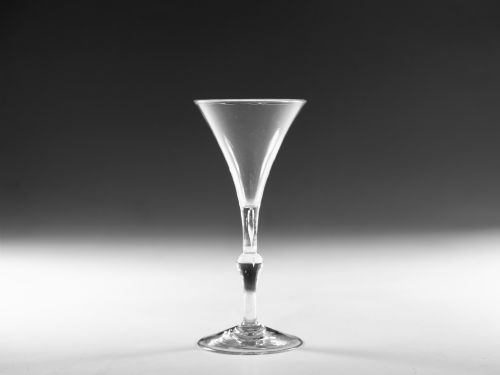
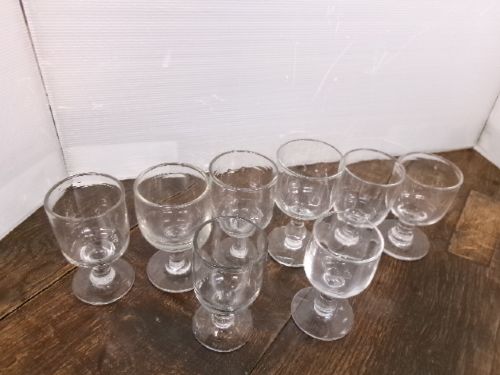
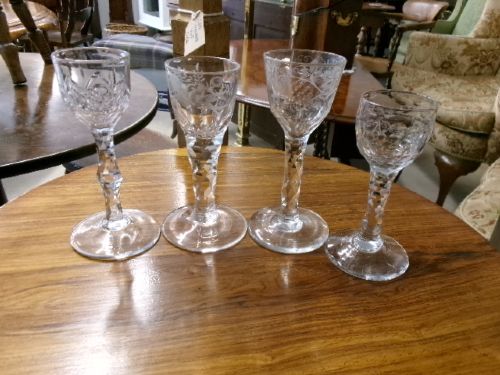
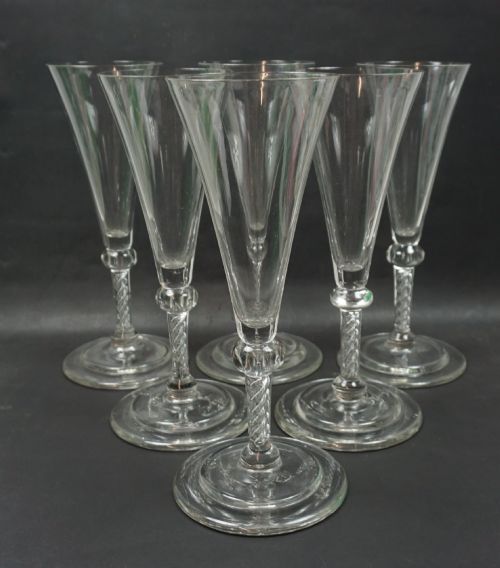
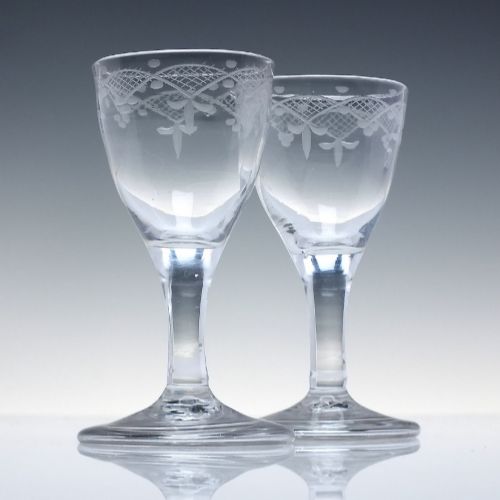
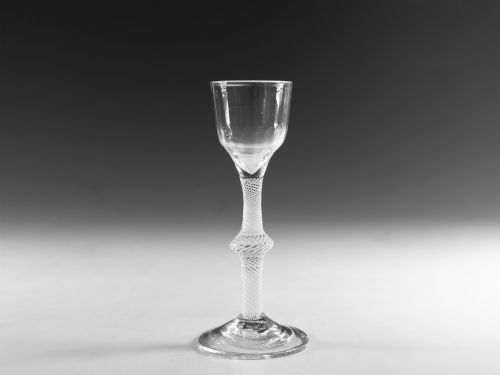
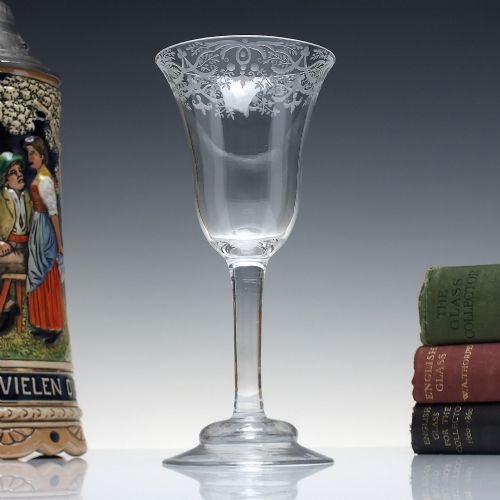
Clear glass drinking stems encompass wine glasses, dram glasses, ale glasses, and rummers originating primarily from the eighteenth and nineteenth centuries. These vessels were formed to hold various alcoholic beverages during formal dining and social gatherings, displaying distinctive bowl shapes from trumpet and ogee to pan top. Collectors encounter numerous examples carrying traditional air twists, opaque twists, and plain stems dating back to the Georgian era.
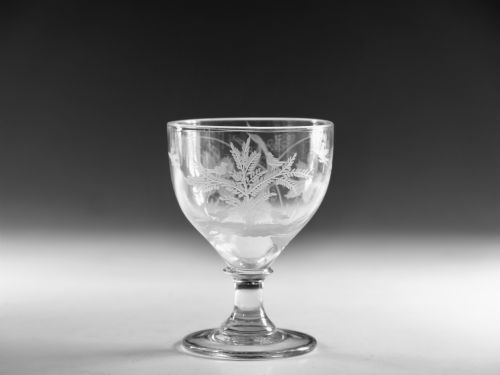
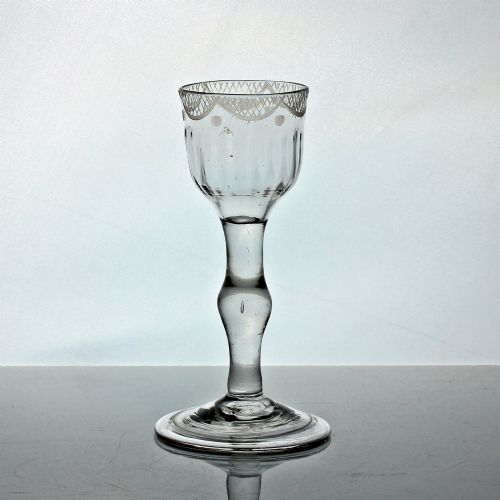
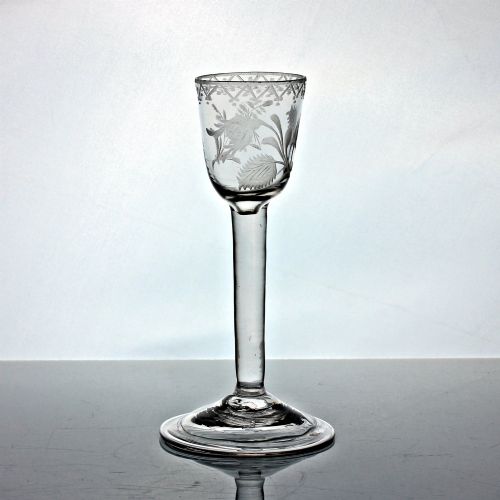
The selection ranges from early baluster and balustroid forms to later Victorian variations and twentieth-century revivals. Bowls frequently exhibit engraved decorations including rococo motifs, Jacobite symbols, or swag and tail patterns above wide foot bases. Certain pieces incorporate folded feet or pedestal stems, marking distinct functional types such as champagne, sweetmeat, and marriage goblets.
Factors of quality
Quality rests upon the proportion between the bowl, stem, and foot, alongside the precision of internal twists. Superior examples demonstrate clarity in the metal without excessive cloudiness or heavy impurities, maintaining balance and stability on a wide foot base.
Engraved ornamentation dictates distinction, where crisp, finely detailed cutting or freehand engraving elevates the vessel beyond plain utility. The complexity of the stem construction, particularly in mixed twists and multi-spiral formations, separates standard production from exceptional examples.
Listings span the eighteenth, nineteenth, and twentieth centuries, incorporating lead glass, flint glass, and white enamel materials.
The Clear Glass Drinking Stems Glossary
- Baluster stem
- A heavy, thick stem shape derivative of architectural pillars, common in early eighteenth-century drinking vessels. This form provides substantial weight beneath the bowl.
- Air twist
- A stem containing elongated bubbles or threads of air drawn into spirals during manufacture. Makers created these by trapping air inside hot metal and stretching the glass.
- Opaque twist
- A stem enclosing fine white enamel threads twisted into spiral patterns. These threads contrast sharply against the clear glass exterior.
- Ogee bowl
- An asymmetrical bowl profile curving outward at the rim and inward toward the base. This shape concentrates aromas for wine drinking.
- Rummer
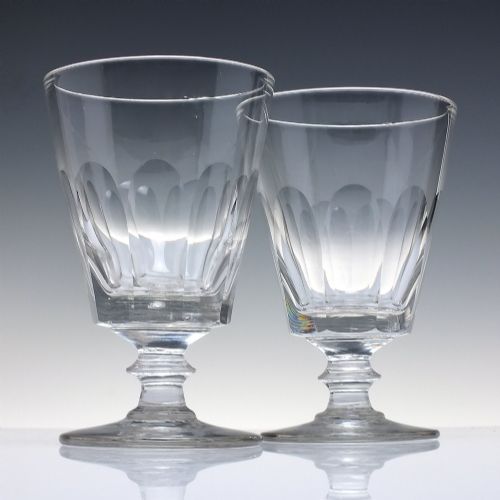
- A large, sturdy glass goblet utilised for serving ale, rum, or punch during the Georgian and Victorian periods. They typically feature short stems and capacious bowls.
Clear Glass Drinking Stems: Frequently Asked Questions
How do I date an 18th-century wine glass?
Dating relies on observing the combination of bowl shape, stem construction, and foot formation. Early pieces often exhibit heavy baluster stems or folded feet, while mid-century examples commonly feature air or opaque twists.
Changes in glass chemistry and engraving styles further help narrow the decade of manufacture. Comparing the pontil mark on the underside of the foot provides additional context regarding the manufacturing period.
What is the difference between an air twist and an opaque twist?
An air twist contains tiny elongated bubbles drawn into helical strands inside the clear stem. These rely solely on trapped air manipulated while the glass is molten.
An opaque twist incorporates solid rods of white enamel melted into the core of the stem. This produces a distinct, solid white pattern visible through the clear exterior glass.
Were these glasses used daily or kept for display?
These vessels served active roles at dining tables for wine, ale, and spirits during formal meals and gatherings. Their sturdy lead glass construction meant they were built for handling rather than mere ornament.
Over generations, many survived through careful use and storage in cabinets. Their durable lead composition allowed them to withstand regular washing.
Why do some glasses have folded feet?
Folding the rim of the glass foot under itself added physical strength to a vulnerable edge. This technique protected the base from chipping during tavern or dining table use.
Folded feet appear more frequently on earlier eighteenth-century drinking vessels. The extra glass at the rim also provided a heavier, more stable base for taller bowls.