


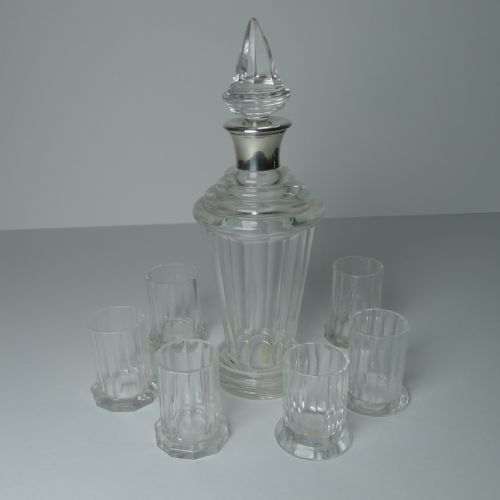

Antique Shot Glass
An antique shot glass brings small-scale drinking history to the table, taking forms from Georgian dram glasses to silver beakers.
Antique Shot Glass
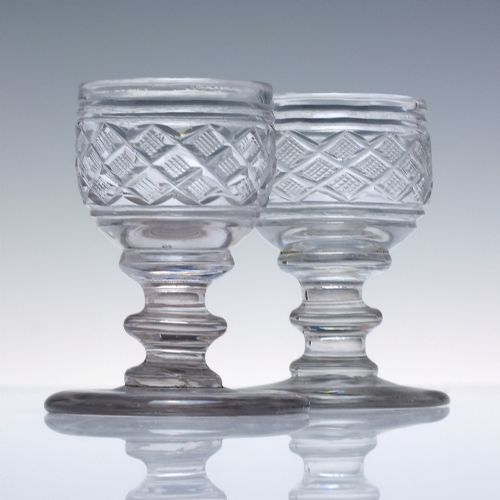
When you search for an antique shot glass, you encounter a variety of small drinking vessels spanning Georgian, Victorian, and later periods. These range from heavy lead glass dram glasses to silver beakers and cordial sets.
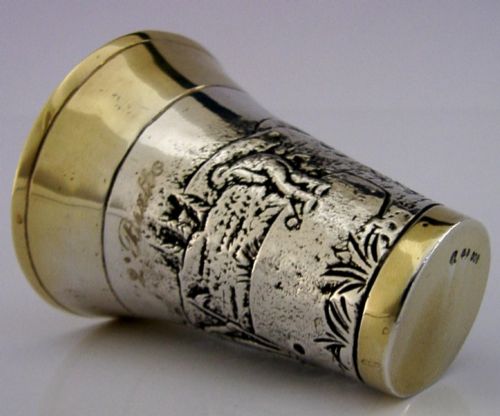
The pieces on this page include glass and silver examples, often found singly or in matched sets intended for spirits, whisky, and liqueurs. Forms stretch from simple cut glass to novelty silver tumblers and Russian vodka cups.
Georgian dram glasses and Victorian novelties appear alongside Edwardian boxed sets and Art Deco decanter groups. Each style reflects the drinking customs and social habits of its specific era.
How they were made
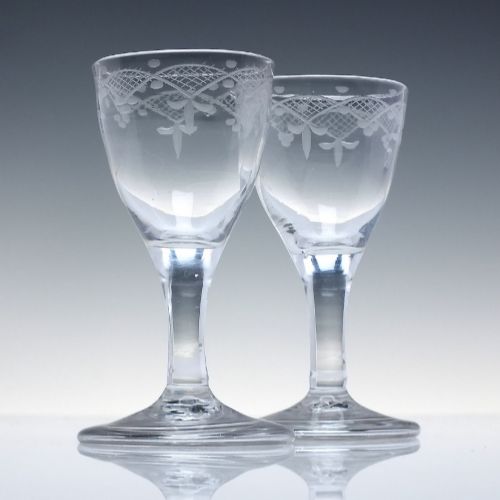
Glass examples rely on traditional blowing, cutting, and engraving techniques, utilising clear glass, lead glass, and lead crystal. Makers shape the metal while hot and subsequently apply wheel-cutting or surface engraving.
Silver vessels utilise smithing and casting methods, often incorporating 800 silver, sterling silver, or parcel-gilt finishes. Artisans hammer sheets of silver into beakers or cast figural novelties and cups with detailed ornamentation.
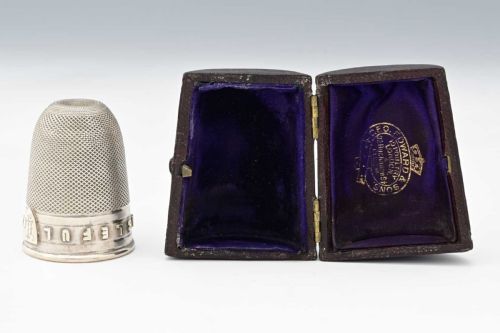
One Victorian silver tumbler takes the literal form of a thimble, inscribed with the phrase just a thimbleful.
What varies in quality
Quality rests in the crispness of the cutting, the weight and clarity of the glass, and the precision of the silver smithing. Superior examples display sharp facets, clean engraved lines, and balanced proportions.
Completeness alters desirability, particularly for sets housed in original boxes or matched with a decanter. Maker attribution and fine material composition further distinguish standard production from exceptional work.
Rene Lalique·Elkington·Aleksandr Timofeyevich Shevyakov·Moser Glass·Baccarat
The Antique Shot Glass Glossary
- Dram glass
- A small historical drinking vessel designed for a single measure of spirits or whisky. These typically feature thick bases and simple or cut bowls.
- Lead crystal
- Glass containing a significant proportion of lead oxide, which increases weight, brilliance, and refractive index. This material allows for deep, sharp cutting.
- Parcel-gilt
- Silver objects that are partially gilded with a thin layer of gold on specific interior or exterior surfaces. This technique creates a contrast between the silver and gold tones.
- Folded foot
- A glass base where the outer rim is turned under while hot to create a smoother, thicker edge. This adds durability to fragile drinking vessels.
- Beaker
- A straight-sided or slightly flared cup without a handle, used for consuming spirits or other beverages. These appear in both glass and solid silver.
Antique Shot Glass: Frequently Asked Questions
What were antique shot glasses used for?
These vessels served for drinking concentrated spirits, whisky, drams, cordials, and liqueurs during social gatherings and formal meals. Smaller cups also functioned specifically for vodka or spirits.
Their capacities matched historical measures, accommodating single servings poured from matching decanters or directly from bottles at the table.
How do I date an antique shot glass?
Dating relies on stylistic markers, manufacturing techniques, and materials characteristic of specific eras such as Georgian, Victorian, or Art Deco. Cut patterns, foot construction, and hallmarks on silver components provide direct chronological evidence.
Comparing the form to documented examples from makers like Baccarat or Moser further narrows the period of production.
Are these glasses safe to use today?
Most antique glass and solid silver vessels remain structurally sound for holding beverages, provided they are handled with care. Hand washing in tepid water preserves the material without thermal shock.
Older lead glass should not be used for storing acidic liquids over long periods, but brief use for serving spirits is common practice among collectors.
Why do some shot glasses come in sets?
Matching sets were produced for entertaining guests, often supplied with a fitted presentation box or accompanied by a matching decanter. Complete groups held greater social utility for hosts serving liqueurs or cordials after dining.
Finding a matched set from the Edwardian or Art Deco periods remains desirable for collectors seeking complete service arrangements.