
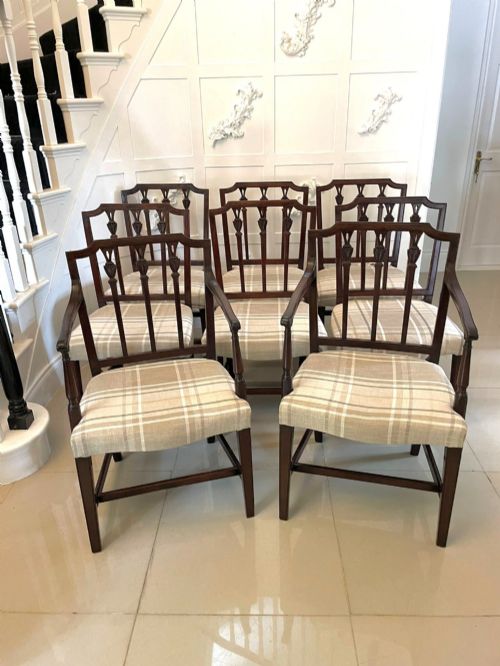

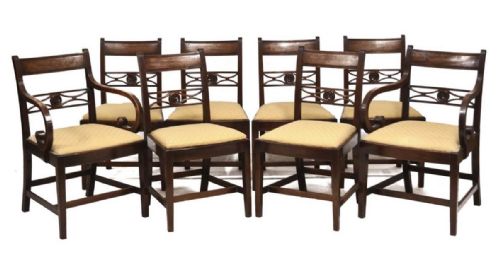
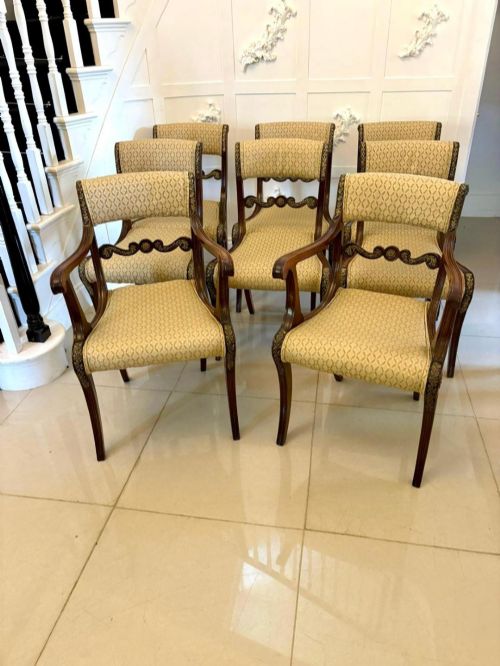
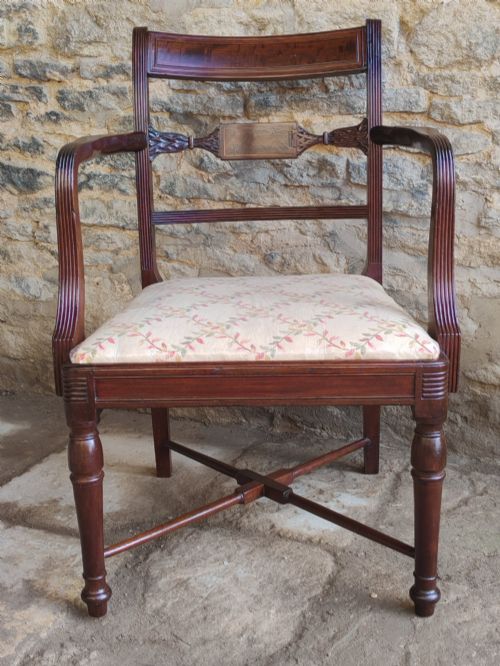

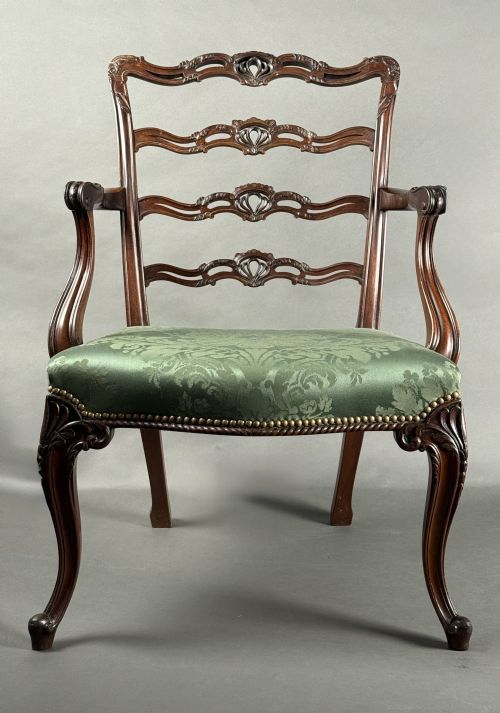
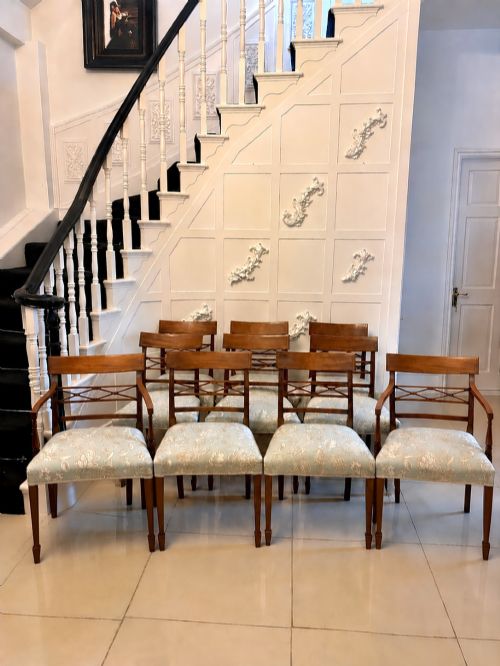
Georgian Carver Armchairs
Georgian carver armchairs provide sturdy elbow support and formal presence, bringing period character to a desk or dining table.
Georgian Carver Armchairs
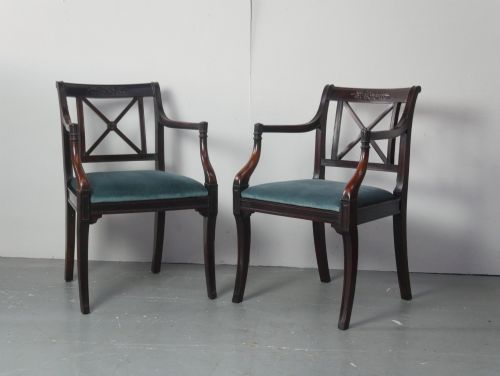
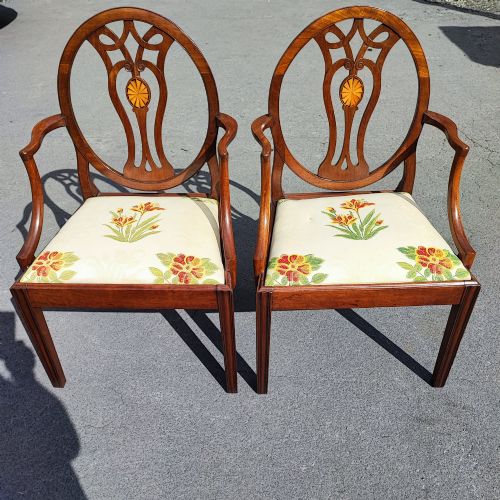
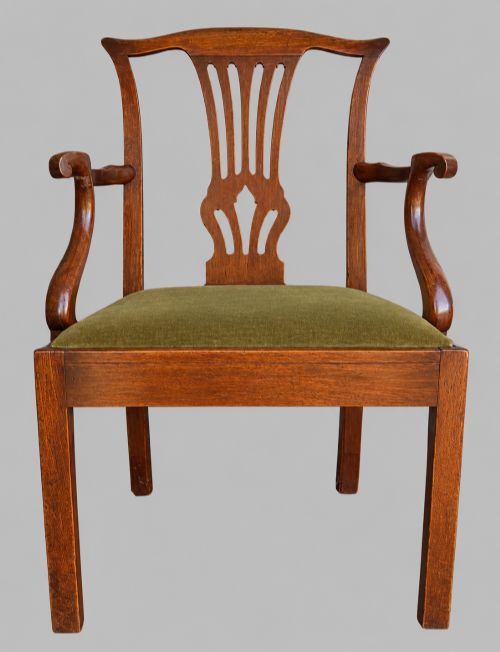
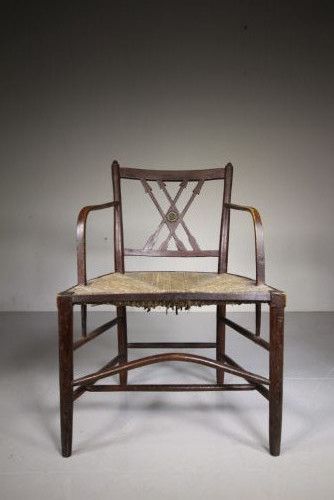
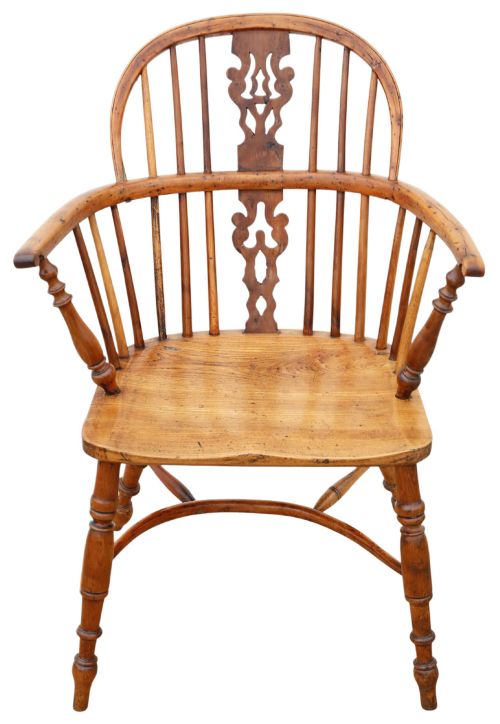
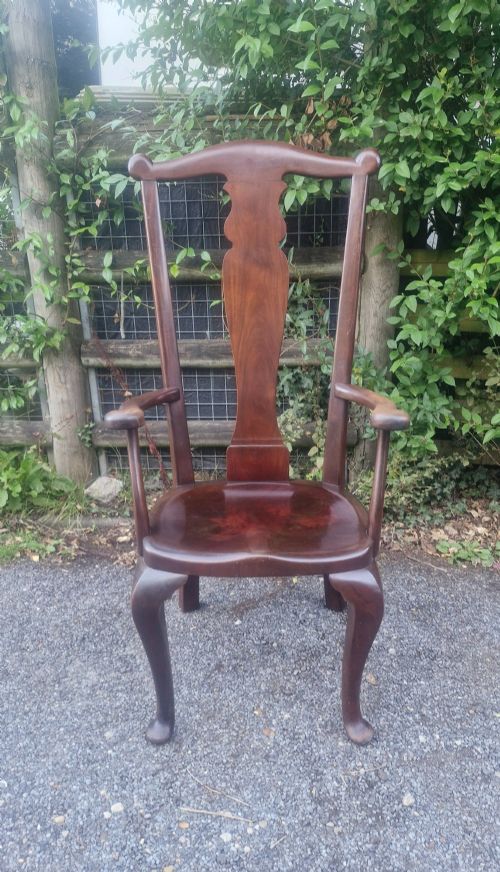
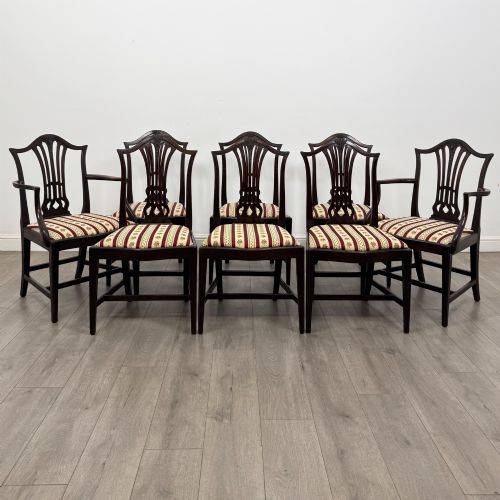
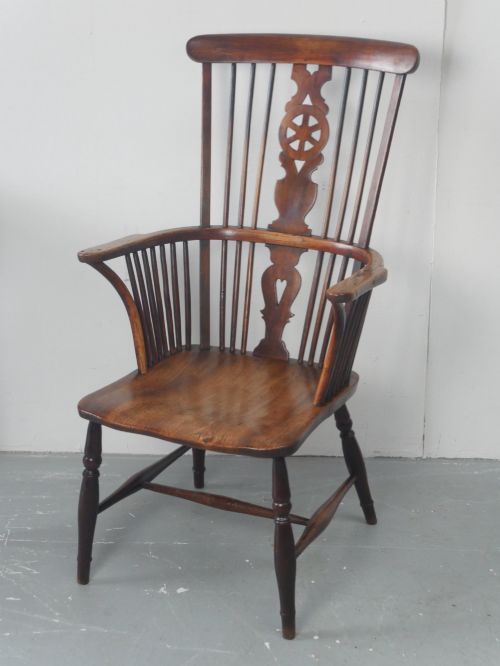
Georgian carver armchairs comprise seating built with supportive elbow rests, appearing in formal dining sets or as single library and desk chairs. These pieces emerge from the eighteenth and nineteenth centuries, alongside later revivals spanning the Victorian era and the early twentieth century.
The materials reflect both urban cabinet-making and rural traditions, moving from polished mahogany and walnut to vernacular timbers like elm, ash, yew and fruitwood. Makers constructed them as open armchairs, solid Windsor forms, ladderbacks, bar-backs and shield-backs, often upholstered in velvet, leather, tapestry fabric or plain textiles.
How They Were Made
Cabinet-makers shaped dense hardwoods such as mahogany and walnut into intricate Chippendale, Sheraton and Regency profiles, employing mortise and tenon joinery alongside detailed carving and inlay. Country workshops relied on steam-bending and turning local timbers like ash, elm and yew to form the curved bows and spindles of Windsor armchairs.
Seating construction integrated drop-in frames, caning, or webbed upholstery covered in leather, tapestry or fabric. Finishing touches included applied brass details, painted surfaces, and maker stamps.
Georgian Carver Armchairs Retail Price Guide 2026
Typical asking prices for georgian carver armchairs among the pieces listed under this phrase on Sellingantiques today, from the lower quarter to the upper quarter. They describe what is for sale here now, not the wider market.
Some provincial carvers retain traces of old paint underneath layers of dark polish, whispering tales of rural cottage kitchens.
What Varies In Quality
The caliber of a carver armchair rests upon the selection of timber and the crispness of its construction, distinguishing master cabinet work from provincial output. Timber density, grain figuring, and the depth of hand-carved details dictate the visual weight and longevity of the frame.
Proportion and structural integrity separate standard pieces from exhibition examples. Well-balanced arm supports, tight joints, and original upholstery methods preserve the intended comfort and architectural line of the chair.
Gillows
The Georgian Carver Armchairs Glossary
- Carver
- An armchair designed with elbow rests, traditionally placed at the head of a dining table or utilised at a desk.
- Windsor
- A traditional wooden armchair constructed with a solid saddle-seat into which turned legs and a spoked or bowed back are wedged.
- Elbow Chair
- An alternative term for an armchair, referencing the prominent arm rests designed to support the arms.
- Shield Back
- A chair back shaped in the outline of a shield, popularised during the late eighteenth century by designers like Hepplewhite.
- Bar-Back
- A chair back featuring horizontal wooden rails or slats crossing the upright supports.
Georgian Carver Armchairs: Frequently Asked Questions
What is a carver armchair?
A carver armchair is a seated piece featuring structural arm rests, traditionally designed for the heads of a dining table or for use at a desk.
These chairs offer greater width and support than standard single chairs, often matching larger dining sets or standing alone as library seating.
How do I date a Georgian chair?
Dating relies on examining the timber species, joinery techniques, and stylistic markers such as Chippendale splats or Regency brass inlay. Comparing the structural wear and tool marks helps confirm the period.
Cabinet-making methods shifted from solid eighteenth-century hardwoods to varied nineteenth-century revivals and regional country production.
Can I use them at a desk?
Many carver armchairs function effectively as desk or library chairs due to their supportive elbow rests and solid wooden frames.
Desk variants often incorporate leather pads, swivel mechanisms, or tapestry upholstery tailored for prolonged seating.
What is the difference between city and country styles?
City carvers utilise polished mahogany or walnut with refined carving, following prevailing architectural trends like Sheraton or Chippendale.
Country versions employ regional timbers such as elm, ash and fruitwood, focusing on Windsor forms or ladderbacks built for utility.