


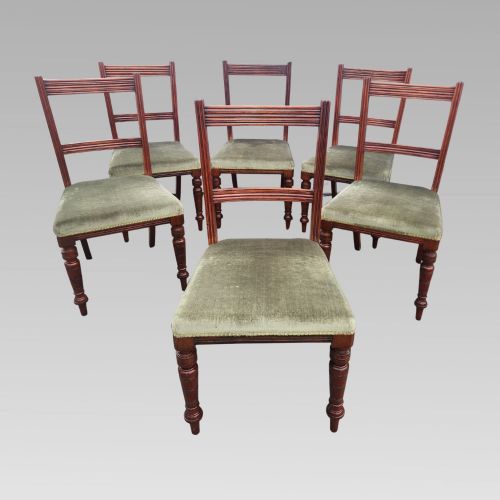

Reeded Leg Chairs
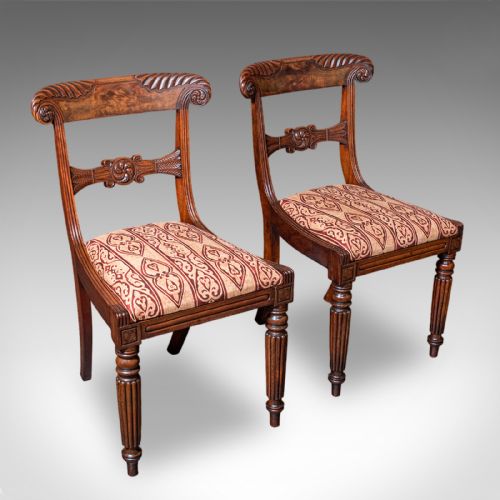
Reeded leg chairs are classical seating forms defined by parallel carved grooves, offering structured elegance for period dining rooms and libraries.
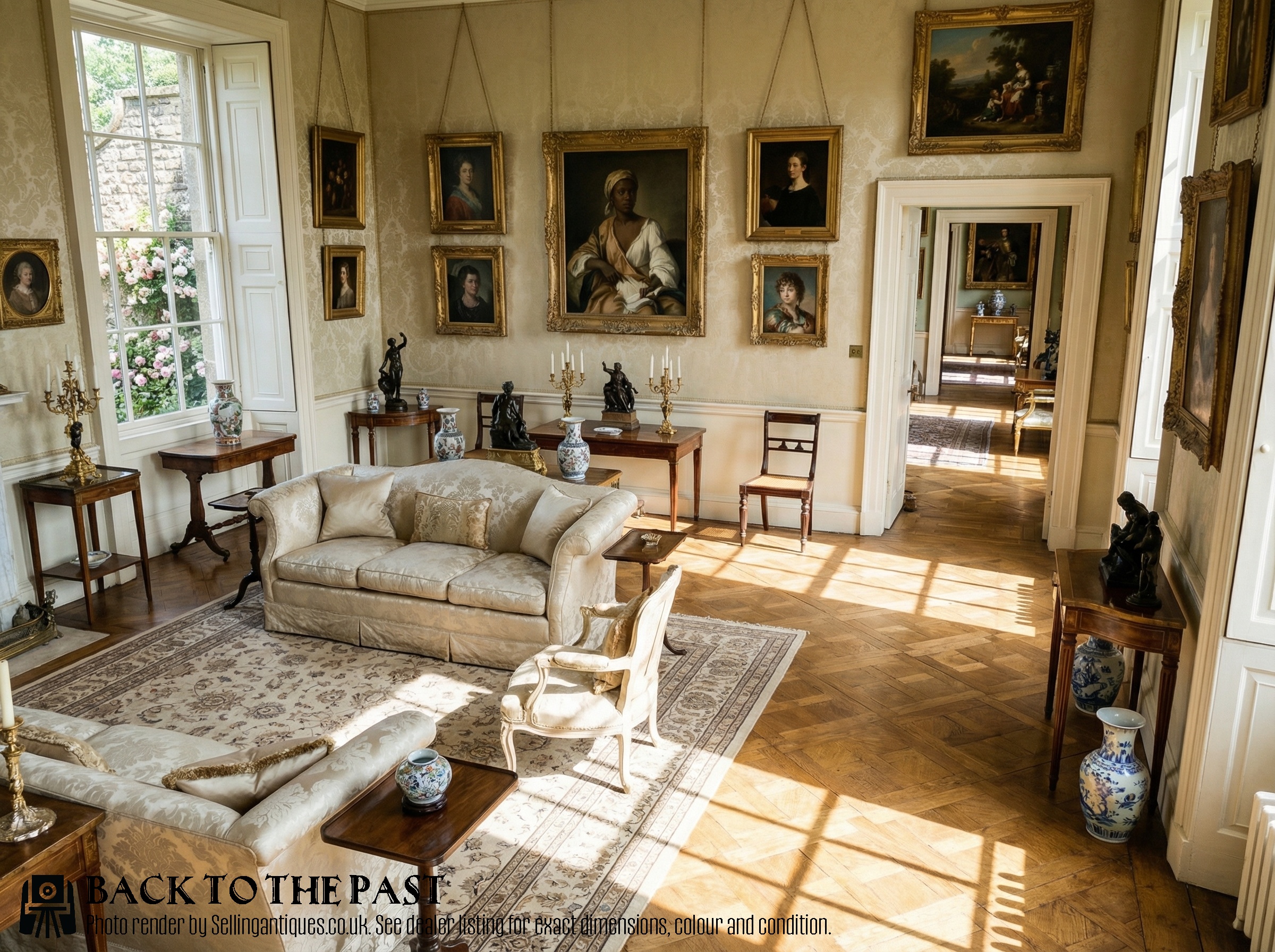
Reeded Leg Chairs
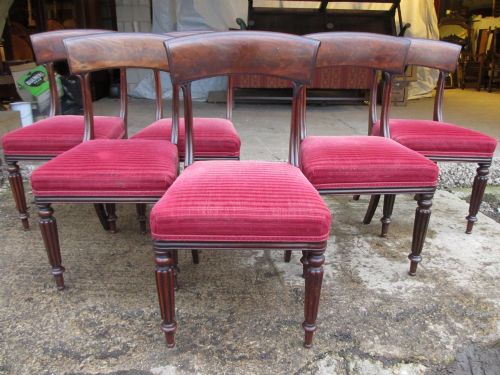
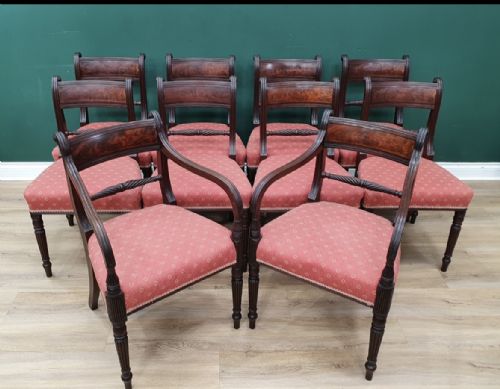
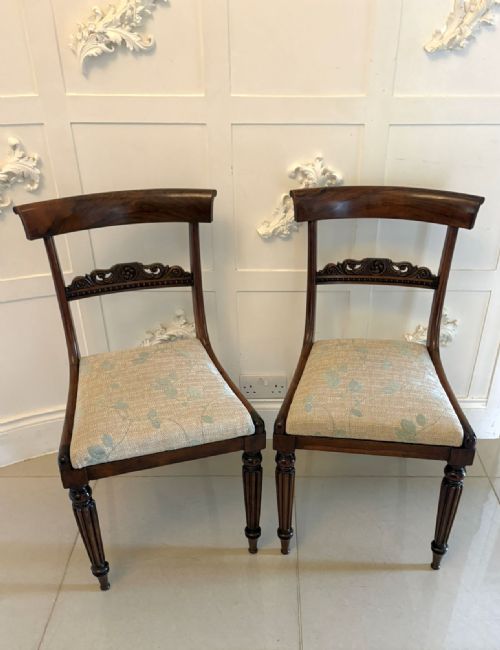
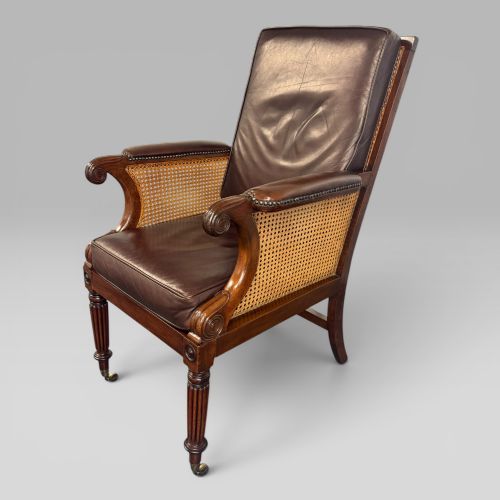
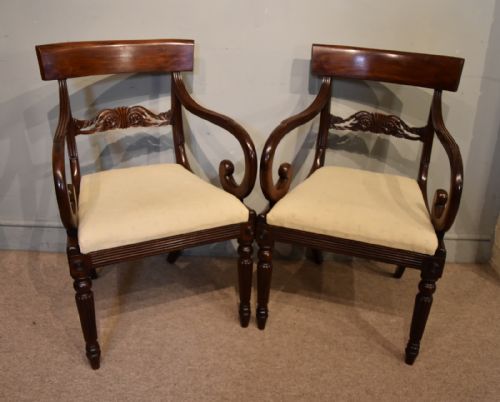
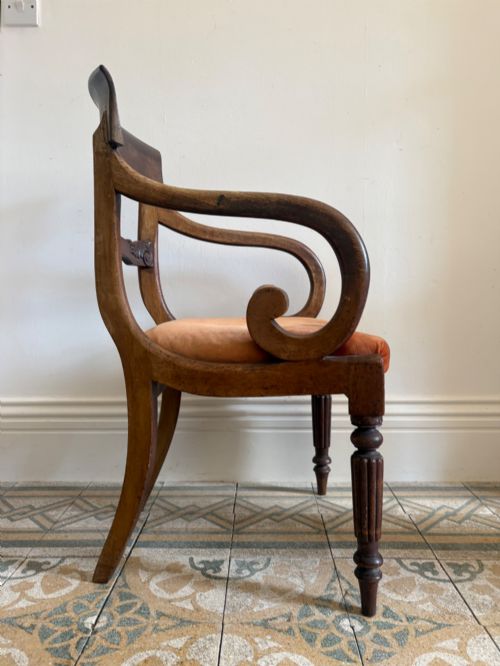
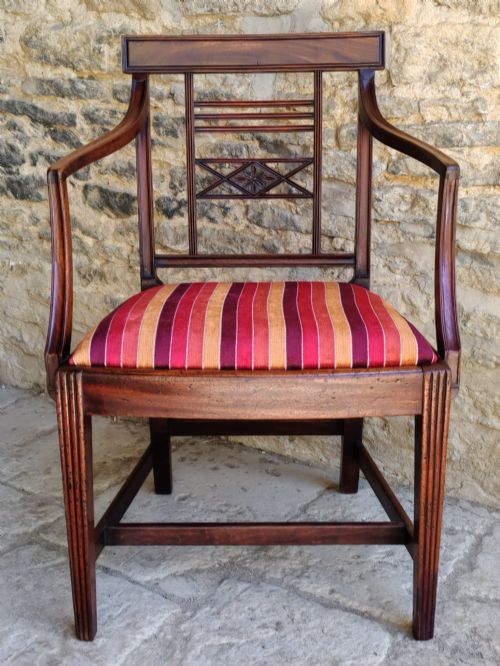
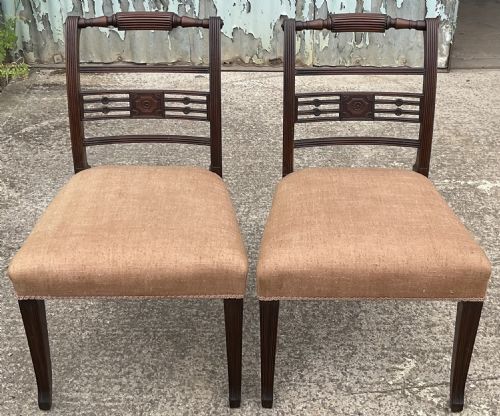
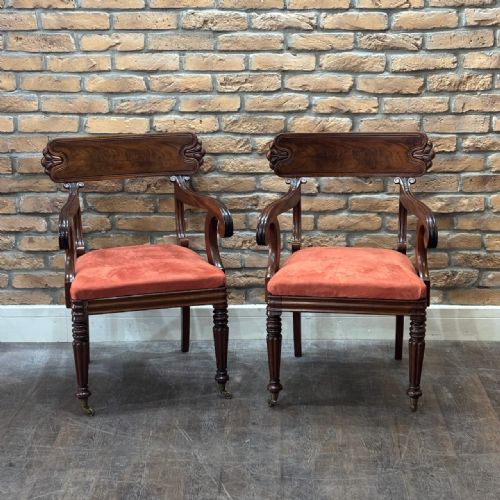
Reeded leg chairs encompass dining chairs, armchairs, side chairs, and hall chairs dating primarily from the Georgian, Regency, William IV, and Victorian periods. Sets of dining chairs appear alongside pairs of armchairs and individual library chairs.
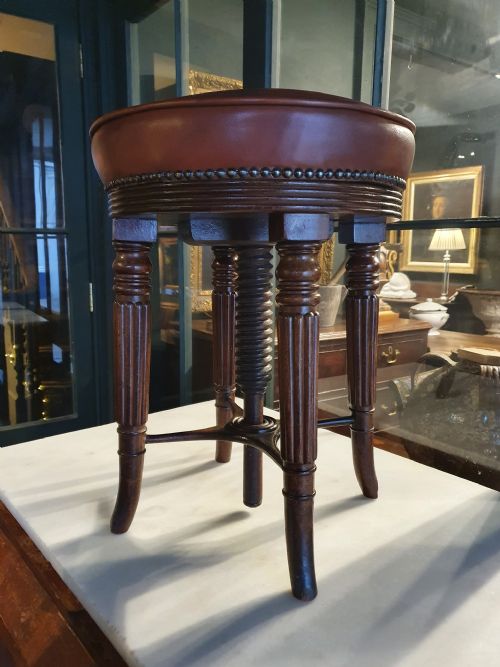
Mahogany forms the dominant timber across the selection, accompanied by rosewood, oak, and beech. Seating surfaces feature upholstered fabric, leather, velvet, cane, or drop-in pads.
How they were made
Cabinetmakers shaped dense hardwoods such as mahogany and rosewood using hand tools to cut clean vertical channels into the forelegs. These linear mouldings required steady precision to maintain uniform depth along the timber.
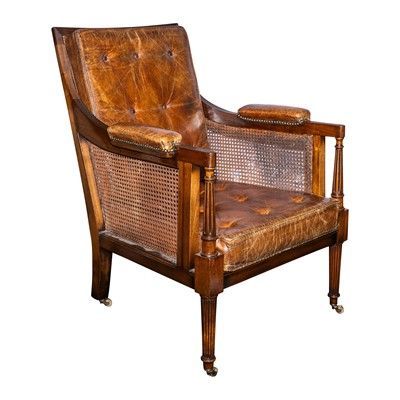
Frames incorporated traditional joinery supplemented by caning, button upholstery, and studded leather fixed with brass details. Drop-in seats and overstuffed pads provided removable or integrated comfort.
Reeded Leg Chairs Retail Price Guide 2026
Typical asking prices for reeded leg chairs among the pieces listed under this phrase on Sellingantiques today, from the lower quarter to the upper quarter. They describe what is for sale here now, not the wider market.
Listings feature mahogany, rosewood, oak, and beech timbers paired with cane, leather, and velvet upholstery.
What varies in quality
Quality rests in the crispness of the reeded carving and the choice of dense, well-figured timber. Sharply defined flutes indicate skilled hand execution rather than softened machine profiling.
Proportion and structural integrity distinguish superior sets. Matching grain patterns across a set of dining chairs and robust joinery in armchairs separate standard utility pieces from high-workshop production.
Gillows
The Reeded Leg Chairs Glossary
- Reeding
- Parallel convex moulding carved into timber legs or rails. This decorative technique creates a textured columnar effect.
- Bergère
- An enclosed upholstered armchair with wooden framing. Caned panels frequently form the back and sides.
- Bar back
- A chair back featuring a horizontal cross rail resembling a curved bar. This design is prevalent in Regency seating.
Reeded Leg Chairs: Frequently Asked Questions
How do I date a reeded leg chair?
Dating relies on stylistic markers such as top rail contours, leg turning, and timber choice. Regency and George III examples display specific classical proportions distinct from later Victorian interpretations.
Secondary indicators include construction methods and upholstery backing. Comparing these details against documented period pieces clarifies the decade of manufacture.
Are reeded leg chairs suitable for daily dining?
Solid mahogany and rosewood construction provides robust durability for regular seating use. Many retain stable frame joinery suited to modern domestic life.
Upholstery and caning condition dictate immediate utility. Sound frames often support reupholstery in contemporary fabrics without losing historical integrity.
What is the difference between a side chair and a carver?
Side chairs are armless seats designed to tuck compactly around a dining table. Carvers include armrests for added support and generally sit at the table head.
Matched sets frequently pair multiple side chairs with a matching pair of carvers. Both share identical leg treatments and framing details.
How do I maintain mahogany furniture?
Regular dusting with a dry lint-free cloth preserves the polished wooden surface. Avoid direct sunlight and extreme temperature fluctuations to prevent timber splitting.
Occasional application of appropriate wax feed nourishes the polish. Professional conservation ensures structural stability remains uncompromised over time.