
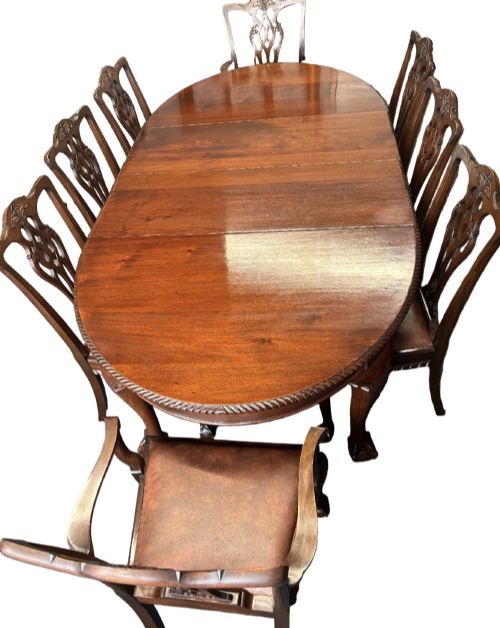
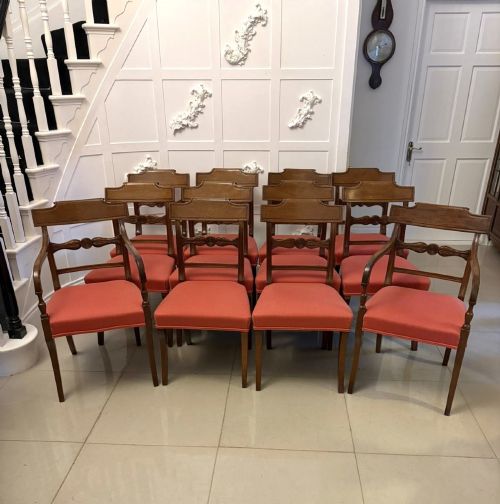
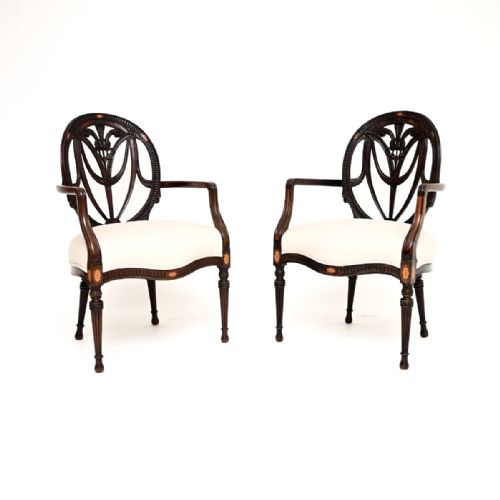
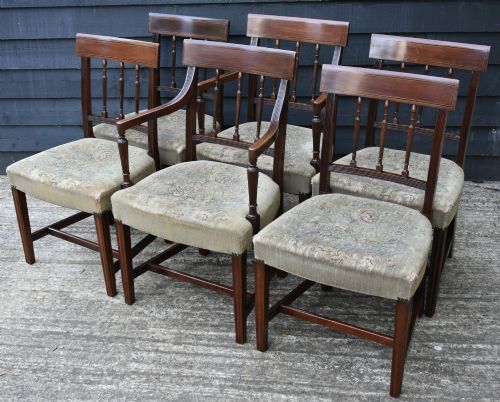
Brown Mahogany Carvers
Brown mahogany carvers are substantial timber armchairs built for the dining table, offering sturdy seats and arms in rich tropical wood.
Brown Mahogany Carvers
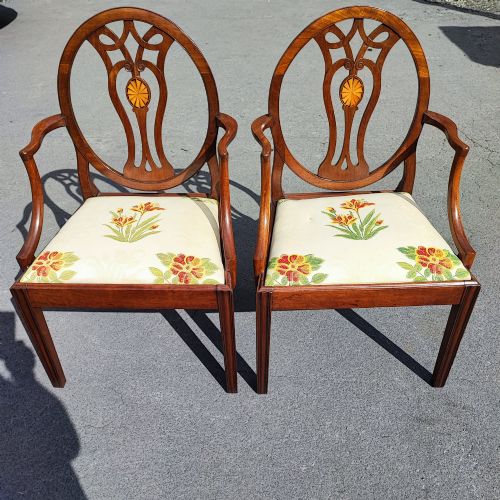
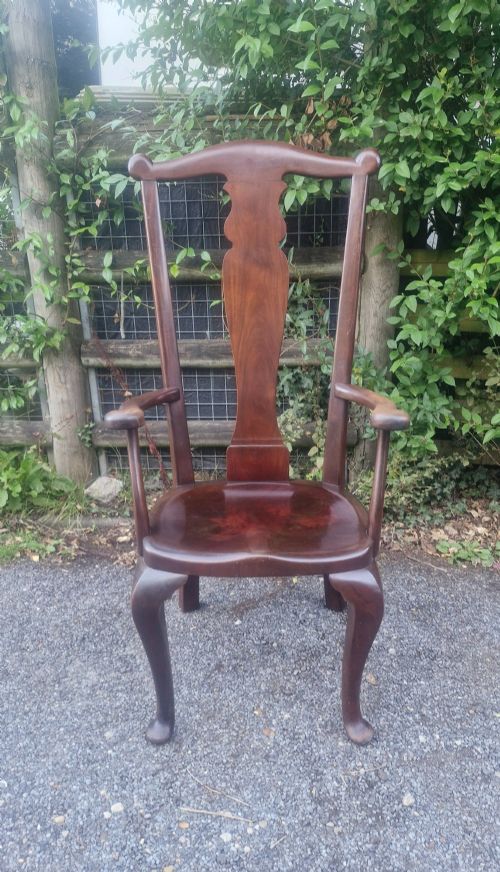
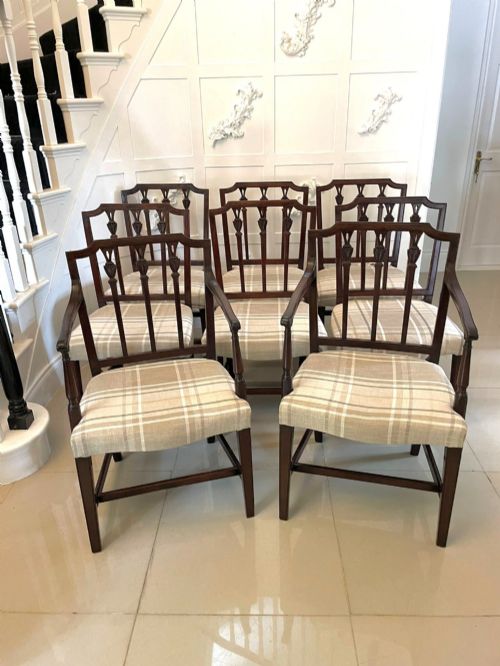
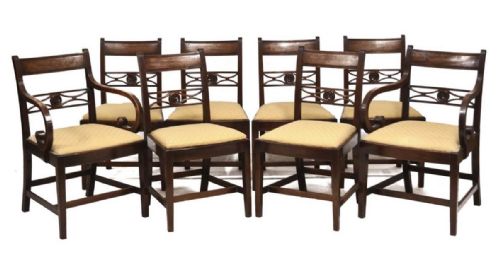
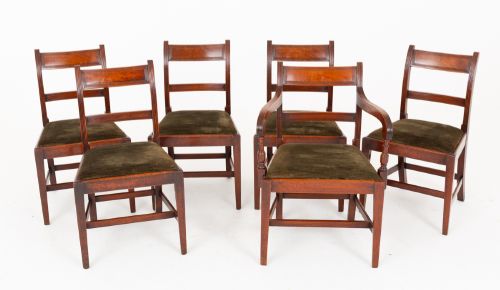
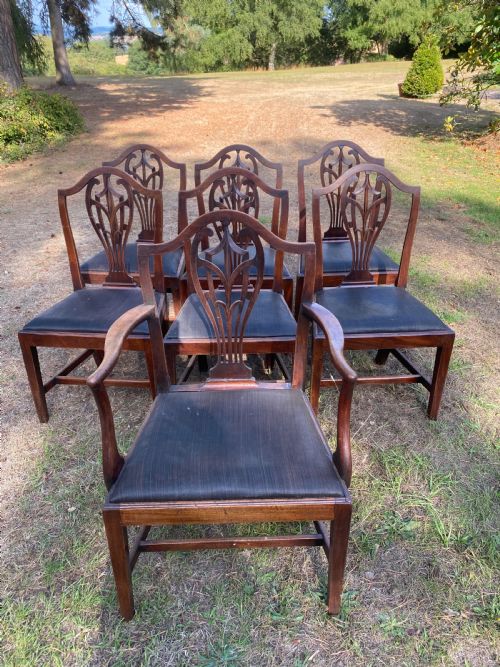
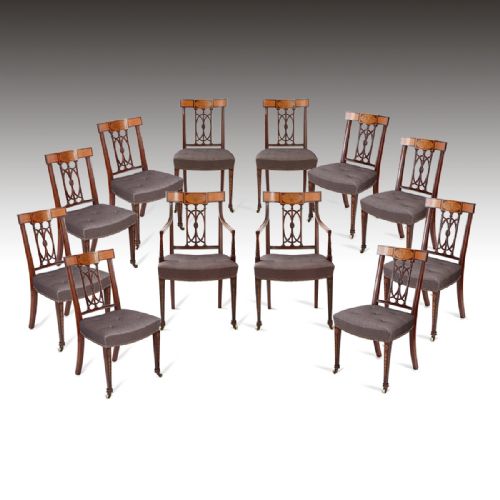
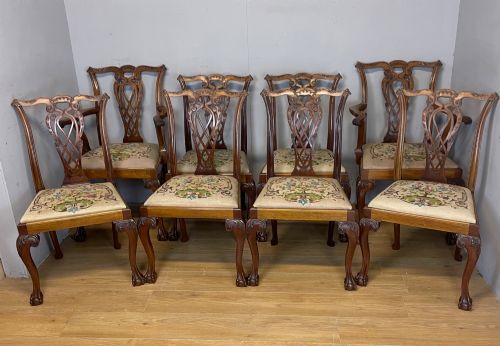
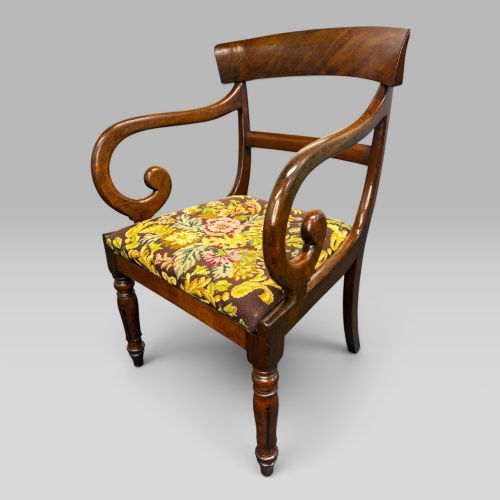
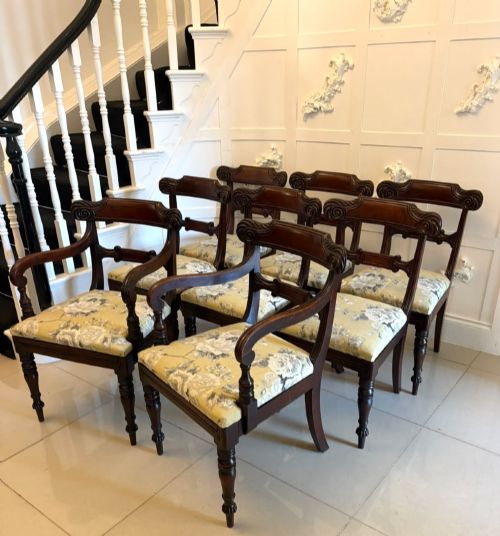
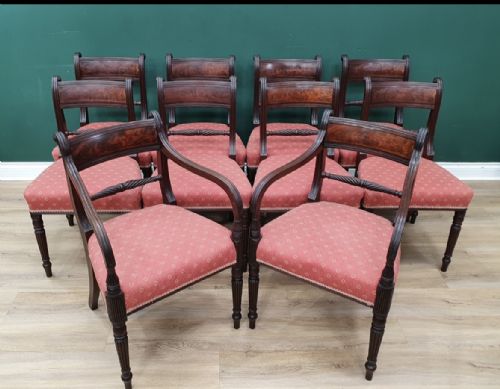
Brown mahogany carvers are timber armchairs designed to sit at the head and foot of a dining table alongside matching single chairs. When looking for brown mahogany carvers, buyers encounter pieces spanning the 18th century through to the Edwardian period, with strong representation from the Georgian and Regency eras.
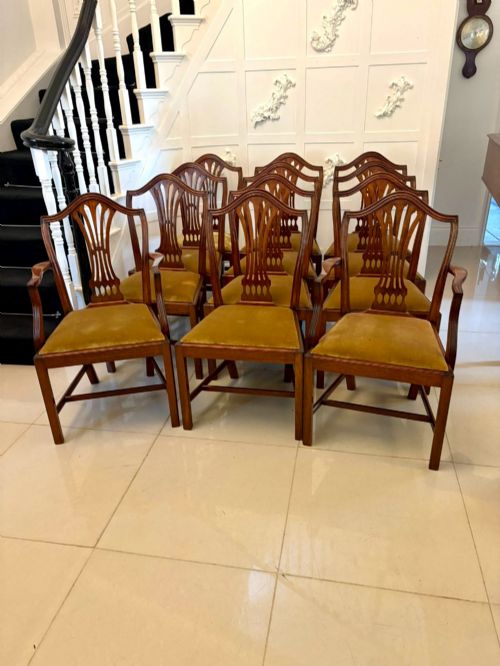
The forms on this page include dining sets with included carvers, pairs of armchairs, and single elbow chairs intended for the desk, morning room or dining room. Styles range from George III and Chippendale to Hepplewhite, Sheraton, and later revival periods.
Makers and workshops constructed these armchairs in mahogany, frequently pairing the dark timber with drop-in seats or upholstery in fabric, leather, velvet, and satinwood, occasionally accented with brass details.
How they were made
Cabinet makers constructed brown mahogany carvers using solid timber frames joined with traditional woodworking joints. Mahogany provided the structural strength required for chairs subjected to daily use at the dining table.
Seating portions were upholstered over webbing or dropped into wooden frames using materials such as leather, velvet, woven fabric, and satinwood inlay for decorative contrast. Brass elements sometimes appeared on castors or structural mounts.
Materials recorded across the inventory include solid mahogany, brass fittings, satinwood, and various upholstery fabrics.
What varies in quality
The quality of a brown mahogany carver rests in the crispness of its hand carving and the selection of the timber grain. Finer examples display deeply defined splats, pierced backs, and well-figured mahogany that has aged to a rich colour.
Structural integrity and originality dictate the standing of an armchair. Pieces retaining their original finish, uncompromised joinery, and period upholstery materials command greater appreciation than heavily altered specimens.
Gillows
The Brown Mahogany Carvers Glossary
- Shield back
- A chair back shaped like a heraldic shield, popularised by designers like Hepplewhite in the late 18th century. It frequently incorporates pierced vertical splats.
- Lyre back
- A chair back featuring an open splat shaped in the outline of a musical lyre. This form appears often in Regency period seating.
- Cockpen chair
- An open armchair with a Chinese fretwork lattice grid pattern in the back and arms. It gained popularity during the 18th century Chippendale revival and earlier Georgian periods.
- Elbow chair
- An alternative term for an armchair, often used in historical inventories to describe a seating piece with armrests for the morning room or desk.
Brown Mahogany Carvers: Frequently Asked Questions
What is a carver chair?
A carver chair is an armchair specifically built to match a set of dining chairs. It traditionally sits at the head and foot of the dining table.
The term distinguishes the armed seating from the armless single chairs in the same dining set.
How do I identify a Georgian carver?
Georgian carvers display characteristic 18th-century design traits such as straight or cabriole legs, carved splats, and robust mahogany frames. Styles from this era often align with Chippendale, Hepplewhite, or Sheraton aesthetics.
Construction methods involve pegged joinery and dense, dark mahogany timber typical of the period.
Were carvers sold separately?
Carvers were frequently produced as part of larger dining sets containing multiple single chairs and a pair of armchairs. They could also be commissioned or purchased individually as gentleman's elbow chairs or desk chairs.
Matching sets often show slight variations between the single chairs and the armchairs built to accompany them.
What fabrics were used on seats?
Original seating materials included leather, velvet, patterned upholstery fabric, and plain textiles secured over drop-in frames or stuffed webbed bases. Later restorations often replaced these coverings while retaining the underlying wooden frame.
Leather and durable woven fabrics were favoured for dining room use due to their resilience.