
Mahogany Dining Room Seating
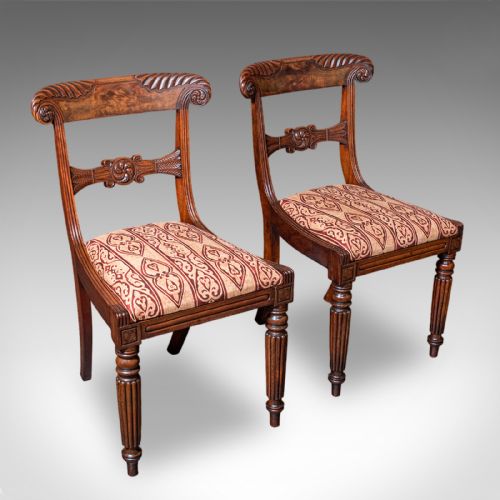
Mahogany dining room seating brings solid timber frames and period presence to the table, offering matched sets from Georgian, Regency, and Victorian eras.
Mahogany Dining Room Seating
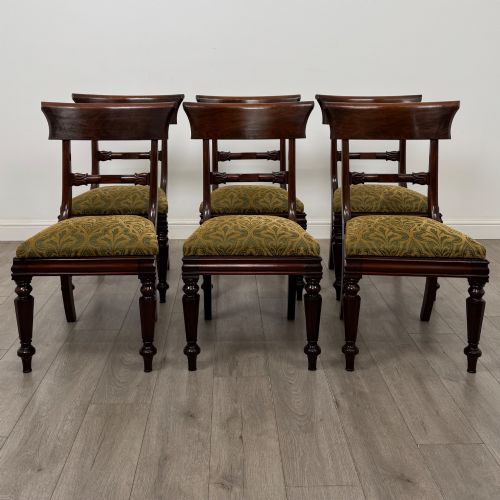
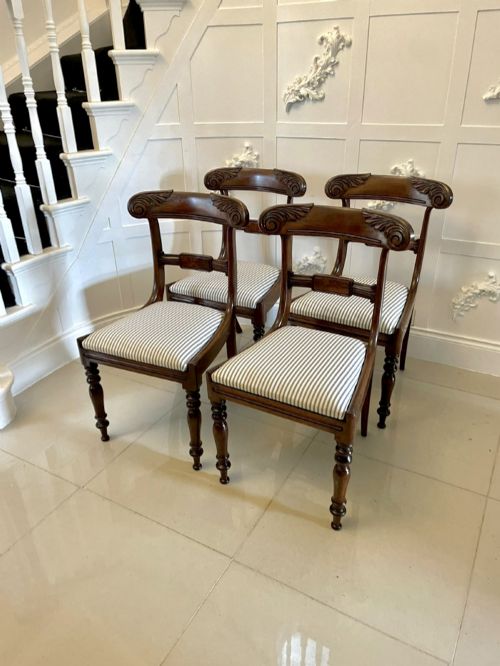
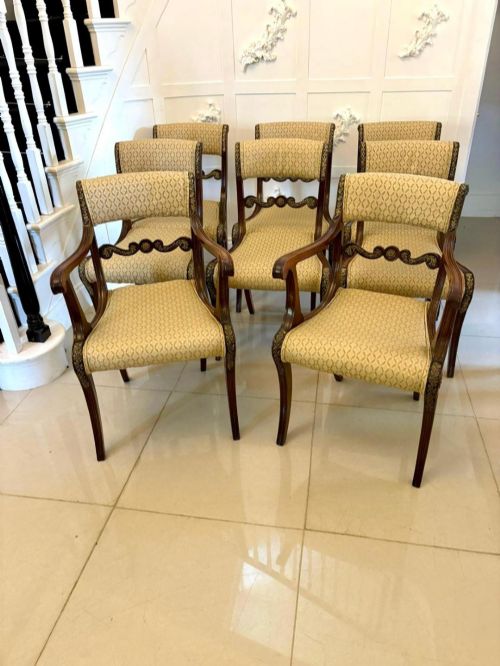
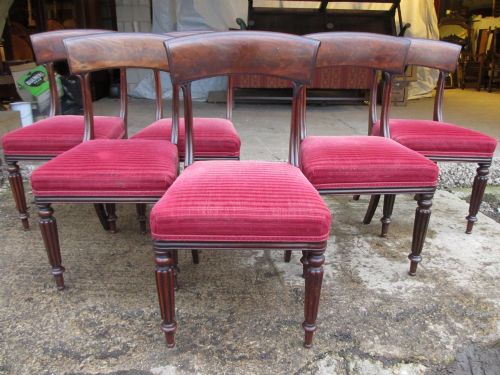
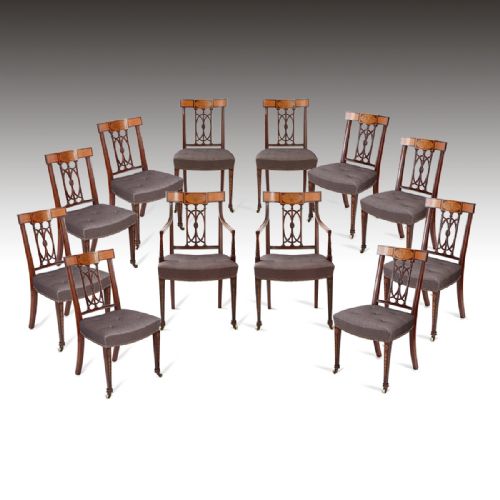
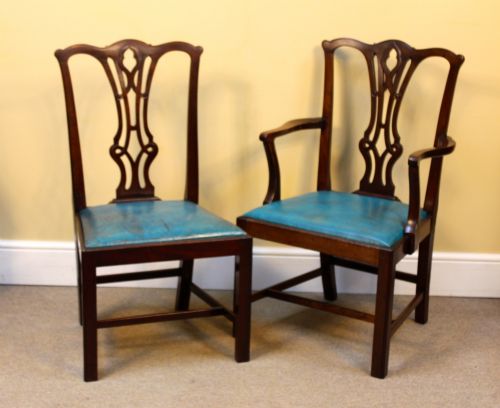
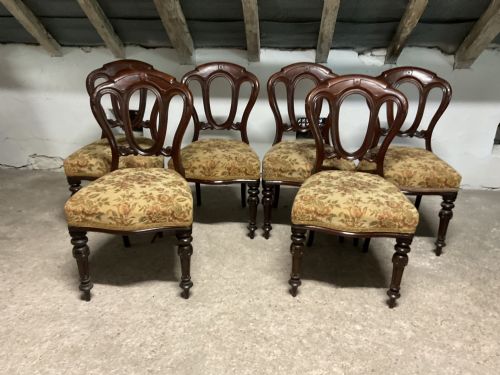
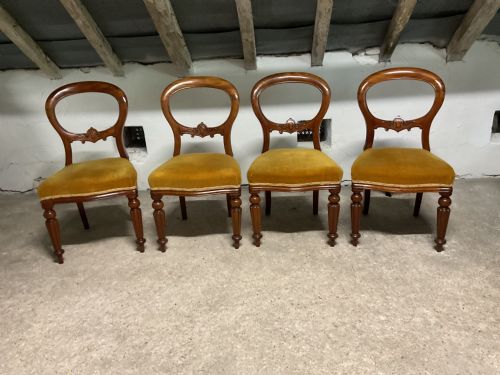
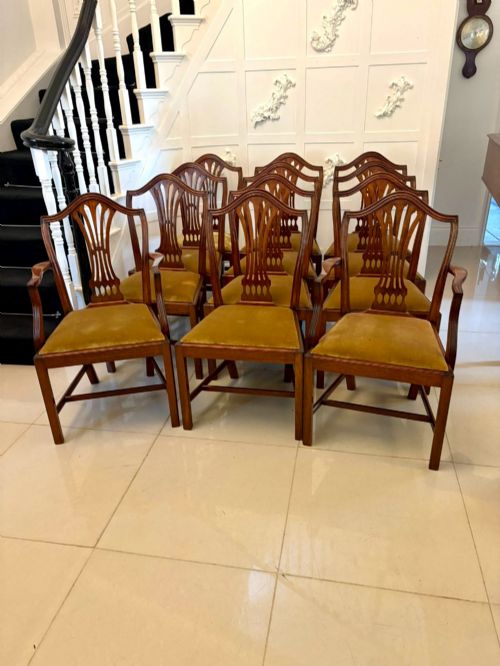
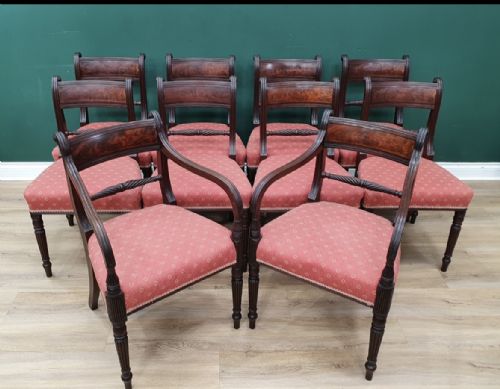
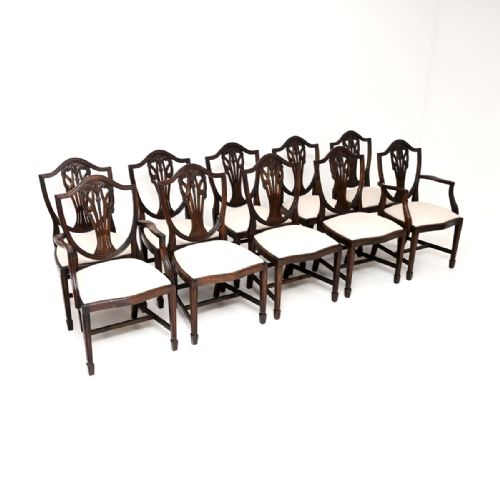
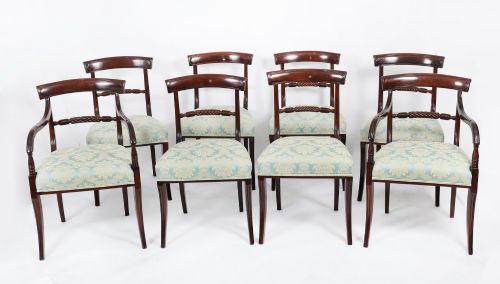
When you search for mahogany dining room seating, you encounter sets of chairs designed for formal dining, typically comprising single side chairs alongside matching carvers with armrests. The listings here concentrate heavily on nineteenth-century examples, spanning the Regency, William IV, and Victorian periods, alongside later Edwardian revivals and twentieth-century interpretations.
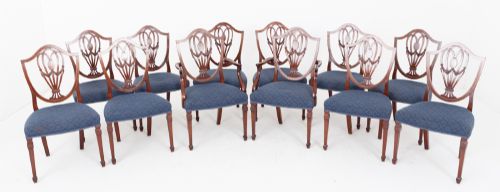
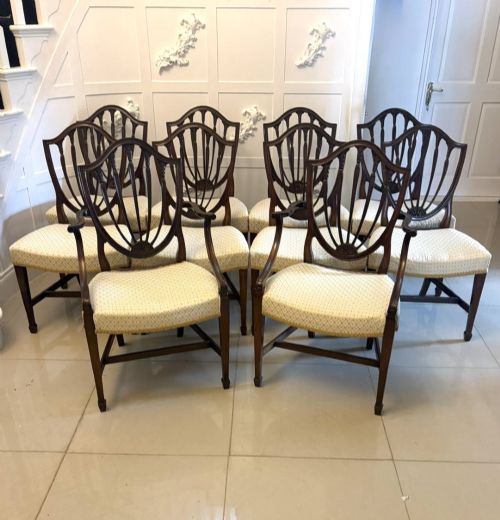
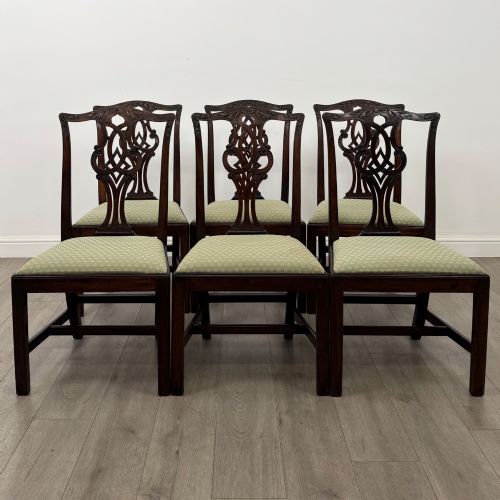
Most pieces appear in matching sets of four, six, eight, ten, or twelve, reflecting the proportions required for period dining rooms. Forms range from balloon backs and shield backs to clean Regency lines, rooted in styles such as Georgian, Hepplewhite, and Chippendale.
How they were made
Cabinetmakers constructed these frames primarily from solid mahogany, utilising the dense, dark timber for its strength and capacity to hold crisp carved detail. Joinery relied on traditional mortise and tenon construction to withstand regular daily use around the dining table.
Seating portions were upholstered over webbing and stuffing, incorporating materials such as leather, velvet, and various woven upholstery fabrics, often secured with brass tacks.
Expect at least one carver to generously accommodate the host after a substantial Sunday roast.
What varies in quality
Quality rests upon the crispness of the timber carving, the depth of the mahogany grain, and the integrity of the original frame construction. Superior sets maintain uniformity across every chair in the group, showing careful timber selection and restrained, purposeful ornamentation rather than heavy-handed additions.
The survival of original surface finishes, patination, and matching upholstery treatments elevates certain sets above standard utilitarian examples from the same period.
Maple And Co·Gillows
The Mahogany Dining Room Seating Glossary
- Carver
- An armchair designed with armrests, traditionally placed at the head of the dining table and made to match the surrounding single chairs.
- Shield back
- A chair back shaped in the outline of a heraldic shield, popularised during the Georgian era by designers like Hepplewhite.
- Balloon back
- A rounded, oval chair back resembling the shape of a balloon, seen frequently on Victorian mahogany dining seating.
- Regency
- A style period spanning the early nineteenth century, characterised by classical restraint, clean lines, and ancient Greek or Roman influences.
- William IV
- A transitional design period during the 1830s known for heavy, substantial proportions and bold scrolling timber work.
- Hepplewhite style
- A refined eighteenth-century furniture style known for tapered legs and delicate carved shield or heart-shaped backs.
Mahogany Dining Room Seating: Frequently Asked Questions
How many chairs come in a standard set?
Sets typically range from four to twelve chairs, often including a mix of single side chairs and a pair of carvers with armrests.
Larger configurations of ten or twelve pieces cater to extended dining tables, while smaller sets of four or six suit compact spaces.
What is the difference between a carver and a dining chair?
A carver includes armrests and sits at the head or foot of the table, offering a more formal presence.
Dining chairs lack arms to allow multiple seats to tuck neatly along the sides of the dining table.
How do I identify a Regency dining chair?
Regency chairs display classical restraint, often featuring saber legs, reeded frames, and influences drawn from ancient Roman design.
They generally date from the early nineteenth century and possess lighter proportions than heavier Victorian alternatives.
Are these chairs suitable for daily use?
Solid mahogany frames and traditional mortise joinery provide the structural strength needed for regular dining.
Checking the stability of the joints and the condition of the upholstery webbing ensures comfort and safety during meals.