

Antique Elbow Dining Chairs
These antique elbow dining chairs bring solid timber construction and period presence to the head of a table.
Antique Elbow Dining Chairs
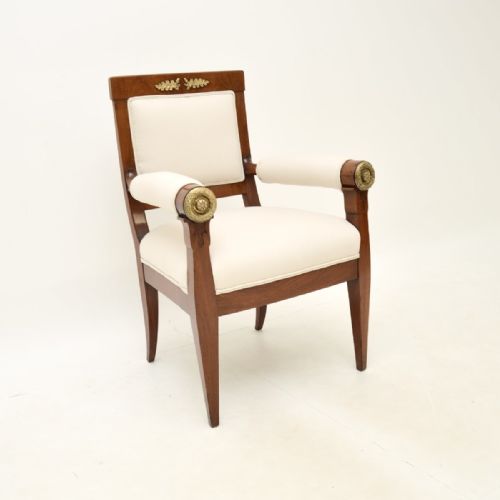
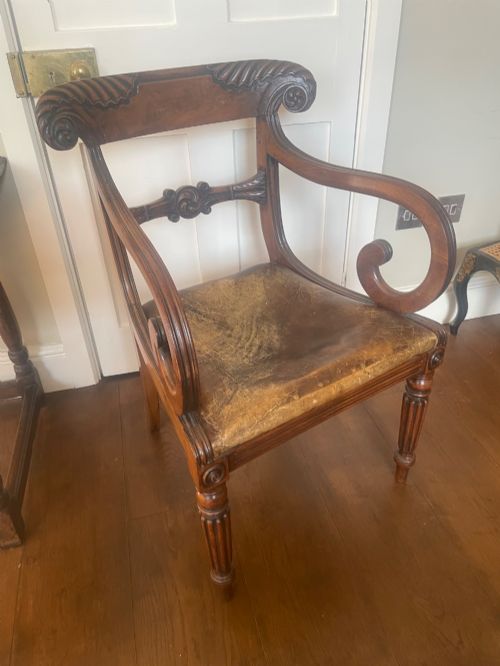
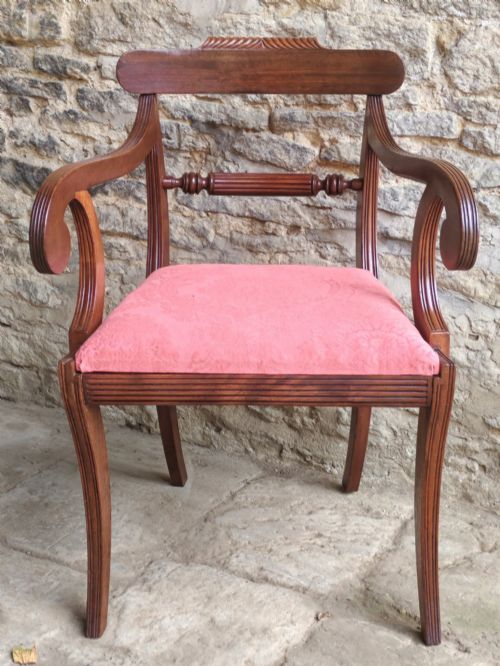
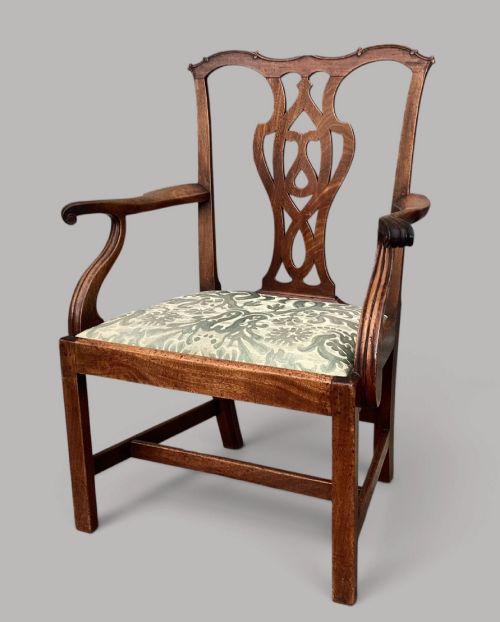
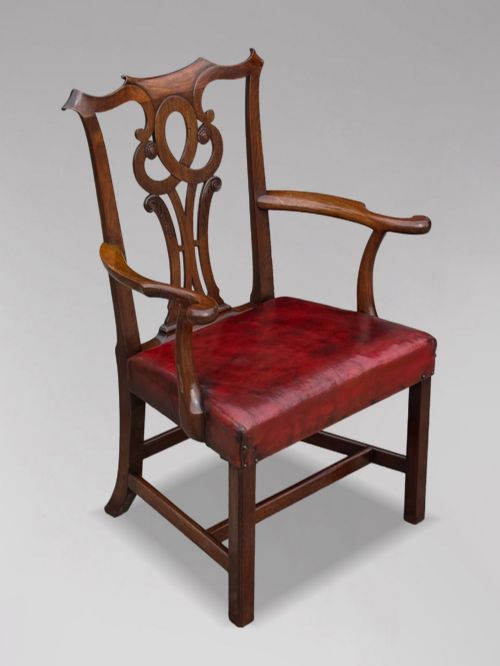
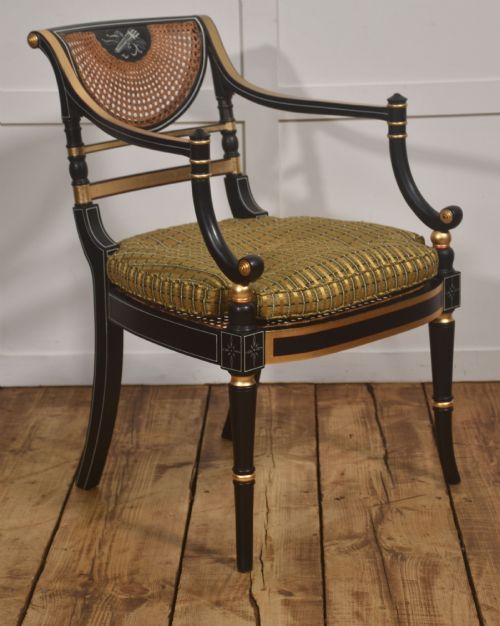
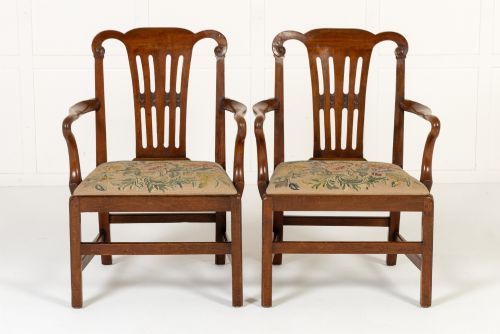
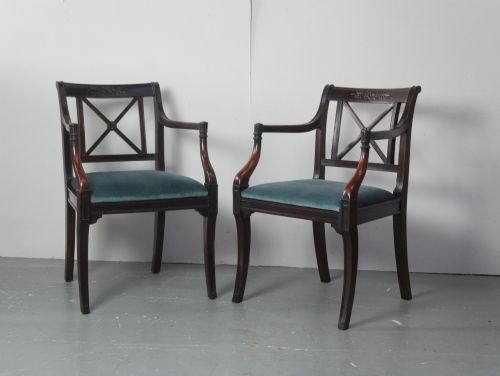
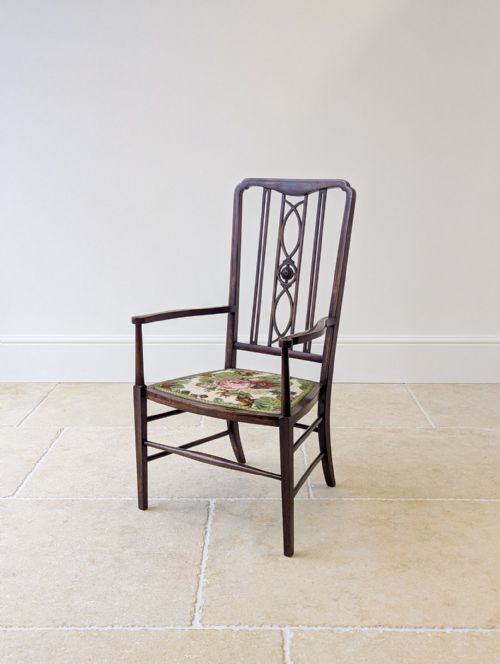
When you search for antique elbow dining chairs, you encounter seating designed with armrests for the ends of a dining table or for use as a desk chair. The pieces on this page span the eighteenth, nineteenth, and early twentieth centuries, encompassing Georgian, Regency, Victorian, and Edwardian periods.
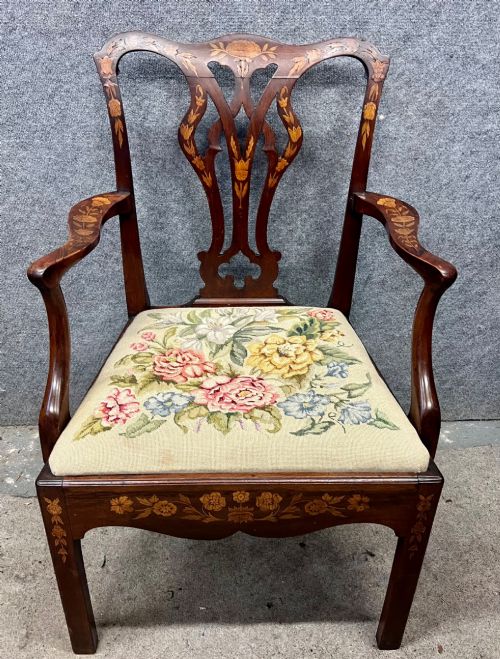
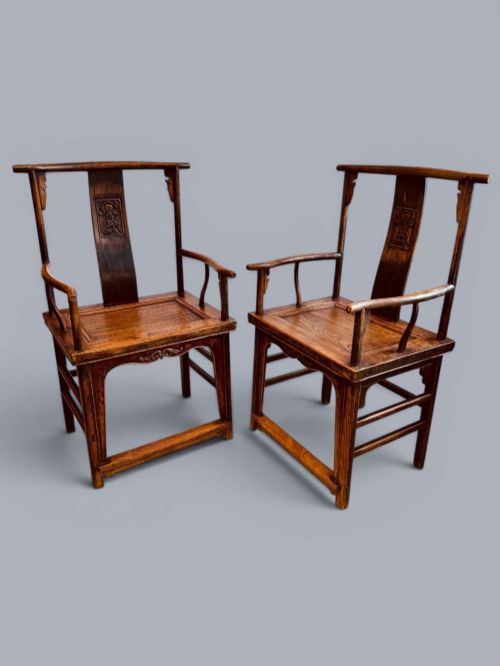
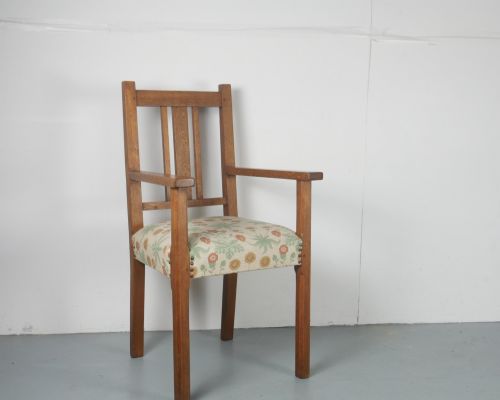
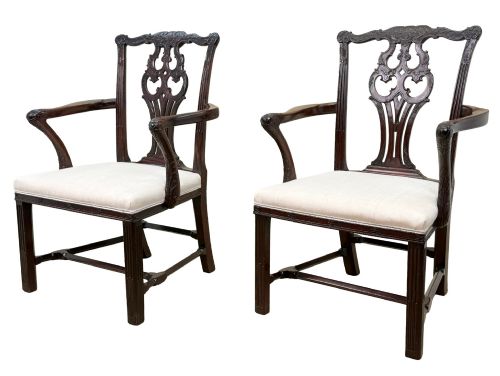
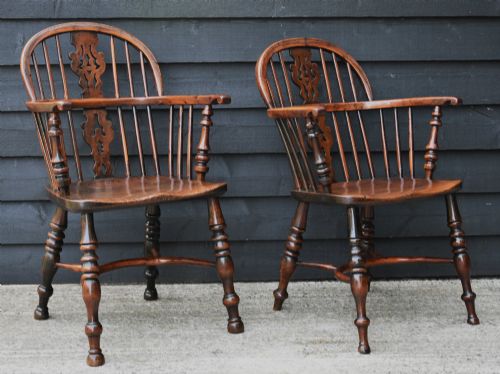
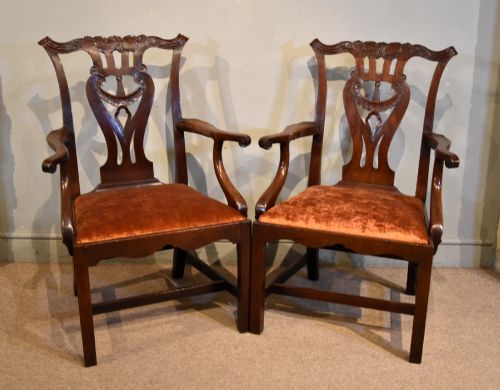
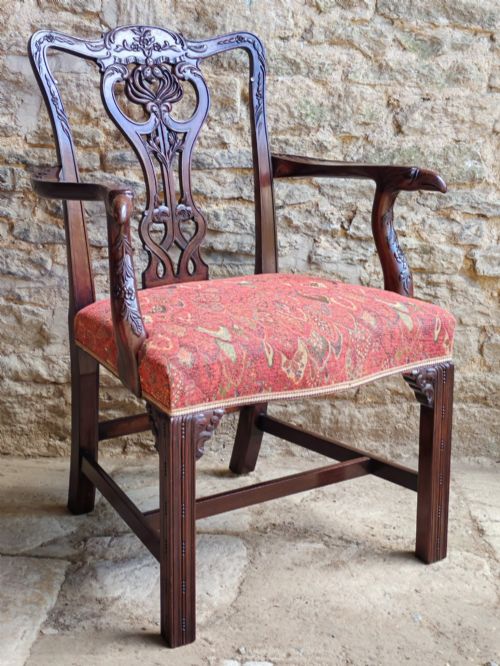
The form appears in several distinct styles, including formal mahogany Chippendale designs with carved splats, regional country Windsors in yew, elm, and ash, and robust Arts and Crafts oak models. Most examples function as carvers or open armchairs, constructed to sit alongside matching sets of single chairs.
Origins range across English, Irish, Scottish, and Welsh workshops, reflecting local timber supplies and regional cabinet-making traditions. You find both individual seating and matched pairs, alongside occasional larger sets suitable for formal dining rooms.
How they were made
Cabinet-makers relied primarily on dense hardwoods such as mahogany, oak, walnut, and satinwood for formal urban seating, utilising mortise and tenon joinery to secure the frames. Regional makers turned to native timber, combining elm seats with ash spindles and yew bow arms for durable country Windsors.
Upholstery techniques evolved from drop-in rush and cane seating to webbed frames padded with horsehair and finished in fabric, leather, or velvet. Carved details, inlay work, and turned components demonstrate the hand tools and joinery methods standard to each period.
Antique Elbow Dining Chairs Retail Price Guide 2026
Typical asking prices for elbow dining chairs among the pieces listed under this phrase on Sellingantiques today, from the lower quarter to the upper quarter. They describe what is for sale here now, not the wider market.
Object types on this page include open armchairs, desk chairs, and country kitchen Windsors.
What varies in quality
Quality rests on timber selection, structural integrity, and the crispness of hand-carved ornamentation. Superior examples display straight-grained mahogany, tightly fitted joints without excessive modern reinforcement, and balanced proportions between the elbow supports and the backrest.
The distinction between standard commercial production and fine cabinet-work shows in the depth of carving on the splats and the careful shaping of the arms. Original surfaces and patination elevate a piece above examples that have undergone heavy stripping or structural alteration.
Gillows·Heals Letchworth·Howard and Sons
The Antique Elbow Dining Chairs Glossary
- Carver
- A dining chair fitted with armrests, traditionally placed at the head of a table. These match a set of standard single chairs.
- Elbow chair
- An alternative term for an armchair, describing a seat with supports for the arms. The phrase often applies to open-framed desk and dining chairs.
- Windsor
- A traditional timber chair featuring a solid wooden seat into which the legs and back spindles are wedged. These often incorporate a bentwood bow for the arms and back.
- Splat
- The vertical wooden slat positioned in the centre of a chair back. Cabinet-makers shaped and carved these to define specific stylistic periods like Chippendale.
- Smokers bow
- A low-backed Windsor variant with a continuous curved arm rail, frequently used in country pubs and domestic smoking rooms during the nineteenth century.
Antique Elbow Dining Chairs: Frequently Asked Questions
How do I use elbow chairs at a dining table?
Elbow chairs sit naturally at the head and foot of a dining table to frame the seating arrangement. Their armrests provide extra comfort for prolonged seating during meals.
Ensure you measure the height of your table apron to verify that the armrests slide underneath when the chair is pushed in.
What is the difference between a carver and an armchair?
In trade terms, a carver specifically denotes an armchair designed to accompany a matching set of dining chairs. The designation implies formal dining use rather than general parlour seating.
Many listings use the terms interchangeably to describe any period chair featuring armrests.
Are these chairs comfortable for daily use?
Period elbow chairs offer sturdy construction and supportive upright backs well-suited for dining and desk work. Solid timber seats and firm horsehair upholstery provide a different sitting experience compared to modern padded furniture.
Adding loose cushions can adjust the seat height and comfort level for everyday dining.
How do I match an antique elbow chair to existing furniture?
Matching relies on identifying the primary timber, such as mahogany, oak, or walnut, and observing the general period style. Pieces do not need to form an exact pair to work together around a large table; contrasting woods like elm and mahogany often complement each other.
Focus on matching the wood tone and overall visual weight rather than exact historical dates.