
Pair of Wooden Armchairs
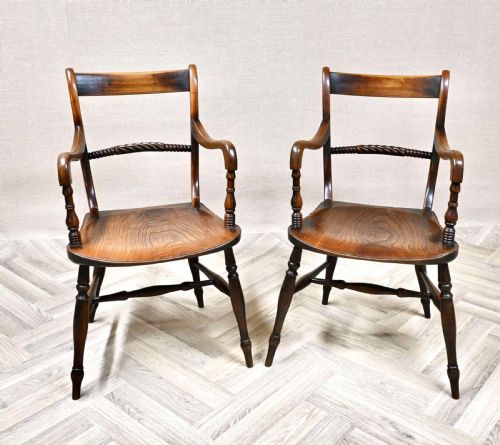
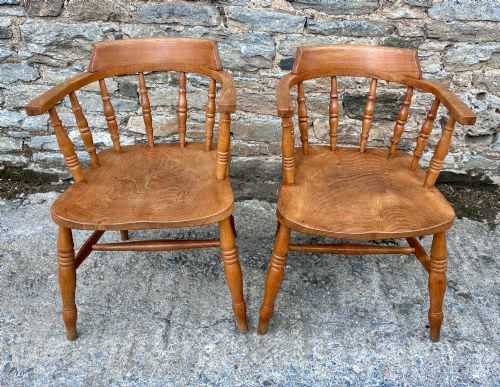
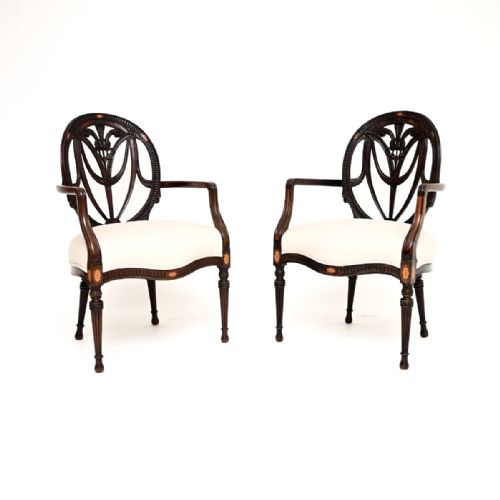
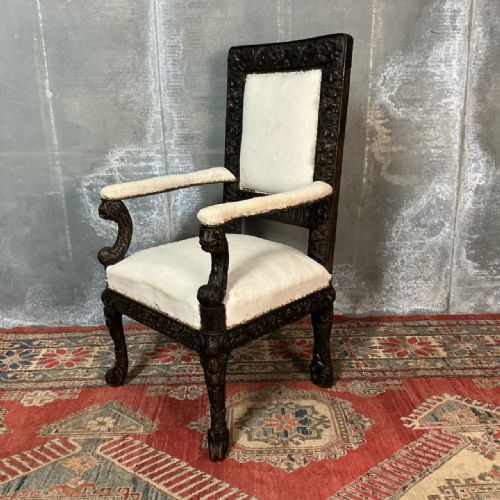
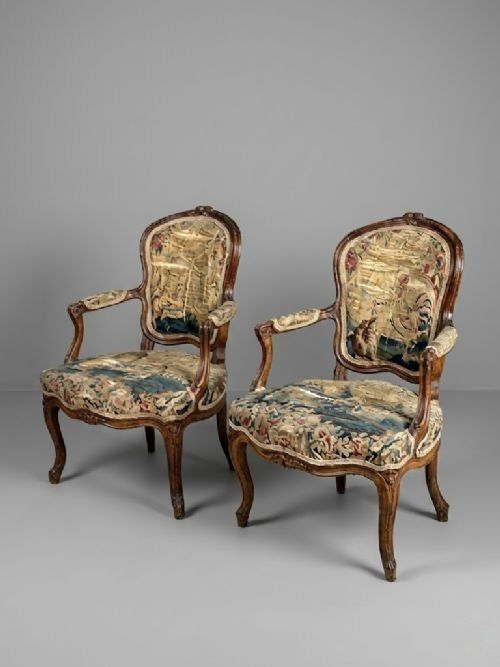
A pair of wooden armchairs brings matched seating and solid timber construction to a room, ranging from simple elm windsors to carved walnut revival seats.
Pair of Wooden Armchairs
A pair of wooden armchairs brings matched timber seating to a room, spanning periods from the eighteenth century through the twentieth. These listings feature regional British designs alongside continental European and Chinese forms.
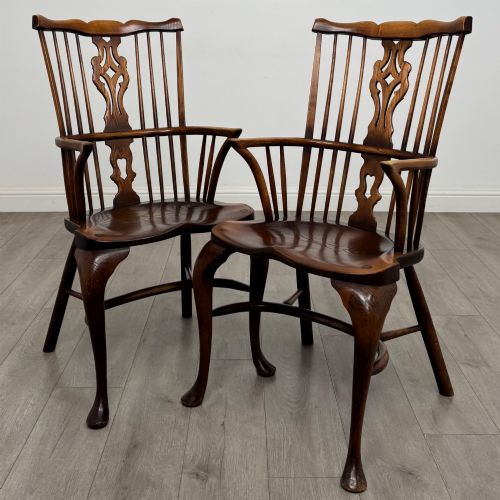
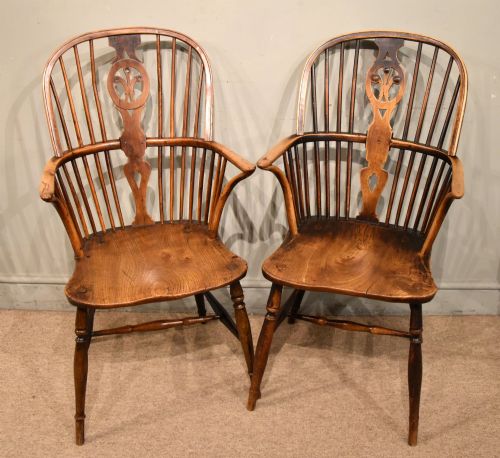
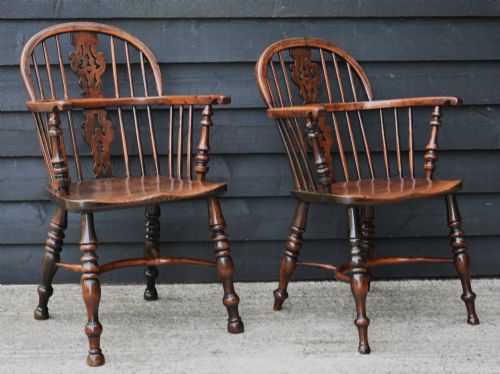
The most frequent form met here is the Windsor chair, constructed in elm, ash, or yew, often originating from country workshops. Alongside these sit formal revival armchairs in mahogany, walnut, and oak.
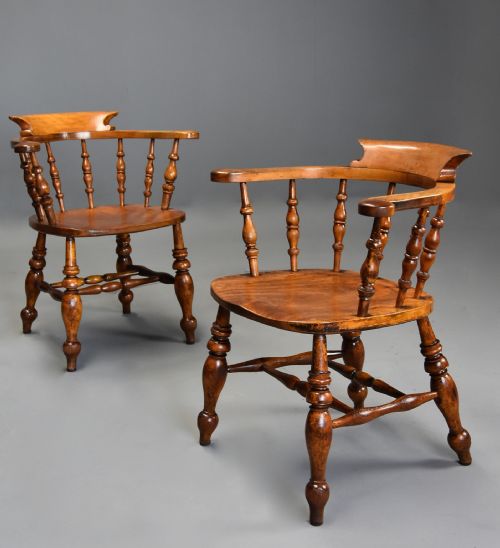
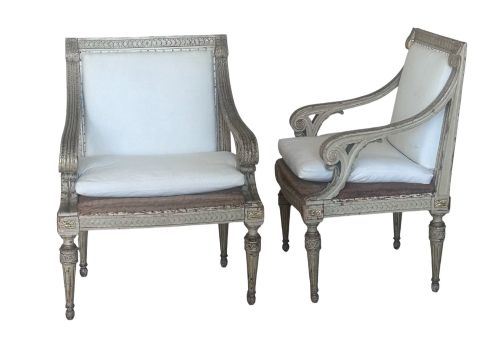
Seating spans diverse domestic spaces, including library chairs, salon seats, and smoking bows. Buyers encounter specific regional variations such as Welsh windsors and Piedmontese armchairs.
Materials and construction
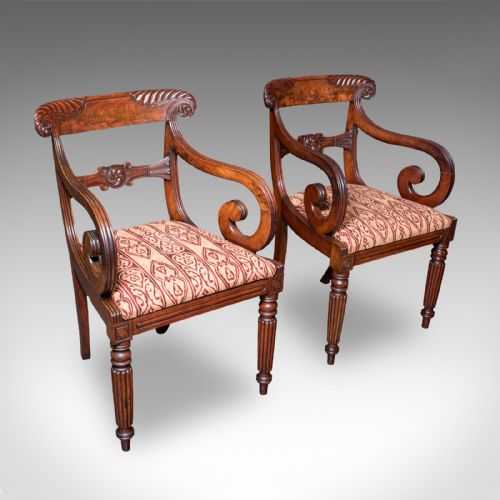
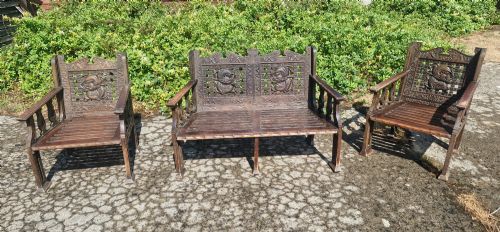
Timber selection dictates the character of these seats, utilising native hardwoods like elm, oak, mahogany, and walnut, alongside exotic woods such as goncalo alves and birch. Craftspeople turned spindles, carved solid panels, and shaped steam-bent components to form robust frames.
Joinery methods rely on traditional pegged mortise and tenon joints, particularly in Windsor and wainscot forms. Surface treatments range from clear wax finishes and patinated lacquers to applied gilding and decorative inlay.
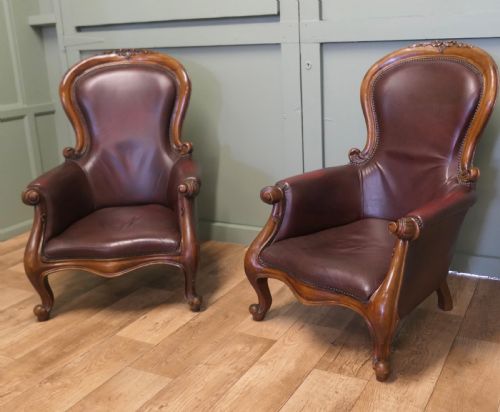
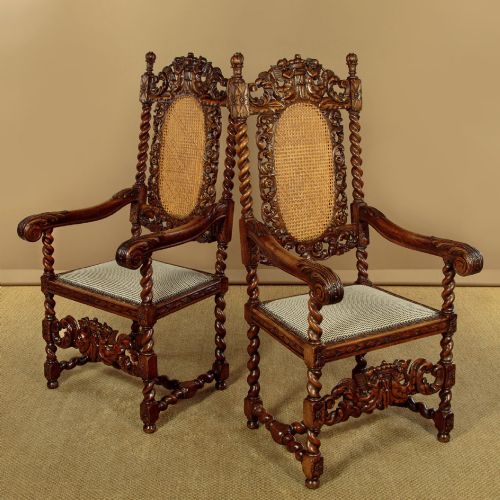
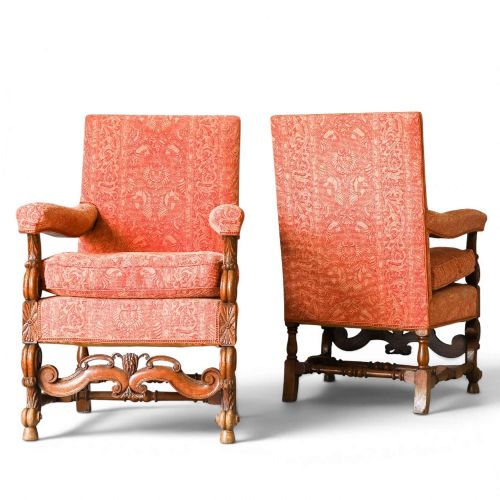
Upholstered examples integrate traditional stuffing and webbing beneath fabric, leather, or specialised coverings like Aubusson tapestry. Frame carving varies from plain structural members to detailed Baroque and Renaissance revival motifs.
Listings span multiple eras, encompassing eighteenth-century designs, nineteenth-century Victorian revival styles, and twentieth-century Art Deco forms.
Distinctions in quality
Quality rests in the integrity of the timber and the crispness of any carved detail, distinguishing workshop execution from mass production. Superior pieces retain original surface patination, timber colour, and honest wear without excessive restoration.
Structural honesty separates fine examples, where joints remain tight and timber shrinkage occurs naturally over centuries. Design proportion and the balance between comfort and formal presence define the upper tier of these seats.
Edward Barnsley
The Pair of Wooden Armchairs Glossary
- Windsor
- A traditional wooden chair featuring a solid saddle-sculpted seat into which legs and back spindles are wedged. These chairs often combine elm seats with ash or yew superstructures.
- Carver
- An armchair designed to match a set of dining chairs, typically placed at the head of a table. They feature open arms suited to dining use.
- Yoke-back
- A traditional Chinese chair style characterised by a top rail curving upwards and outwards like an ox yoke. Examples in the listings include elm and hardwood construction.
- Patina
- The surface sheen and mellowed appearance developed by timber over long periods of handling and waxing. Good patination reflects age and continuous use.
- Wainscot
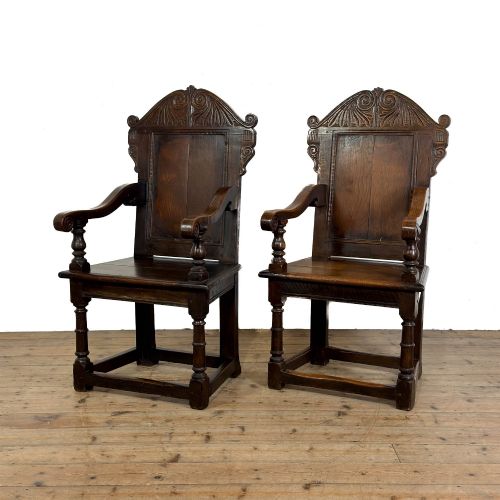
- An early form of heavy wooden armchair constructed with panelled backrests and solid box frames. These sturdy seats date to sixteenth and seventeenth-century traditions.
Pair of Wooden Armchairs: Frequently Asked Questions
How do I date a wooden armchair?
Dating relies on examining construction techniques, tool marks, timber shrinkage, and the prevailing style of the period. Secondary wood choices and fastener types also provide clues to age.
Comparison with documented examples from eras like the Georgian or Victorian periods helps confirm the decade of manufacture.
Are wooden armchairs comfortable for daily use?
Solid timber seats like Windsors offer firm upright support, often shaped with dished seats for posture. Upholstered versions provide softer lounging options.
Depth and rake angle vary significantly across styles, making some better suited to reading while others function as occasional seating.
How should I care for antique wooden chairs?
Maintain timber moisture levels by avoiding direct heat sources and sudden humidity changes. Regular application of suitable beeswax helps preserve the finish.
Check structural joints periodically to ensure glue has not dried out, preventing strain on traditional mortises.
What is the difference between a carver and an elbow chair?
Carver chairs traditionally denote armchairs made to accompany a set of dining chairs around a table. Elbow chairs generally describe wider seating meant for desks or morning rooms.
Both terms refer to armed wooden seats, though proportions vary according to their intended domestic room.