
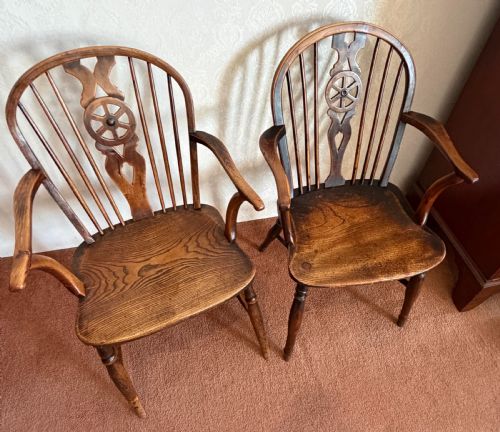


Pair Windsor Armchairs
Pair windsor armchairs are sturdy, timber-framed seats combining regional vernacular tradition with robust local craftsmanship.
What pair windsor armchairs are
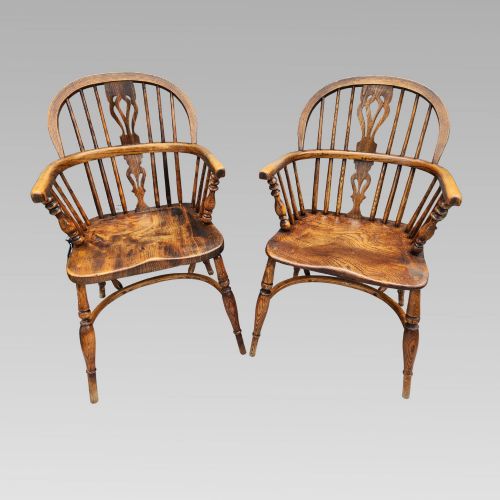
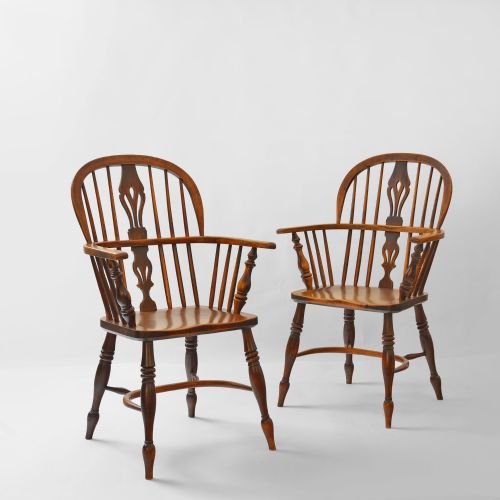
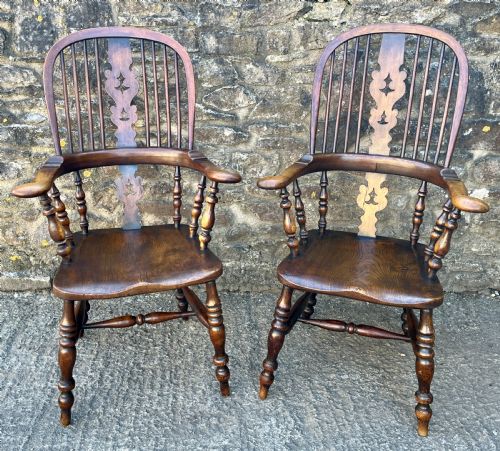
Pair windsor armchairs are seating constructed with a central wooden seat plate into which the legs, back spindles and bow are independently wedged or secured. This construction method defines the vernacular furniture tradition found across English country districts during the Georgian, Victorian and nineteenth-century periods.
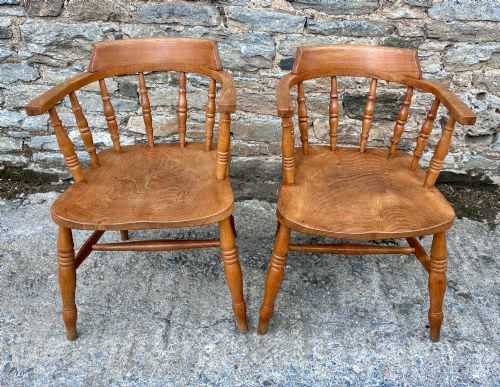
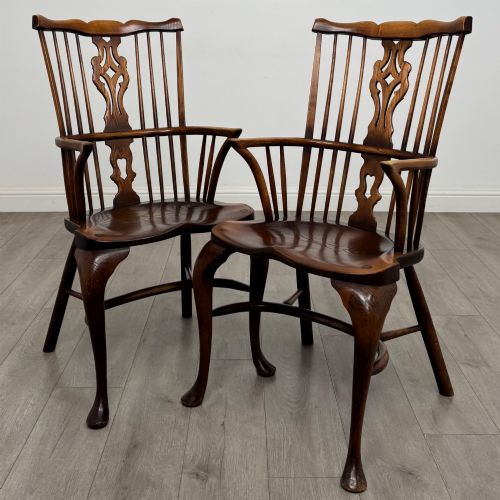
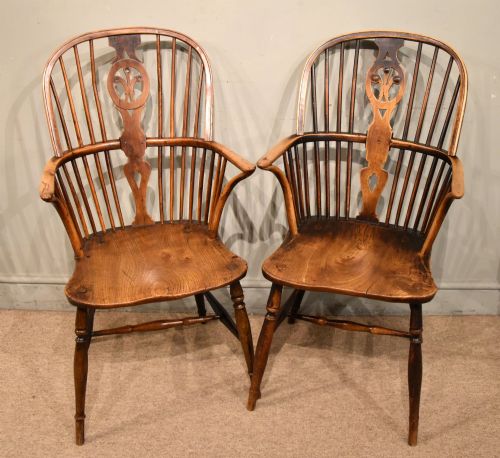
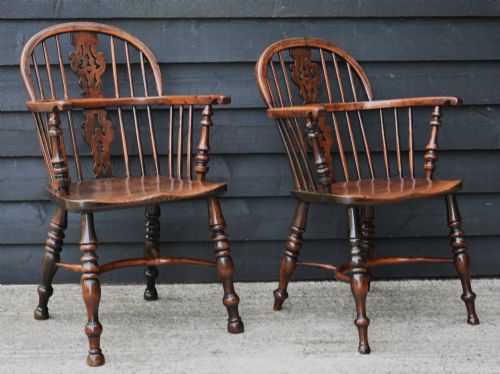
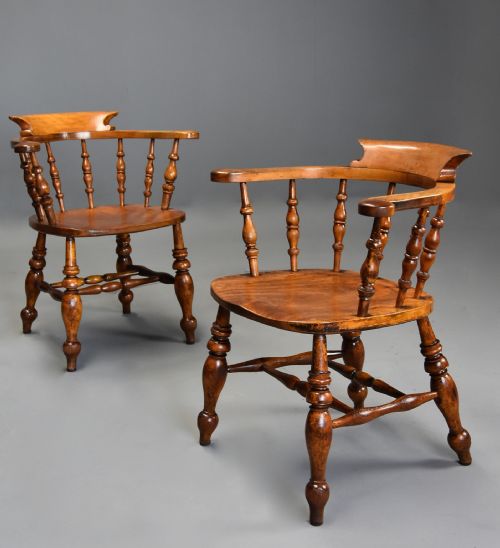
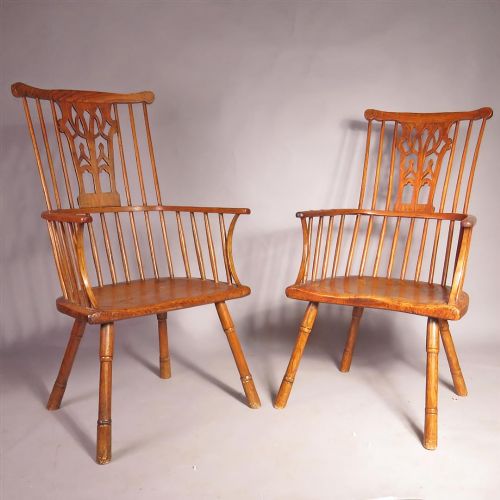
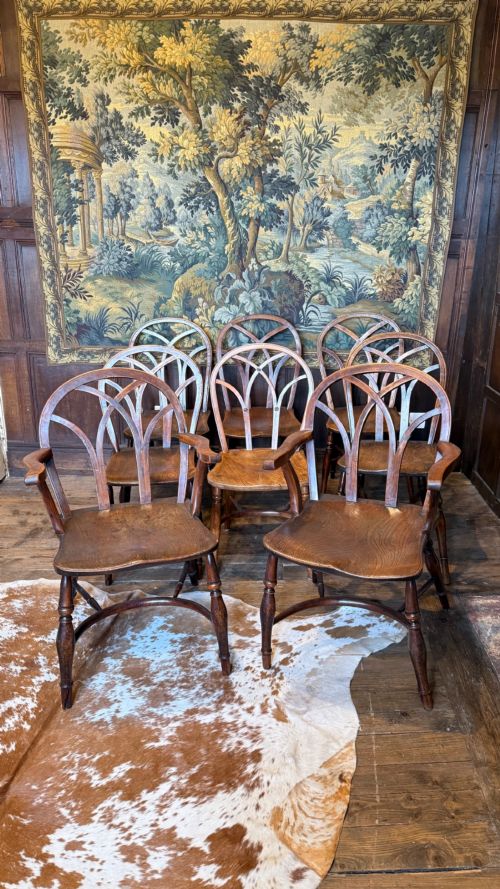
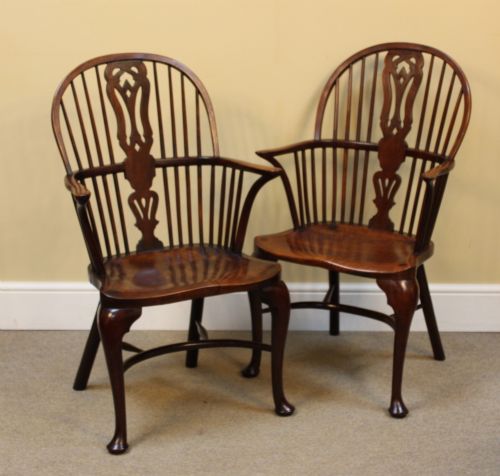
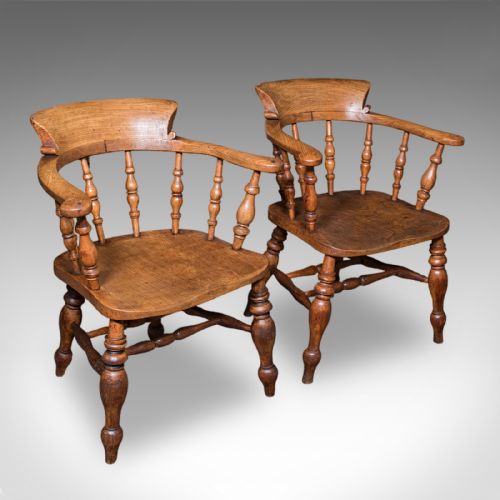
The versions most frequently encountered here are matched or harlequin pairs pairing timbers like elm, yew, ash and beech in high-back, low-back, wheel-back or smokers bow forms. These domestic armchairs served utilitarian roles in kitchens, farmhouses and parlours before collectors gathered them into balanced pairs.
How they were made
Maker-joiners utilised native woods by matching strong, elastic timbers for specific structural demands. Seats were typically carved from solid elm, while flexible ash, beech or yew formed the turned legs, spindles and steam-bent hoops.
Component parts were shaped using drawknives, spokeshaves and pole lathes before being joined securely through wedged tenons and drilled mortises. Applied bent arms and crinoline stretchers added rigidity to the wooden framework.
Retail Price Guide 2026
Typical UK retail prices for pair windsor armchairs, calculated from the Sellingantiques database of over a million retail prices indexed since 2003. This retail price guide relies exclusively on Sellingantiques data; no external sources or auction records are used, so the figures do not describe the wider market.
Listings feature eighteenth-century, nineteenth-century and 1900 pieces built from elm, yew, ash and beech.
What varies in quality
Quality separates through the selection and figuring of native woods, particularly where burr yew or richly grained elm display deep natural patination. The crispness of the wood-turnings on legs and spindle backs also distinguishes finer workshop production from standard utility items.
Proportion and structural harmony dictate the visual balance of a pair, whether formed as an exact matching set or an assembled harlequin pair. The integrity of the original joints and the depth of the saddle-shaped seat carving further separate ordinary kitchen seating from distinguished country pieces.
Gillows·William Birch·Thames Valley·Nottinghamshire
The Pair Windsor Armchairs Glossary
- Crinoline stretcher
- A curved metal or wooden brace connecting the legs of an armchair to provide lateral stability. This distinctive hoop earned its name from the hooped Victorian skirts it resembled.
- Smokers bow
- A low-backed Windsor armchair variant featuring a continuous curved arm rail resting on short turned spindles. These sturdy chairs were common in country homes and public houses.
- High back
- A tall chair silhouette incorporating an elevated hoop or comb frame supported by vertical wooden spindles. This tall format provided additional head support and visual presence.
- Applied bent arm
- An arm structure formed by steaming and bending a separate timber piece before fixing it above the seat. This technique allowed for broader, more ergonomic arm rests.
- Wheel back
- A Windsor chair back featuring a pierced wooden splat carved in the shape of a spoked wheel. This decorative motif gained popularity during the Victorian period.
Frequently Asked Questions
How do you date windsor armchairs?
Dating relies on observing structural shifts, such as the transition from eighteenth-century low-back forms to taller Victorian hoop backs and wheel backs. Tool marks and timber ageing provide further clues.
Different periods favoured specific regional turning styles and combinations of ash, elm, yew and beech, which help place the chairs within the Georgian or nineteenth-century eras.
Where were windsor armchairs used?
These timber chairs served practical functions across English farmhouses, country cottages, kitchens and rural inns. Their robust frame suited daily domestic work.
Over time, these utilitarian seats moved from functional workspaces into parlours and living spaces as the appreciation for vernacular country furniture grew.
Why use different woods in one chair?
Craftsmen selected specific native timbers for their distinct physical properties to ensure structural strength. Elm provided a tough, splitting-resistant seat plate.
Flexible ash and beech worked well for steam-bent hoops and slender spindles, while decorative yew was utilised for its striking grain and durability in prominent parts.