


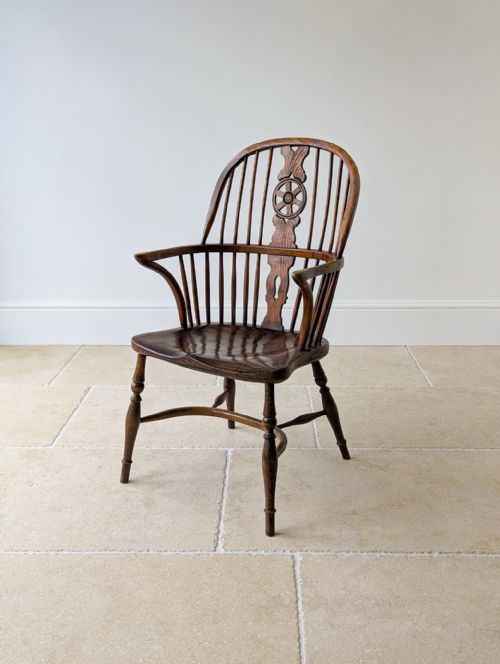
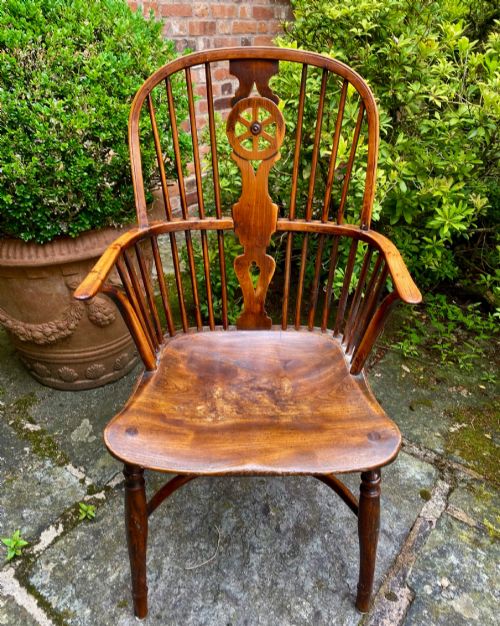

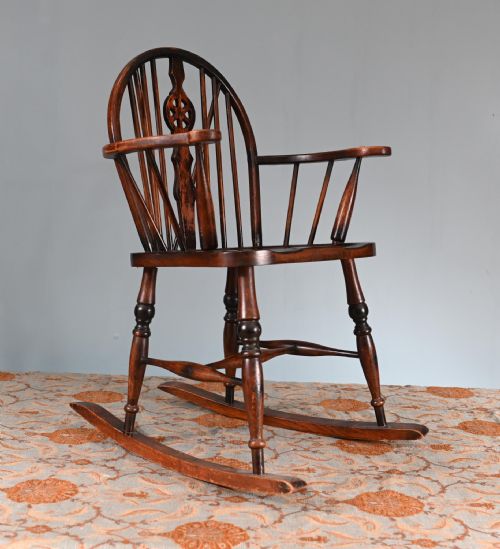
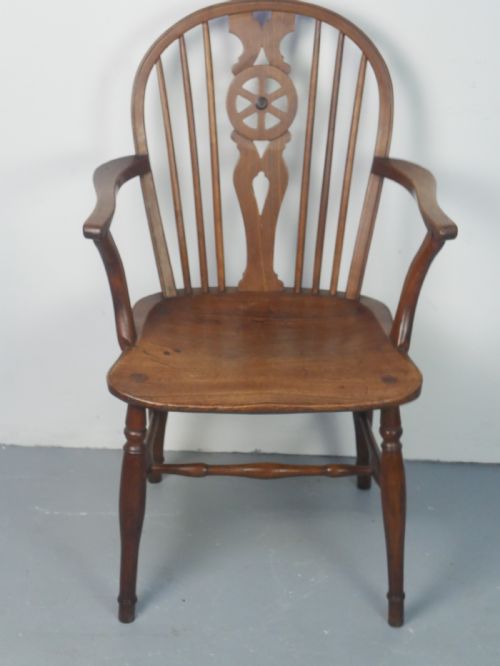
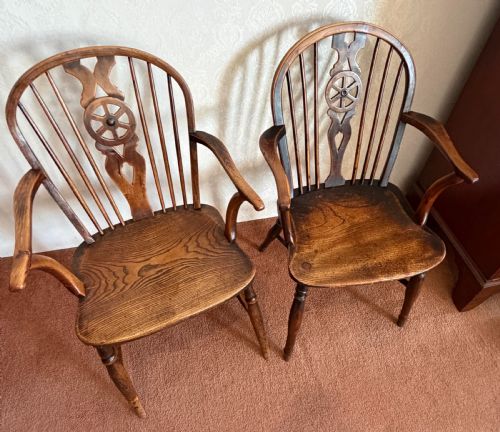


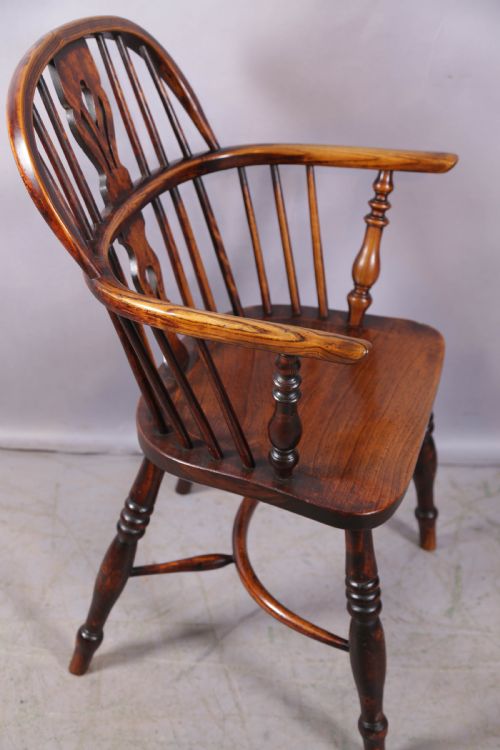
Wheelback Windsor Armchair
A wheelback windsor armchair brings enduring English country character into a room through honest vernacular design and timber construction.
What They Are
When you search for a wheelback windsor armchair, you encounter robust seating shaped by English country and Georgian vernacular traditions. These sturdy seats serve as functional domestic furniture rooted in centuries of local carpentry.
The versions you meet most frequently on this page date from the nineteenth century, including specific pieces from eighteen fifty. They appear in regional variants such as Thames Valley styles alongside kitchen armchairs.
Makers built these chairs using timber species typical of rural workshops. The combination of elm, ash, and yew wood defines the physical presence of these items.
How They Were Made
Joiners built these armchairs using a combination of solid timber boards and turned components. Elm frequently forms the generous seat plank, while ash provides sturdy spindles and legs.
Many examples incorporate yew wood for its rich grain and natural figuring. Workshops shaped the distinctive wheelback splat to support the user while adding decorative detail to the frame.
Retail Price Guide 2026
Typical UK retail prices for wheelback windsor armchair, calculated from the Sellingantiques database of over a million retail prices indexed since 2003. This retail price guide relies exclusively on Sellingantiques data; no external sources or auction records are used, so the figures do not describe the wider market.
Recorded listings on this site span the nineteenth century, including specific pieces dated to eighteen fifty.
What Varies in Quality
Quality rests upon the selection of timbers and the fidelity of the regional form. Yew wood examples display distinctive grain patterns that elevate the visual presence above standard elm variants.
Construction details distinguish finer workshops from utilitarian kitchen pieces. The proportional balance of the wheelback motif and the integrity of the spindle joints determine the standing of each individual chair.
The Wheelback Windsor Armchair Glossary
- Wheelback
- A central splat carved and pierced in the shape of a cart wheel. This decorative motif characterises nineteenth-century country armchairs.
- Windsor Chair
- A seat constructed with a solid wooden saddle-shaped seat into which the legs and back spindles are directly tenoned. This method creates a sturdy vernacular form.
- Thames Valley
- A regional English style associated with refined yew wood construction. Chairs from this area often display superior timber selection and graceful turnings.
- Vernacular
- Everyday objects built by local craftspeople using traditional regional techniques. These pieces prioritise practical utility over formal academic styles.
Frequently Asked Questions
What is a wheelback windsor armchair?
A wheelback windsor armchair is a traditional wooden seat featuring a pierced wheel motif in the back splat and a solid saddle-shaped seat.
These pieces emerged from rural English workshops during the nineteenth century and reflect vernacular woodworking traditions.
How were these chairs used historically?
People utilised these armchairs as durable everyday seating in kitchens, farmhouses, and country houses. Their robust construction suited daily domestic life.
The comfortable saddle seat and supportive back made them practical for long periods of sitting by the hearth or at a table.
Which woods appear in these chairs?
Makers constructed these armchairs using native British timbers including elm, ash, and yew wood. Each wood served a specific structural or aesthetic purpose.
Elm provided strong seats, ash formed flexible spindles, and yew offered fine grain patterns for higher-status examples.
How do I date a wheelback windsor?
Dating relies on examining the timber wear, construction methods, and regional style characteristics. Most recorded examples date from the nineteenth century.
Comparison with documented Thames Valley or Victorian kitchen pieces helps establish the likely period of manufacture.