



Victorian Yew Wood Armchair
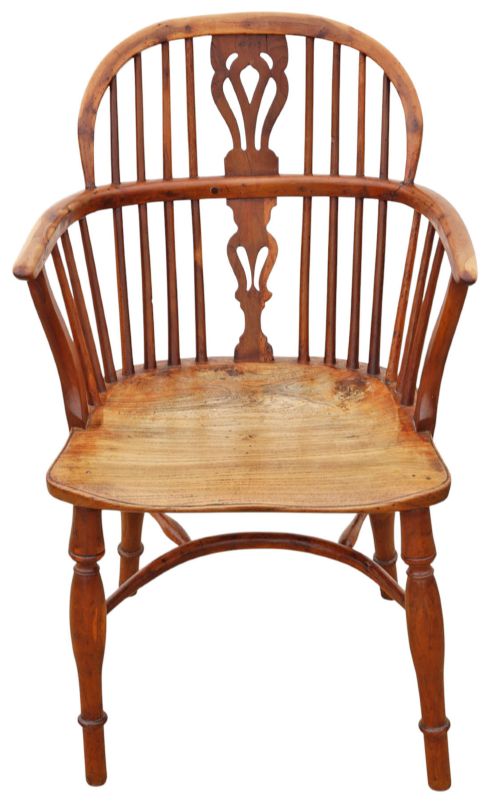
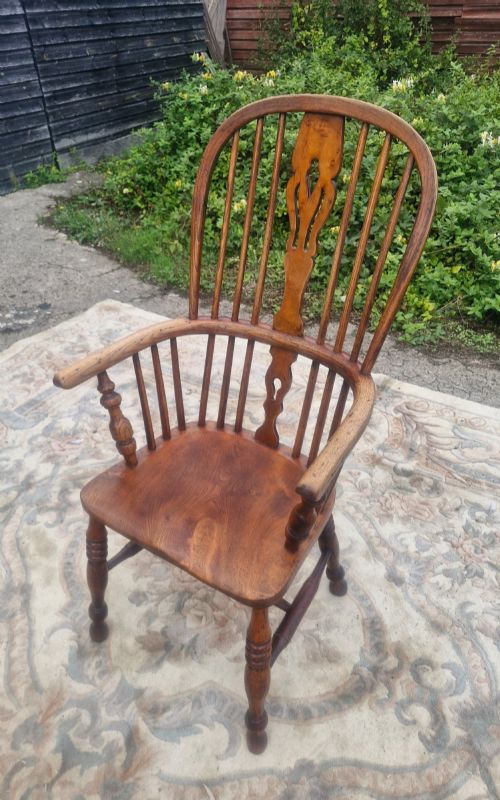
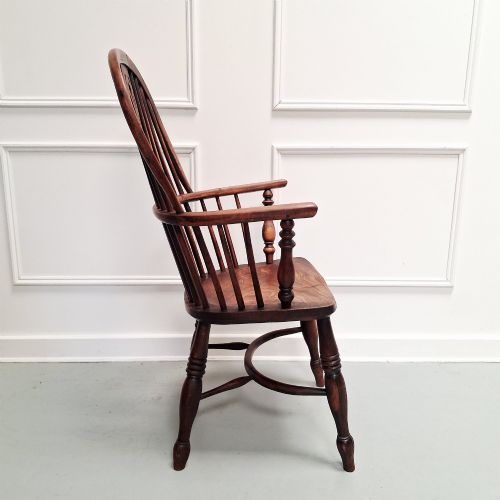
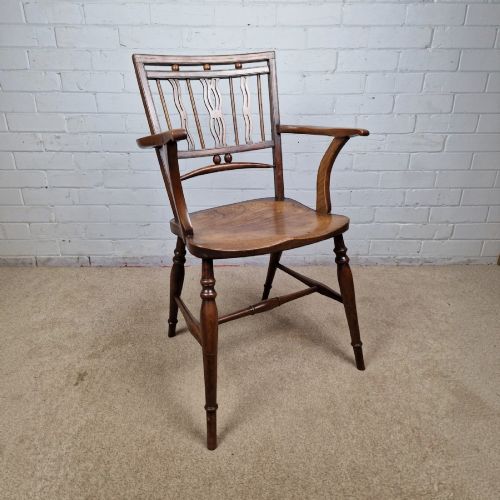
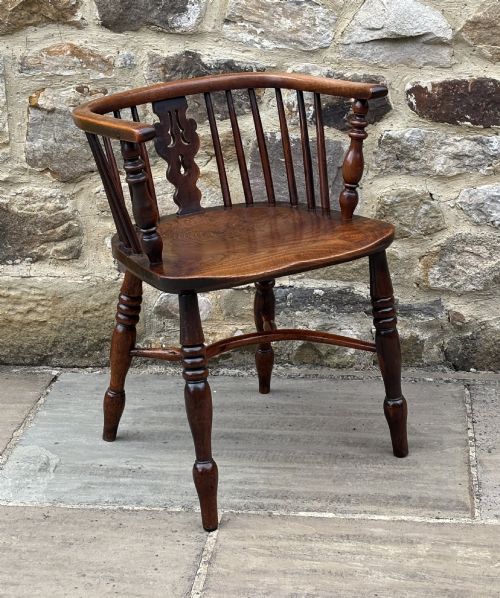
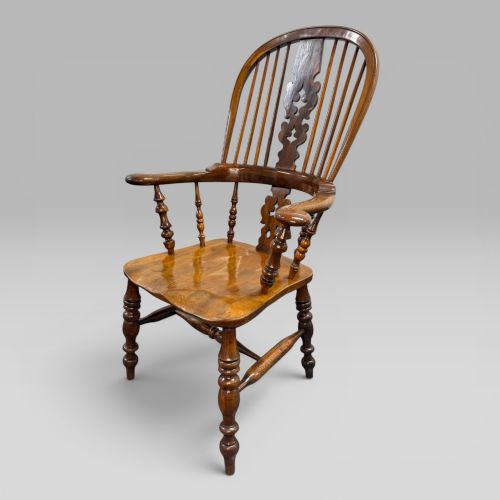
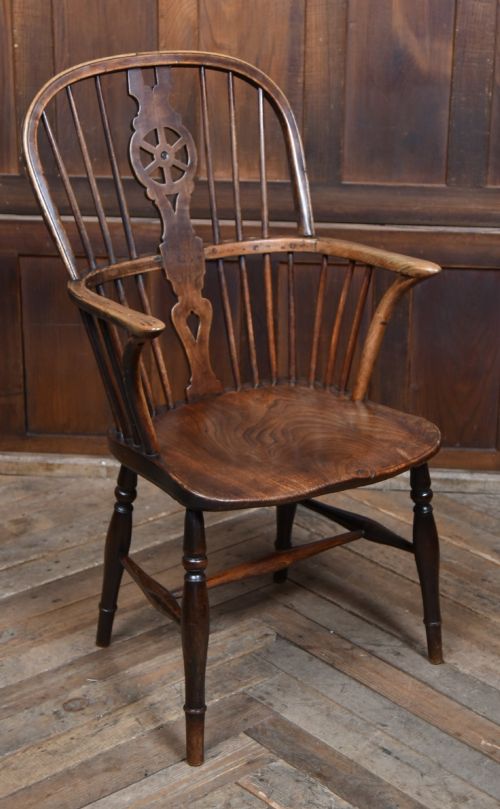
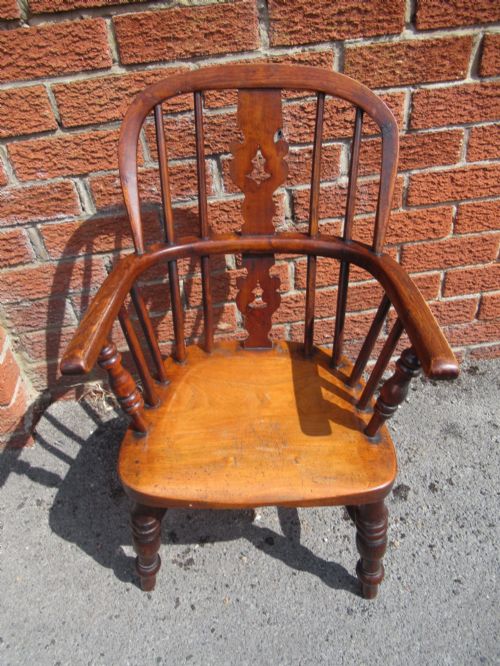
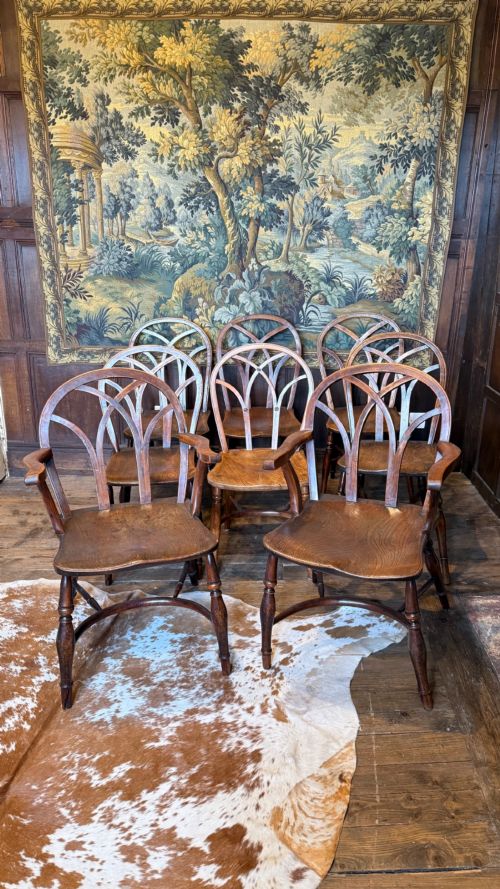
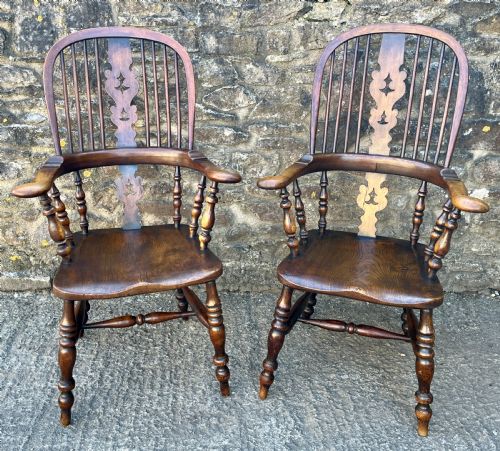
These pieces are a victorian yew wood armchair, built for country houses and provincial parlours where timber figuring mattered.
Victorian Yew Wood Armchair
A search for a victorian yew wood armchair brings up heavy provincial seating built in English country workshops during the nineteenth century. Most examples found on this page belong to the Windsor form, constructed with individual spindles driven into a solid wooden seat.
The selection ranges from high-back and low-back Windsor variants to broader captain's chairs and smaller child's versions. Regional differences emerge through variations in back splats and stretcher arrangements, spanning styles from plain vernacular to Gothic Revival.
Materials and construction
Maker workshops built these chairs by combining contrasting native timbers, typically pairing rich yew wood for the bent frames and arms with solid elm for the deep-dished seats. Additional support often came from turned legs and spindles made of ash, beech, or oak.
Makers utilised steam-bending techniques to shape the characteristic bows and arm-rails from green timber. Components were then joined using traditional wedged mortise and tenon joints without relying on metal fasteners.
Current listings demonstrate timber combinations featuring yew wood paired with elm, ash, and beech across nineteenth-century provincial workshops.
Factors affecting quality
The visual appeal of a victorian yew wood armchair depends heavily on the natural figure and grain density of the timber selected by the maker. Highly figured wood displays deep honey tones and complex figuring that separates standard workshop output from superior examples.
Structural integrity and proportion also dictate standing, with finer chairs retaining robust undercarriages like crinoline stretchers alongside balanced arm profiles. Surface wear matters less than the presence of a deep, honest patina developed through decades of domestic use.
J Spencer
The Victorian Yew Wood Armchair Glossary
- Windsor chair
- A wooden chair constructed with a solid timber seat into which the legs and back spindles are directly fitted. This form dominated English vernacular seating throughout the nineteenth century.
- Broad arm
- A chair arm widened significantly into a flat, paddle-like rest for writing or resting the hands. These wider arms are frequently turned from substantial pieces of yew.
- Crinoline stretcher
- A curved under-stretcher that links the legs of a Windsor chair in a continuous loop. This design element adds substantial rigidity to the lower frame.
- Carver
- A traditional term for an armchair, often used to describe larger seating intended for the ends of a dining table. These pieces match the simpler side chairs in a set.
- Spindle
- A slender, turned wooden rod used vertically to form the backrest of a chair. Makers shaped these components on lathes before driving them into drilled seat sockets.
Victorian Yew Wood Armchair: Frequently Asked Questions
How do I identify a yew wood Windsor?
Yew wood exhibits a distinct, highly figured reddish-brown grain with pale sapwood bands that mark it out from plainer timbers like beech or elm. Examining the arms and hoop usually reveals this complex timber patterning.
Combined with a solid elm seat and traditional spindle construction, the timber character confirms the regional English origin of the piece.
Were these chairs used at dining tables?
Many examples functioned as single fireside seats or writing chairs rather than matching sets for dining rooms. Their sturdy construction suited daily domestic tasks across various rooms.
Armchairs and captain's chairs served heavier everyday service, explaining the worn patination found on the wooden arms and seats.
How should I care for a nineteenth-century timber chair?
Keep wooden seating away from direct heat sources and drastic humidity swings to prevent timber shrinkage and joint loosening. Natural wax applied sparingly helps maintain the surface finish.
Avoid harsh modern cleaning sprays that strip away the historic patina accumulated on the wood over generations of use.