
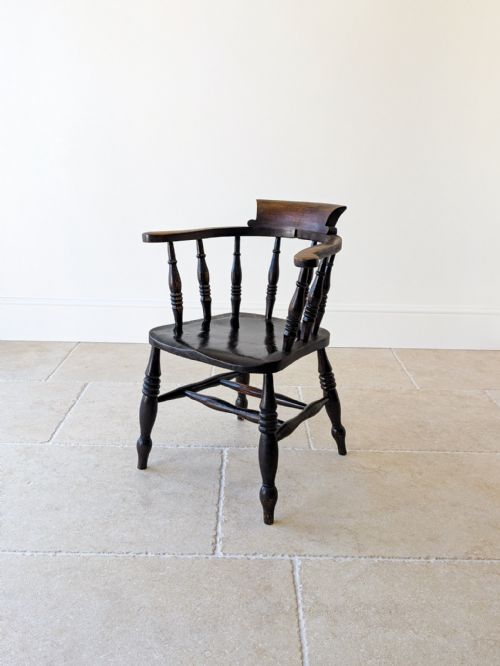
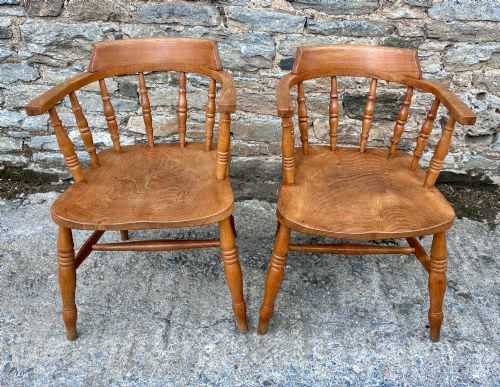
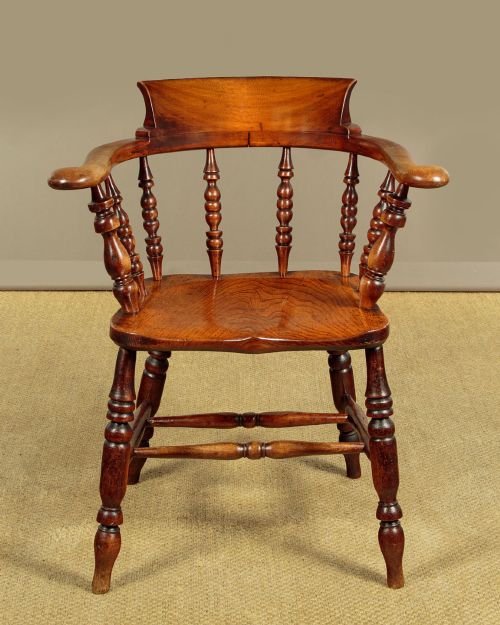
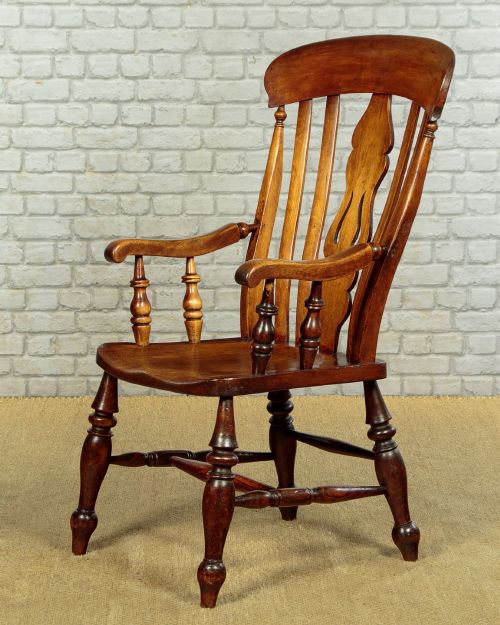


Carved Elm Desk Chair
A carved elm desk chair brings tangible grain and sturdy vernacular character directly to the working day.
Carved Elm Desk Chair
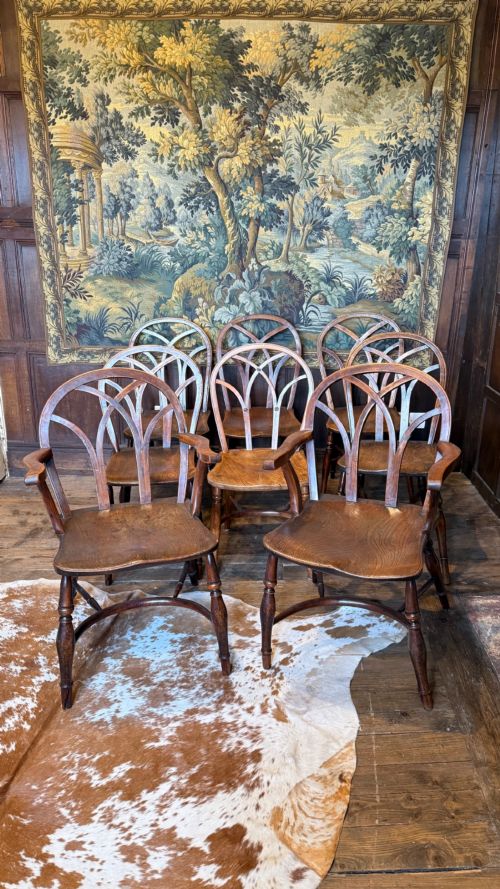
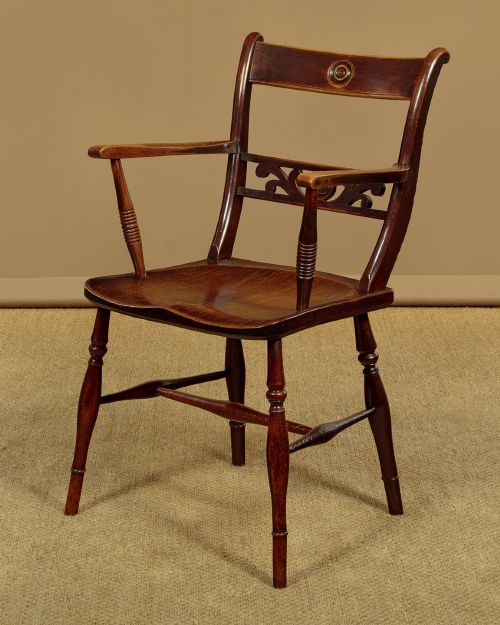
A carved elm desk chair encompasses a robust group of seating designed for study, writing, and daily domestic labour. The listings on this page span the nineteenth century, including Victorian periods, Georgian eras, and specific regional workshops.
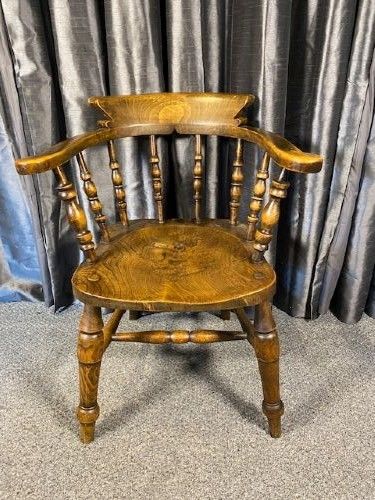
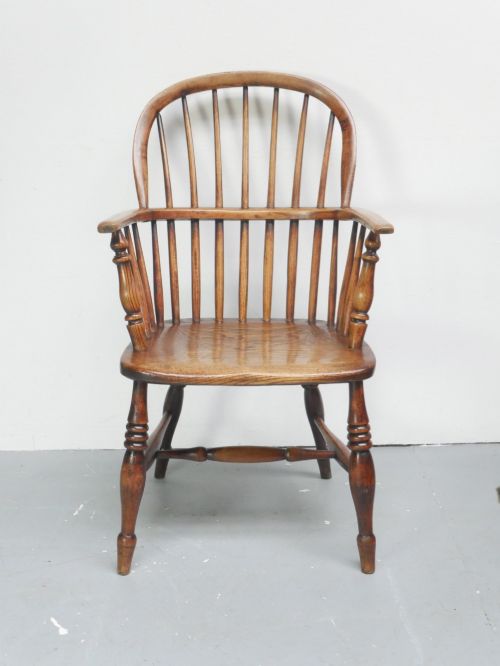
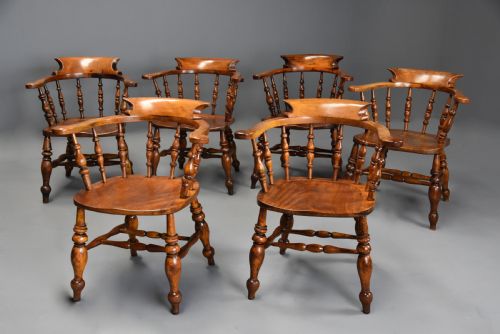
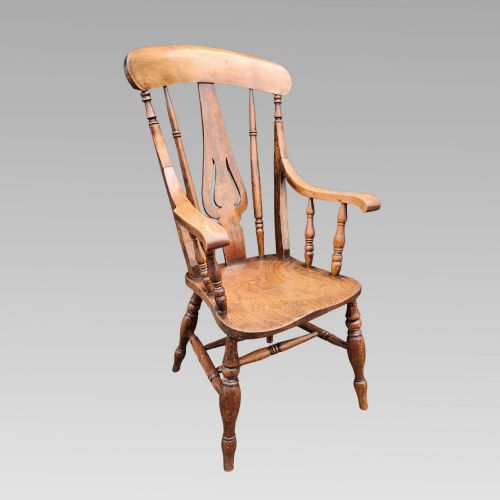
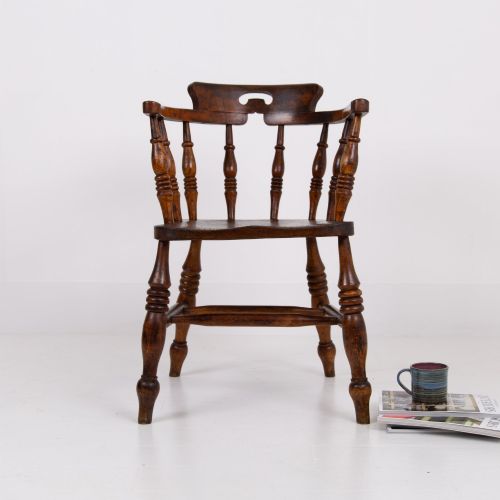
Buyers will most frequently encounter the classic Windsor form, smoker's bows, and captain's chairs featuring solid wooden seats. Woods like beech, ash, and yew frequently accompany the primary elm construction, providing structural contrast.
The selection ranges from British country farmhouse examples to occasional Chinese lacquered armchairs and Qing dynasty pieces. Each serves as a functional seat carrying distinct historical style markers from its period of origin.
How they were made
The construction relies on traditional timber framing where solid elm forms the substantial, sculpted seat boards. Secondary woods such as ash, beech, and yew provide the turned spindles, legs, and bentwood bows necessary for resilient support.
Makers utilised classic joinery techniques including wedged tenons and through-joints to secure the uprights directly into the thick wooden seats. Surface finishes range from natural waxed grain to historic red lacquer applied to Chinese elm frameworks.
Some nineteenth-century makers secretly hid extra chair legs inside hollowed arm joints just in case of emergency repairs.
What varies in quality
Quality separates along the crispness of the turning on spindles and the sculptural depth of the saddle seat. Superior examples display carefully balanced proportions, well-matched timber grains, and minimal restorative intervention over time.
The choice of secondary woods and the complexity of the back design, such as wheel-backs or lyre motifs, dictate the relative sophistication of an individual piece. Robust structural integrity and honest patination remain paramount across all regional variations.
The Carved Elm Desk Chair Glossary
- Smoker's bow
- A low-backed Windsor armchair featuring a continuous bentwood armrail, traditionally found in rural pubs and smoking rooms.
- Saddle seat
- A wooden seat base carved into a concave shape for ergonomic comfort during extended periods of sitting.
- Spindle back
- A chair construction utilising a series of slender, turned wooden uprights to support the backrest.
- Thames Valley
- A recognised regional English style of Windsor chair making known for specific combinations of yew and elm.
- Captain's chair
- A compact low-back armchair designed to fit neatly beneath a desk or writing table.
Carved Elm Desk Chair: Frequently Asked Questions
What is a carved elm desk chair?
A carved elm desk chair is a sturdy wooden seat, often built in the Windsor or captain's style, designed for writing and study.
These pieces utilise strong domestic hardwoods and feature sculpted seats suited for daily use.
How do I identify a Victorian elm chair?
Victorian examples typically exhibit darker patination, turned spindle backs, and robust construction methods common to nineteenth-century workshops.
Look for combined timbers such as ash or beech frames supporting a solid elm seat board.
Where were Windsor desk chairs made?
Windsor chairs originate from various regional British centres, including specific traditions in the Thames Valley and East Anglia.
Maker methods and local timber availability heavily influenced the distinct local designs and structural details.
How should I care for antique elm?
Maintain antique elm by keeping chairs away from direct heat sources and sudden temperature fluctuations that dry timber.
Apply a microcrystalline wax occasionally to nourish the grain and preserve the historic surface patination.