
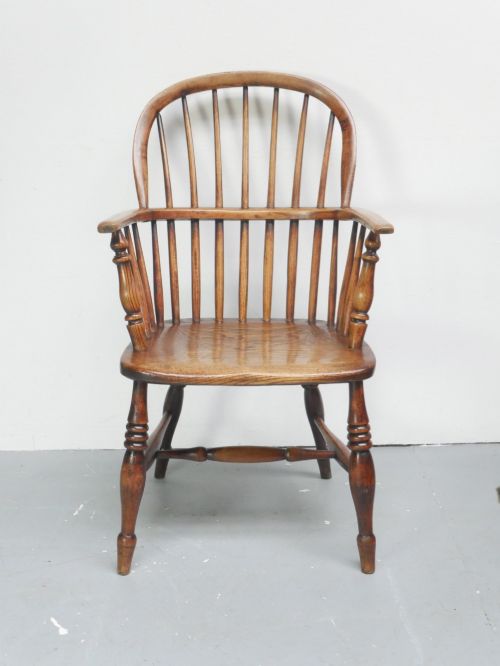
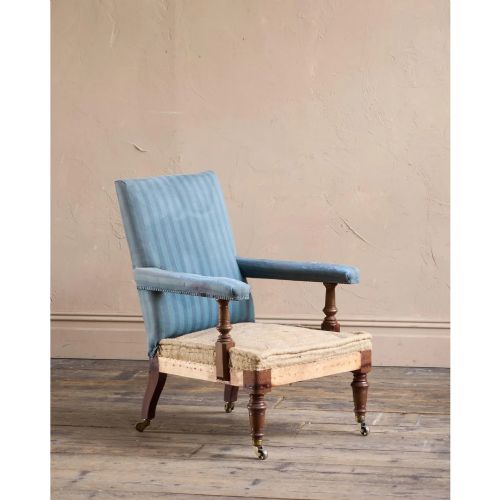
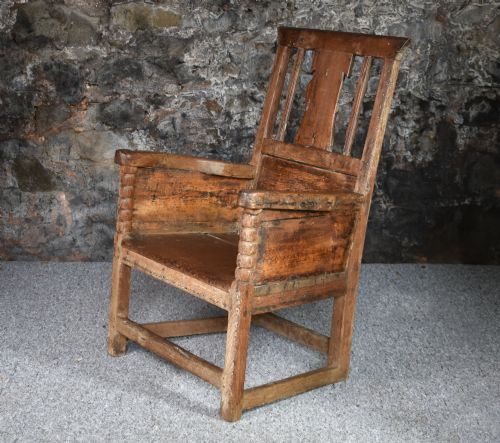


Scottish Country Armchair
These scottish country armchair examples bring rugged local character into a room through honest regional timber construction and vernacular joinery.
Scottish Country Armchair
A scottish country armchair draws on centuries of local furniture traditions, ranging from heavy regional Windsors and Orkney chairs to vernacular crofter seats and lambing chairs. Buyers searching for a scottish country armchair often encounter pieces dating from the eighteenth century through to the early twentieth century.
The selection on this page centres on sturdy forms built for practical domestic use in Scottish houses, farmhouses and cottages. Most examples fall into the nineteenth century category, alongside eighteenth century country pieces and later Edwardian interpretations.
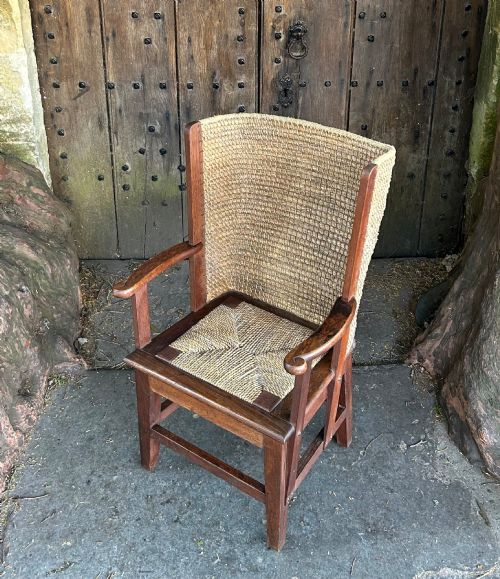
Makers and regional styles such as Orkney rush-backs, Darvel armchairs, and bobbin rocking chairs represent the distinct character available. These seating forms rely on straightforward regional forms rather than elaborate urban fashions.
Materials and construction
Construction relies on native hardwoods including oak, elm, ash, birch, and beech, shaped by regional joiners and country makers. Timbers are frequently combined with natural seating materials such as straw, rush, and wood.
Vernacular methods dictate the build, using turned spindles, solid plank seats, and framed backs rather than high-style cabinetmaking joints. Details like bentwood arms and pegged joinery reflect traditional workshop practices across Scottish regions.
Scottish Country Armchair Retail Price Guide 2026
Typical asking prices for scottish country armchair among the pieces listed under this phrase on Sellingantiques today, from the lower quarter to the upper quarter. They describe what is for sale here now, not the wider market.
The documented periods span from the early eighteenth century through the Edwardian era and the 1930s.
Judging quality in regional seating
Quality rests in the integrity of the regional form and the balance of the proportions, distinguishing humble utilitarian items from more considered vernacular commissions. The retention of original strawwork in Orkney chairs or untouched timber surfaces in earlier oak and ash frames defines the upper tier.
Makers' attribution and workshop provenance elevate specific pieces, moving them beyond standard vernacular output. The harmony between the turned components and the primary timber structure governs the overall success of the piece.
Whytock and Reid·Morison and Co·Duncan McKellar of Fenwick·Wheelers of Arncroach
The Scottish Country Armchair Glossary
- Vernacular
- Furniture made by local tradesmen for domestic or regional use rather than to follow metropolitan court fashions. These pieces utilise native woods and practical construction methods.
- Orkney Chair
- A traditional Scottish seating form originating from the Orkney Islands, featuring a low wooden frame with a high, woven straw back designed to keep out drafts.
- Windsor Chair
- A seat constructed with pegged legs and spindles fitted directly into a solid wooden saddle-shaped seat, often featuring a bowed back rail.
- Lambing Chair
- An enclosed armchair with high wooden sides and a hooded top designed to protect the sitter from draughts near an open hearth.
- Rush
- The dried stem of wetland plants used traditionally for weaving chair seats. It provides a durable and flexible surface.
Scottish Country Armchair: Frequently Asked Questions
What defines a scottish country armchair?
A scottish country armchair is defined by its regional origins, native timber construction, and adherence to local vernacular furniture styles rather than academic design trends.
These chairs reflect the domestic needs of Scottish homes, utilising materials like oak, elm, and ash alongside straw or rush.
How do I identify an Orkney chair?
An Orkney chair is immediately recognised by its distinctive high woven straw back attached to a wooden frame, designed to shield the occupant from cold draughts.
They often incorporate low wooden seats and box bases characteristic of the islands' traditions.
Where were these chairs originally used?
These armchairs were used in farmhouses, crofts, country houses, and cottages across Scotland for daily domestic seating.
Their robust construction was intended to withstand heavy everyday use near the hearth or in living spaces.
Are these chairs comfortable for daily use?
Many examples offer supportive wooden saddles or woven seats, though comfort depends on the specific vernacular design and proportions.
They function well as occasional armchairs in studies, bedrooms, or living rooms where regional character is desired.