

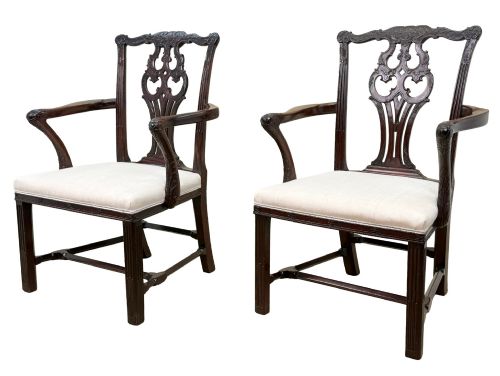
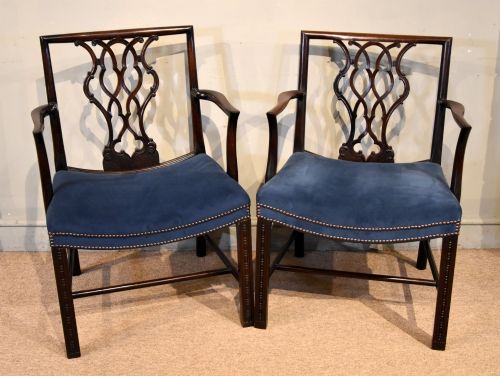
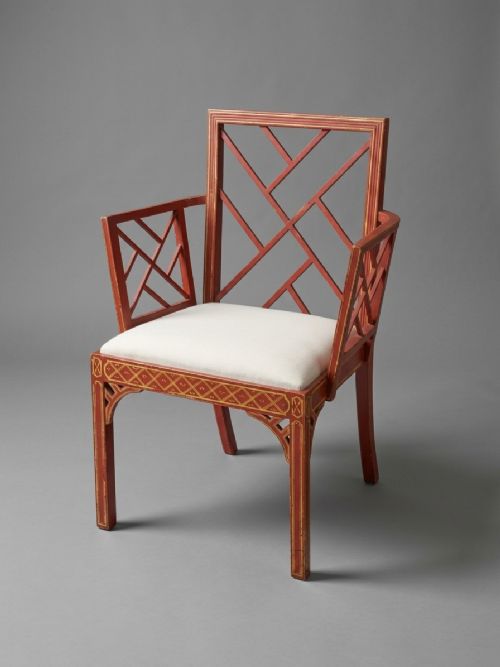
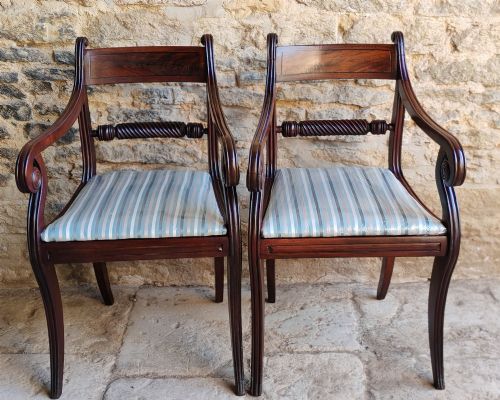
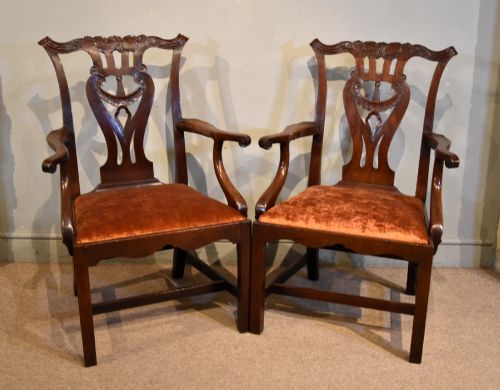
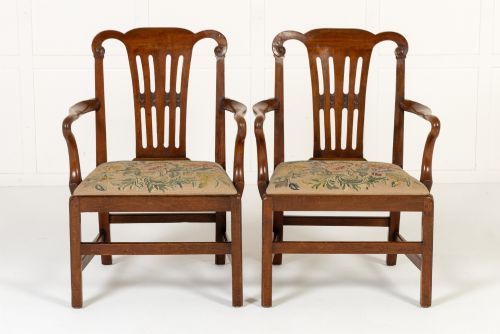
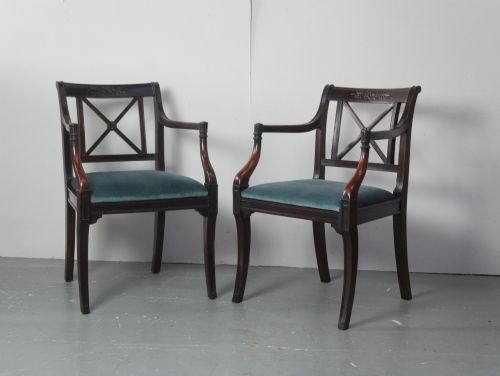
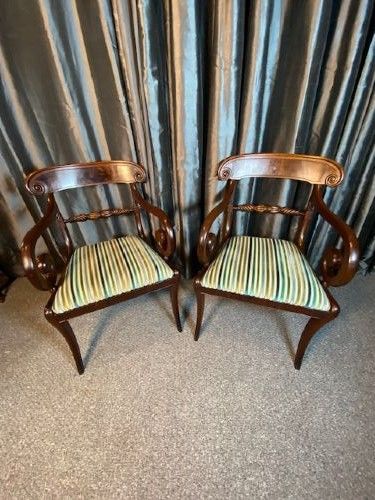
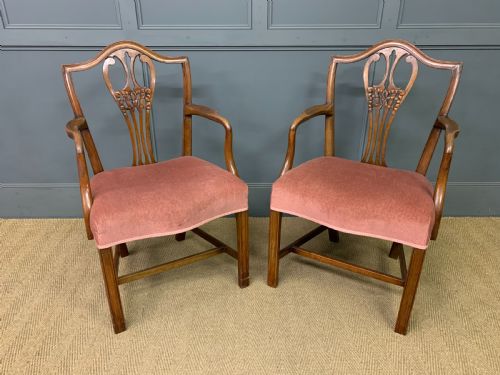
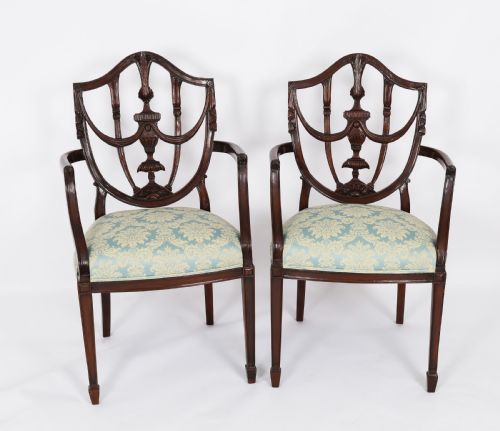
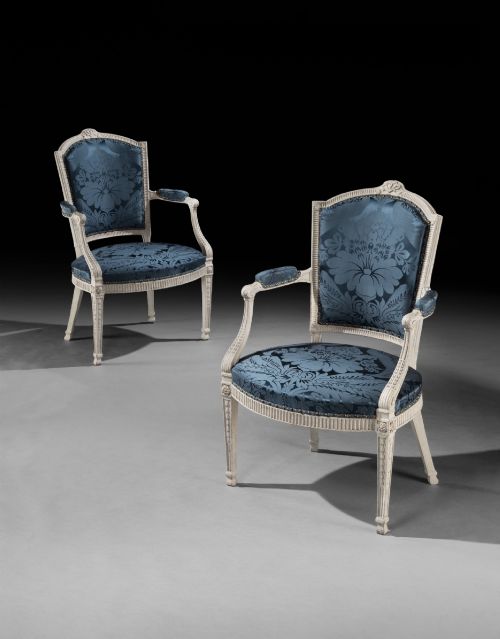
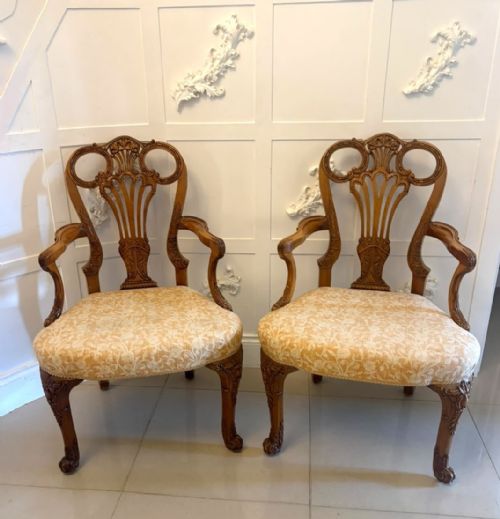
Pair Georgian Carver Armchairs
A pair georgian carver armchairs provides architectural gravity to a dining table or study with sturdy timbers and refined elbow rests.
Pair Georgian Carver Armchairs
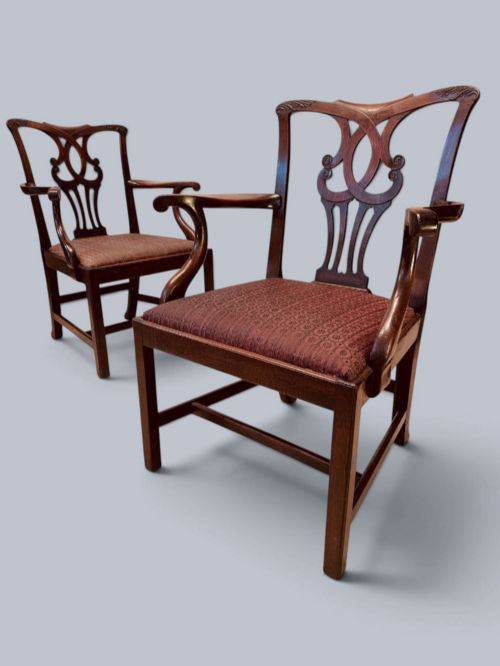
These pair georgian carver armchairs span the eighteenth and nineteenth centuries, taking the form of open armchairs and desk chairs designed for formal rooms. Most examples encountered here are constructed from mahogany, though elm, ash, walnut, and satinwood also appear across the listings.
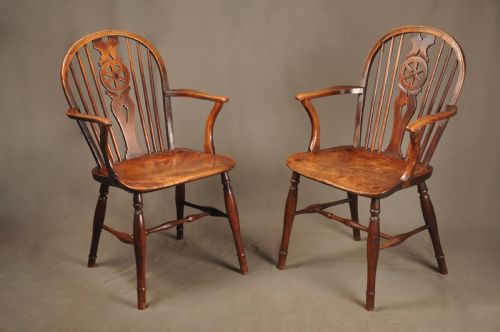
The regional variety ranges from formal English George III and Regency productions to Irish Chippendale interpretations and Scottish country makes. Later revivals from the Edwardian era and the twentieth century mirror these earlier architectural idioms.
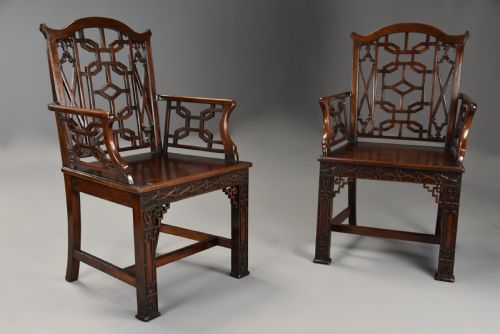
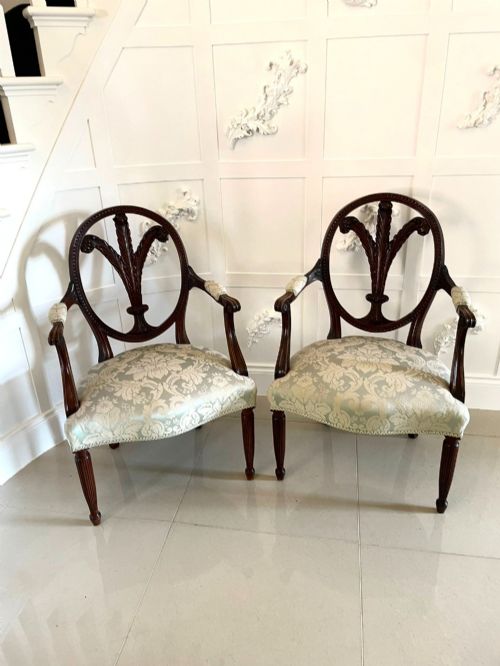
Makers utilised specific regional traits, such as Chinese Chippendale painted finishes, shield backs, and broad arm Windsor structures. Matching sets survive alongside carefully assembled pairs that share proportional harmony.
Grading Quality
The highest tier pair georgian carver armchairs displays crispness in the hand-carved splats, arm terminals, and rails, where timber was selected for strong grain and deep natural colour. Lesser examples show softer carved details and simpler joinery intended for utilitarian domestic service.
Proportional balance and the integrity of the original timber frames separate exceptional survivors from heavily restored or later revival pieces. Surface patination accumulated over centuries adds visual depth that modern finishing cannot replicate.
Pair Georgian Carver Armchairs Retail Price Guide 2026
Typical asking prices for pair georgian carver armchairs among the pieces listed under this phrase on Sellingantiques today, from the lower quarter to the upper quarter. They describe what is for sale here now, not the wider market.
The Pair Georgian Carver Armchairs Glossary
- Carver chair
- An armchair, typically heavier and more elaborate than the surrounding dining chairs, originally designated for the head of the table. They feature prominent elbow rests designed to accommodate formal clothing.
- Chippendale style
- A furniture design vocabulary inspired by Thomas Chippendale patterns, characterised by interlaced ribbon splats, cabriole legs, and elaborate carved ornamentation. Later revivals adopted these identical decorative motifs.
- George III
- The period of British design spanning the long reign of King George III, known for neoclassical restraint, mahogany primacy, and balanced proportions. Pieces from this era form the backbone of formal seating.
- Regency
- The stylistic era encompassing the British Regency and the reign of George IV, marked by classical influences, sabre legs, and darker woods. These chairs often incorporate brass inlay and restrained mounts.
- Shield back
- A chair back shaped in the outline of a heraldic shield, popularized during the late eighteenth century by designers like Hepplewhite. The internal splat usually fans outward from a central carved urn or drapery motif.
Pair Georgian Carver Armchairs: Frequently Asked Questions
How do I identify a genuine period armchair?
Examine the timber underneath for age-appropriate tool marks, dry grain patination, and the construction methods used in the joinery.
Original frames possess hand-cut tenons and wear patterns that differ substantially from twentieth-century machinery output.
Can I use carver chairs at a modern dining table?
Yes, provided you measure the arm height against the underside clearance of your table apron.
Traditional carvers were built lower than modern office chairs, so checking dimensions ensures they slide neatly underneath.
What is the difference between George III and Regency styles?
George III furniture draws heavily from Palladianism and Chinese or Gothic tastes, prioritising carved mahogany and architectural structure.
Regency design shifts toward archaeological classical antiquity, often featuring sabre legs, reeded framing, and brass accents.
How should I care for antique leather upholstery?
Maintain the surface by applying specialised leather dressings sparingly to prevent the hide from drying and cracking over time.
Keep antique armchairs away from direct heat sources and strong sunlight to preserve both the leather and the wooden frame.